
Last updated: October 2026
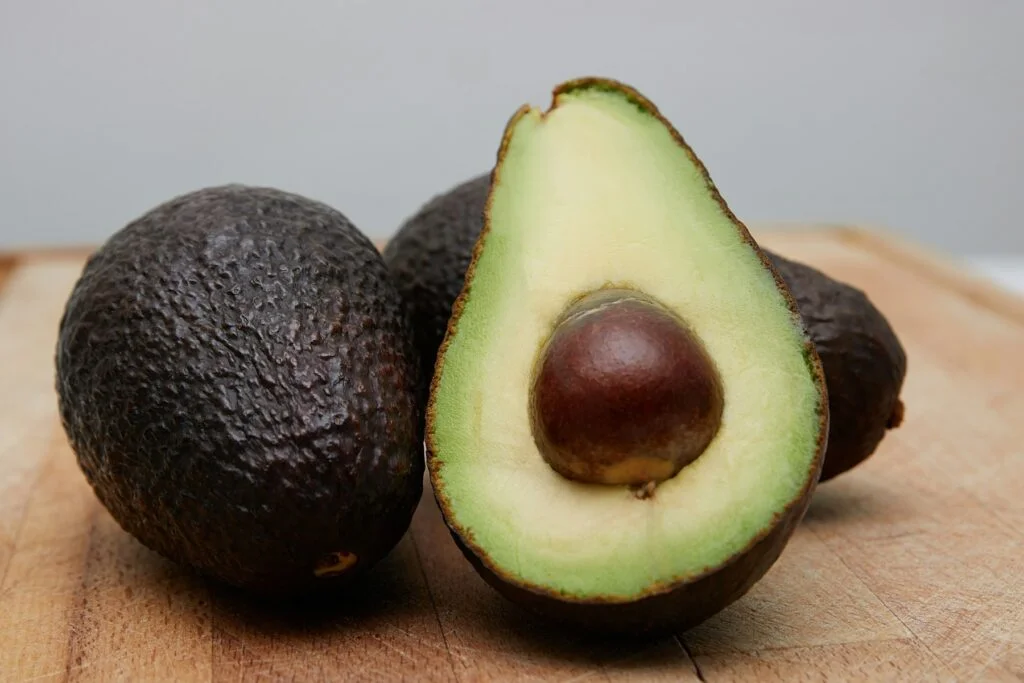
Avocado is high in unsaturated fat and a source of fibre, potassium, folate and vitamin E. Half an avocado (80g) counts as one of your 5 A Day and has about 137 calories. The evidence is strongest for eating it in place of butter or cheese; studies on weight, gut and eye health are smaller or mixed.
Below: the nutrition in half an avocado with UK figures, what the research shows for each claimed benefit, whether avocado is fattening, how many to eat, avocado on toast compared with other breakfasts, ripening tips and who should be careful.
Quick facts: half a Hass avocado (80g of flesh) has about 137 calories, 13.9g fat (three quarters of it unsaturated), 2.5g fibre, 466mg potassium and 22mg magnesium. Half an avocado a day, or a few times a week, suits most people, ideally in place of butter, cheese or processed meat rather than on top of them.
Avocado nutrition per half
These figures are for the flesh of Hass avocados, the usual supermarket variety, from the UK government’s food composition tables (CoFID, 2021). Half a medium avocado gives about 80g of flesh, which is the NHS adult portion of fruit or vegetables. The last column compares half an avocado with the reference intakes used on UK food labels (and the NHS 30g a day target for fibre).
| Nutrient | Per half (80g) | Per 100g | Half vs UK daily reference |
|---|---|---|---|
| Energy | 137 kcal | 171 kcal | 7% of 2,000 kcal |
| Fat | 13.9g | 17.4g | 20% of 70g |
| of which monounsaturated | 8.0g | 10.0g | n/a |
| of which polyunsaturated | 1.8g | 2.3g | n/a |
| of which saturates | 3.3g | 4.2g | 17% of 20g |
| Fibre | 2.5g | 3.1g | 8% of 30g |
| Protein | 1.4g | 1.8g | 3% of 50g |
| Sugars | 0.3g | 0.4g | Very low |
| Potassium | 466mg | 583mg | 23% of 2,000mg |
| Magnesium | 22mg | 27mg | 6% of 375mg |
| Folate | 25µg | 31µg | 12% of 200µg |
| Vitamin E | 1.8mg | 2.2mg | 15% of 12mg |
| Vitamin B6 | 0.24mg | 0.3mg | 17% of 1.4mg |
| Vitamin K (US data) | about 17µg | 21µg | 22% of 75µg |
| Lutein and zeaxanthin (US data) | about 217µg | 271µg | No reference value |
Three things stand out. First, about three quarters of the fat is unsaturated, mostly the monounsaturated kind also found in olive oil. Avocado isn’t a meaningful source of omega-3, though: for that, see our omega 3 guide.
Second, UK figures are lower than the US ones many websites quote. US tables list about 6.8g of fibre and 89µg of folate per 100g, against 3.1g and 31µg in the UK data, which comes from a 2017 analysis of 11 avocados sold in the UK. That’s why you’ll see “10g of fibre per avocado” elsewhere. Half an avocado still gives a useful 2.5g towards the 30g a day the NHS recommends; most UK adults manage only about 20g. For bigger wins, see our high fibre foods list.
Third, avocado is not high in magnesium. Half gives about 22mg, roughly 7% of the 300mg the NHS says men need and 8% of the 270mg for women. Nuts, seeds and beans give far more: see foods high in magnesium and our guide to pumpkin seeds.
What the nutrients in avocado do
In the UK, only health claims on the government’s register can be made for foods, and only when the food contains enough of the nutrient. Per 100g, avocado meets the conditions for “high unsaturated fat” (75% of its fatty acids are unsaturated) and for “source of” fibre, potassium, folate, vitamin E and vitamin B6. So these authorised claims apply:
- Unsaturated fats: replacing saturated fats with unsaturated fats in the diet contributes to the maintenance of normal blood cholesterol levels. Monounsaturated and polyunsaturated fats are unsaturated fats.
- Potassium contributes to the maintenance of normal blood pressure, and to normal muscle function.
- Folate contributes to the reduction of tiredness and fatigue.
- Vitamin E contributes to the protection of cells from oxidative stress.
- Vitamin B6 contributes to normal psychological function.
Note the wording of the first claim: the benefit comes from swapping, not adding. The NHS makes the same point, advising us to cut down on fats overall and replace saturated fat with some unsaturated fat. There is no authorised claim for avocado itself, and magnesium claims don’t apply because avocado has too little. The rest of this guide covers what research has found.
Avocado benefits: evidence by claim
Avocado has been studied more than most single foods, including one large trial (HAT) that gave 1,008 adults with a large waist one avocado a day for six months. HAT was privately funded, with an author from the industry’s Avocado Nutrition Center, so it’s worth looking at what it and other studies did and didn’t find.
| Claim | What the studies found | Strength |
|---|---|---|
| Cholesterol | A 2024 review of 9 trials found a small fall in total cholesterol, with LDL (“bad”) cholesterol falling only in people who already had high cholesterol. An earlier 2018 review found no change in LDL but a small rise in HDL. In HAT, LDL fell modestly. The reviewers rated their certainty low to very low. | Moderate, mainly when it replaces saturated fat |
| Heart disease | In two Harvard cohorts of 110,487 people followed for 30 years, eating at least two servings a week (one whole avocado) was linked with a 16% lower risk of cardiovascular disease and 21% lower risk of coronary heart disease. Swapping half a serving a day of butter, cheese, eggs or processed meat for avocado was linked with 16% to 22% lower risk. | Observational: shows a link, not cause |
| Weight and fullness | A 2022 review of 8 trials (657 people) found no change in weight or body fat, either up or down. HAT found no change in belly fat or weight. In a small breakfast study (31 adults), a whole avocado in place of some carbs reduced hunger and raised fullness hormones. | Doesn’t cause weight gain; no weight loss effect |
| Gut health | In a 12-week trial of 163 adults, a daily avocado meal increased the variety of gut bacteria and those that ferment fibre. | Early, a few trials |
| Eyes and brain | In a six-month trial of 40 older adults, one avocado a day raised lutein in the eye (macular pigment), which didn’t happen in the group eating potato or chickpeas. Attention improved slightly in the avocado group. | Small, early |
| Sleep | No trial has tested avocado for sleep. In a secondary analysis of HAT, the sleep part of a heart health score rose by about 3 points out of 100. | No direct evidence |
The honest summary: avocado is a nutritious swap for foods high in saturated fat, and it doesn’t seem to cause weight gain. It isn’t a fix on its own. For more foods with brain and mood research behind them, see brain foods, and for evening snacks, see foods that help you sleep.
The gut findings fit what we know about fibre in general: see our gut health guide. If you take vitamin D, our guide to the best time to take vitamin D explains why a meal with some fat, such as avocado, is a good habit.
Is avocado fattening?
Not in the trials. Avocado is energy dense, at about 137 calories per half and 274 for a whole avocado. But reviews of the trials found no weight gain, even in HAT, where people added a large avocado every day for six months. Fat plus fibre is filling, which may be part of the reason.
If you’re watching your weight, treat avocado as your fat for that meal rather than an extra. Half an avocado on toast instead of butter is a fair swap; a whole one on top of a cooked breakfast is a lot of calories. For more on appetite and weight, see sleep and weight loss.
How many avocados should you eat a week?
There is no official UK limit. The NHS counts half an avocado as one of your 5 A Day. In the Harvard cohorts, the lower heart risk was seen at two or more servings a week, which is just one whole avocado. HAT gave adults one large avocado a day for six months with no weight gain.
A sensible middle ground for most people is half an avocado a day, or a whole one a few times a week, in place of other fats. Mix it up with other fruit and veg, nuts and seeds such as chia seeds, and a square or two of dark chocolate if you like it.
Avocado on toast vs other breakfasts
How does avocado compare with other things you might put on toast? Figures are from the UK food composition tables for the portions shown (our typical portions). Add about 78 calories, 2.5g fibre and 3.4g protein for a 36g slice of wholemeal toast.
| Topping | Portion | Calories | Saturated fat | Fibre | Protein |
|---|---|---|---|---|---|
| Avocado | Half (80g) | 137 | 3.3g | 2.5g | 1.4g |
| Butter | 10g | 74 | 5.2g | 0g | 0.1g |
| Smooth peanut butter | 20g | 121 | 2.6g | 1.3g | 4.6g |
| Cheddar | 30g | 125 | 6.5g | 0g | 7.6g |
| Two boiled eggs | 100g | 143 | 2.7g | 0g | 14.1g |
Avocado has less saturated fat than butter or cheese and adds fibre, but it’s low in protein. Topping it with an egg, or adding beans or seeds, makes a breakfast that keeps you going longer. More ideas in breakfast for energy.
How to ripen and store avocados
Avocados only ripen after they’re picked, a process driven mainly by the ripening gas ethylene at room temperature, and slowed by cold. In practice:
- Buy firm if you won’t eat them for a few days, and leave them in the fruit bowl.
- Check for ripeness by pressing gently near the stalk: ripe avocados give slightly.
- To speed things up, put the avocado in a paper bag with a ripe banana or apple, which also give off ethylene.
- Once ripe, move it to the fridge to slow it down and eat within a few days.
- For a cut half, keep the stone in, brush the flesh with lemon or lime juice, wrap it and refrigerate.
Ripeness may matter for sensitive tummies too: researchers at Monash University found unripe avocado contains more of a sugar alcohol called perseitol than ripe avocado (more on that below).
Who should be careful with avocado
- If you take warfarin. The NHS says foods high in vitamin K can affect how warfarin works, and to talk to your doctor before any big change to your diet. Avocado contains some vitamin K, and a review of warfarin and fruit interactions included case reports involving avocado. You don’t need to avoid it: just keep the amount you eat steady and tell your anticoagulant clinic if that changes.
- Latex allergy. Some people allergic to latex also react to certain fruits (latex-fruit syndrome). A 2024 review found avocado, banana, kiwi and papaya were the most common. See also kiwi for sleep. Avocado allergy without latex allergy is rare but can be serious. Call 999 if you or someone else may be having an anaphylactic reaction, such as a swollen throat or tongue or trouble breathing.
- IBS and the low FODMAP diet. Monash University rates a standard serve of avocado as high FODMAP, partly because of perseitol and partly because of its high fat content. If avocado sets off symptoms, try a small amount of ripe avocado and check the Monash app. See bloating for other common triggers.
- Pets. Avocado contains a compound called persin, found in all parts of the plant. Vets report that pet birds such as parrots, rabbits and fish are particularly sensitive, and in a 1989 study six of eight budgerigars fed mashed avocado died. Keep avocado, skins and stones away from pets and call your vet if one eats some.
Where our range fits
Food comes first, and avocado earns a place in most diets. If you’d like more magnesium than half an avocado gives, our Magnesium Glycinate Sleep Complex is a berry-flavoured evening drink with magnesium bisglycinate and citrate (148mg magnesium per serving), glycine and L-theanine. Magnesium contributes to a reduction of tiredness and fatigue. Read more in magnesium for sleep.
It’s vegan, made in the UK and for adults only. We don’t recommend our products during pregnancy or breastfeeding.
FAQs
Is it OK to eat avocado every day?
Yes, for most people. Half an avocado a day counts as one of your 5 A Day, and a large six-month trial of one avocado a day found no weight gain. Use it in place of other fats rather than on top.
How many calories are in half an avocado?
About 137 calories for half a Hass avocado (80g of flesh), based on UK food composition data. A whole avocado has about 274 calories.
Is avocado good for weight loss?
Trials show avocado doesn’t cause weight gain, but it doesn’t cause weight loss either. Fat plus fibre can help you feel full, so it works best as a swap for butter, cheese or refined carbs.
Is avocado high in magnesium?
Not really. Half an avocado has about 22mg, around 7 to 8% of what adults need a day. Nuts, seeds, beans and wholegrains give much more.
Is avocado good in pregnancy?
Avocado can be part of a healthy diet in pregnancy and contains some folate, but it doesn’t replace the folic acid supplement the NHS advises for the first 12 weeks, ideally starting before you get pregnant. Ask your midwife or GP about your diet.
Does avocado help you sleep?
There is no direct evidence. One large avocado trial found a small rise in a sleep score as a secondary finding. Avocado contains a little magnesium and potassium, but regular sleep habits matter far more.
Is avocado safe for pets?
No, keep it away from pets. Avocado contains persin, and pet birds, rabbits and fish are particularly sensitive. Call your vet if your pet eats any.
Sources
- Office for Health Improvement and Disparities. McCance and Widdowson’s Composition of Foods Integrated Dataset (CoFID) 2021 (14-386 avocado, Hass, flesh only; butter, peanut butter, Cheddar, boiled eggs, wholemeal bread).
- Dreher ML, Davenport AJ (2013). Hass avocado composition and potential health effects. Critical Reviews in Food Science and Nutrition (US figures for vitamin K, lutein, fibre and folate).
- NHS. Healthier Families: fat, Facts about fat, 5 A Day portion sizes, How to get more fibre into your diet, Vitamins and minerals: others, Warfarin, Folic acid and Anaphylaxis.
- DHSC. Great Britain nutrition and health claims register. Retained Regulation (EU) No 1169/2011, Annex XIII: reference intakes.
- James-Martin G et al (2024). Avocado consumption and cardiometabolic health: a systematic review and meta-analysis. Journal of the Academy of Nutrition and Dietetics. Mahmassani HA et al (2018). Avocado consumption and risk factors for heart disease: a systematic review and meta-analysis. American Journal of Clinical Nutrition.
- Pacheco LS et al (2022). Avocado consumption and risk of cardiovascular disease in US adults. Journal of the American Heart Association.
- Lichtenstein AH et al (2022). Effect of incorporating 1 avocado per day versus habitual diet on visceral adiposity: a randomized trial (HAT). Damani JJ et al (2025). Effect of daily avocado intake on cardiovascular health assessed by Life’s Essential 8. Kris-Etherton PM et al (2026). The Habitual Diet and Avocado Trial (HAT): a collaborative multicenter model for large-scale, privately funded nutrition research consortia.
- Conceição AR et al (2022). Can avocado intake improve weight loss in adults with excess weight? A systematic review and meta-analysis of randomized controlled trials. Zhu L et al (2019). Using the avocado to test the satiety effects of a fat-fiber combination in place of carbohydrate energy in a breakfast meal.
- Thompson SV et al (2021). Avocado consumption alters gastrointestinal bacteria abundance and microbial metabolite concentrations among adults with overweight or obesity. Scott TM et al (2017). Avocado consumption increases macular pigment density in older adults.
- Vincent C et al (2020). Hormonal interplay in the regulation of fruit ripening and cold acclimation in avocados. Monash FODMAP (2024). Avocado and FODMAPs: a smashing new discovery.
- Norwood DA et al (2015). A comprehensive review of potential warfarin-fruit interactions. Gromek W et al (2024). Revisiting latex-fruit syndrome after 30 years of research. Cowan VE, Berg KJ (2026). Dietary intoxications of the exotic animal patient. Hargis AM et al (1989). Avocado (Persea americana) intoxication in caged birds.
This guide is general information, not medical advice. If you take warfarin or other regular medicines, have a food allergy or a bowel condition, or are pregnant, speak to your GP, pharmacist or midwife. Evopure makes the Magnesium Glycinate Sleep Complex. We don’t sell avocados.