
Last updated: October 2026
Chia seeds are a rich plant source of fibre and omega-3. One tablespoon (15g) gives about 5g of fibre, a sixth of the NHS 30g daily target, plus 2.7g of the plant omega-3 ALA, calcium and magnesium. Trials suggest small effects on blood pressure and blood sugar, but not weight loss. Always eat them soaked or in something wet.
Below: the nutrition in a spoonful, what the research shows for each claim, how much to eat, chia water, an easy chia pudding, chia vs flaxseed and who should be careful.
Quick facts: 1 tablespoon (15g) of chia has about 73 calories, 5.2g fibre, 2.7g ALA omega-3, 95mg calcium and 50mg magnesium. 1 to 2 tablespoons a day is a sensible amount. Soak them for at least 10 minutes, or eat them in something wet like porridge or yoghurt.
Chia seeds nutrition per tablespoon
These figures are for dried chia seeds from the US Department of Agriculture’s FoodData Central database, per 15g (about a tablespoon) and per 25g (a generous serving). The last column compares a tablespoon with the NHS daily amounts for adults (and the food label reference for protein).
| Nutrient | Per 15g (1 tbsp) | Per 25g | 1 tbsp vs UK daily amount |
|---|---|---|---|
| Energy | 73 kcal | 122 kcal | n/a |
| Fibre | 5.2g | 8.6g | 17% of 30g |
| ALA omega-3 | 2.7g | 4.5g | No NHS figure |
| Protein | 2.5g | 4.1g | 5% of the 50g label reference |
| Calcium | 95mg | 158mg | 14% of 700mg |
| Magnesium | 50mg | 84mg | 17% of 300mg (men), 19% of 270mg (women) |
| Iron | 1.2mg | 1.9mg | 14% of 8.7mg (men), 8% of 14.8mg (women 19 to 49) |
| Fat (of which saturates) | 4.6g (0.5g) | 7.7g (0.8g) | n/a |
The NHS says most UK adults eat only about 20g of fibre a day against a target of 30g, so a spoonful of chia closes about half that gap. For more easy wins, see our high fibre foods list and foods high in magnesium.
Chia is also a “novel food” in the UK: the Food Standards Agency names it as a traditional food from elsewhere that wasn’t widely eaten here before 1997, so it had to be authorised before going on sale, the same system that now covers CBD.
What the nutrients in chia seeds do
Chia easily meets the legal conditions to be called high in fibre and a source of omega-3, calcium, magnesium and protein, so these authorised GB health claims apply:
- ALA contributes to the maintenance of normal blood cholesterol levels. The beneficial effect is obtained with a daily intake of 2g of ALA, and one tablespoon of chia gives about 2.7g.
- Calcium is needed for the maintenance of normal bones and teeth.
- Magnesium contributes to a reduction of tiredness and fatigue, to normal muscle function and to the maintenance of normal bones.
- Protein contributes to the maintenance of muscle mass.
There is no authorised claim for chia itself, or for fibre in general helping digestion. The rest comes from research, covered next. For how plant ALA compares with fish oils, see our omega 3 guide.
Chia seeds benefits: evidence by claim
Chia research is limited to small trials, most lasting weeks rather than years. A 2018 review of 12 trials rated all of the evidence low or very low quality. Here’s an honest summary.
| Claim | What the research shows | Evidence |
|---|---|---|
| Constipation and gut | High in fibre, but no trials of chia for constipation. | None direct |
| Blood pressure | Pooled trials found lower blood pressure, from limited data. | Low to moderate |
| Cholesterol | Mixed: neutral in one review, modest falls in another. | Low |
| Blood sugar | Smaller rise after a sugary drink or meal. No change in long-term markers. | Low |
| Weight and fullness | Feels filling, but most trials show no extra weight loss. | Weak |
| Bones | Good calcium and magnesium content. No trials on bone health. | Nutrients only |
Chia seeds, heart health, blood pressure and cholesterol
Blood pressure is the most consistent finding. A 2025 meta-analysis of 8 trials found systolic blood pressure about 7 mmHg lower and diastolic about 6 mmHg lower with chia than without. The authors cautioned that the data are limited. If you’re working on blood pressure, see also beetroot juice.
Cholesterol results are less clear. A 2021 review of 10 trials found chia had a neutral or slightly beneficial effect on blood fats, with none of the changes statistically clear. A 2025 umbrella review pooling earlier reviews found modest falls in total and LDL cholesterol, but also a small drop in HDL, the “good” cholesterol.
Omega-3. Chia gives you ALA, not the EPA and DHA found in oily fish. In a 12-week trial, 50g of chia a day raised blood ALA by about a quarter but didn’t change EPA or DHA levels.
Chia seeds and blood sugar
Chia’s soluble fibre forms a thick gel, which seems to slow how fast sugar reaches your blood. In a Canadian crossover study, 15 healthy adults had a 50g glucose drink alone, with 25g of ground chia or with flaxseed. Both seeds cut the blood sugar rise, and chia also lowered peak glucose and appetite more than flax.
The longer view is less exciting. A 2025 meta-analysis found no significant effect on fasting blood sugar or HbA1c, the three-month marker used in diabetes. So chia can soften the spike from a meal, but it isn’t a fix. If you get sleepy after lunch, see tired after eating and sugar cravings.
Do chia seeds help you lose weight?
Probably not on their own. In a 12-week US trial, 76 overweight adults took 25g of chia in water twice a day before meals, and lost no more weight than the placebo group. A 2025 meta-analysis also found no significant effect on weight, body fat or waist size.
The one positive trial was in 77 adults with type 2 diabetes on a calorie-controlled diet. Over 6 months, the chia group lost 1.9kg against 0.3kg on an oat bran control. That’s a modest difference in a specific group.
Where chia helps is fullness: 25g of seeds makes a filling pudding for about 120 calories before the milk. A useful swap for a sugary snack, not a fat burner. See our breakfast for energy ideas.
Chia seeds for constipation and gut health
This is the most popular use of chia, and the least tested: we couldn’t find a controlled trial of chia for constipation, and a Cleveland Clinic dietitian makes the same point. The logic is sound, though: chia is very high in fibre, and the NHS advice for constipation is to drink plenty of fluids, gradually increase your fibre and add things like oats or linseed.
The key word is gradually. Going from little fibre to two big spoonfuls of chia overnight can cause wind, bloating and cramps. Start with a teaspoon, build up over a week or two and drink more water as you go (see how much water should I drink).
For a wider plan, see gut health, probiotics and magnesium for constipation.
Soaked vs dry chia seeds: why it matters
Chia seeds start forming a gel as soon as they touch liquid, and can absorb up to 27 times their weight in water. That’s what makes chia pudding work. It’s also why you should never eat them dry and then drink.
A 2017 case report describes a 39-year-old man who swallowed a tablespoon of dry chia seeds followed by a glass of water. The seeds swelled into a gel that completely blocked his oesophagus (food pipe), and doctors had to clear it piece by piece with an endoscope. He had a long history of swallowing problems, probably from a condition called eosinophilic oesophagitis.
It’s rare, but easy to avoid:
- Soak chia for at least 10 minutes before eating, or stir it into something wet like porridge, yoghurt or a smoothie.
- Don’t eat spoonfuls of dry seeds, and don’t sprinkle large amounts on dry food without a drink alongside.
- If you have any trouble swallowing, only eat chia fully soaked, and see a GP about the swallowing problem.
How much chia should you eat a day?
There’s no official amount. 1 to 2 tablespoons (15 to 25g) a day is a sensible amount for most adults. It gives 5 to 9g of fibre and more than the 2g of ALA linked to the cholesterol claim, for under 125 calories.
Some trials have used 50g a day or more, but more isn’t better if your gut isn’t used to it. If you already eat plenty of fibre from wholegrains, beans, fruit and vegetables, a tablespoon is plenty.
Chia seed water and the “internal shower” trend
The TikTok “internal shower” is chia seeds stirred into water with lemon juice, sold as a bloating and constipation fix. To make chia water, stir 1 tablespoon of chia into a large glass of water (about 250ml), add a squeeze of lemon if you like, and leave it for 10 to 15 minutes, stirring once or twice so it doesn’t clump.
Our verdict: it’s fibre plus water, a sensible combination, but there’s no research on the drink itself and nothing “cleansing” about it, on an empty stomach or otherwise. If you try it, let it gel fully, start with a teaspoon and don’t use it to replace meals. Like apple cider vinegar shots, the hype is bigger than the evidence.
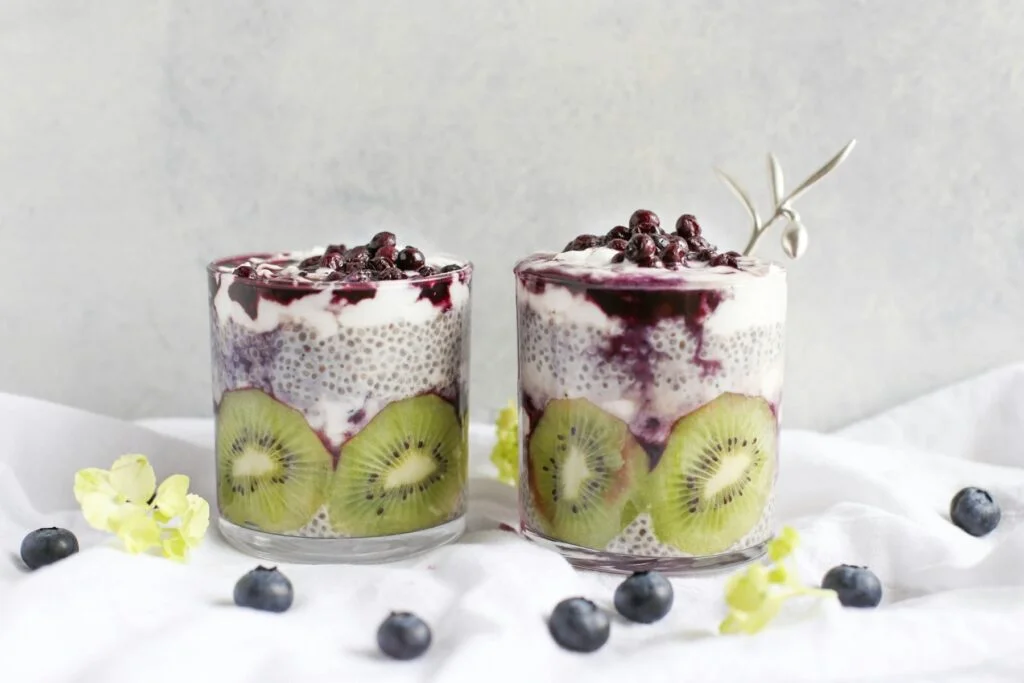
Easy chia pudding recipe
Serves 1. Ready in 2 hours, or make it the night before.
- Put 2 tablespoons (about 25g) of chia seeds in a jar or bowl.
- Add 150ml of milk or a plant drink, a few drops of vanilla and, if you like, 1 teaspoon of maple syrup or honey.
- Stir well, wait 5 minutes, then stir again to break up any clumps.
- Cover and chill for at least 2 hours, or overnight, until thick.
- Top with berries, sliced banana, a spoon of yoghurt or a few pumpkin seeds.
Chocolate version: stir 1 to 2 teaspoons of cacao powder into the milk first. Too thick? Add a splash more milk. Too runny? Add a teaspoon more chia and wait 10 minutes. Eat within 2 days.
Chia seeds vs flaxseed
Both are excellent. Per 15g, from the same USDA database:
| Per 15g | Chia seeds | Flaxseed (linseed) |
|---|---|---|
| Calories | 73 kcal | 80 kcal |
| Fibre | 5.2g | 4.1g |
| ALA omega-3 | 2.7g | 3.4g |
| Protein | 2.5g | 2.7g |
| Calcium | 95mg | 38mg |
| Magnesium | 50mg | 59mg |
| Gel when wet | Very thick | Thin |
Chia wins on fibre and calcium and makes a much thicker gel: in the Canadian study it was about 20 times more viscous than flax, which may explain the bigger effect on blood sugar and appetite. Flax has a little more omega-3 and is the seed the NHS mentions for constipation. Use whichever you’ll actually eat, or mix them.
Chia seeds side effects and who should be careful
- Wind, bloating and cramps. The usual cause is adding lots of fibre fast. Build up slowly and drink more. See magnesium for bloating for other common causes.
- Choking or blockage. Rare, and linked to eating seeds dry then drinking. Soak them first, especially if you have swallowing problems.
- Bowel conditions. If you have Crohn’s disease or ulcerative colitis, check with your IBD team before adding lots of fibre, particularly during a flare.
- Medicines. Because trials suggest chia can lower blood pressure and blunt blood sugar rises, talk to your GP or pharmacist before eating it daily if you take blood pressure or diabetes medicines. Patient.info also advises checking first if you take blood thinners.
- Allergy. Chia allergy is rare, but case reports include skin reactions and anaphylaxis, and there may be cross-reactivity with sesame. Call 999 if your lips, mouth, tongue or throat suddenly swell or you struggle to breathe.
Where our range fits
Food comes first. If you’d like more magnesium than a spoonful of chia gives, our Magnesium Glycinate Sleep Complex is a berry-flavoured evening drink with magnesium bisglycinate and citrate (148mg magnesium per serving), glycine and L-theanine. Magnesium contributes to a reduction of tiredness and fatigue.
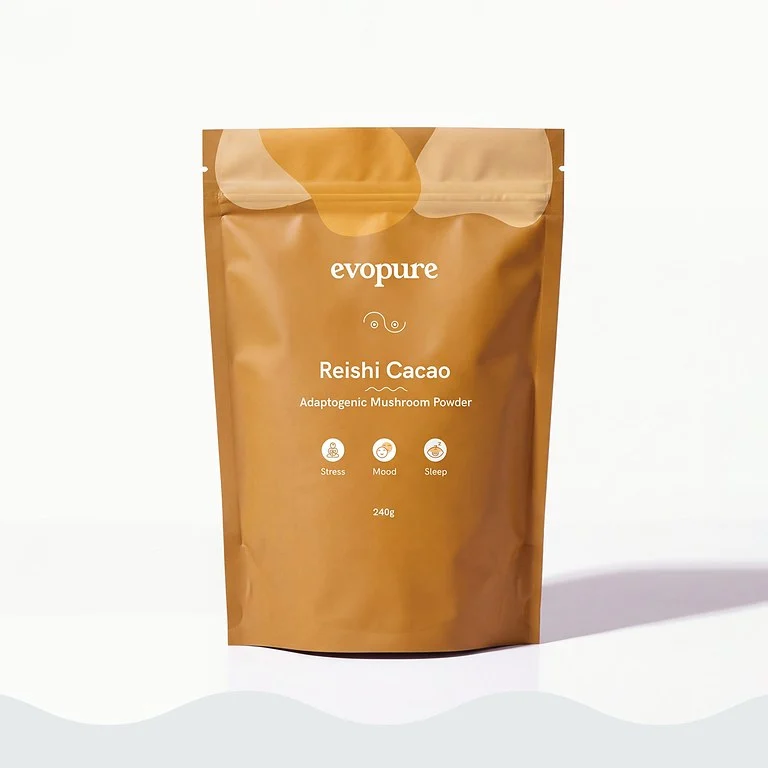
For a chocolate chia pudding with a difference, stir a spoonful of our Reishi Mushroom Adaptogenic Complex into the milk. It’s a reishi hot chocolate powder made with reishi mushroom extract, cacao, maca and coconut milk powder. Cacao naturally contains a little caffeine. More ideas in healthy hot chocolate.
Both are vegan, made in the UK and for adults only. We don’t recommend our products during pregnancy or breastfeeding.
Related guides
- Looking for another nutrient-rich food? See the health benefits of avocado.
- For the full picture on the other seed, see our guide to flaxseed (linseed) benefits, including why it is best eaten ground.
- Spirulina benefits, another popular superfood checked against the evidence.
FAQs
How much chia should I eat a day?
There’s no official amount, but 1 to 2 tablespoons (15 to 25g) is sensible for most adults. That gives 5 to 9g of fibre and at least 2.7g of ALA omega-3. Start smaller if you don’t usually eat much fibre.
Do chia seeds need to be soaked?
It’s best to soak them for at least 10 minutes or eat them in something wet, like porridge or yoghurt. Never swallow a spoonful of dry seeds and then drink water: in one reported case they swelled and blocked a man’s food pipe.
Are chia seeds good for constipation?
They’re very high in fibre, and the NHS advises gradually increasing fibre and drinking plenty of fluids for constipation. But chia itself hasn’t been tested in constipation trials. Build up slowly to avoid wind and bloating.
Do chia seeds help you lose weight?
Not much on their own. Most trials and a 2025 meta-analysis found no significant effect on weight. They’re filling, so they can help as a swap for higher-sugar snacks.
Is chia seed water good for you?
It’s a simple way to get fibre and fluid, but there’s no research on the drink itself and it doesn’t detox anything. Let the seeds gel fully for 10 to 15 minutes and start with a teaspoon.
Which is better, chia seeds or flaxseed?
Both are good. Per 15g, chia has more fibre and calcium and forms a thicker gel, while flaxseed has slightly more ALA omega-3. Use whichever you will eat regularly, or mix them.
Can you eat chia seeds every day?
Yes, for most adults 1 to 2 tablespoons a day is fine as part of a balanced diet. Check with your GP or pharmacist first if you take blood pressure, diabetes or blood-thinning medicines.
Sources
- US Department of Agriculture. FoodData Central (SR Legacy entries 170554 chia seeds, dried; 169414 flaxseed).
- NHS. How to get more fibre into your diet, Calcium, Vitamins and minerals: others (magnesium), Iron, Constipation and Food allergy.
- DHSC. Great Britain nutrition and health claims register. Retained Regulation (EU) No 1169/2011. Annex XIII: reference intakes. Food Standards Agency. Novel foods authorisation guidance.
- Teoh SL et al (2018). Clinical evidence on dietary supplementation with chia seed (Salvia hispanica L.): a systematic review and meta-analysis. Nutrition Reviews.
- TaghipourSheshdeh F et al (2025). The effect of chia seed on blood pressure, body composition, and glycemic control: a GRADE-assessed systematic review and dose-response meta-analysis. Nutrition Reviews.
- Silva LA et al (2021). Chia seed (Salvia hispanica L.) consumption and lipid profile: a systematic review and meta-analysis. Al-Younis ZK et al (2025). A critical review of the health benefits associated with chia seeds.
- Vuksan V et al (2017). Comparison of flax and Salba-chia seeds on postprandial glycemia and satiety in healthy individuals. Vuksan V et al (2017). Salba-chia in the treatment of overweight and obese patients with type 2 diabetes. Nieman DC et al (2009). Chia seed does not promote weight loss or alter disease risk factors in overweight adults.
- Simmelink A et al (2017). Watch it grow: esophageal impaction with chia seeds. Case Reports in Internal Medicine.
- Porr C et al (2026). Chia seed allergy: emerging clinical evidence, molecular allergens, and the unresolved question of cross-reactivity. Nutrients.
- Cleveland Clinic. Does TikTok’s “internal shower” drink work? Patient.info. 9 benefits of chia seeds and when they’re not safe.
This guide is general information, not medical advice. If you have swallowing problems, a bowel condition, high blood pressure, diabetes or a food allergy, or take regular medicines, speak to your GP or pharmacist. Evopure makes the Magnesium Glycinate Sleep Complex and the Reishi Mushroom Adaptogenic Complex. We don’t sell chia seeds.