Last updated: November 2026
Only a few foods contain much vitamin D. The best are oily fish such as salmon, mackerel, herring and sardines, then egg yolks, red meat, liver and fortified foods like some cereals, fat spreads and plant drinks. It is hard to reach 10 micrograms a day from food alone, so the NHS advises a supplement from October to March.
Below: micrograms per portion from UK food data, vegan options, a sample day and where a supplement fits. Checked November 2026.
Which foods are highest in vitamin D?
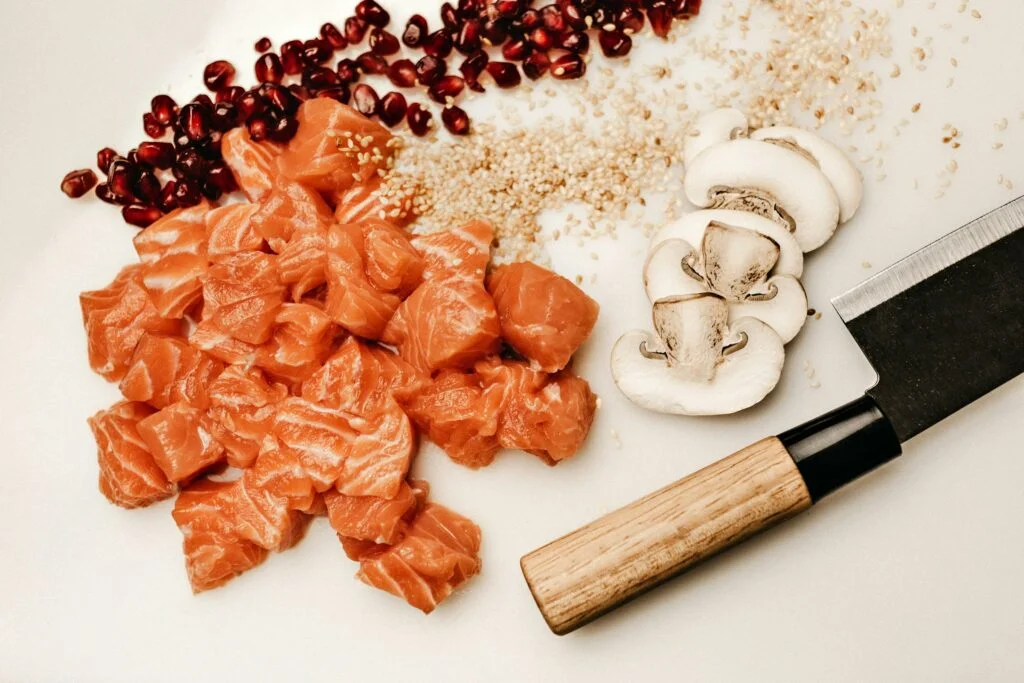
Oily fish is the richest everyday food by far: one 140g portion of salmon or grilled mackerel gives about a full day’s 10 micrograms. Eggs come next, mostly in the yolk. Figures from McCance and Widdowson’s The Composition of Foods, the UK’s official food data, as published by the British Nutrition Foundation.
| Food | Portion | Vitamin D | % of 10µg a day |
|---|---|---|---|
| Red salmon, canned | 140g | 15.3µg | 153% |
| Mackerel, grilled | 140g | 11.9µg | 119% |
| Salmon, baked | 140g | 10.2µg | 102% |
| Mackerel, canned | 140g | 9.2µg | 92% |
| Sardines, canned | 140g | 4.6µg | 46% |
| Eggs, scrambled | 2 eggs (120g) | 3.4µg | 34% |
| UV-treated mushrooms | 80g | 3.2µg | 32% |
| Egg, boiled | 1 egg (50g) | 1.6µg | 16% |
| Tuna, canned | 140g | 1.5µg | 15% |
Herring is another strong source: the British Heart Foundation puts grilled herring at about 16 micrograms per 100g. Canned tuna is much lower.
The NHS advises at least 2 portions of fish a week, including 1 of oily fish, with a portion around 140g. Oily fish also brings omega-3 fats; see our omega-3 guide for how they compare with supplements.
Meat, liver, dairy and fortified foods
These foods help, but each gives only a small share of the day’s 10 micrograms.
| Food | Portion | Vitamin D | % of 10µg a day |
|---|---|---|---|
| Fortified bran flakes | 30g | 1.4µg | 14% |
| Pork, roast | 90g | 0.9µg | 9% |
| Fat spread (polyunsaturated) | 10g | 0.8µg | 8% |
| Beef mince, lean, stewed | 100g | 0.6µg | 6% |
| Lamb, roast | 90g | 0.5µg | 5% |
| Calf’s liver, fried | 100g | 0.3µg | 3% |
| Chicken breast | 100g | 0.2µg | 2% |
| Butter | 10g | 0.1µg | 1% |
Liver is lower than most people expect. The NHS lists it as a source, but a portion gives well under 1 microgram. It is far richer in vitamin A, which is why the NHS says not to eat liver or liver products such as pâté more than once a week (see who should be careful).
Milk isn’t a good source in the UK. The NHS says cows’ milk is generally not fortified here, unlike in some other countries. Fortified breakfast cereals, fat spreads and some yoghurts are, but the amount varies a lot by brand, so read the nutrition panel for the micrograms per serving.
See also iron-rich foods, foods high in magnesium and calcium, which works with vitamin D for bones.
Do any fruits or vegetables contain vitamin D?
No fruit or vegetable naturally contains a useful amount of vitamin D. The one exception is mushrooms. Like your skin, mushrooms make vitamin D when they are exposed to ultraviolet light, either sunlight or a UV lamp.
Some UK supermarkets sell these as vitamin D mushrooms. A 2018 review found UV-exposed mushrooms eaten before their best-before date are likely to keep more than 10 micrograms per 100g, though levels fall with storage and cooking. Ordinary mushrooms contain very little, so check the pack.
Some drinks, such as unsweetened soya drinks, have vitamin D added; the label will say so.
Vitamin D foods for vegans and vegetarians
Without fish and meat, the choice is short:
- fortified fat spreads and breakfast cereals (NHS)
- unsweetened soya drinks with vitamin D added (NHS); check other plant drinks’ labels
- UV-treated mushrooms, sold as vitamin D mushrooms
Vegetarians can add eggs: two scrambled eggs give about a third of the day’s amount. The NHS also says to check the label that the vitamin D isn’t of animal origin: most D3 is made from lanolin in sheep’s wool, while D2 and vegan D3 (from lichen or algae) are plant-based. A 2012 meta-analysis found D3 raised blood levels more than D2 in larger, less frequent doses, with less difference on daily doses. More in vitamin D vs D3.
Can you get enough vitamin D from food alone?
Most people in the UK don’t. The British Heart Foundation puts the average UK intake from food at around 2 to 3 micrograms a day, against the 10 micrograms the NHS says adults need. Here is how a fairly good day adds up without oily fish:
- breakfast: fortified bran flakes (1.4µg)
- lunch: two scrambled eggs on toast with spread (3.4µg + 0.8µg)
- dinner: roast pork (0.9µg)
That’s 6.5 micrograms, about two thirds of the target. Salmon or mackerel for dinner takes you past 10, but few people eat oily fish daily.
So the NHS says everyone should consider a daily 10 microgram supplement between October and early March, when the UK sun is too weak for your skin to make vitamin D, and all year if you are rarely outdoors, usually cover most of your skin or have dark skin. See vitamin D in winter for the full NHS advice and feeling tired in winter for other causes of low energy.
The NHS says you cannot overdose on vitamin D from sunlight. The risk comes from taking high-dose supplements for a long time, which can raise calcium in the blood, so the NHS says not to take more than 100 micrograms (4,000 IU) a day. See too much vitamin D.
Which vitamin D supplement fits your diet?
For most people the simple choice is a plain vitamin D3 tablet or spray giving 10 micrograms (400 IU) a day: cheap, easy to find and all the NHS advice asks for. Pick vegan D3 or D2 if you avoid animal products. Our best vitamin D supplement UK guide compares the options, and the best time to take vitamin D covers morning or night.
If you already take CBD oil, you can cover both in one product.
Our pick
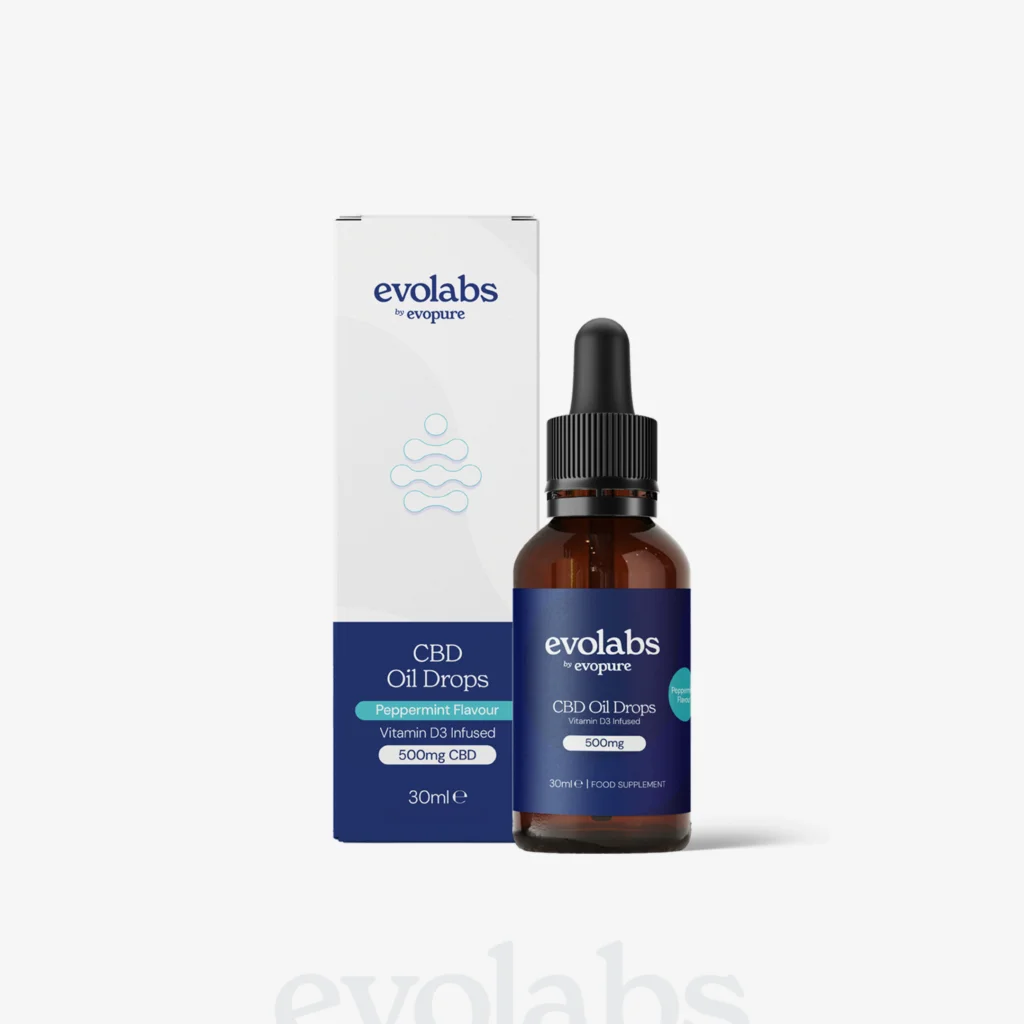
Mint CBD Oil With Vitamin D3 · Evolabs
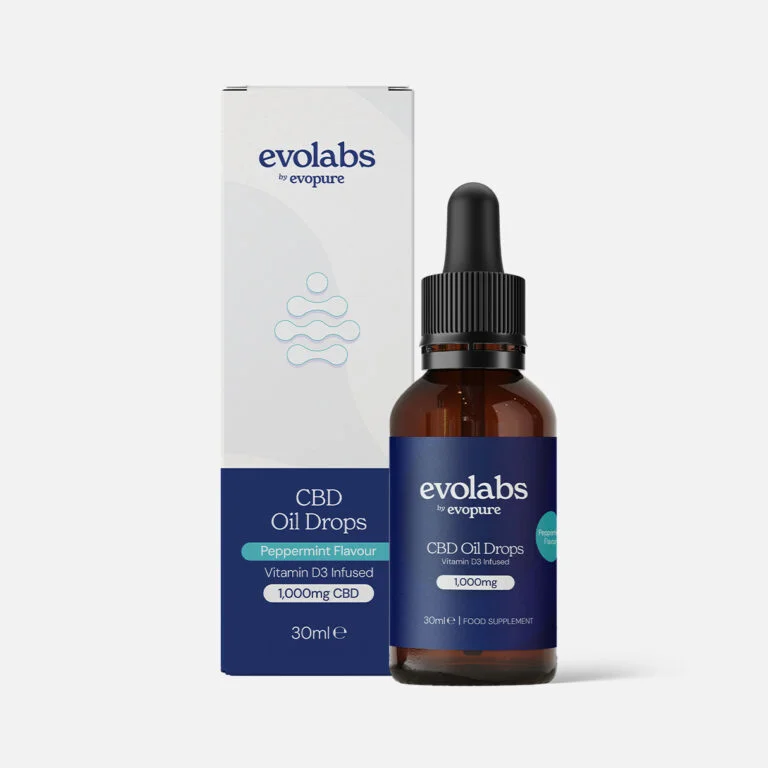
for adults who already take CBD, Evopure’s Mint CBD Oil + Vit D3 (Evolabs, 1,000mg, 30ml) gives 10µg vegan vitamin D3 (algae-based, 200% NRV) and 11.7mg CBD in each half pipette. Vitamin D contributes to the normal function of the immune system. For adults 18+ only; not for pregnancy or breastfeeding. If you take any regular medicines, check with your GP or pharmacist first. You don’t need a separate vitamin D tablet as well.
Add Mint CBD Oil + Vit D3 1,000mg to bag
Vegan and made in the UK from US-grown hemp. Free UK delivery over £45, 14-day returns on unopened items.
Subscribe from £13.49One-off from £17.99
View productThe Mint oil is on the FSA public list linked to a validated application, with CBD batch reports on our lab testing page. The FSA advises healthy adults to take no more than 10mg of CBD a day: on this 1,000mg bottle, about 0.3ml gives 10mg of CBD and about 8.5µg of D3. See our CBD dosage guide and why our Mint oil uses algae D3.
The FSA’s 10mg a day figure is precautionary advice rather than a legal limit, set while longer-term safety research continues. At Evopure we think it is a very cautious figure, and many adults use more. If you go above it, increase slowly, and check with your GP or pharmacist first if you take any medication.
For a winter routine without CBD, the Magnesium Glycinate Sleep Complex gives 290mg magnesium (77% NRV) per 4.75g serving, and magnesium contributes to a reduction of tiredness and fatigue (see magnesium and vitamin D). The Reishi Mushroom Adaptogenic Complex is a reishi hot chocolate that contains a little natural caffeine from cacao. Both are vegan and made in the UK. We don’t recommend our products during pregnancy or breastfeeding.
Who should be careful with vitamin D foods?
- Pregnancy: avoid liver and liver products such as pâté. The NHS says their high vitamin A levels can harm your baby. Women who are pregnant, breastfeeding or planning a pregnancy should eat no more than 2 portions of oily fish a week. Fish liver oil supplements are also high in vitamin A, so ask your midwife or pharmacist before taking one.
- After the menopause, and older men: the NHS advises no more than 1.5mg of vitamin A a day from food and supplements, because of the link with bone health. That means liver no more than once a week and care with fish liver oils.
- Medical conditions: the NHS says some people have medical conditions that mean they may not be able to safely take as much vitamin D. If you have a long-term condition or take regular medicines, ask your GP or pharmacist before starting a supplement.
iBone pain, muscle weakness or tiredness that won’t lift? See your GP, and read vitamin D deficiency symptoms. For winter health, see how to support your immune system and our winter wellness guide.
Sources 9
- NHS. Vitamin D.
- British Nutrition Foundation. Vital vitamin D! (values from McCance and Widdowson’s The Composition of Foods, Seventh Summary Edition).
- British Heart Foundation. Foods high in vitamin D.
- NHS. The vegan diet.
- NHS. Fish and shellfish.
- NHS. Vitamin A and foods to avoid in pregnancy.
- Cardwell G and others (2018). A review of mushrooms as a potential source of dietary vitamin D. Nutrients.
- Tripkovic L and others (2012). Comparison of vitamin D2 and vitamin D3 supplementation in raising serum 25-hydroxyvitamin D status. Am J Clin Nutr.
- Food Standards Agency. Cannabidiol (CBD) guidance.
General information, not medical advice. Evopure makes the Mint CBD Oil + Vit D3 (Evolabs), Magnesium Glycinate Sleep Complex and Reishi Mushroom Adaptogenic Complex, which are food supplements. Spotted something out of date? Email support@evopure.co.uk.