Last updated: October 2026
Most lower back pain is a muscle or ligament strain rather than damage to the spine, and it usually improves within a few weeks. The NHS advice is to keep moving, use heat or ice, take pharmacy painkillers if needed and try gentle stretches. Get urgent help for numbness around your genitals or bottom, or new bladder or bowel problems.
Below: causes, how long it lasts, what the evidence says, a 5-minute stretch routine, desk and sleep tips, red flags and when to see a GP or physio.
Need help now? Call 999 or go to A&E if back pain comes with numbness around your genitals or bottom, new bladder or bowel problems, or weakness or numbness in both legs. See all the red flags.
Common causes of lower back pain
The NHS says it’s often not clear what causes back pain. A review in The Lancet calls this non-specific low back pain: there is no known physical cause, and it often settles without much formal medical care. It is very common, affecting an estimated 619 million people worldwide in 2020, and it is the leading cause of years lived with disability.
| Cause | What it often feels like | What to do |
|---|---|---|
| Muscle or ligament strain (non-specific back pain) | Aching or stiffness, sometimes after lifting, an awkward movement or an unusually active day | Keep moving, heat or ice, pharmacy painkillers |
| Slipped disc or sciatica (an irritated nerve) | Pain, tingling or numbness down the back of one leg, sometimes to the foot. See sciatica. | Same self-care; GP if not improving or you have weakness |
| Period pain | Tummy cramps that can spread to the back and thighs | GP if very painful or new |
| Pregnancy | Common, as ligaments soften and strain the lower back and pelvis | Midwife or GP (see below) |
| Kidney infection | Side or lower back pain with a fever, shivering or pain when peeing | Urgent GP or NHS 111 |
| Ankylosing spondylitis (inflammatory back pain) | Back pain and stiffness building over months, often with tiredness or sore, swollen joints | GP |
| Rare serious causes (fracture, infection, cancer) | Pain after a serious accident, with weight loss or feeling unwell, or worse at night | See the red flags |
Back pain or kidney pain?
Kidney infection pain is felt in your side, lower back or just under the ribs, so it is easy to confuse with back pain. The difference is what comes with it. The NHS lists:
- a high temperature, or feeling hot, cold or shivery
- pain or stinging when you pee, or needing to pee more often
- dark or cloudy pee, or blood in your pee
- feeling or being sick
Back pain from a strain doesn’t come with a fever or pee symptoms. If you think you have a kidney infection, ask for an urgent GP appointment or contact NHS 111. Call 999 if someone is confused, very drowsy or has trouble speaking.
How long does lower back pain last?
The NHS says back pain usually improves within a few weeks, but it can sometimes last longer or keep coming back. Research backs this up. A meta-analysis of 33 groups of patients (11,166 people) found that, in people with new (acute) low back pain, the average pain score fell from 52 out of 100 at the start to 23 at six weeks and 6 at one year. Most of the improvement happened in the first six weeks, then progress slowed.
Pain that lasts three months or more is called chronic (long-term) back pain. It is still rarely a sign of serious damage, but it’s worth seeing a GP or physiotherapist for an exercise plan and other support.
What to do in the first few days
- Keep moving. The NHS advice is to stay as active as you can and avoid long periods in bed. Short, frequent walks are a good start; our guide to Japanese walking has an easy interval plan once you feel ready.
- Use heat or ice. The NHS suggests a heat pack or an ice pack wrapped in a tea towel. A warm bath is another option; see our Epsom salt bath guide.
- Ask a pharmacist about painkillers. The NHS says anti-inflammatories such as ibuprofen can help but are not suitable for everyone, and that paracetamol on its own is not recommended for back pain, though it may be used with another painkiller. Check with a pharmacist which is right for you, especially if you take other medicines.
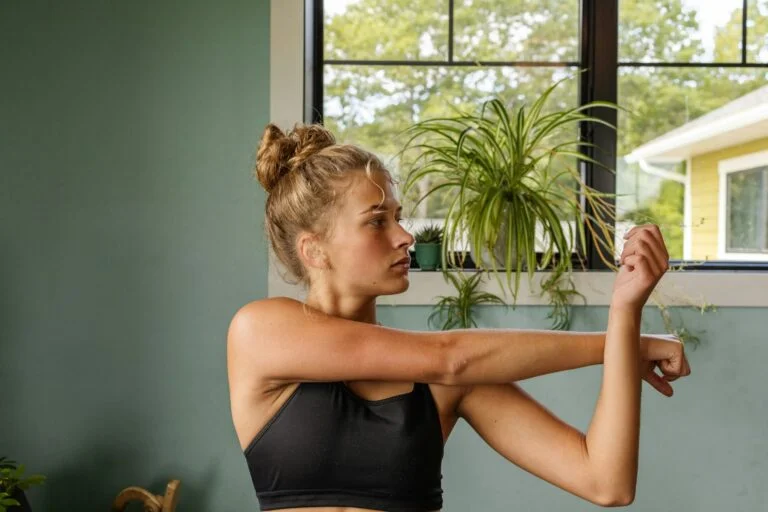
- Try gentle stretches such as the routine below, and stop any that make your pain worse.
- Keep working if you can. NICE guidance encourages people to continue with normal activities and supports a return to work.
What helps vs what the evidence says
NICE guideline NG59 (updated July 2026) sets out how NHS clinicians in England manage low back pain. Here is how common options compare with it and with Cochrane reviews.
| Option | What NICE NG59 says | What the research shows |
|---|---|---|
| Staying active vs bed rest | Encourage people to continue normal activities | Small benefits for pain and function from staying active rather than resting in bed (Cochrane) |
| Exercise | Consider a group exercise programme, matched to your needs and preferences | Probably reduces pain in long-term back pain compared with no treatment or usual care (Cochrane, 249 trials) |
| Manual therapy (manipulation, mobilisation, massage) | Consider, but only as part of a package that includes exercise | Not recommended on its own |
| Heat | Not covered | Heat wraps give a small, short-term reduction in pain (moderate evidence); too little evidence on cold (Cochrane) |
| Psychological therapies such as CBT | Recommendations removed in July 2026 as possibly out of date | The NHS still lists CBT as an option for long-lasting back pain |
| Paracetamol alone | Do not offer for low back pain | No better than placebo for new back pain (Cochrane, high-quality evidence) |
| Anti-inflammatories (NSAIDs) | Consider, at the lowest effective dose for the shortest time | Not suitable for everyone: ask a pharmacist |
| Opioids | Do not routinely offer for new (acute) back pain; do not offer for chronic back pain | Overuse is a widespread problem (Lancet review) |
| Scans (X-ray, MRI) | Do not routinely offer imaging outside specialist settings | Overuse of imaging is a widespread problem |
| Belts, corsets, acupuncture, TENS, ultrasound | Do not offer | Not recommended by NICE |
The message is consistent: movement and exercise you can stick with come first, and scans, strong painkillers and gadgets add little for most people. If you are wondering about CBD, see what the CBD and pain trials actually show. CBD isn’t a treatment for back pain.
A gentle 5-minute stretch routine
These are standard back mobility exercises from NHS physiotherapy leaflets. Move slowly and only as far as feels comfortable; stop if your pain gets worse. If you’re pregnant, recovering from surgery or your pain is severe, check with your midwife, GP or physio first.
- Pelvic tilts (1 minute). Lie on your back with your knees bent and feet flat. Gently flatten your lower back into the floor by tilting your pelvis, then ease into a small arch. Rock slowly between the two, about 10 times.
- Knee rolls (1 minute). Knees together, slowly roll them to one side, keeping your shoulders on the floor, then to the other side. Repeat 8 to 10 times each way.
- Knee hugs (1 minute). Hug one or both knees towards your chest for 10 to 20 seconds. Repeat 3 times.
- Bridges (1 minute). Flatten your back, then lift your hips off the floor. Hold for a few seconds, lower slowly, and repeat 8 to 10 times.
- Press-up on elbows (1 minute). Lie on your front and prop yourself up on your forearms, tummy on the floor. Hold for 10 to 20 seconds and repeat 3 to 5 times. Skip it if it increases pain down your leg.
Finish with a short walk. Doing it daily matters more than doing it perfectly. The NHS also mentions yoga and pilates, and somatic exercises are another gentle option. For rest days and food, see muscle recovery.
Lower back pain when sitting: desk set-up
Sitting for a long time doesn’t damage your spine, but it can make sore, stiff tissues ache more. NHS physiotherapists in Cambridge point out there is no clear evidence that “bad” posture causes back pain. Changing position often matters more than finding a perfect one.
The Health and Safety Executive (HSE) desk set-up guidance:
- Chair: seat height so your thighs are supported front and back, with the seat back supporting your lower back. A small cushion can help.
- Knees: leave a gap of 2 to 3cm between the front of the seat and the back of your knees.
- Screen: top of the screen level with your eyes, about an arm’s length away, straight in front of you so you don’t twist.
- Keyboard and mouse: keyboard just below elbow height, mouse in line with your elbow, shoulders relaxed.
- Laptops: for long spells, use a separate keyboard, mouse and a riser so the screen is higher.
- Breaks: short and frequent beats long and occasional: 5 to 10 minutes every hour is better than 20 minutes every 2 hours.
Working from a sofa or kitchen chair? See our guide to working from home and staying well for routines that build in movement.
Sleeping position and mattresses
Back pain and poor sleep often go together. NHS physiotherapy advice for a more comfortable night:
- On your side: put a pillow between your knees to keep your spine in a neutral position.
- On your back: put a small pillow under your knees to let your back muscles relax.
Our full guide to the best sleeping position compares side, back and front sleeping.
What about mattresses? The old advice to sleep on a very hard mattress isn’t backed by evidence. In a Spanish trial of 313 adults with long-term low back pain, people given a medium-firm mattress had better results for pain in bed, pain on rising and disability after 90 days than those given a firm one. A 2021 review of 39 studies reached a similar conclusion, favouring medium-firm mattresses for comfort, sleep quality and spinal alignment. In practice: avoid a mattress that sags, and choose one that feels supportive but comfortable to you.
For wider sleep help, see 12 sleep hygiene habits that work.
Stress and back pain
Stress doesn’t mean your pain is “in your head”, but mind and body are linked. A systematic review of studies that followed people with low back pain over time found that psychological distress and low mood were linked with a higher risk of the pain becoming long-term.
Things that may help you cope:
- Learn to spot your own stress symptoms, including tense shoulders, clenched jaw and poor sleep.
- Try progressive muscle relaxation or a body scan meditation before bed.
- Keep up gentle activity and time outdoors, even on sore days.
- If stress, low mood or worry about your back is taking over, talk to your GP about support such as talking therapies.
Red flags: when lower back pain is urgent
Call 999 or go to A&E if you have back pain and:
- numbness or loss of feeling around your genitals or bottom (anus)
- new difficulty peeing, or losing control of your bladder or bowels
- pain, tingling, weakness or numbness in both legs
- changes in genital sensation, erections or orgasm
- chest pain
- pain that started after a serious accident, such as a car crash or fall
Do not drive yourself. Ask someone to drive you, or call 999 for an ambulance.
The first four can be signs of cauda equina syndrome, where the nerves at the bottom of the spine are squashed. It is rare, affecting about 1 to 3 people in every 100,000, but it needs emergency treatment to protect bladder, bowel and sexual function.
Call NHS 111 or ask for an urgent GP appointment if you have back pain and:
- you feel hot, cold, shivery or generally unwell
- the pain is sudden and severe, or getting worse quickly
When to see a GP or physio
The NHS suggests seeing a GP if:
- your back pain hasn’t improved after a few weeks of treating it at home
- it stops you doing day-to-day activities
- you’re worried about it or struggling to cope
- you’ve lost weight without trying
- there’s a lump or swelling, or your back has changed shape
- it doesn’t improve with rest or is worse at night
- it gets worse when you sneeze, cough or poo
Physiotherapy without a GP: in many areas you can refer yourself to NHS community musculoskeletal (MSK) services, which include physiotherapy. Check your local NHS website or ask your GP surgery.
What a GP may offer: prescribed painkillers, group exercise, physiotherapy, manual therapy, CBT, or for some long-term pain, a nerve-sealing procedure. Scans are rarely needed.
Back pain in pregnancy: it is common, but speak to your midwife or GP if it is severe. Contact them urgently if you’re in your second or third trimester (it can be a sign of early labour), or have a fever, bleeding, pain when peeing or pain under your ribs. Call 999 if you lose feeling in your legs, bottom or genitals.
Where our products fit (honestly)
No supplement or balm is a treatment for back pain, and CBD isn’t a treatment for back pain. Nothing replaces moving more and proper medical advice. Here’s how our products can sit alongside a healthy routine.
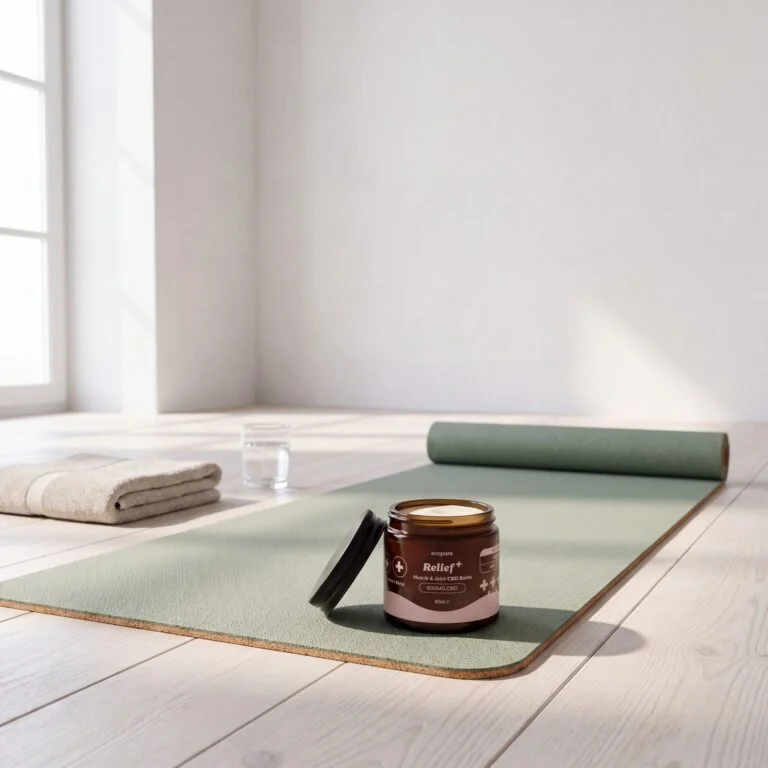
Our CBD Balm, Muscle and Joint Support is a massage balm made with broad spectrum CBD, peppermint, eucalyptus and juniper. It feels cooling and non-greasy, and some people use it as part of a massage routine. Read more in our CBD balm guide.
Our Magnesium Glycinate Sleep Complex is a caffeine-free evening drink with magnesium bisglycinate and citrate, glycine and L-theanine. Magnesium contributes to normal muscle function. For more on magnesium and muscles, see magnesium for muscle pain.
If you also take CBD by mouth: the FSA’s 10mg a day figure is precautionary advice rather than a legal limit, set while longer-term safety research continues. At Evopure we think it is a very cautious figure, and many adults use more. If you go above it, increase slowly, and check with your GP or pharmacist first if you take any medication.
Our products are for adults (18+) only. We don’t recommend our products during pregnancy or breastfeeding. If you take prescribed medicines, check with your pharmacist before adding a supplement.
FAQs
How long does lower back pain last?
Most lower back pain improves within a few weeks, with most of the improvement in the first six weeks. See a GP if it isn’t improving after a few weeks of self-care.
Is it better to rest or keep moving with lower back pain?
Keep moving. The NHS advises staying as active as you can and avoiding long periods in bed.
Should I use heat or ice for lower back pain?
Either, wrapped in a tea towel. The evidence is better for heat, which gives a small, short-term reduction in pain.
How do I know if lower back pain is serious?
Call 999 or go to A&E if you have numbness around your genitals or bottom, new bladder or bowel problems, or weakness or numbness in both legs. Call NHS 111 if you feel feverish or unwell, or the pain is severe and getting worse quickly.
How can I tell lower back pain from kidney pain?
Kidney infection pain is in your side, lower back or just under the ribs and comes with a high temperature, shivering or pain when peeing. Muscle back pain doesn’t cause fever or pee symptoms.
Why does my lower back hurt when I sit?
Sitting still for a long time can make sore, stiff tissues ache. Support your lower back, keep your screen at eye level and get up to move every hour.
Can stress cause lower back pain?
Stress is rarely the only cause, but distress and low mood are linked with back pain becoming long-term.
Sources
- NHS. Back pain.
- NICE. Low back pain and sciatica in over 16s: assessment and management (NG59). Last updated July 2026.
- NHS. Sciatica.
- NHS. Kidney infection.
- NHS. Back pain in pregnancy.
- NHS. Period pain.
- NHS. Physiotherapy.
- Health and Safety Executive. Good posture when using DSE and Work routine and breaks.
- Cambridge University Hospitals NHS Foundation Trust. Back mobility exercises and Myth busting about posture, core stability and lifting.
- Torbay and South Devon NHS Foundation Trust. Cauda equina syndrome.
- Maher C, et al. Non-specific low back pain. Lancet, 2017. PMID 27745712.
- GBD 2021 Low Back Pain Collaborators. Global burden of low back pain, 1990 to 2020. Lancet Rheumatology, 2023. PMID 37273833.
- da C Menezes Costa L, et al. The prognosis of acute and persistent low-back pain: a meta-analysis. CMAJ, 2012. PMID 22586331.
- Dahm KT, et al. Advice to rest in bed versus advice to stay active for acute low-back pain and sciatica. Cochrane, 2010. PMID 20556780.
- Hayden JA, et al. Exercise therapy for chronic low back pain. Cochrane, 2021. PMID 34580864.
- French SD, et al. Superficial heat or cold for low back pain. Cochrane, 2006. PMID 16437495.
- Saragiotto BT, et al. Paracetamol for low back pain. Cochrane, 2016. PMID 27271789.
- Pincus T, et al. Psychological factors as predictors of chronicity in low back pain. Spine, 2002. PMID 11880847.
- Kovacs FM, et al. Effect of firmness of mattress on chronic non-specific low-back pain. Lancet, 2003. PMID 14630439.
- Caggiari G, et al. What type of mattress should be chosen to avoid back pain and improve sleep quality? J Orthop Traumatol, 2021. PMID 34878594.
This guide is general information, not medical advice. If you’re worried about back pain, speak to a GP, pharmacist or physiotherapist. Evopure makes the CBD Balm, Muscle and Joint Support and the Magnesium Glycinate Sleep Complex.