Last updated: October 2026
For most people, sleeping on your side is the best sleeping position. It helps reduce snoring and suits most back and neck problems, especially with a pillow between your knees. Back sleeping is fine if you don’t snore. Front sleeping can strain your neck and lower back. In pregnancy, from 28 weeks, go to sleep on your side.
Below: each position compared, the best position for back pain, neck pain, snoring, heartburn and pregnancy, and pillow tips.
Sleeping position s compared
| Position | Good for | Watch out for | Tip |
|---|---|---|---|
| Side | Snoring, most back pain, pregnancy, reflux | Shoulder or hip ache | Pillow between your knees; pillow fills the gap to your shoulder |
| Back | Neck and spine alignment | Snoring and sleep apnoea can be worse | Low pillow; a pillow under your knees |
| Front (stomach) | May reduce snoring | Neck twisted, lower back arched | Thin pillow or none; pillow under your hips |
The best position is ultimately the one that lets you sleep well and wake without pain. Most of us change position many times a night anyway.

Our pick
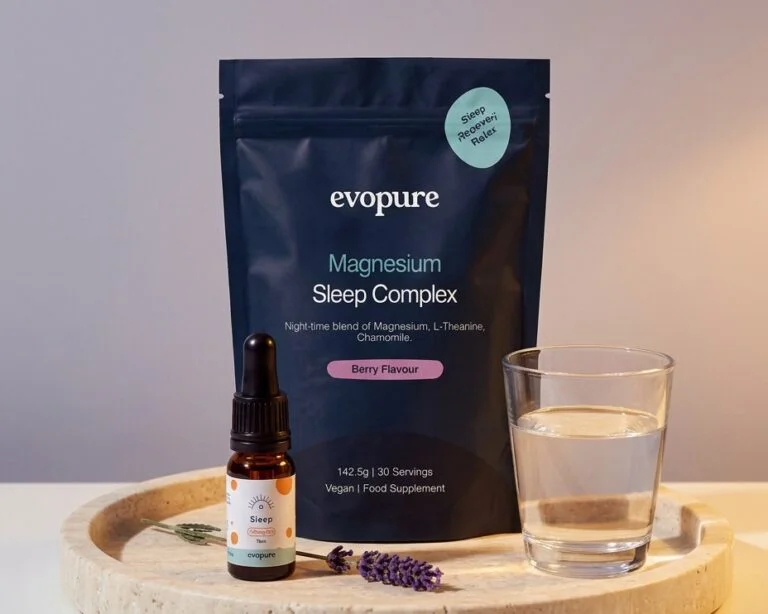
Magnesium Glycinate Sleep Complex
Magnesium Glycinate Sleep Complex is a berry drink powder with 148mg of magnesium a scoop from bisglycinate and citrate, plus glycine and L-theanine. Magnesium contributes to a reduction of tiredness and fatigue.
Add Magnesium Glycinate Sleep Complex to bag See ingredients and reviews
Vegan and made in the UK. Free UK delivery over £45, 14-day returns on unopened items.
Subscribe £22.49One-off £29.99
View productBest sleeping position for back and neck pain
Aim to keep your spine in a straight line. On your side, put a pillow between your knees so your top leg doesn’t pull your lower back round. On your back, a pillow under your knees eases pressure on your lower back. The NHS advises keeping your head level with the rest of your body, using a low, firm pillow and a firm mattress for neck pain. A 2021 study found people waking with spinal pain spent more time in twisted or awkward sleep postures than those without pain.
If you wake stiff and sore, see joint pain, magnesium and muscle aches and tension headaches. Our CBD Balm is a soothing massage balm many people use on stiff muscles before bed.
Best sleeping position for snoring
Side sleeping. On your back, your tongue and soft tissues fall back and narrow your airway. The NHS suggests sleeping on your side and even sewing a tennis ball into the back of your sleepwear to stop you rolling over. See how to stop snoring.
Best sleeping position for heartburn and reflux
Raise the head of your bed so your head and chest are higher than your stomach, as the NHS recommends. Many people also find lying on their left side helps. Avoid eating within 3 to 4 hours of bed. See is eating before bed bad?
Best sleeping position in pregnancy
From 28 weeks, go to sleep on your side, for naps too. A 2019 analysis of over 3,000 women found going to sleep on your back in late pregnancy was linked with a higher risk of stillbirth, while left and right side were equally safe. If you wake on your back, just roll back onto your side. A pregnancy pillow can help. See magnesium in pregnancy.
Tips for comfortable sleep
- Match your pillow to your position: thicker for side sleepers, medium for back, thin for front.
- Change position gradually by using pillows to stop you rolling.
- Replace an old, sagging mattress.
- Wind down well. See how to sleep better and our sleep calculator.
An evening drink can be part of a calming routine. Our Magnesium Glycinate Sleep Complex is a berry bedtime drink, and magnesium contributes to a reduction of tiredness and fatigue and to normal muscle function.
Related guides
- Waking up with a headache and neck pain.
- Side sleeping can also help if you sleep with your mouth open. See mouth breathing while sleeping.
- Waking up with numb, tingling hands? See pins and needles at night.
- If it’s your knees that keep you awake, see knee pain at night and other tips.
- Sore shoulder at night? Our shoulder pain guide explains how to sleep with it and which pillows help.
- For daytime habits that help with stiffness, see our guide to posture, including desk set-up and simple exercises.
- Sore hip at night? See hip pain at night and how to sleep for the pillow-between-the-knees position physios recommend.
- Waking with numb, tingling fingers? Read our guide to carpal tunnel syndrome and why a night splint is the first thing to try.
- Waking with a stiff upper back? See how to sleep with upper back pain.
- Leg pain from sciatica keeping you awake? See what actually helps sciatica, including the NHS exercises.
- If your pelvis or one side of your lower back aches at night, see how to sleep with SI joint pain.
- Sleeping on your back is also linked to sleep paralysis; the NHS suggests side sleeping if it’s a problem for you.
- Waking with a stiff neck or shoulders? Our guide to CBD balm in the UK covers a simple self-massage routine.
- Leg pain from sciatica keeping you awake? See what actually helps sciatica, and what the research says about CBD.
The FSA’s 10mg a day figure for CBD is precautionary advice rather than a legal limit, set while longer-term safety research continues. At Evopure we think it is a very cautious figure, and many adults use more. If you go above it, increase slowly, and check with your GP or pharmacist first if you take any medication.
Sources 5
- NHS. Snoring.
- NHS. Neck pain and stiff neck.
- NHS. Heartburn and acid reflux.
- Cronin RS et al (2019). An individual participant data meta-analysis of maternal going-to-sleep position, interactions with fetal vulnerability, and the risk of late stillbirth. EClinicalMedicine.
- Cary D et al (2021). Examining relationships between sleep posture, waking spinal symptoms and quality of sleep. PLoS One.
This guide is general information, not medical advice. Evopure makes the Magnesium Glycinate Sleep Complex and CBD Balm.