Last updated: November 2026
SI joint pain comes from the sacroiliac joints, where the base of your spine meets your pelvis. It usually causes one-sided pain low in the back or buttock, sometimes spreading into the thigh. Common causes include injury, pregnancy and arthritis. Most cases improve with staying active and physio-led exercise. See a GP if it hasn’t improved after a few weeks.
Below: symptoms, SI joint pain vs sciatica, causes, UK diagnosis, seven exercises, treatment, sleep tips and red flags. Call 999 if back pain comes with numbness around your genitals or bottom, or new bladder or bowel problems. See all the red flags.
For your exercise routine
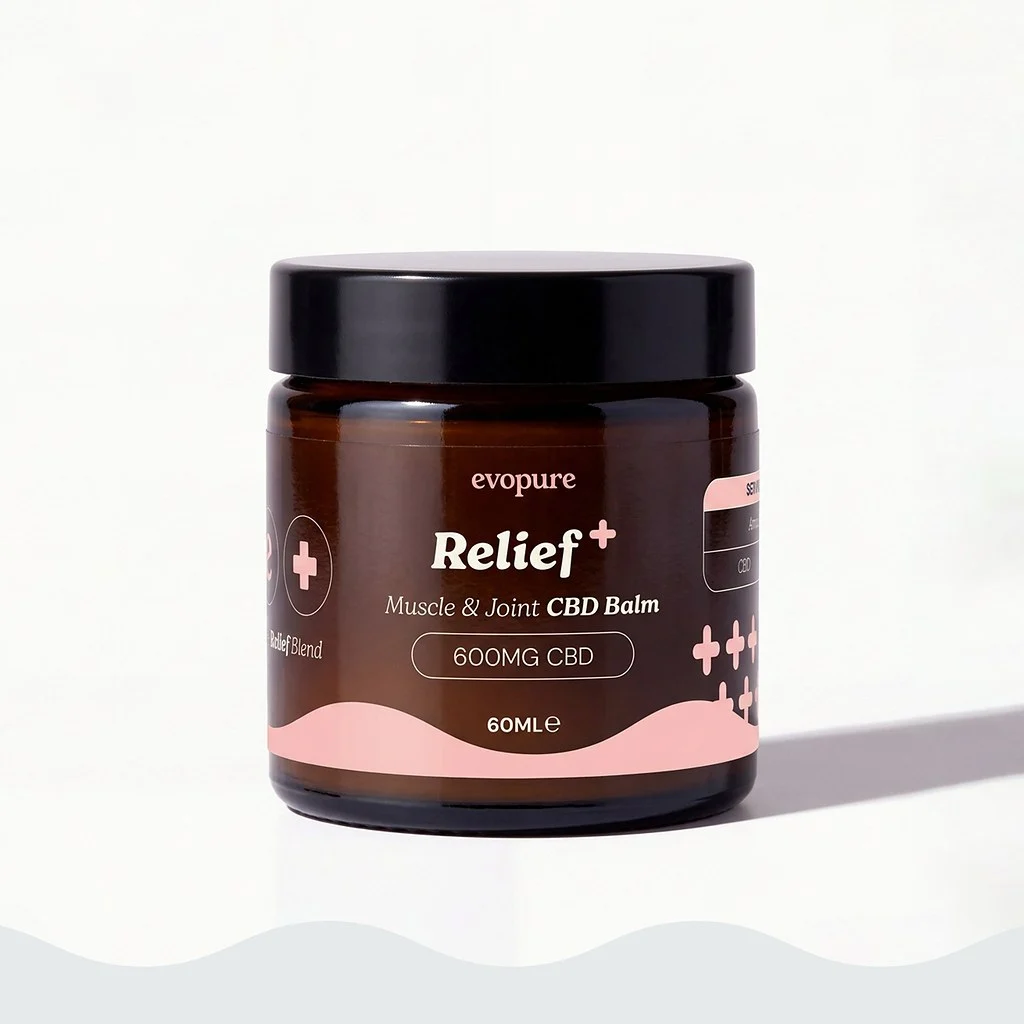
CBD Balm Muscle & Joint Support
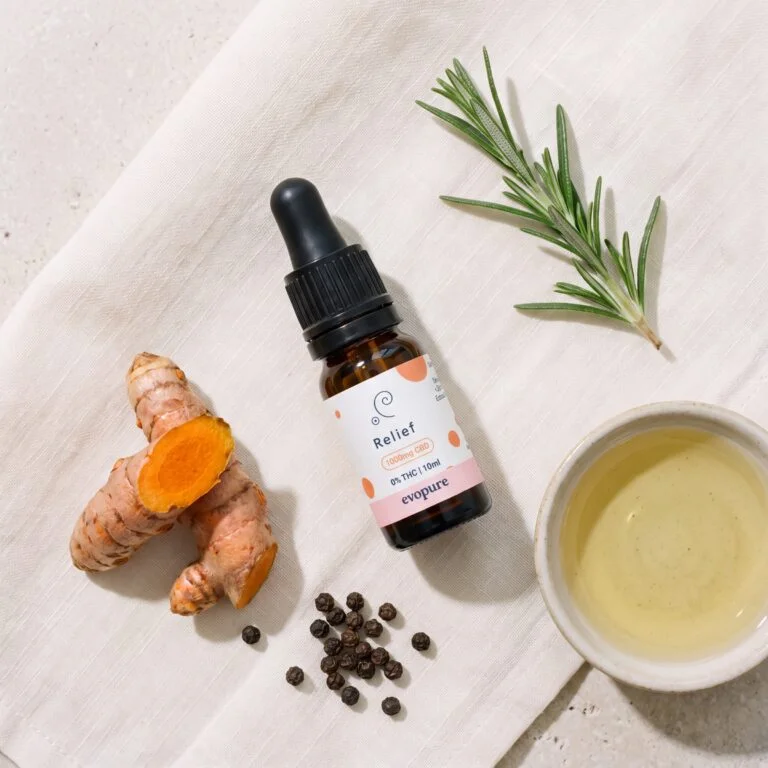
our CBD Balm, Muscle and Joint Support is a massage balm with CBD, peppermint, eucalyptus and juniper. It feels cooling and non-greasy, and some people like to work it into the lower back and buttock before or after stretching. Each 2ml serving has 20mg CBD (600mg per tub). Vegan, made in the UK, third-party lab tested and 0% THC. Adults only.
Our balm’s product description mentions wintergreen oil, so ask a pharmacist before using it if you’re allergic to aspirin or take a blood thinner. Subscribe and save 25% on your first order, then 20%. New to Evopure? Join our emails for 20% off a one-off first order. Free UK delivery over £45.
Subscribe £29.99One-off £39.99
View productSacroiliac joint pain symptoms
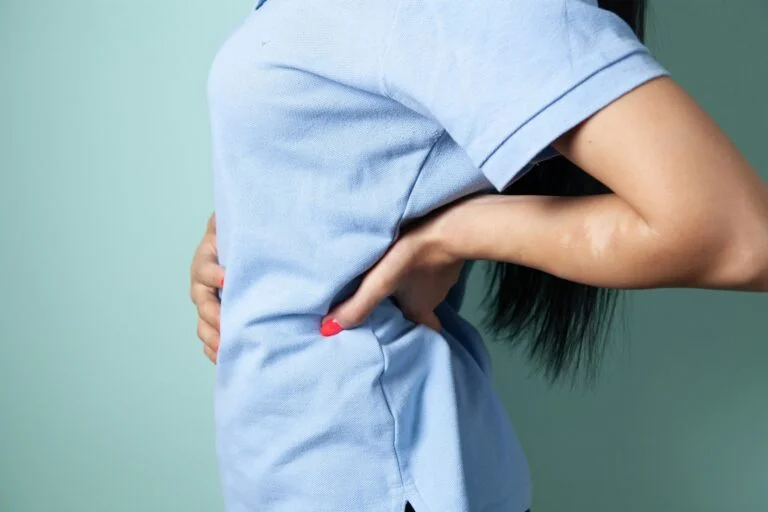
The main sacroiliac joint pain symptoms are pain on one side of the low back, over the dimple just above the buttock, which can spread into the buttock, hip, groin or back of the thigh. It often hurts more when you stand on one leg, use stairs or turn over in bed, the triggers the NHS lists for pelvic pain in pregnancy.
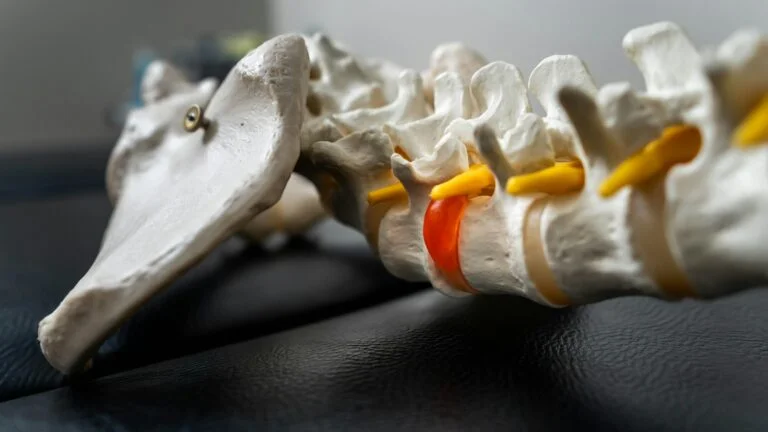
Your two sacroiliac joints join the sacrum, the triangle of bone at the base of your spine, to the pelvis. They sit under the two dimples just above your buttocks.
A 2013 research review describes the typical picture:
- Pain on one side, just below the waist, slightly off the middle of the back, over the dimple or upper buttock.
- Pain that can spread into the buttock, hip, groin or back of the thigh. The pattern varies a lot.
- A clear start more often than other back pain, such as a fall, a lift or a pregnancy.
- Pain on standing on one leg, which Harvard Health notes is often worse on the affected side.
SI joint problems are common. NICE says the SI joint is behind chronic lower back pain in 15% to 30% of people with low back pain. If your pain is more general, start with our lower back pain guide.
SI joint pain vs sciatica, back pain and hip pain
These overlap, so use this table as a guide, not a diagnosis.
| Problem | Where it usually hurts | Typical clues |
|---|---|---|
| SI joint pain | One side, over the dimple at the back of the pelvis and upper buttock; can spread to the hip, groin or thigh | Often a clear start; worse standing on one leg |
| Sciatica | Bottom and back of one leg, often down to the foot and toes | Sharp or burning pain, pins and needles, numbness or weakness; leg pain usually worse than back pain |
| General lower back pain | Across the lower back, in the middle or either side | Ache, stiffness or spasm, often after a strain; usually improves within a few weeks |
| Hip joint pain | Groin or front of the hip, or the outside of the hip | Pain walking or crossing the legs; stiffness, especially from about 45 |
| Inflammatory back pain (axial spondyloarthritis) | Lower back and around the buttocks | Starts gradually, usually aged 18 to 40; worse in the morning and at night, better with exercise, not rest |
See our guides to sciatica and hip pain. If several joints ache, read our joint pain guide.
What causes SI joint pain?
NICE lists wear and tear, injury, pregnancy, previous spinal fusion surgery and a curved spine (scoliosis) among the causes, with rarer ones such as infection, gout or a tumour.
- Injury: a fall onto the buttock, a car accident or an awkward lift.
- Pregnancy: pelvic girdle pain (PGP) can affect the joints at the back of the pelvis. The NHS says it isn’t harmful to your baby. Tell your midwife or GP if it makes moving difficult: see the NHS page on pelvic pain in pregnancy.
- Inflammatory conditions: ankylosing spondylitis and non-radiographic axial spondyloarthritis cause inflammation in the spine and the area around the buttocks. The NHS says they usually start between 18 and 40.
- Leg length and age: the 2013 review lists a difference in leg length, older age and previous spine surgery as risk factors.
How SI joint pain is diagnosed in the UK
iA GP or physio examines you. They’ll ask how it started and check your back, hips and legs. NICE’s guideline on low back pain (NG59) asks clinicians to rule out serious causes first, such as infection, cancer, injury or inflammatory disease.
Pain provocation tests. The physio stresses the joint in different positions to see if it brings on your usual pain. In a study of 48 patients, three or more positive tests out of six picked up 94% of people whose SI joint pain was confirmed by injection. If none brought on familiar pain, the joint could be ruled out.
Scans and blood tests. NICE says don’t routinely offer imaging for low back pain outside specialist services, and X-rays often can’t show whether the SI joint is to blame. If an inflammatory condition is suspected, your GP may refer you to a rheumatologist for blood tests and an MRI scan.
Diagnostic injection. In specialist pain clinics, an X-ray-guided injection of local anaesthetic into the joint is the usual way to confirm it. If your usual pain eases soon afterwards, the joint is likely to be the source, although a 2005 review notes this method isn’t perfect.
7 gentle exercises for SI joint pain
These are common physio exercises for the lower back and pelvis; the Chartered Society of Physiotherapy includes the first two in its back pain routine. Start with a few slow repetitions and build up.
- Knee-to-chest. Lie on your back, knees bent, feet flat. Bring one knee towards your chest with your hands under your thigh. Hold for up to 30 seconds, lower, and repeat with the other leg.
- Pelvic tilt. Lie on your back, knees bent. Gently draw your belly button in and flatten your lower back into the floor, then let it arch slightly. Keep breathing steadily.
- Glute bridge. Lie on your back, knees bent. Tighten your tummy and buttocks, lift your hips until they line up with your shoulders and knees, hold for 5 seconds, then lower slowly.
- Cat-cow. On hands and knees, slowly round your back towards the ceiling, then let it sag gently while you lift your head. Keep it small and smooth.
- Clamshell. Lie on your side, knees bent, feet together. Keeping your feet touching, lift your top knee a little way, then lower.
- Figure-4 stretch. Lie on your back, knees bent. Rest one ankle on the opposite knee, then draw that thigh towards you until you feel a stretch in the buttock. Hold for 20 to 30 seconds.
- Bird dog. On hands and knees, slowly stretch one arm forward and the opposite leg back, keeping your back level. Hold for a few seconds, then swap sides.
iThe pain rule: mild discomfort is fine, but stop if your pain gets worse and ask a GP or physio. If you feel worse the next morning, do less.
Sacroiliac joint pain exercises to avoid
With sacroiliac joint pain, avoid at first any exercise that brings on your usual pain, especially heavy single-leg moves such as lunges, hopping and step-ups, deep twists, wide-legged stretches and deep hip stretches such as pigeon pose. The NHS advice for pelvic pain is to keep active but avoid what makes the pain worse. A physio can help you build back up.
The NHS says walking, swimming, yoga and pilates may also help back pain. See how many steps a day and somatic exercises.
SI joint pain treatment
What you can do yourself
There’s no UK guideline for SI joint pain as a whole, so the NHS and NICE low back pain advice applies:
- Stay active and carry on with daily activities. Don’t stay in bed for long periods.
- Painkillers: the NHS suggests anti-inflammatory medicine such as ibuprofen, which isn’t suitable for everyone. Paracetamol on its own isn’t recommended for back pain. Ask a pharmacist which suits you.
- Ice or heat: an ice pack or a heat pack, each wrapped in a tea towel. Heat suits stiffness and spasm: see our hot water bottle safety guide.
- Exercise like the routine above.
What a physio or GP may offer
NICE NG59 recommends exercise programmes, and manual therapy such as manipulation or massage only alongside exercise. A 2017 review of 9 small, low to average quality studies found physio, including exercise and manipulation, reduced pain and disability. A 2025 review noted there are no internationally agreed treatment guidelines yet.
SI belts: NICE says don’t offer belts or corsets for low back pain in general. A physio may still suggest a pelvic support belt in pregnancy, as the NHS notes, or for a joint that moves too much.
Specialist options
| Treatment | What it involves | UK position |
|---|---|---|
| SI joint injection | Local anaesthetic, sometimes with steroid, guided by X-ray | Offered by NHS pain clinics to help you move more and do physio. Can briefly flare pain; repeated steroids carry risks |
| Radiofrequency denervation | Heat from a needle switches off the small nerves carrying pain from the joint | Offered by some NHS pain clinics. NICE’s back pain recommendation covers the spine’s facet joints, not the SI joint specifically |
| Minimally invasive SI joint fusion | Implants fix the joint so it can’t move | NICE says the evidence supports it with standard safeguards, for a confirmed diagnosis, when other treatment has failed |
A 2026 analysis of 18 trials (1,075 people) found radiofrequency treatments did better than steroid injections, sham procedures and conservative care, but the certainty of the evidence was low to very low. NICE recommends the iFuse fusion implant only after a positive diagnostic injection, when non-surgical treatment hasn’t worked.
How to sleep and sit with SI joint pain
NHS advice for pelvic girdle pain in pregnancy, which involves the same joints, is a sensible starting point:
- In bed: lie on your side with a pillow between your knees, so your pelvis stays level.
- Getting in and out of a car: keep your knees together.
- Standing: put equal weight on both legs, and sit down to put on socks and trousers.
- Sitting: avoid sitting or standing for long periods. Change position often and get up to move regularly.
For more, see our guides to the best sleeping position and posture and desk set-up. Tight buttock muscles? Our muscle knots guide covers self-massage.
Red flags: when to call 999 or 111
Call 999 or go to A&E if you have back pain with:
- pain, tingling, weakness or numbness in both legs
- loss of feeling around your genitals or bottom
- changes in your bladder or bowels, such as difficulty peeing, or peeing or pooing yourself
- changes in sexual feeling or function
- pain that started after a serious accident
These can be signs of cauda equina syndrome, which needs treatment in hospital. Don’t drive yourself.
iCall NHS 111 or ask for an urgent GP appointment if you feel hot, cold, shivery or generally unwell, or the pain is severe, came on suddenly or is getting worse quickly.
When to see a GP or physio
See a GP if the pain hasn’t improved after a few weeks of home treatment or is stopping your daily activities. See one too if you’ve lost weight without trying, the pain is worse at night, you’ve had cancer before, or you’re under 40 and your back is stiffest in the morning and eases with exercise, as this can point to axial spondyloarthritis.
Physio without a GP: in many areas of England you can refer yourself to NHS community musculoskeletal (MSK) services, including physiotherapy, without a diagnosis.
Pain higher up? See upper back pain.
Where our products fit (honestly)
No balm or supplement is a treatment for SI joint pain, and nothing replaces exercise and proper medical advice.
Our CBD Balm, Muscle and Joint Support is a cooling massage balm with peppermint, eucalyptus and juniper that some people use before or after stretching. It is a cosmetic, not a medicine. Read more in our CBD balm guide.
Our Magnesium Glycinate Sleep Complex is an evening drink with magnesium bisglycinate and citrate, glycine and L-theanine. Magnesium contributes to normal muscle function. For more, see magnesium for cramps.
If you also take CBD by mouth, keep the FSA’s advice in mind. The FSA’s 10mg a day figure is precautionary advice rather than a legal limit, set while longer-term safety research continues. At Evopure we think it is a very cautious figure, and many adults use more. If you go above it, increase slowly, and check with your GP or pharmacist first if you take any medication.
iOur products are for adults (18+) only. We don’t recommend our products during pregnancy or breastfeeding. If you take prescribed medicines, check with your GP or pharmacist before adding a supplement.
See also what is inflammatory arthritis?, including axial spondyloarthritis.
Related guides
- For gout, which usually starts in the feet rather than the back, see our gout guide.
- Wondering about supplements? Our guide to the best supplements for joint pain explains what the evidence shows and what to check first.
- Thinking of trying CBD for buttock and leg pain? Read CBD for sciatica: what the evidence shows before you buy.
- Wondering about CBD for joint pain? Read the best CBD for joint pain in the UK: what to look for.
- Pain spreading below the knee with numbness is more likely a nerve: see slipped disc symptoms.
Next step
CBD Balm Muscle & Joint Support
Add our CBD Balm to your stretching routine (20mg CBD per 2ml). It is a cosmetic, not a treatment; if you’re allergic to aspirin or take a blood thinner, ask a pharmacist first (it mentions wintergreen oil).
Subscribe and save 25% on your first order, then 20%. New to Evopure? Join our emails for 20% off a one-off first order. Free UK delivery over £45. Adults only. If you take any regular medicines, check with your GP or pharmacist first. We don’t recommend our products during pregnancy or breastfeeding.
Subscribe £29.99One-off £39.99
View productSources 17
- NHS. Back pain and Sciatica.
- NHS. Pelvic pain in pregnancy.
- NHS. Ankylosing spondylitis and its symptoms.
- NHS. Get NHS help for back or joint problems.
- NICE. Low back pain and sciatica in over 16s: assessment and management (NG59). 2016, updated 2026.
- NICE. Minimally invasive sacroiliac joint fusion surgery for chronic sacroiliac pain (HTG436, formerly IPG578). 2017.
- NICE. iFuse for treating chronic sacroiliac joint pain (HTG488, formerly MTG39).
- Chartered Society of Physiotherapy. Video exercises for back pain.
- Royal Berkshire NHS Foundation Trust. Sacro-iliac joint radiofrequency denervation. Patient leaflet, 2026.
- University Hospitals Plymouth NHS Trust. Sacro-iliac joint injections. Patient leaflet, 2023.
- Harvard Health Publishing. Sacroiliac joint pain: causes, symptoms, and exercises that help.
- Cohen SP, et al. Sacroiliac joint pain: a comprehensive review of epidemiology, diagnosis and treatment. Expert Rev Neurother, 2013. PMID 23253394.
- Cohen SP. Sacroiliac joint pain: a comprehensive review of anatomy, diagnosis, and treatment. Anesth Analg, 2005. PMID 16244008.
- Laslett M, et al. Diagnosis of sacroiliac joint pain: validity of individual provocation tests and composites of tests. Man Ther, 2005. PMID 16038856.
- Al-Subahi M, et al. The effectiveness of physiotherapy interventions for sacroiliac joint dysfunction: a systematic review. J Phys Ther Sci, 2017. PMID 28932014.
- Migliorini F, et al. Management of sacroiliac joint pain: current concepts. Eur J Orthop Surg Traumatol, 2025. PMID 40397173.
- Park JH, et al. Interventional treatments for sacroiliac joint pain: a systematic review and network meta-analysis. Reg Anesth Pain Med, 2026. PMID 41912272.
iThis guide is general information, not medical advice. If you’re worried about SI joint or back pain, speak to a GP, pharmacist or physiotherapist. Evopure makes the CBD Balm, Muscle and Joint Support and the Magnesium Glycinate Sleep Complex.