Last updated: October 2026
Working from home can be good for mental health, with no commute and more flexibility, but it can also bring loneliness, longer hours and trouble switching off. The keys are a clear routine, a separate workspace, regular breaks and daylight, real contact with colleagues and friends, and a firm end to the working day.
Below: the pros and cons for mental health, 12 practical tips, how to switch off, staying connected, your employer’s duties in the UK, and when to get help.
Quick checklist: get dressed and step outside before you start, work away from your bed and sofa, take a proper lunch break, talk to at least one person by voice or video each day, and close the laptop at a set time with a small “shutdown” routine.
Is working from home good for mental health?
It depends on the person and the set-up. A 2020 review of 23 studies found working from home affected wellbeing, stress, fatigue, pain and quality of life, both for better and worse. The biggest factors were support from the organisation and colleagues, social contact outside work and how well work and family life were separated. Women were less likely to see health benefits, often because of juggling work and caring at home.
| Possible benefits | Possible downsides |
|---|---|
| No commute, more time and sleep | Loneliness and isolation |
| More flexibility and control | Longer hours and always “on” |
| Fewer interruptions for focused work | Blurred lines between work and home |
| Easier to fit in exercise and home cooking | Less movement and daylight |
| Less office noise and social pressure | Poor desk set-up, back and neck pain |
Hybrid working, a mix of home and office, gives many people the best of both.
Signs working from home is affecting you
- Feeling lonely, flat or cut off from your team
- Working late most evenings or checking emails in bed
- Rarely leaving the house on workdays
- Struggling to focus or start tasks. See how to focus better
- Snacking or drinking more, or skipping meals
- Poor sleep or tension headaches
- Feeling constantly tired, irritable or overwhelmed
If several sound familiar and it has gone on for weeks, it may be heading towards burnout. See burnout symptoms and stress symptoms.
12 tips for working from home
Routine and space
- Keep regular hours. Start and finish at similar times each day. A steady routine supports sleep and mood. See a morning routine for energy.
- Do a “fake commute”. A 10 to 15 minute walk before and after work marks the start and end of the day and gets you morning daylight, which helps set your body clock.
- Get dressed. It sounds small, but it helps your brain shift into work mode.
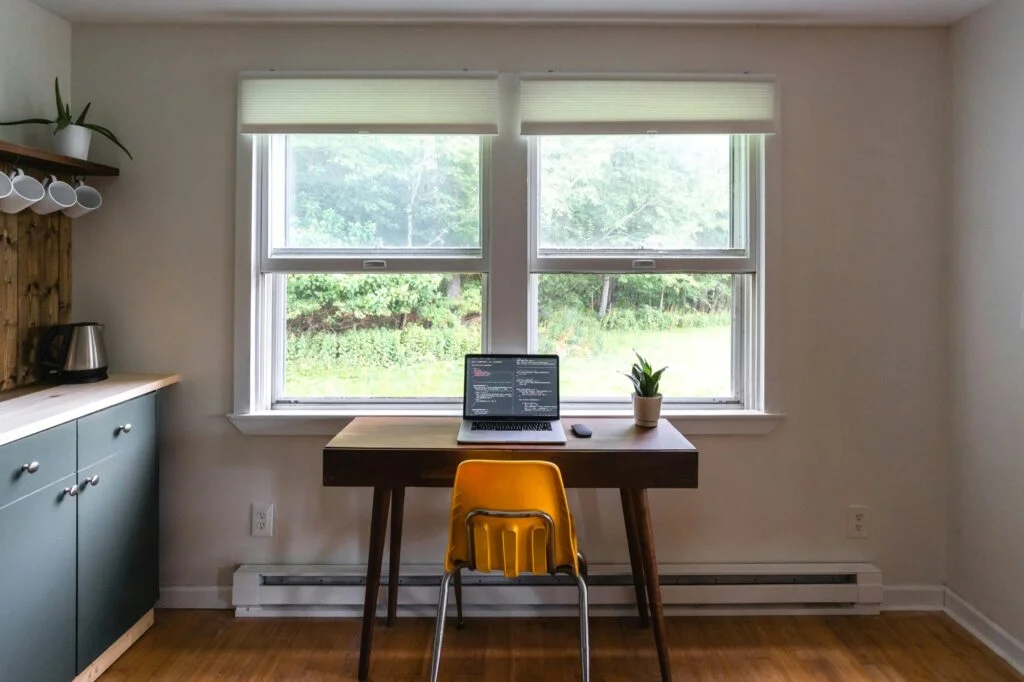
- Have a dedicated workspace. Ideally not your bedroom. If you must work there, pack the laptop away at the end of the day.
- Sort your desk set-up. Screen at eye level, feet flat, back supported, and a separate keyboard and mouse if you use a laptop.
During the day
- Take proper breaks. Step away from the screen every hour or so, and take a real lunch break away from your desk.
- Move. Stand up, stretch, walk while on calls. Even short bursts help mood and energy.
- Work by daylight. Sit near a window if you can, especially in autumn and winter. See seasonal affective disorder.
- Eat proper meals. It’s easy to graze or skip lunch at home. See food and mood.
- Watch the caffeine. The kettle is always close. Keep it to the morning and early afternoon. See does caffeine cause anxiety?
- Batch notifications. Check email and messages at set times rather than constantly.
- Plan your hardest work for when you have most energy, and leave admin for the afternoon slump.
How to switch off after work
Without a commute, work can spill into the evening. A short “shutdown ritual” tells your brain the day is done.
- Write tomorrow’s top three tasks, so they’re out of your head.
- Close the laptop and put it out of sight.
- Turn off work notifications on your phone.
- Change clothes, go for a walk or do something physical.
- If your mind keeps racing, try journal prompts or box breathing. See how to stop overthinking.
Many people add a calming drink as a cue to unwind. Our Magnesium Glycinate Sleep Complex is an evening drink with L-theanine, and magnesium contributes to normal psychological function and to the reduction of tiredness and fatigue. Some people take our Flow CBD Oil, with ashwagandha and maca, as part of their daytime routine. The FSA’s 10mg a day figure for CBD is precautionary advice rather than a legal limit, set while longer-term safety research continues. At Evopure we think it is a very cautious figure, and many adults use more. If you go above it, increase slowly, and check with your GP or pharmacist first if you take any medication.
Staying connected
Loneliness is one of the biggest risks of home working. Small, regular contact makes a big difference.
- Use video or a phone call instead of messages for some conversations.
- Keep informal chat going: a team coffee call, a channel for non-work talk.
- Go into the office, or work from a café or coworking space, now and then if you can.
- Plan something social after work, even a short walk with a friend.
- Tell your manager if you’re struggling. They can’t help if they don’t know.
See our guides to loneliness, imposter syndrome and the mental load if you’re juggling work and home.
Working from home in autumn and winter
Dark mornings and early sunsets hit home workers harder, because there’s no commute to get you outside. On some winter days it’s possible to see no daylight at all.
- Get outside in the morning, even for 10 minutes. Daylight is far brighter than indoor lighting, even on a cloudy day.
- Take your lunch break outdoors while it’s light.
- Keep warm and keep moving. Sitting still in a cold room makes the afternoon drag. A short burst of activity warms you up.
- Consider vitamin D. The NHS advises everyone in the UK to consider a 10 microgram vitamin D supplement from October to March. See vitamin D in winter.
- Notice low mood that returns each winter. It could be seasonal affective disorder, which is worth talking to your GP about.
For more ideas, see winter wellness and why you feel tired in winter.
What your employer should do (UK)
In the UK, employers have the same health and safety responsibilities for home workers as for anyone else. According to the Health and Safety Executive, that includes managing work-related stress, keeping in touch with home workers, and assessing display screen equipment (computer) set-ups. If your set-up is causing pain, or your workload is unmanageable, raise it with your manager or HR. Many employers also offer an Employee Assistance Programme with free, confidential counselling.
When to get help
See a GP if you’ve felt low, anxious or unable to cope for more than two weeks, or it’s affecting your work, sleep or relationships. Adults in England can refer themselves to NHS Talking Therapies. If you are in crisis, call 999 or NHS 111, or text SHOUT to 85258. See how to deal with anxiety for more support.
Finding it hard to get started at home? See how to get motivated.
If work stress has become too much, see signs of a nervous breakdown, including fit notes and time off.
FAQs
Is working from home bad for your mental health?
Not necessarily. It can reduce stress and give more flexibility, but it can also cause loneliness, longer hours and trouble switching off. Routine, breaks and social contact make the difference.
How do I stop feeling lonely working from home?
Use video or phone calls instead of messages, keep informal team chats going, work from the office or a café sometimes, and plan social time after work.
How do I switch off when working from home?
Finish at a set time, write tomorrow’s tasks, put the laptop away, turn off work notifications and do something that marks the end of the day, such as a walk.
Is my employer responsible for my wellbeing when I work from home?
Yes. UK employers have the same health and safety duties for home workers, including managing work-related stress and checking computer set-ups.
Should I work from my bedroom?
It’s best avoided, as it can blur the line between work and rest and affect sleep. If you have to, pack your work away at the end of the day.
Sources
- Oakman J et al (2020). A rapid review of mental and physical health effects of working at home: how do we optimise health? BMC Public Health.
- Health and Safety Executive. Home working: protecting your workers.
- NHS. Every Mind Matters.
- NHS. Back pain.
This guide is general information, not medical advice. Evopure makes the Flow CBD Oil and Magnesium Glycinate Sleep Complex.