Last updated: November 2026
A slipped disc is when the soft cushion between two bones in your spine bulges out and presses on a nerve. It is also called a herniated or prolapsed disc. Typical symptoms are back or neck pain, pain down one leg (sciatica), and numbness, tingling or weakness. Most people get better with gentle activity and painkillers, without surgery.
Below: symptoms in the lower back and neck, causes, how long recovery takes, what helps, treatments, and the cauda equina warning signs that need A&E.
Need help now? Call 999 or go to A&E if back pain comes with numbness around your bottom or genitals, being unable to pee or control when you pee or poo, or losing feeling in one or both legs. These can be signs of cauda equina syndrome. See all the red flags.
What is a slipped disc?
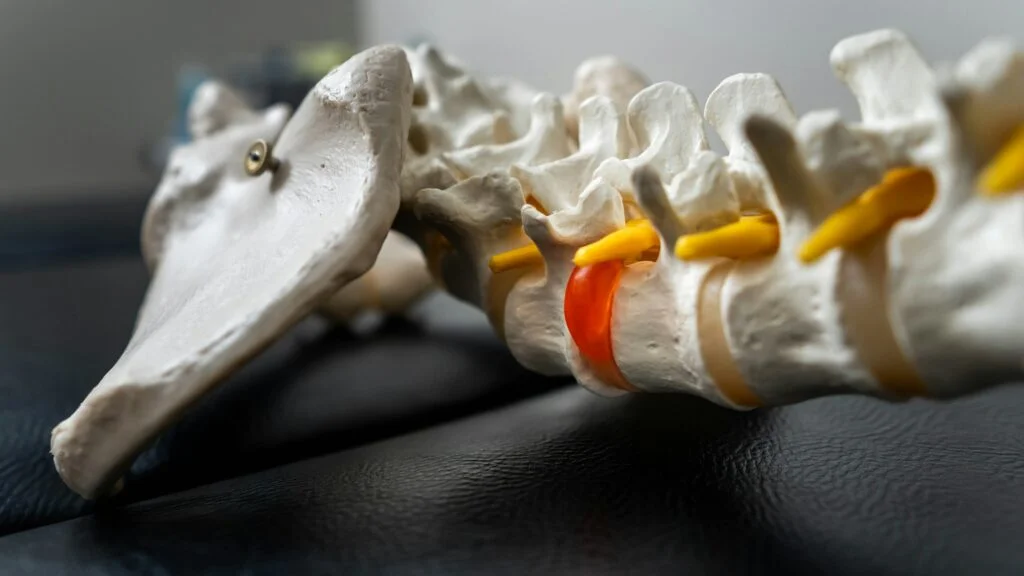
Between the bones of your spine (vertebrae) sit round discs with a tough outer ring and a soft, jelly-like centre. They act as shock absorbers. A disc doesn’t actually “slip”: part of it bulges or breaks through the outer ring, and if it presses on a nerve root it can cause pain, numbness or weakness along that nerve.
A slipped disc can happen in the lower back (lumbar spine) or the neck (cervical spine). Disc changes are also very common in people with no pain at all: a review of 33 scan studies found disc bulges in 30% of pain-free 20-year-olds and 84% of pain-free 80-year-olds. So a scan finding doesn’t always explain your symptoms, which is one reason doctors rarely need one at first.
Slipped disc symptoms
Slipped disc symptoms include lower back or neck pain, trouble bending or straightening your back, muscle weakness, and numbness or tingling in your shoulders, back, arms, hands, legs or feet, according to the NHS. If the disc presses on the sciatic nerve, you get pain in the buttock, hip or down the leg. Some people have no symptoms at all.
Herniated disc symptoms: lower back vs neck
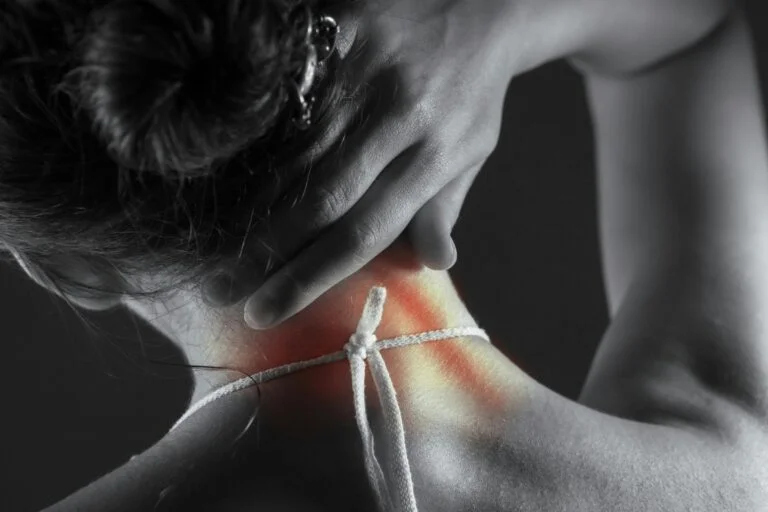
Herniated disc symptoms depend on where the disc is. In the lower back they usually mean back pain with pain, tingling or numbness down one leg (sciatica). In the neck they mean neck pain with pain or tingling into the shoulder, arm or hand. Weakness that’s getting worse, or bladder changes, need urgent help.
| Where the disc is | Typical symptoms | Read more |
|---|---|---|
| Lower back (lumbar) | Back pain, pain into the buttock and down one leg, sometimes to the foot; tingling, numbness or a weak leg or foot | Sciatica, lower back pain |
| Neck (cervical) | Neck pain and stiffness, pain, tingling or numbness into the shoulder, arm or hand | Stiff neck, pins and needles |
| Either, if severe | Worsening weakness or numbness, or bladder, bowel or genital changes | Red flags |
iTell a GP if pain gets worse when you cough or sneeze, or is worse at night (NHS). Pain on one side low down over the buttock may come from the pelvis instead: see SI joint pain and hip pain.
What causes a slipped disc?
A slipped disc is usually caused by wear on the discs as you age, sometimes tipped over by a strain. The NHS lists ageing, exercising too hard, lifting heavy objects the wrong way, sitting or driving for long periods, being inactive or overweight, and smoking, as nicotine weakens disc tissue.
Many people can’t point to one moment it started. Keeping active, building strength and changing position often all help your back in general: see does good posture matter? and how many steps a day you need.
How long does a slipped disc take to heal?
A slipped disc usually gets better slowly over a few weeks to a few months, the NHS says, with rest, gentle exercise and painkillers. The bulging part often shrinks back on its own: a review of 31 studies found the disc material regressed in 70% of extruded discs and 96% of sequestrated discs without surgery.
In a Dutch trial of 283 people with severe sciatica from a slipped disc, 95% felt recovered after a year whether they had early surgery or waited. Surgery relieved leg pain faster, but the end result was similar. Pain that lasts longer than about 3 months is worth reviewing with a GP or physio.
What helps a slipped disc at home?
The NHS says you’ll get better more quickly if you gradually start gentle exercise such as walking, swimming or yoga, after resting for a short time if the pain is severe. Anti-inflammatory painkillers such as ibuprofen can help, taken regularly up to the recommended dose; ask a pharmacist if you’re not sure they suit you.
- Keep moving little and often: avoid long spells in bed or sitting. Short walks are a good start: try Japanese walking once you feel ready.
- Heat: the NHS suggests a heat pack or hot water bottle wrapped in a tea towel to ease stiffness or muscle spasms. See hot water bottle safety.
- Gentle exercises: our sciatica guide has 6 gentle exercises and our lower back pain guide a 5-minute routine. Stop any that make leg pain worse.
- Sleep: a pillow between your knees on your side, or under your knees on your back, often feels easier. See the best sleeping position.
- Skip: NICE says back belts, corsets and TENS machines shouldn’t be offered for back pain or sciatica, and paracetamol on its own isn’t recommended.
Slipped disc treatment in the UK
Most slipped discs are treated with exercise, physiotherapy and painkillers. A GP may prescribe a stronger painkiller, a steroid injection or a muscle relaxant for short-term use, and an MRI scan if symptoms don’t improve. The NHS says surgery is not usually needed.
| Treatment | When it’s used | What to know |
|---|---|---|
| Physiotherapy | Pain lasting more than a few weeks, or to get moving with confidence | In many areas you can refer yourself to NHS MSK services without a GP |
| Prescribed painkillers | If pharmacy painkillers aren’t enough | Short-term only; NICE advises against gabapentinoids and oral steroids for sciatica |
| Epidural steroid injection | Acute, severe sciatica | NICE says it can be considered; local anaesthetic plus steroid |
| Surgery (decompression) | Symptoms not improving with other treatment, or worsening weakness or numbness | Faster leg pain relief; similar results at 1 year to waiting |
Osteopathy or chiropractic may help some people, usually paid privately; NICE suggests manual therapy only alongside exercise. For the wider evidence, see what helps lower back pain vs what the evidence says.
Cauda equina syndrome: when it’s an emergency
Cauda equina syndrome is compression of the bundle of nerves at the bottom of the spinal cord, which control your bladder, bowel and feeling around the genitals and bottom. It is rare, affecting 1 to 3 in 100,000 people, but a large slipped disc in the lower back can cause it, and it needs treatment in hospital straight away.
Call 999 or go to A&E if you have back pain and:
- numbness or tingling around your bottom, genitals or inner thighs, or it feels different when you wipe
- you can’t pee, find it hard to start or stop, or don’t feel when your bladder is full
- you can’t control when you pee or poo, or you’re leaking without noticing
- you lose feeling in one or both legs
- changes in erections, ejaculation or genital feeling during sex
- back pain after a serious accident, such as a car crash
Do not drive yourself. Call 999 or ask someone to drive you, and take your medicines with you.
Don’t wait to see if these settle, even at night or at the weekend. Delays can mean permanent problems with bladder, bowel or sexual function.
When to see a GP
See a GP if painkillers aren’t helping, the pain isn’t improving after a few weeks, or you have a very high temperature or feel hot, cold or shivery, unexplained weight loss, swelling in your back, or pain that’s worse at night (NHS). Mention any numbness, tingling or weakness and how far down it goes.
Where our products fit (honestly)
No balm, oil or supplement treats a slipped disc, and CBD isn’t a treatment for back or nerve pain. Movement, time and proper advice come first. Some people like these as part of their routine:
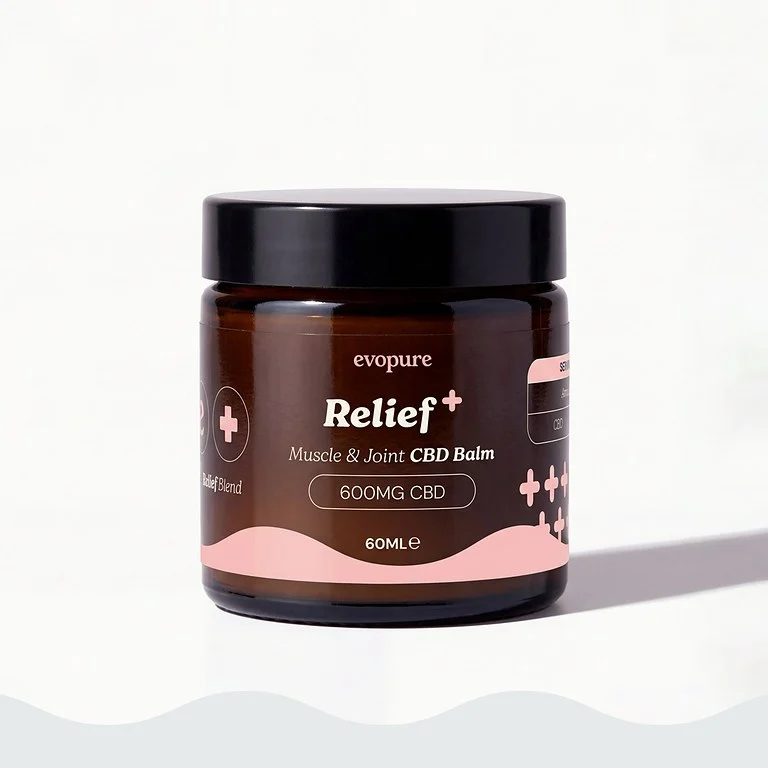
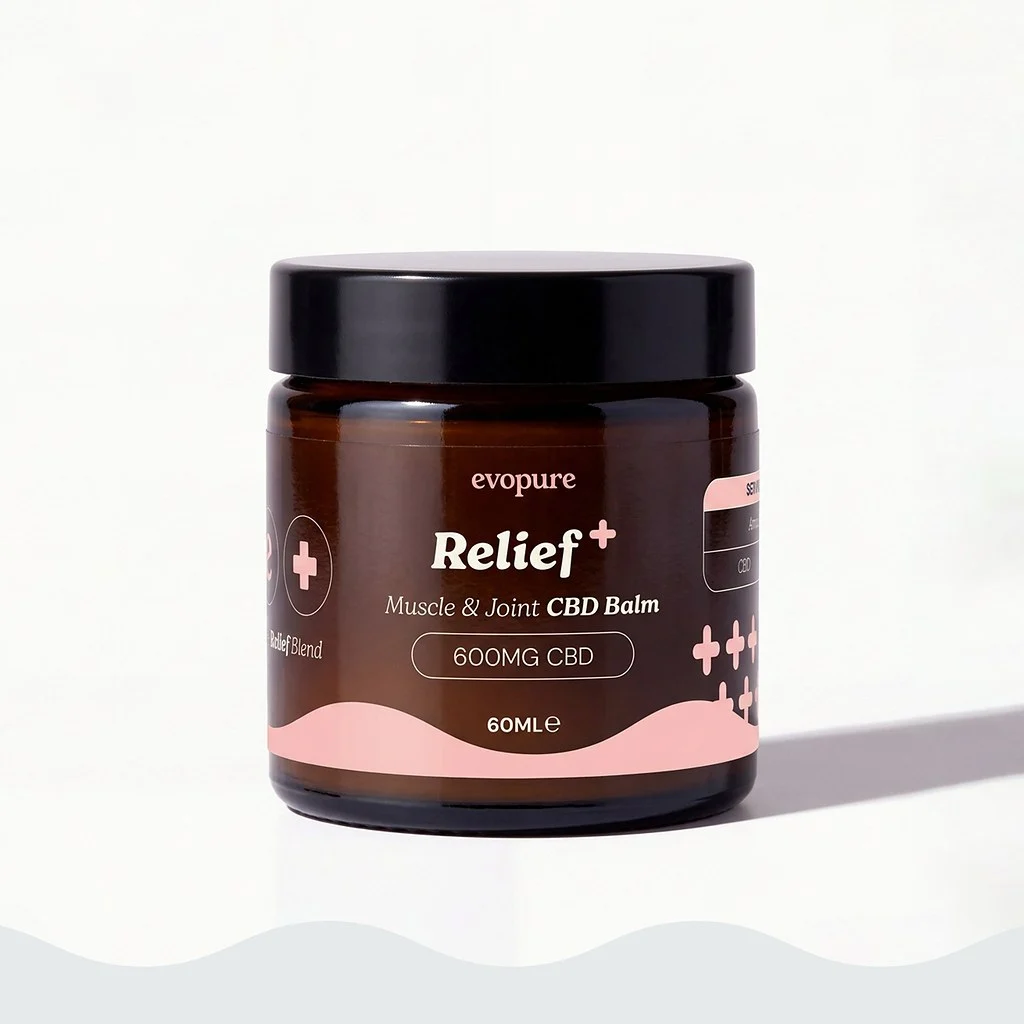
- CBD Balm, Muscle and Joint Support: a cooling, non-greasy massage balm with 20mg of CBD per 2ml serving (600mg per tub), peppermint, eucalyptus and juniper. It is a cosmetic, not a pain treatment. The product description mentions wintergreen, which is related to aspirin: if you’re allergic to aspirin or take a blood thinner, ask a pharmacist first. See our CBD balm guide.
- Magnesium Glycinate Sleep Complex: a caffeine-free berry evening drink with 290mg of magnesium (77% NRV) per 4.75g, plus glycine and L-theanine. Magnesium contributes to normal muscle function. More in magnesium for muscle pain.
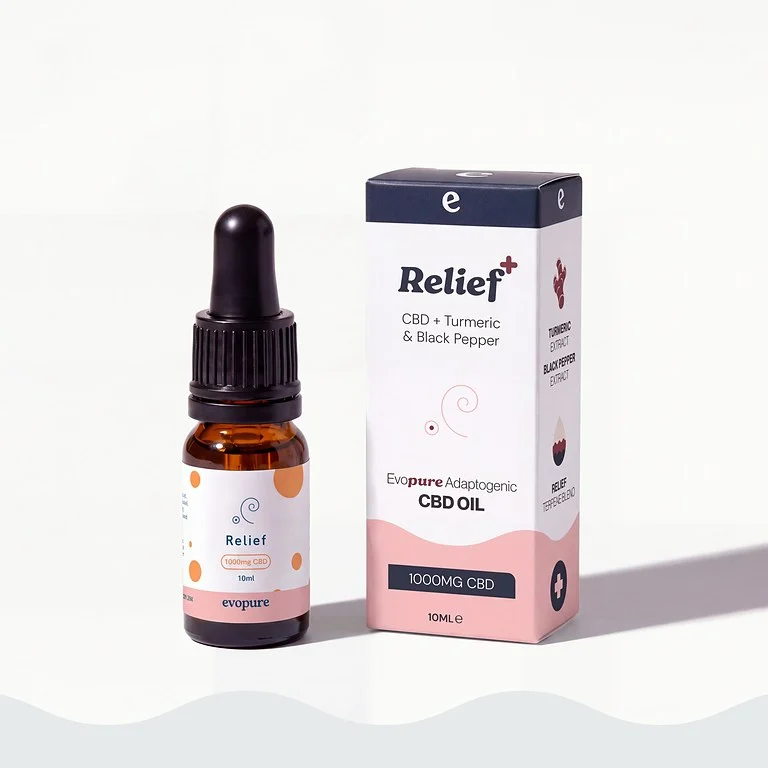
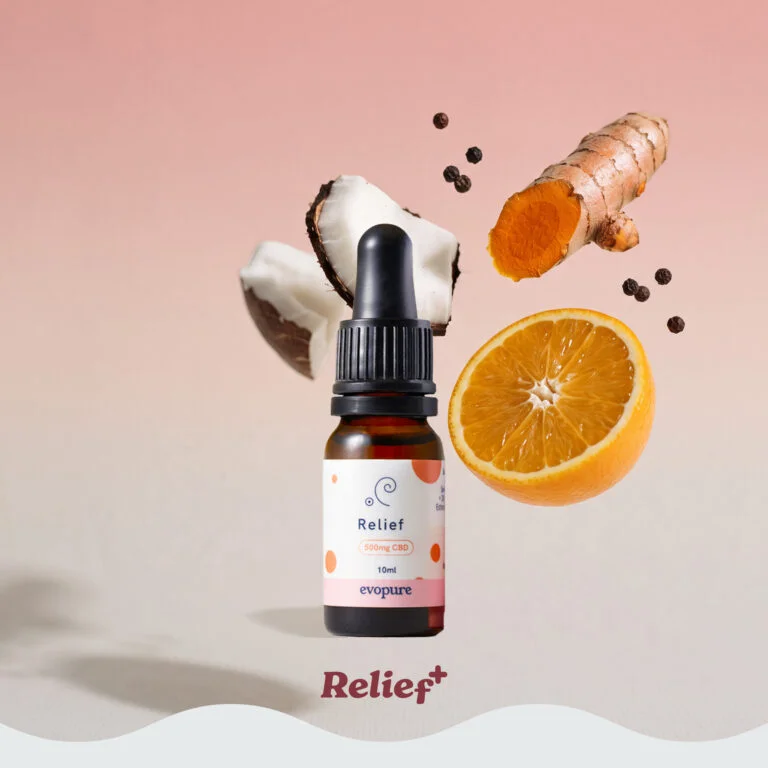
- Relief CBD Oil with Turmeric and Black Pepper: broad spectrum CBD with 35mg turmeric extract and 35mg black pepper extract per half pipette. Our honest look at the evidence: CBD for sciatica.
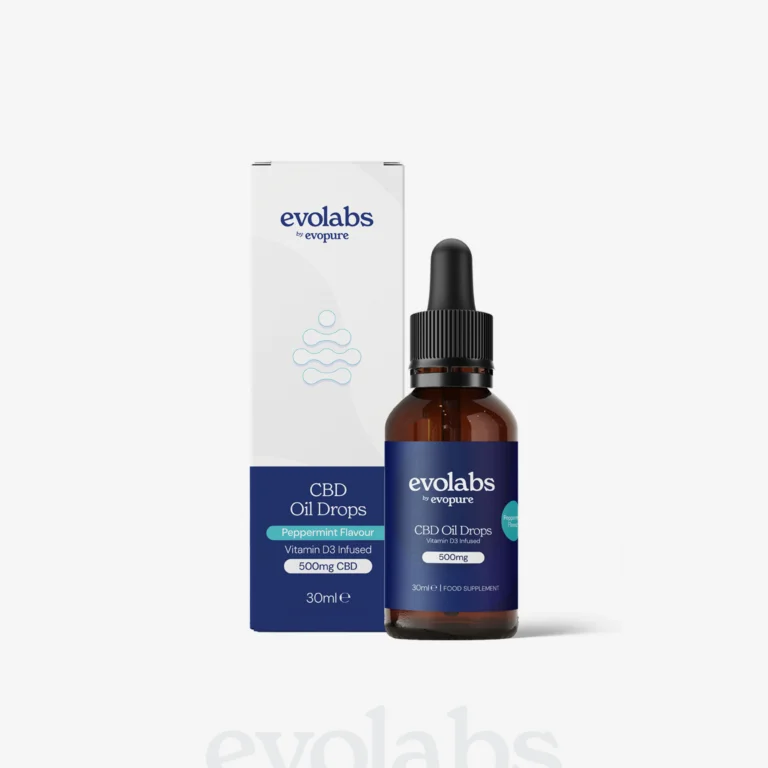
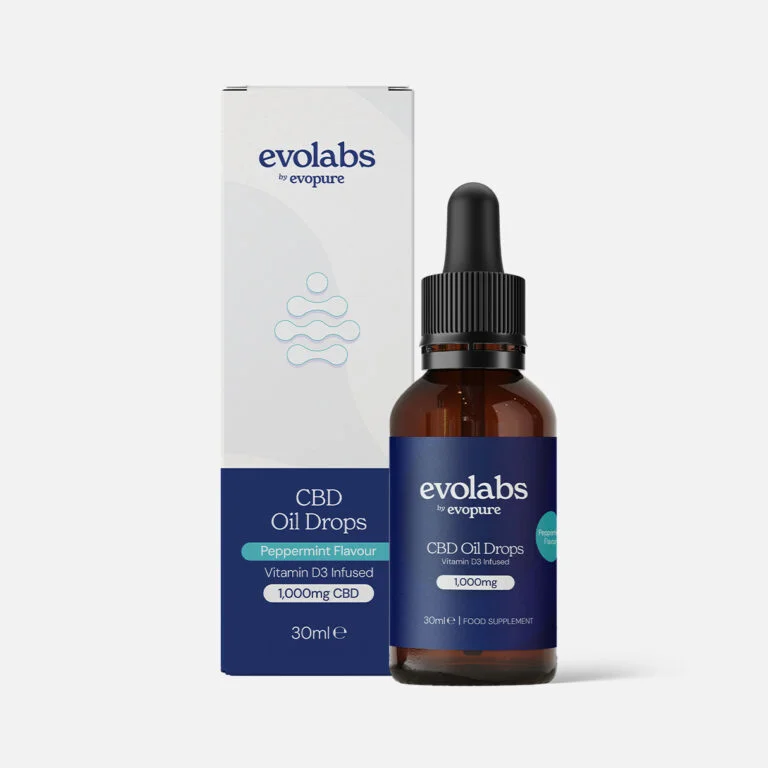
The FSA advises healthy adults to take no more than 10mg of CBD a day: about 0.2ml of the 500mg (0.1ml of the 1,000mg) gives 10mg. Adults only.
The FSA’s 10mg a day figure is precautionary advice rather than a legal limit, set while longer-term safety research continues. At Evopure we think it is a very cautious figure, and many adults use more. If you go above it, increase slowly, and check with your GP or pharmacist first if you take any medication.
iIf you take any regular medicines, including prescribed painkillers or blood thinners, check with your GP or pharmacist first. We don’t recommend our products during pregnancy or breastfeeding.
Next step
Keep walking little and often, use heat for stiffness, and if you enjoy a massage routine, try the CBD Balm (20mg CBD per 2ml). For the evening, the Magnesium Glycinate Sleep Complex gives 290mg of magnesium per 4.75g.
Add CBD Balm to bag Add Magnesium Glycinate Sleep Complex to bag
Prefer an oil? Add Relief CBD Oil 500mg to bag or choose another strength. Subscribe and save 25% on your first order, then 20%. New to Evopure? Join our emails for 20% off a one-off first order. Free UK delivery over £45. Adults only.
Sources 7
- NHS. Slipped disc (reviewed 24 April 2024).
- NHS. Sciatica and Back pain.
- NICE. Low back pain and sciatica in over 16s: assessment and management (NG59).
- Torbay and South Devon NHS Foundation Trust. Cauda equina syndrome.
- Chiu CC, et al. The probability of spontaneous regression of lumbar herniated disc: a systematic review. Clin Rehabil, 2015. PMID 25009200.
- Peul WC, et al. Surgery versus prolonged conservative treatment for sciatica. N Engl J Med, 2007. PMID 17538084.
- Brinjikji W, et al. Systematic literature review of imaging features of spinal degeneration in asymptomatic populations. AJNR, 2015. PMID 25430861.
iThis guide is general information, not medical advice. If you’re worried about back or neck pain, speak to a GP, pharmacist or physiotherapist. Evopure makes the CBD Balm, Magnesium Glycinate Sleep Complex and Relief CBD Oil.