Last updated: October 2026
Magnesium contributes to normal muscle function, so it matters if your intake is low. For muscle pain itself the evidence is mixed: one small trial found 350mg a day reduced post-workout soreness, but a Cochrane review found magnesium unlikely to prevent cramps in older adults, and magnesium gels and Epsom salt baths haven’t been shown to work.
Below: what the research shows by type of muscle pain, the best form, dose and timing, food sources, safety, and what else helps.
Does magnesium help muscle pain? The research
| Type of pain | What the research found |
|---|---|
| Post-workout soreness (DOMS) | 350mg a day for 10 days reduced soreness and improved perceived recovery after weight training, in a small trial of 22 young adults |
| Night cramps in older adults | A Cochrane review of 11 trials found magnesium unlikely to give a meaningful benefit |
| Cramps in pregnancy | Conflicting results; more research needed. See magnesium in pregnancy |
| Exercise cramps | No trials yet |
| Period cramps | Some small trials. See magnesium for PMS |
Magnesium is most likely to make a difference if you’re low in it, for example if you train hard, sweat a lot, or eat few nuts, seeds, beans and whole grains. See signs of magnesium deficiency and magnesium for cramps.
What magnesium does in muscles
Magnesium contributes to normal muscle function, electrolyte balance, normal energy-yielding metabolism and the reduction of tiredness and fatigue. Inside muscle cells it works alongside calcium: calcium triggers contraction and magnesium is needed for the muscle to relax again. That’s why low magnesium is linked with twitches and cramps, though taking extra when your levels are already fine is unlikely to add much.
Best magnesium for muscle pain
| Form | Notes |
|---|---|
| Glycinate (bisglycinate) | Gentle on the stomach; suits an evening routine after training |
| Citrate | Well absorbed; can loosen stools at higher doses |
| Malate | Often marketed for muscles, but no better evidence than other forms |
| Oxide | Poorly absorbed; more likely to cause diarrhoea |
No form is proven best for muscle pain; what matters most is that it’s well absorbed and you take it consistently. Our Magnesium Glycinate Sleep Complex combines bisglycinate and citrate with glycine, L-theanine and botanicals, giving 148mg of magnesium per serving as a warm evening drink. See types of magnesium and magnesium for active people.
Epsom salts, sprays and gels
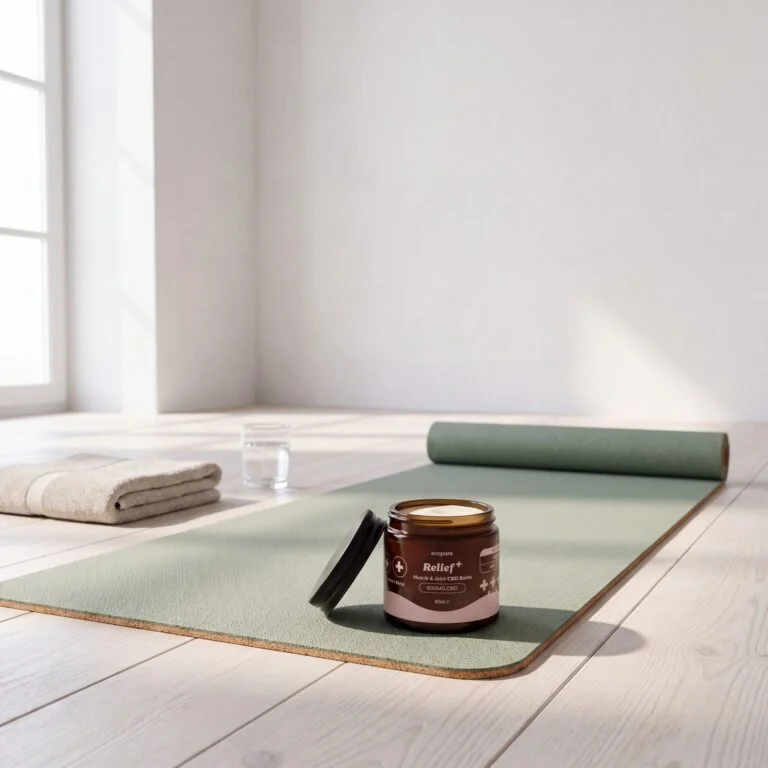
Epsom salts are magnesium sulphate. There’s no good evidence that useful amounts of magnesium pass through the skin, and a 2025 trial found a magnesium gel did no better than a placebo gel for soreness after downhill running. A warm bath or massage can still feel good for its own sake, but swallowing magnesium is the reliable way to raise your intake. For a topical option, see CBD balm for muscle pain.
How much and when
- Daily needs: the NHS says adults need 300mg a day (men) or 270mg (women), and most of this should come from food.
- Supplements: the NHS says 400mg a day or less from supplements is unlikely to cause harm. The soreness trial used 350mg.
- Timing: any time of day works; many people take it in the evening. See best time to take magnesium.
- How long: give it a few weeks. See how long magnesium takes to work.
Magnesium-rich foods
Good sources include nuts and seeds (especially pumpkin seeds and almonds), spinach and other leafy greens, beans and lentils, wholemeal bread and brown rice, and dark chocolate. A diet built around these usually covers your needs.
Side effects and who should check first
- Diarrhoea and stomach upset, mainly with oxide, citrate or high doses.
- Kidney problems: speak to your GP first, as magnesium can build up.
- Medicines: magnesium can reduce absorption of some antibiotics and osteoporosis medicines; leave a gap and ask a pharmacist.
- See your GP if muscle pain is severe, unexplained, comes with weakness, dark urine or fever, or started after a new medicine such as a statin.
What else helps sore muscles
- Gentle movement and building up training load gradually.
- Sleep: most muscle repair happens overnight. See magnesium for sleep.
- Enough protein and fluids after exercise.
- Heat, massage or stretching for comfort.
- Over-the-counter painkillers if needed, following the pharmacist’s advice.
Many active people also use CBD as part of their recovery routine. See CBD for muscle recovery and our honest look at CBD for pain.
Related guides
- Tension headaches.
- Waking with aches? See the best sleeping position for back pain.
- Teeth grinding and jaw tension.
FAQs
Does magnesium help with muscle pain?
Magnesium contributes to normal muscle function. One small trial found it reduced post-workout soreness, but evidence for other muscle pain is mixed.
What is the best magnesium for muscle pain?
No form is proven best. Glycinate is gentle on the stomach and popular in the evening; citrate is well absorbed.
How much magnesium should I take for sore muscles?
The soreness trial used 350mg a day. The NHS says 400mg a day or less from supplements is unlikely to cause harm.
Do Epsom salt baths help sore muscles?
There’s no good evidence that magnesium is absorbed through the skin. A warm bath may still feel relaxing.
Does magnesium help with cramps?
A Cochrane review found it unlikely to help night cramps in older adults. Results in pregnancy are conflicting.
Should I take magnesium before or after exercise?
Timing matters less than taking it consistently. Many people take it in the evening.
Sources
- Reno AM et al. Effects of magnesium supplementation on muscle soreness and performance. J Strength Cond Res, 2022.
- Garrison SR et al. Magnesium for skeletal muscle cramps. Cochrane Database Syst Rev, 2020.
- Coates AM et al. No effect of topical application of a commercial magnesium gel on exercise recovery. Int J Sport Nutr Exerc Metab, 2025.
- Gröber U et al. Myth or reality: transdermal magnesium? Nutrients, 2017.
- NHS. Vitamins and minerals: magnesium.