Last updated: October 2026
Epsom salt is magnesium sulphate. A warm Epsom salt bath can feel relaxing and soothe tired muscles, but there’s little good evidence that much magnesium gets through your skin. Most of the benefit comes from the warm water and the time out. For topping up magnesium, food or an oral supplement is more reliable.
Below: what Epsom salt is, which benefits hold up, whether the magnesium absorbs, how to use it (including a foot soak), how it compares with magnesium flakes and Dead Sea salt, and who should be careful.
What is Epsom salt?
Epsom salt is magnesium sulphate, a mineral salt that looks like coarse sugar. It isn’t the same as table salt, which is sodium chloride.
It’s named after Epsom in Surrey. According to Epsom and Ewell Borough Council, in the drought of 1618 a cowherd called Henry Wicker found a spring on Epsom Common that his cows wouldn’t drink from, and its water turned out to be a strong laxative.
In the UK it’s sold as bath salts and as Epsom Salts BP, a pharmacy medicine for occasional constipation. Only the pharmacy product is meant to be swallowed, and only as directed. See types of magnesium for how sulphate compares with other forms.
Epsom salt bath benefits: what holds up
Most claimed benefits come from the bath, not the salt. Here’s an honest summary.
| Claim | What the evidence says |
|---|---|
| Relaxation | A warm bath and 20 quiet minutes are relaxing for most people. That’s a real benefit, with or without salt. |
| Better sleep | A warm bath 1 to 2 hours before bed is linked with falling asleep faster. No studies show Epsom salt adds to this. |
| Sore muscles | Many people find warmth soothing for stiff, tired muscles. There’s no good evidence the salt itself helps. See magnesium for muscle pain. |
| Topping up magnesium | No good evidence. The skin is a barrier and very little magnesium is likely to get through. |
| “Detox” | We found no good evidence that Epsom baths draw out toxins. Your liver and kidneys do that job. |
| Constipation | A bath won’t help. Magnesium sulphate only acts as a laxative when swallowed. See magnesium for constipation. |
| Colds | No evidence. The NHS suggests rest, plenty of fluids and breathing in steam from a hot shower to ease a blocked nose, so a warm bath may feel comforting. |
Does the magnesium absorb through your skin?
Probably not in any useful amount. The outer layer of your skin, the stratum corneum, is built to keep water and dissolved salts out. Magnesium in bath water is a charged particle, which makes it hard for it to cross that fatty barrier.
A 2017 review in the journal Nutrients looked at the evidence for magnesium sprays, flakes and salt baths and concluded that claims of transdermal (through the skin) absorption are scientifically unsupported. It noted that magnesium may only get in through hair follicles and sweat glands, which make up just 0.1% to 1% of the skin’s surface.
The study most often quoted in favour of Epsom baths is a small report by a University of Birmingham researcher. Nineteen people took a 12-minute Epsom bath every day for 7 days, and most showed a rise in blood magnesium. It was never published in a peer-reviewed journal or repeated, and the 2017 review described it as of questionable quality.
We cover skin absorption in more depth in our guide to magnesium spray, and what happens to magnesium once it is in your body in how long magnesium stays in your body.
Epsom salt baths and sleep
The warm water is what matters here. A 2019 review and meta-analysis pooled 13 studies of warm baths and showers before bed. Bathing in water of about 40 to 42.5°C was linked with better self-rated sleep quality. When people bathed 1 to 2 hours before bedtime, for as little as 10 minutes, they fell asleep faster.
The likely reason is temperature. A warm bath sends blood to your hands and feet, and afterwards your body sheds heat and your core temperature drops, which is one of the signals for sleep. That’s why timing matters: a bath right before bed can leave you too warm to drop off.
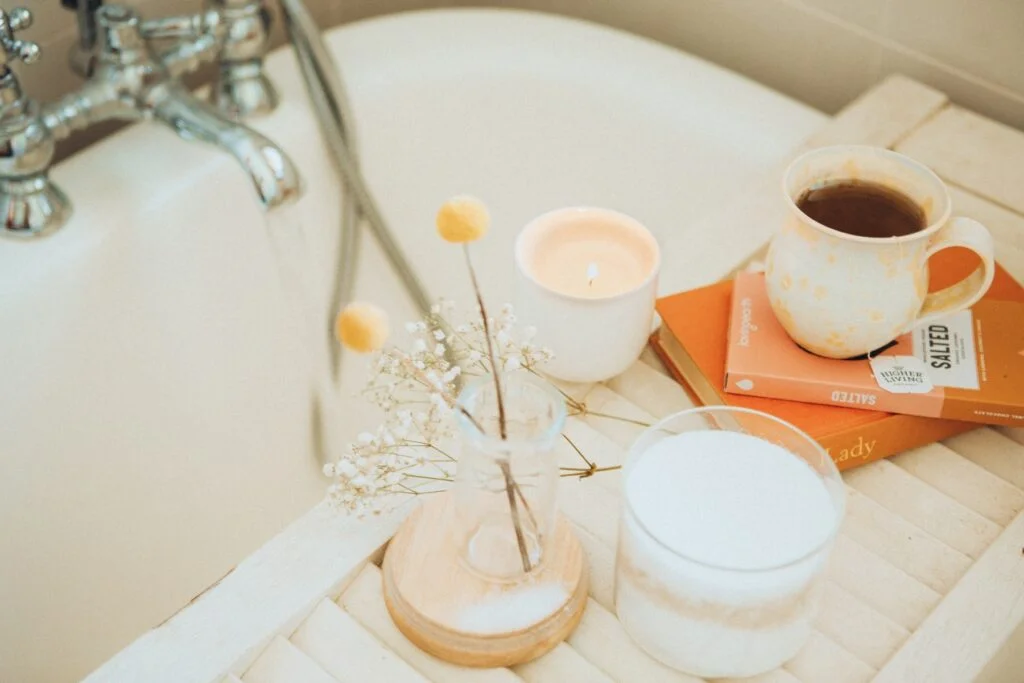
Adding Epsom salt won’t hurt, and the ritual can help you switch off. Pair it with the basics in our sleep hygiene guide and how to fall asleep fast. For more on whether magnesium itself helps, see magnesium for sleep.
How to have an Epsom salt bath
- How much: UK packs often suggest about 2 cups (roughly 250 to 500g) in a standard bath, and some say up to 1kg. Start at the lower end. More salt hasn’t been shown to do more.
- Dissolve it: pour the salt under the running tap so it dissolves quickly.
- Temperature: warm, not hot. Check the water with your wrist or elbow before you get in.
- How long: packs often suggest 15 to 20 minutes. Get out slowly, as warm water can make you feel light-headed.
- When: for sleep, aim for 1 to 2 hours before bed.
- How often: packs often suggest 2 to 3 times a week. Cut back if your skin feels dry or itchy.
- Afterwards: rinse with fresh water if your skin feels tight, pat dry, moisturise and drink a glass of water.
Want to make it more of an event? Our bath bomb recipe uses Epsom salts, and our sauna benefits guide covers heat more generally.
Epsom salt foot soak
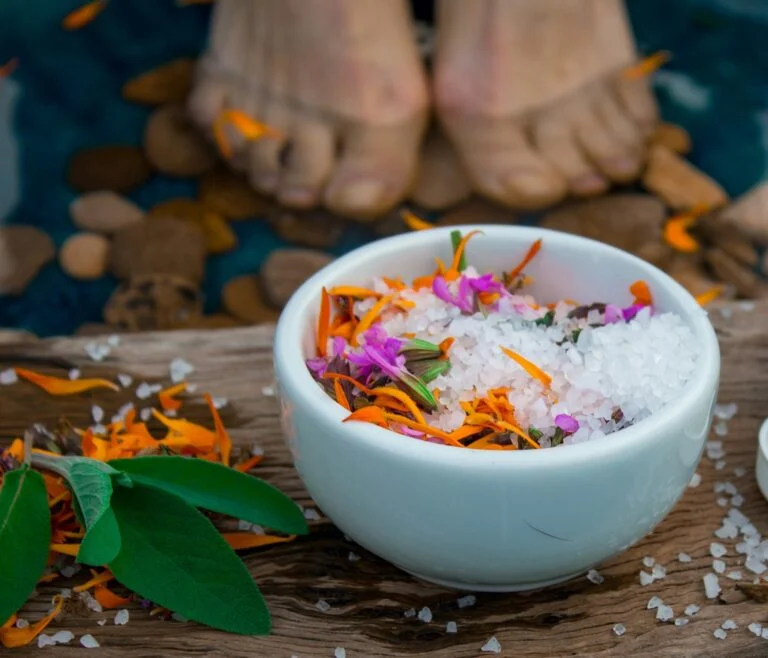
A foot soak is a cheap way to unwind after a long day on your feet. Packs often suggest about 1 cup (roughly 100 to 250g) in a bowl of warm water. Soak for a short while, then dry well, especially between your toes, and moisturise.
There’s no good evidence your feet absorb more magnesium than the rest of you; the skin on your soles is some of the thickest on your body.
If you have diabetes, Diabetes UK advises avoiding soaking your feet, as it makes the skin more likely to get damaged, and checking water temperature with your wrist or elbow first. Ask your GP or podiatrist before trying a foot soak, and see your GP about numb, burning or painful feet.
Epsom salt vs magnesium flakes, Dead Sea salt and table salt
| What it is | Raises your magnesium? | Good for | |
|---|---|---|---|
| Epsom salt | Magnesium sulphate | No good evidence | A cheap, relaxing soak |
| Magnesium flakes | Magnesium chloride | No good evidence | The same; often pricier |
| Dead Sea salt | A mix of mineral salts rich in magnesium chloride | No good evidence | Skin feel: one small 2005 study found a 15-minute Dead Sea salt soak left dry forearm skin better hydrated |
| Table or sea salt | Mostly sodium chloride | No | No clear advantage in the bath |
| Oral magnesium (glycinate, citrate) | Taken by mouth as food or a supplement | Yes, the proven route | Actually topping up magnesium |
In short, pick whichever bath salt you enjoy and can afford. If your real goal is more magnesium, see magnesium glycinate vs citrate vs threonate.
Safety: who should be careful
- Don’t drink bath salts. Swallowed magnesium sulphate is a strong laxative. Only take the pharmacy product, and only if a pharmacist or doctor advises it. The medicine leaflet warns against taking it with kidney problems, in pregnancy or breastfeeding, or for children under 12, and too much can cause dangerously high magnesium levels, with symptoms such as drowsiness, confusion, muscle weakness and an irregular heartbeat. If someone has swallowed a large amount, call 111, or 999 if they’re very unwell.
- Broken skin and eczema. Salt stings cuts and cracked skin, and packs say not to use it on broken skin. The NHS says heat and changes in temperature can make eczema worse, and advises keeping cool and washing with an emollient instead of soap. Ask a pharmacist or GP before using salt baths with eczema.
- Pregnancy. The charity Tommy’s says a significant rise in core temperature could be harmful in pregnancy, particularly in the first 12 weeks. Keep baths warm, not hot, and check with your midwife, as some packs say not to use Epsom salts in pregnancy. See magnesium in pregnancy. We don’t recommend our products during pregnancy or breastfeeding.
- Diabetes. Avoid foot soaks unless your GP or podiatrist says otherwise, and always check the water temperature.
- Children. Keep it simple: a small amount in a warm bath, with an adult there the whole time. Some packs say not to use on babies or infants, so ask your health visitor or GP first. See magnesium for kids. Our products are for adults only.
- Kidney disease. Your body may not clear magnesium well, so check with your GP first.
- A fresh sprain or strain. The NHS advises avoiding heat, such as hot baths, for the first 2 to 3 days to help prevent swelling.
If you want a reliable magnesium top-up
The NHS says adults need 300mg of magnesium a day (men) or 270mg (women), and that you should be able to get it from a varied diet. Good sources include leafy greens, nuts, seeds and wholegrains. See foods high in magnesium and signs of magnesium deficiency.
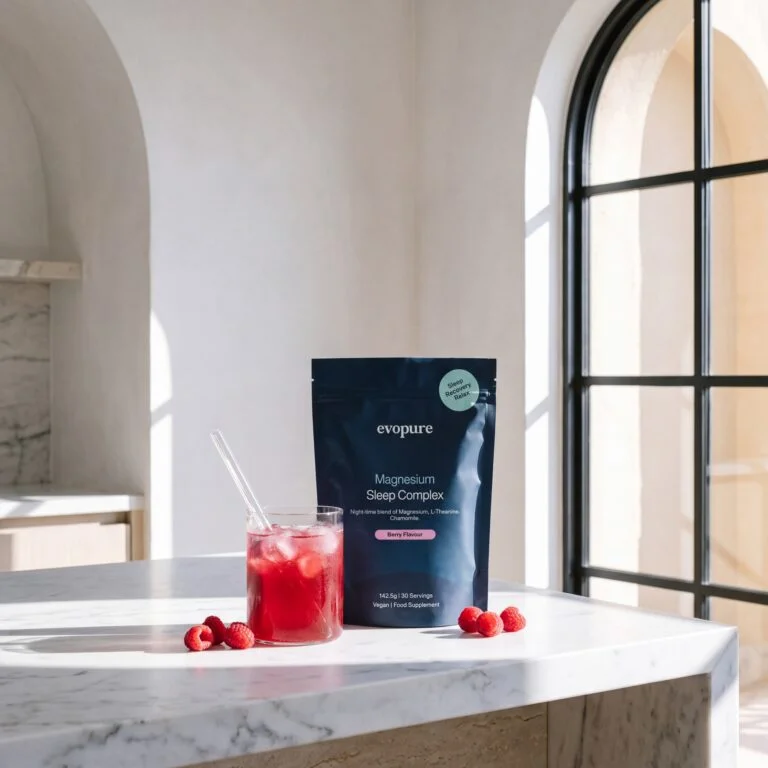
If you’d like a supplement, our Magnesium Glycinate Sleep Complex is a berry-flavoured evening drink with magnesium bisglycinate and citrate (148mg of magnesium per serving), plus glycine, L-theanine and botanicals. Magnesium contributes to normal muscle function, normal psychological function and the reduction of tiredness and fatigue.
An evening routine of a warm Epsom bath followed by a magnesium drink gives you the ritual and a magnesium source your body can actually absorb. Taking more than 400mg a day from supplements can cause diarrhoea, so stick to the label.
Related guides
- Where a warm bath fits in your bedtime routine.
- Eight evidence-based ways to get more deep sleep.
- Prefer magnesium chloride? Our magnesium flakes guide covers how to use them and how they compare.
- A warm bath is one of the NHS self-help tips for period pain relief.
FAQs
Do Epsom salt baths actually do anything?
A warm bath can help you relax, and a bath an hour or two before bed may help you fall asleep sooner. There’s no good evidence that the Epsom salt itself adds much, because very little magnesium gets through your skin.
How long should you soak in an Epsom salt bath?
Packs often suggest 15 to 20 minutes. Keep the water warm, not hot, and get out sooner if you feel dizzy, light-headed or unwell.
How often can you have an Epsom salt bath?
Packs often suggest 2 to 3 times a week. If your skin feels dry or itchy afterwards, bathe less often, rinse off with fresh water and moisturise.
Should you rinse off after an Epsom salt bath?
You don’t have to, but a quick rinse with fresh water helps if the salt leaves your skin feeling dry, tight or itchy. Pat dry and moisturise.
Can you have an Epsom salt bath when pregnant?
Some packs say not to use them in pregnancy, so check with your midwife first. If you do have a bath, keep it warm, not hot, because a big rise in body temperature could be harmful, especially in the first 12 weeks.
Is an Epsom salt bath good for eczema?
It isn’t a recognised eczema treatment, and salt can sting broken or cracked skin. The NHS advises keeping cool and washing with an emollient instead of soap. Ask a pharmacist or GP before trying salt baths.
Do Epsom salt baths help constipation?
Not in the bath. Magnesium sulphate only works as a laxative when swallowed, and that is a medicine to take only on the advice of a pharmacist or doctor.
Sources
- Gröber U et al (2017). Myth or reality: transdermal magnesium? Nutrients.
- Haghayegh S et al (2019). Before-bedtime passive body heating by warm shower or bath to improve sleep: a systematic review and meta-analysis. Sleep Medicine Reviews.
- Proksch E et al (2005). Bathing in a magnesium-rich Dead Sea salt solution improves skin barrier function, enhances skin hydration… International Journal of Dermatology.
- Electronic Medicines Compendium. Epsom Salts BP: summary of product characteristics.
- NHS. Vitamins and minerals: others (magnesium).
- NHS. Atopic eczema.
- NHS. Sprains and strains.
- Tommy’s. Causes of miscarriage (saunas and hot tubs).
- Diabetes UK. How to look after your feet.
This guide is general information, not medical advice. Evopure makes the Magnesium Glycinate Sleep Complex.