












Last updated: October 2026
Arthritis means pain, swelling and stiffness in one or more joints. About 10 million people in the UK have it. The two most common types are osteoarthritis and rheumatoid arthritis. Exercise, a healthy weight, physiotherapy and the right medicines help most. Get urgent advice if a joint is suddenly hot, red and swollen.
Below: the main types side by side, rheumatoid vs osteoarthritis, inflammatory arthritis, causes, knuckle cracking, what helps and when to see a GP.
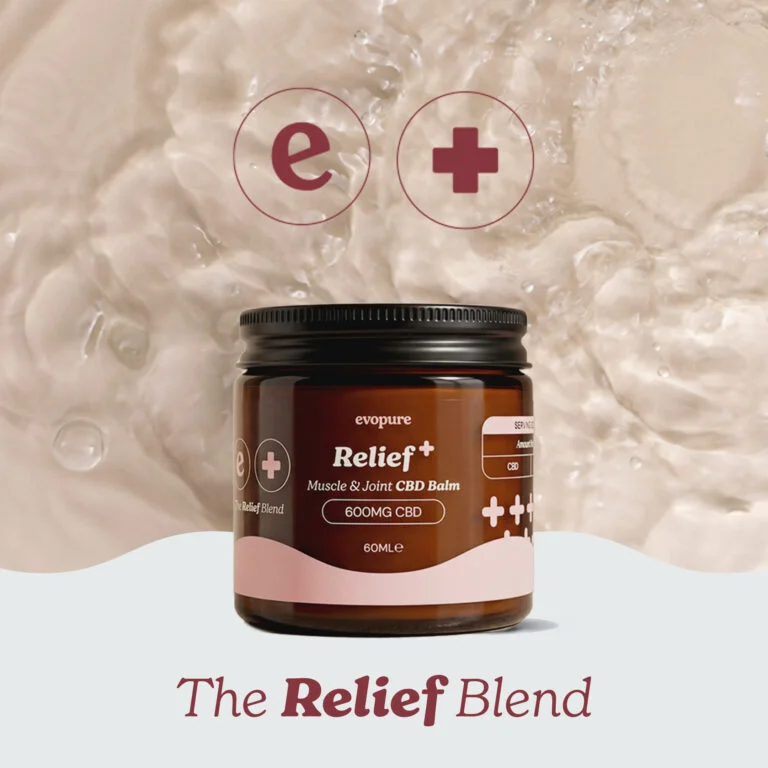
A note before you read: our products aren’t a treatment for arthritis, and nothing here replaces advice from your GP or rheumatology team. If you enjoy a gentle hand or knee massage, our CBD Balm, Muscle and Joint Support is a cooling, non-greasy massage balm with broad spectrum CBD, peppermint, eucalyptus and juniper. Vegan, made in the UK and tested by ISO 17025 accredited labs.
What is arthritis?
Arthritis isn’t one disease. It’s an umbrella word for a group of conditions that cause pain, swelling and stiffness in the joints. The NHS says it most often affects the hands, wrists and fingers, the feet, ankles and toes, the back and spine, and the knees and hips. Symptoms can suddenly get worse for a few days, which is called a flare-up.
Arthritis UK (the charity formerly called Versus Arthritis, renamed in October 2025) says arthritis affects about 10 million people in the UK, around 1 in 6 of us. Osteoarthritis is by far the most common type. Rheumatoid arthritis affects around 400,000 adults.
It isn’t only an older person’s condition: rheumatoid arthritis is often diagnosed between 40 and 60, ankylosing spondylitis usually starts before 40, and juvenile idiopathic arthritis affects children under 16. There’s no cure for most types, but a lot helps, and for the inflammatory types early treatment makes a real difference.
Types of arthritis compared
These are the types you’re most likely to hear about in the UK. Fibromyalgia causes widespread pain too, but it isn’t a form of arthritis: see our fibromyalgia guide.
| Type | What it is | Typical age | Joints usually affected | Morning stiffness | How it’s diagnosed |
|---|---|---|---|---|---|
| Osteoarthritis | The most common type, linked to age, weight and past injury | Usually starts in the late 40s | Knees, hips, small joints of the hands, feet | None, or wears off within 30 minutes | Often by a GP from symptoms alone if you’re 45 or over; X-rays not usually needed |
| Rheumatoid arthritis | Autoimmune: the immune system attacks the joint lining | Often diagnosed between 40 and 60 | Small joints of the hands and feet, often both sides | Often longer than 30 minutes | Rheumatologist: examination, blood tests (rheumatoid factor, anti-CCP), X-rays of hands and feet |
| Psoriatic arthritis | Inflammatory arthritis linked to psoriasis | Can develop after years of psoriasis | Any joint; whole fingers or toes can swell; nails may pit | Common; varies | Rheumatologist, looking at joints, skin and nails |
| Axial spondyloarthritis (including ankylosing spondylitis) | Inflammation mainly in the spine and the base of the spine | Usually begins under 40; affects women about as often as men | Lower back, buttocks, where tendons attach to bone | Lasts longer than ordinary backache; often eases with movement | Rheumatologist: symptoms, HLA-B27 blood test, scans |
| Gout | Crystals form in and around a joint when there’s too much uric acid in the blood | More likely with age; more common in men | Often the big toe; also ankles, knees, wrists | Not typical: attacks come on suddenly | GP, from your symptoms and history |
If your back is the main problem, see lower back pain and sacroiliac joint pain. For gout, our guide to CBD and gout also covers the gout medicines doctors use.
Rheumatoid arthritis vs osteoarthritis
Both cause sore, stiff joints, but they’re very different conditions with different treatments. The best clues are which joints are affected, how long you’re stiff in the morning, and whether you feel unwell in yourself.
| Osteoarthritis | Rheumatoid arthritis | |
|---|---|---|
| What’s going on | Changes in the joint linked to age, weight, injury and family history | The immune system attacks the joint lining, which can damage cartilage and bone over time |
| Who gets it | Usually starts in the late 40s; more common in women | Often diagnosed between 40 and 60; more common in women |
| Pattern | Pain linked to activity, often in knees, hips and hands | Small joints of the hands and feet, usually both sides at once |
| Morning stiffness | None, or wears off within 30 minutes | Often lasts beyond the first half hour |
| Other symptoms | Swelling, tenderness, a grating or crackling feeling | Tiredness, fever, sweating, poor appetite, weight loss, firm lumps (nodules) |
| Main treatment | Exercise and weight management first, then painkilling gels or tablets if needed | Disease-modifying medicines (DMARDs) such as methotrexate, started early by a rheumatologist |
NICE’s osteoarthritis guideline (NG226) says a GP can diagnose osteoarthritis without an X-ray if you’re 45 or over, your joint pain is linked to activity, and you have no morning stiffness or it lasts no longer than 30 minutes. If you don’t fit that picture, other causes need ruling out. For osteoarthritis in specific joints, see knee pain and hip pain.
What is inflammatory arthritis?
Inflammatory arthritis is the group of conditions where inflammation inside the joint drives the problem. In rheumatoid arthritis, the immune system mistakenly attacks the joint lining. Psoriatic arthritis and axial spondyloarthritis belong to a related family called spondyloarthritis. Gout is inflammatory too, but it’s caused by crystals rather than the immune system.
Signs that point to inflammatory arthritis rather than osteoarthritis:
- Morning stiffness lasting longer than 30 minutes
- Swelling in several joints, especially the small joints of the hands or feet, often on both sides
- Feeling tired, feverish or generally unwell
- A whole finger or toe swelling up, or pitted nails if you have psoriasis
- Back pain that started before 45, has lasted over 3 months, wakes you in the second half of the night and eases when you move
Why early referral matters
NICE’s rheumatoid arthritis guideline (NG100) tells GPs to refer anyone with suspected persistent joint inflammation (synovitis) to a specialist, and to refer urgently if the small joints of the hands or feet are affected, more than one joint is affected, or 3 months or more have passed since symptoms started. That applies even if blood tests are normal.
NICE then recommends starting a DMARD as soon as possible, ideally within 3 months of persistent symptoms. Arthritis UK-funded research found that intensive treatment started within 12 weeks of symptoms improves the chance of remission and reduces long-term joint damage. So if your joints stay swollen and stiff for weeks, don’t wait it out: see a GP and say how long you’re stiff each morning.
Arthritis symptoms
The core symptoms of every type are joint pain, swelling and stiffness, and difficulty moving the joint. Each type then has its own pattern:
- Osteoarthritis: pain linked to activity, stiffness, tenderness, sometimes swelling and a grating or crackling sound. Symptoms can come and go.
- Rheumatoid arthritis: swollen, stiff small joints on both sides, plus tiredness, fever, sweating, poor appetite or weight loss in some people.
- Psoriatic arthritis: joint pain alongside psoriasis, swollen fingers or toes, tiny pits in the nails, and fatigue.
- Axial spondyloarthritis: back pain and stiffness lasting longer than ordinary backache, and extreme tiredness, building over months or years.
- Gout: sudden, severe pain in one joint, often the big toe, with hot, swollen, red skin. Untreated, an attack usually lasts about 2 weeks.
Arthritis in the hands and fingers
Osteoarthritis often affects the small joints of the hands. Rheumatoid arthritis usually starts in the small joints of the hands, wrists and feet, often on both sides. Psoriatic arthritis can make a whole finger swell and change your nails. If you mainly have tingling or numbness in the thumb and first fingers, especially at night, it may be carpal tunnel syndrome instead. For aches beyond the joints, see our joint pain guide.
Causes and risk factors
Each type has different causes, which is why there’s no single way to prevent arthritis.
| Type | Main risk factors |
|---|---|
| Osteoarthritis | Getting older, being a woman, being overweight, a previous joint injury or operation, family history |
| Rheumatoid arthritis | Being a woman, family history, smoking. What triggers the immune reaction isn’t yet known |
| Psoriatic arthritis | Having psoriasis, and a family history of psoriasis or spondyloarthritis |
| Axial spondyloarthritis | The HLA-B27 gene variant, a family history of spondyloarthritis, a recent genital or urinary infection |
| Gout | Too much uric acid, being male, getting older, being overweight, alcohol, the menopause, water tablets, high blood pressure, kidney problems, diabetes |
The things you can change matter across several types: a healthy weight, staying active, not smoking and not drinking too much. The NHS notes smoking can also make arthritis symptoms worse.
Is rheumatoid arthritis genetic?
Partly. Rheumatoid arthritis can run in families, but most people with an affected relative never develop it. The NHS describes the inherited risk as low.
A large Swedish study of nearly 90,000 people with rheumatoid arthritis found that having an affected parent, sibling or child roughly tripled the odds, and an affected grandparent, aunt or uncle roughly doubled them. Family links were stronger for the antibody-positive type than the antibody-negative type.
Smoking is a major risk factor you can change. A review of 16 studies found men who had ever smoked had almost twice the odds of rheumatoid arthritis, and heavy smokers of either sex had a clearly higher risk. Osteoarthritis can run in families too, though no single gene has been found.
Can cracking your knuckles cause arthritis?
No, the evidence says it doesn’t. In a 2011 US study of 215 people aged 50 to 89 who’d had a hand X-ray, about 1 in 5 were habitual knuckle crackers. Hand osteoarthritis was no more common in crackers (18.1%) than non-crackers (21.5%), and even decades of cracking weren’t linked to arthritis in those joints.
A 2018 review agreed that studies looking for a link have failed to find one. The pop involves a bubble forming in the fluid inside the joint, though exactly how is still debated. A painless click is usually nothing to worry about; a joint that’s painful, swollen or locking is worth getting checked.
What helps arthritis
Treatment can ease symptoms, protect your joints and keep you doing what you enjoy. What works best depends on the type.
Osteoarthritis: what NICE recommends
- Exercise comes first. NICE says everyone with osteoarthritis should be offered exercise tailored to them, such as strengthening and general fitness. Pain can rise at first, but sticking with it brings less pain and better movement. The NHS suggests 150 minutes of moderate activity a week plus strength work on 2 or more days. Walking counts: try Japanese walking.
- Weight management. Any weight loss helps if you’re overweight, and losing 10% of your body weight is likely to help more than 5%.
- Medicines alongside exercise, at the lowest dose for the shortest time: an anti-inflammatory gel for knee osteoarthritis, then anti-inflammatory tablets with stomach protection if needed. NICE doesn’t recommend paracetamol routinely, as there’s no strong evidence it helps.
- Walking aids such as a stick for hip or knee osteoarthritis.
- Not recommended by NICE: acupuncture, TENS, ultrasound, laser therapy, glucosamine and strong opioids.
Rheumatoid and other inflammatory arthritis
- Early DMARDs such as methotrexate, leflunomide or sulfasalazine, sometimes with a short course of steroids while they take effect, and biological medicines if needed.
- Treat to target: the aim is remission, or low disease activity, with regular blood tests until you get there.
- A team, not just tablets: NICE says people with rheumatoid arthritis should have access to specialist physiotherapy, occupational therapy, a hand exercise programme, a podiatrist for foot problems, and psychological support.
Everyday help for any type
- Physiotherapy: in many areas you can refer yourself to NHS community musculoskeletal (MSK) services without seeing a GP.
- Equipment: the NHS lists aids for daily activities, from walking aids to wheelchairs and mobility scooters.
- Healthy habits: regular low-impact exercise, a balanced diet, a healthy weight, not smoking and not drinking too much.
Knee supports, braces and insoles: do they help with arthritis?
Supports aren’t a first-line treatment. NICE says insoles, braces, tape, splints and supports shouldn’t be offered routinely for osteoarthritis, unless a joint is unstable or loaded abnormally, exercise alone isn’t working, and the support is likely to improve movement.
- A simple sleeve may help you feel more confident while you build strength, but it’s no substitute for exercise.
- If your knee gives way, ask a physio whether a brace makes sense for you.
- A walking stick is one of the few aids NICE suggests considering.
- For rheumatoid arthritis, NICE says functional insoles and therapeutic footwear should be available if needed, via a podiatrist.
Our knee pain guide looks at the trial evidence on braces and wedged insoles in more detail.
Do supplements help arthritis?
No supplement is a proven treatment for arthritis, and none replaces exercise or prescribed medicines.
- Glucosamine: NICE says doctors shouldn’t offer it for osteoarthritis, as there’s no strong evidence of benefit. See our glucosamine guide.
- Turmeric, ginger, omega-3, collagen and boswellia: small, mixed or short-term results, mostly in knee osteoarthritis. We compare them in our joint pain supplements table, with more in turmeric benefits and omega 3.
- Diet and rheumatoid arthritis: NICE says there’s no strong evidence diet changes help, but a Mediterranean-style diet (more bread, fruit, vegetables and fish, less meat, plant oils instead of butter and cheese) is a sensible choice.
- CBD: we’ve looked at the trials honestly in CBD for arthritis: what the trials show.
Where our products fit
Our products aren’t a treatment for arthritis. Some people like them as part of a daily routine:
- CBD Balm, Muscle and Joint Support is a cooling, non-greasy balm with broad spectrum CBD, peppermint, eucalyptus and juniper. It’s a cosmetic for a gentle massage, not a pain treatment. More in our CBD balm guide.
- Magnesium Glycinate Sleep Complex is a berry-flavoured bedtime drink with magnesium bisglycinate and citrate (148mg magnesium per serving), glycine and L-theanine. Magnesium contributes to normal muscle function. See magnesium for muscle pain.
The FSA’s 10mg a day figure is precautionary advice rather than a legal limit, set while longer-term safety research continues. At Evopure we think it is a very cautious figure, and many adults use more. If you go above it, increase slowly, and check with your GP or pharmacist first if you take any medication.
Our products are for adults only. We don’t recommend our products during pregnancy or breastfeeding. If you take arthritis medicines, especially DMARDs such as methotrexate, biological medicines or blood thinners, check with your GP, pharmacist or rheumatology team before adding any supplement, including turmeric or CBD.
When to see a GP
See a GP if you have unexplained pain, swelling or stiffness in your joints that doesn’t go away within a few days. Mention how long you’re stiff each morning, which joints are affected, and anything else such as tiredness or psoriasis.
Ask for an urgent GP appointment or contact NHS 111 if you have:
- sudden, severe pain and swelling in just one joint
- red or hot skin around a joint
- sore joints with a fever, or you feel hot, cold or shivery
- pain that isn’t eased by painkillers such as paracetamol
- sore joints with conjunctivitis or vision problems
- sore joints with pain when peeing, genital discharge, or a genital rash or sores
A hot, swollen joint with a fever can be septic arthritis, an infection inside the joint that needs urgent treatment. Don’t wait to see if it settles. Pain elsewhere? See shoulder pain and sciatica.
For more on the skin condition behind psoriatic arthritis, see our guide to psoriasis.
FAQs
What is the difference between rheumatoid arthritis and osteoarthritis?
Rheumatoid arthritis is an autoimmune disease that usually starts in the small joints of both hands and feet, with long morning stiffness and tiredness. Osteoarthritis is linked to age, weight and injury, causes activity-related pain, and morning stiffness usually wears off within 30 minutes.
What is inflammatory arthritis?
Conditions where inflammation inside the joint drives the problem, including rheumatoid arthritis, psoriatic arthritis and axial spondyloarthritis. Early referral to a rheumatologist matters, because early treatment protects the joints.
Is arthritis curable?
There’s no cure for most types, but treatment can control symptoms well. Osteoarthritis doesn’t necessarily get worse and can sometimes improve. For rheumatoid arthritis, the aim of treatment is remission.
Is rheumatoid arthritis genetic?
Partly. An affected parent, sibling or child roughly triples the odds, but most relatives never develop it. Smoking is a major risk factor you can change.
Can you get arthritis from cracking your knuckles?
No. Studies comparing knuckle crackers with non-crackers have found no link with hand osteoarthritis, even after decades of cracking.
Is arthritis a disability in the UK?
It can be. Under the Equality Act 2010, you’re disabled if a condition has a substantial and long-term (12 months or more) effect on normal daily activities. The government gives arthritis as an example of a condition that comes and goes, which has special rules.
Is walking good for arthritis?
Yes, for most people. NICE recommends exercise, including general fitness such as walking, for everyone with osteoarthritis. Pain may rise at first, but regular exercise brings less pain and better movement over time.
Sources
- NHS. Arthritis.
- NHS. Osteoarthritis.
- NHS. Rheumatoid arthritis (overview, symptoms and causes pages).
- NHS. Psoriatic arthritis, Ankylosing spondylitis, Gout and Septic arthritis.
- NICE. Osteoarthritis in over 16s: diagnosis and management (NG226).
- NICE. Rheumatoid arthritis in adults: management (NG100).
- NICE. Spondyloarthritis in over 16s: diagnosis and management (NG65).
- Arthritis UK. A new era as Versus Arthritis becomes Arthritis UK (2025) and Intensive treatment for inflammatory arthritis.
- GOV.UK. Definition of disability under the Equality Act 2010.
- Frisell T, et al. Familial risks and heritability of rheumatoid arthritis. Arthritis Rheum, 2013.
- Sugiyama D, et al. Impact of smoking as a risk factor for developing rheumatoid arthritis: a meta-analysis of observational studies. Ann Rheum Dis, 2010.
- deWeber K, et al. Knuckle cracking and hand osteoarthritis. J Am Board Fam Med, 2011.
- Rizvi A, et al. Review of the clinical anatomy of “knuckle cracking”. Clin Anat, 2018.
This guide is general information, not medical advice. Evopure makes the CBD Balm, Muscle and Joint Support and the Magnesium Glycinate Sleep Complex.