


Last updated: October 2026
Most stiff necks come from sleeping awkwardly, hunching over a desk or phone, or tense muscles, and usually improve within a few weeks. The NHS advises keeping your neck moving gently, heat or a wrapped cold pack, pharmacy painkillers if needed and a low, firm pillow. A stiff neck with fever, severe headache or a rash needs urgent help.
Below: common causes, how long it lasts, what to do today, a gentle 5-minute stretch routine, pillow and desk tips, the stress link, red flags and when to see a GP or physio.
Need help now? Call 999 or go to A&E if a stiff neck comes with a high temperature, a severe headache, a rash that doesn’t fade when you press a glass on it, or bright lights hurting your eyes. These can be signs of meningitis. See all the red flags.
Common causes of a stiff neck
Neck pain is very common: NICE’s clinical summary says up to 70% of people will have it at some point, most often between the ages of 45 and 54. It is rarely caused by serious disease or damage. Most of the time there are several small causes adding up rather than one clear injury.
| Cause | What it often feels like | What helps |
|---|---|---|
| Sleeping awkwardly | You wake up with a sore, stiff neck that is hard to turn, often to one side | Gentle movement, heat, check your pillow (see below) |
| Desk work and staying in one position | Aching at the base of the neck and top of the shoulders, worse late in the day | Desk set-up, short breaks every hour |
| Phone and tablet use | Tightness after long spells looking down at a screen | Raise the screen, take breaks, move your neck |
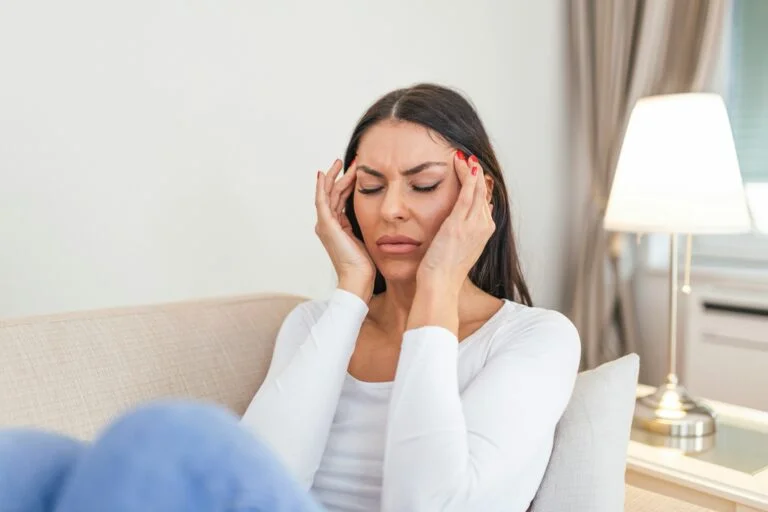
| Stress and muscle tension | Tight shoulders and neck, sometimes with a clenched jaw or tension headache | Relaxation, sleep, exercise (see stress) |
| Whiplash (a sudden jolt, such as a car crash or fall) | Neck pain, stiffness and headaches that can take several hours to start | Painkillers, keep moving; see the red flags |
| A trapped (pinched) nerve | Pain, pins and needles or numbness spreading into the arm | See a GP if it doesn’t settle |
| Age-related changes (cervical spondylosis) | Changes show up on scans in many people over 30, often with no pain at all | Stay active; GP or physio if stiffness keeps coming back |
| Meningitis (rare but serious) | Stiff neck with fever, severe headache, a rash or dislike of bright lights | Call 999 or go to A&E |
Wear and tear on scans can sound alarming, but NICE’s summary notes that many people over 30 show similar changes, and how much shows up on a scan matches poorly with how much it hurts.
How long does a stiff neck last?
The NHS says most neck pain only lasts a few weeks. NHS Inform in Scotland says new neck problems should begin to settle within 8 weeks, with the biggest change usually in the first couple of weeks.
NICE’s summary adds two useful details. Most new neck pain clears up within 2 months, but around half of people still have mild symptoms or flare-ups more than a year later. Recovery tends to be slower for people who have had neck pain before, who also have back pain or headaches, or who are dealing with anxiety, low mood or worry.
Whiplash is a little different: the NHS says it usually gets better within about 2 to 3 months.
How to get rid of a stiff neck: what to do today
There is no 10-second fix, but these NHS steps help most stiff necks settle faster.
- Keep your neck moving. Gentle movement is better than holding it still. The NHS advises against wearing a neck collar unless a doctor tells you to. NHS Inform suggests moving your neck for short periods every hour and keeping up normal activities, at a slower pace if needed.
- Use heat or cold. The NHS suggests a bag of frozen peas wrapped in a tea towel for 5 minutes, 3 times a day, or a hot water bottle wrapped in a tea towel for 20 minutes, 2 to 3 times a day. Never put ice or heat directly on your skin.
- Ask a pharmacist about painkillers. The NHS lists paracetamol or ibuprofen tablets, or ibuprofen gel rubbed on the neck. Ibuprofen isn’t suitable for everyone, so check with a pharmacist, especially if you take other medicines.
- Use a low, firm pillow tonight, and read the sleep tips below.
- Take care with driving and cycling. The NHS says to avoid activities that could be risky if you can’t move your neck fully, such as driving or cycling.
A warm shower or bath before your stretches is an easy way to add heat; our Epsom salt bath guide covers how to make the most of one.
What helps vs what the evidence says
| Option | NHS advice | What the research shows |
|---|---|---|
| Exercise | Do neck flexibility exercises | A Cochrane review of 27 trials (2,485 people) found no evidence either way for new (acute) neck pain. For long-term neck pain, strengthening the neck, shoulders and upper back may help; stretching on its own showed little benefit |
| Heat | Hot water bottle in a tea towel | A 2026 systematic review found only two small trials (67 people). Evidence is too thin to say for sure, but heat is low risk and reasonable to try |
| Pillow type | A low, firm pillow | A 2025 review of 5 studies (239 people) found no type of pillow (latex, foam or standard) clearly better than another |
| Neck collar | Don’t wear one unless a doctor advises it | The NHS says collars don’t help whiplash either |
The message is the same as for lower back pain: gentle movement first, and build strength once the worst has passed. If you’re wondering about CBD, see what the CBD and pain research actually shows. CBD isn’t a treatment for neck pain.
A gentle 5-minute neck stretch routine
These are standard neck and upper back exercises from an NHS physiotherapy leaflet. Sit tall on a firm chair. Move slowly, only as far as feels comfortable, and stop if any exercise makes you feel dizzy or unwell. Some discomfort is normal, but it should ease within 2 hours. If your stiff neck followed a fall, a crash or another injury, get checked before stretching.
- Chin tucks (1 minute). Glide your head straight back, as if making a double chin, keeping your eyes level. Hold for 1 to 2 seconds. Repeat 10 times.
- Side tilts (1 minute). Tilt your head towards one shoulder until you feel a gentle stretch on the other side. Hold for 1 to 2 seconds, then swap. Repeat 5 times each side.
- Forward bends (1 minute). Bend your head forward until you feel a stretch at the back of your neck. Hold for 1 to 2 seconds. Repeat 10 times.
- Look up (30 seconds). With your hands behind your head if that’s comfortable, tip your head back only as far as is comfortable. Hold for 1 to 2 seconds. Repeat 10 times.
- Seated trunk twists (1 minute). Fold your arms across your chest and slowly turn your upper body to one side, then the other. Hold for 1 to 2 seconds. Repeat 5 times each side.
- Shoulder rolls (30 seconds). Roll your shoulders 10 times forwards, then 10 times backwards.
While your neck is stiff, gentle movement little and often through the day helps. As a regular exercise plan, the NHS leaflet suggests doing the routine 3 to 4 times a week, with a rest day in between. Once your neck has settled, the Cochrane review suggests strengthening work for the neck, shoulders and upper back is more useful than stretching alone, and a physio can tailor this. A daily walk helps too; our Japanese walking plan is an easy place to start, and muscle recovery covers rest, sleep and food.
Waking up with a stiff neck: pillow and position
Waking up with a stiff neck usually means your neck spent hours bent or twisted. The NHS tips to prevent it:
- Keep your head level with the rest of your body when you sleep, rather than propped up or dropping down.
- Use a low, firm pillow and a firm mattress.
- Don’t sleep on your front, which keeps your head turned to one side all night.
- Don’t twist your neck in bed, for example reading or watching your phone with your head propped at an angle.
To keep your head level, side sleepers usually need a pillow that fills the gap between ear and shoulder, while back sleepers often find a flatter pillow keeps the head level. There is no one perfect pillow: research hasn’t found any type clearly better, and an NHS hospital leaflet notes there is no single recommended sleeping position. Choose what keeps your head level and feels comfortable. Our guide to the best sleeping position compares side, back and front sleeping in more detail.
If you also wake with a sore jaw or headache, night-time clenching may be playing a part: see teeth grinding and waking up with a headache.
Desk set-up and phone use
Holding one position for a long time is one of the commonest causes of a stiff neck. The Health and Safety Executive (HSE) checklist for screen work:
- Screen: top of the screen level with your eyes, about an arm’s length away and straight in front of you, so you don’t have to twist.
- Keyboard and mouse: keyboard just below elbow height, mouse in line with your elbow.
- Chair: seat height that supports the front and back of your thighs, with good lower back support.
- Laptops: for long spells, use a separate keyboard and mouse and raise the screen on a riser.
- Breaks: short and often is better. The HSE says 5 to 10 minutes every hour is better than 20 minutes every 2 hours.
Phones: a 2025 meta-analysis of 7 studies (10,715 people) found that people who overused their smartphones were more than twice as likely to report neck pain. The studies only show a link, not proof of cause, but it’s an easy habit to change: hold your phone closer to eye level, use a stand for video calls and put it down every so often to roll your shoulders.
Working from home on a sofa or kitchen table? Our guide to working from home and staying well has routines that build in movement.
Stress and neck tension
Many people carry stress in their neck and shoulders. NICE’s summary lists anxiety and depression among the factors that contribute to neck pain, alongside posture and strain. A 2025 review of 6 studies found that psychological distress and catastrophising (expecting the worst about pain) predicted neck pain that lasts or keeps coming back. That doesn’t mean the pain is “in your head”; it means looking after your mind is part of recovery.
- Learn to spot your own stress symptoms, such as raised shoulders, a clenched jaw and poor sleep.
- Try progressive muscle relaxation, which works through tensing and releasing each muscle group, including the neck and shoulders.
- Use a quick breathing technique from our guide on how to calm down when you notice your shoulders creeping up.
- Keep moving on stressful days: a short walk is good for your neck and your mood.
- If stress or worry is taking over, talk to your GP about support such as talking therapies.
Stiff neck and headache
A stiff neck and a headache often go together. The NHS describes tension headaches as pain on both sides of the head, face or neck, like something pressing on or tightening around your head. Stress and poor sleep are common triggers, and the NHS suggests a low, firm pillow and heat or cold packs if neck pain comes with them.
The NHS says to call 999 or go to A&E if you have a headache with a very high temperature, a stiff neck or bright lights bothering you, or a headache that started suddenly and is extremely painful. Trust your instincts: if you feel very unwell, don’t wait.
Red flags: when a stiff neck is urgent
Call 999 or go to A&E if you have a stiff neck and:
- a high temperature, or you feel hot, cold or shivery
- a severe headache that is getting worse, or a headache that came on suddenly and is extremely painful
- bright lights hurt your eyes
- a rash that doesn’t fade when you press a glass against it (it may be harder to see on brown or black skin)
- confusion, drowsiness, slurred speech or a seizure
These can be signs of meningitis, which needs treatment straight away. Not everyone has every symptom. Do not drive yourself to A&E.
After an injury: if your neck pain started after a fall, a car crash or a blow to the head, get it checked. An NHS hospital leaflet advises going to A&E if you have worsening pain, problems with coordination or walking, heaviness or weakness in your arms or legs, or loss of bladder or bowel control. For whiplash, the NHS advises an urgent GP appointment or NHS 111 if you have severe pain despite painkillers, pins and needles, trouble walking or sitting upright, or an electric-shock feeling in your neck and back.
Numbness or weakness: NHS Inform says to contact your GP practice urgently, or call 111 if it’s closed, if you have worsening clumsiness, numbness, pins and needles or weakness in one or both arms, problems with balance or walking, or neck pain with a severe headache.
When to see a GP or physio
The NHS suggests seeing a GP if:
- the pain or stiffness hasn’t gone after a few weeks
- painkillers aren’t helping
- you’re worried about the pain
- you have other symptoms, such as pins and needles or a cold arm
NHS Inform also says to contact your GP if you have neck pain and feel generally unwell, or develop blurred vision, ringing in your ears or dizziness. For whiplash, see a GP if it hasn’t improved after a week.
Physio without a GP: in many areas you can refer yourself to NHS musculoskeletal (MSK) services, including physiotherapy. Check your local NHS website or ask your GP surgery. A physio can give you a strengthening plan if your neck keeps flaring up.
Where our products fit (honestly)
No supplement or balm is a treatment for a stiff neck, and CBD isn’t a treatment for neck pain. Gentle movement, sleep and proper medical advice come first. Here’s how our products can sit alongside a healthy routine.
Our CBD Balm, Muscle and Joint Support is a massage balm made with broad spectrum CBD, peppermint, eucalyptus and juniper. It feels cooling and non-greasy, and some people like it as part of a self-massage routine after a warm shower. Read more in our CBD balm guide.
Our Magnesium Glycinate Sleep Complex is an evening drink with magnesium bisglycinate and citrate, glycine and L-theanine. Magnesium contributes to normal muscle function. For more, see magnesium and muscles.
If you also take CBD by mouth: the FSA’s 10mg a day figure is precautionary advice rather than a legal limit, set while longer-term safety research continues. At Evopure we think it is a very cautious figure, and many adults use more. If you go above it, increase slowly, and check with your GP or pharmacist first if you take any medication.
Our products are for adults (18+) only. We don’t recommend our products during pregnancy or breastfeeding. If you take prescribed medicines, check with your pharmacist before adding a supplement.
Related guides
- If neck pain comes with tingling in your arm or hand, read our guide to pins and needles.
- Tension often travels up into the face as well: see jaw pain for clenching, TMD and a daily jaw-relaxation routine.
- If neck tension spreads to an ache behind your eyes, see headache behind the eyes.
- How to use a hot water bottle safely and how to read its daisy wheel date.
FAQs
How long does a stiff neck last?
Most stiff necks improve within a few weeks, with the biggest change usually in the first couple of weeks. See a GP if it hasn’t gone after a few weeks or painkillers aren’t helping.
How do I get rid of a stiff neck from sleeping wrong?
Keep your neck moving gently, use a hot water bottle or a cold pack wrapped in a tea towel, ask a pharmacist about painkillers, and try slow chin tucks, side tilts and shoulder rolls. Switch to a low, firm pillow that keeps your head level.
Is heat or ice better for a stiff neck?
The NHS suggests either. Use frozen peas wrapped in a tea towel for 5 minutes, or a wrapped hot water bottle for 20 minutes, a few times a day. Many people find heat more soothing for stiffness.
When is a stiff neck serious?
Call 999 or go to A&E if a stiff neck comes with a high temperature, a severe or sudden headache, a rash that doesn’t fade under a glass, bright lights hurting your eyes, or confusion. These can be signs of meningitis.
Can stress cause a stiff neck?
Stress can make neck and shoulder muscles tense, and anxiety and low mood are linked with neck pain that lasts longer or keeps coming back. Relaxation, sleep and regular movement all help.
Should I wear a neck collar for a stiff neck?
No, not unless a doctor tells you to. The NHS says it’s better to keep your neck moving.
What pillow is best for a stiff neck?
The NHS suggests a low, firm pillow that keeps your head level with your body. Research hasn’t found one type of pillow clearly better than another, so choose what keeps your neck straight and feels comfortable.
Sources
- NHS. Neck pain and stiff neck.
- NHS. Meningitis.
- NHS. Headaches.
- NHS. Tension headaches.
- NHS. Whiplash.
- NHS Inform. Neck problems.
- NICE Clinical Knowledge Summaries. Neck pain: non-specific. Last revised April 2023.
- WWL Teaching Hospitals NHS Foundation Trust. Neck and upper back exercises, level 1.
- Hull University Teaching Hospitals NHS Trust. Soft tissue injury: neck pain.
- Health and Safety Executive. Good posture when using DSE and Work routine and breaks.
- Gross A, et al. Exercises for mechanical neck disorders. Cochrane, 2015. PMID 25629215.
- Wilfling D, et al. Use of heat for the self-management of non-specific neck pain: a systematic review. J Pain Res, 2026. PMID 42311469.
- Ghosh S, et al. Effect of pillow on pain, disability and sleep quality in patients with chronic neck pain: a systematic review. Rehabilitacion, 2025. PMID 40633255.
- Chen YJ, et al. Association of smartphone overuse and neck pain: a systematic review and meta-analysis. Postgrad Med J, 2025. PMID 39764644.
- Yu CWG, et al. Physical and psychological predictors for persistent and recurrent non-specific neck pain: a systematic review. Eur J Pain, 2025. PMID 41222211.
This guide is general information, not medical advice. If you’re worried about a stiff neck, speak to a GP, pharmacist or physiotherapist, and call 999 if you think it could be meningitis. Evopure makes the CBD Balm, Muscle and Joint Support and the Magnesium Glycinate Sleep Complex.