



Last updated: October 2026
Mushrooms contain compounds such as beta-glucans that affect inflammation in lab studies, but there’s little proof that mushroom supplements reduce inflammation in people. The best human hint is a small trial where eating shiitake daily lowered a blood marker of inflammation. Eating more mushrooms as part of a varied diet is a sensible, low-risk step.
Below: what inflammation is, what research shows for each mushroom, food vs supplements, safety, and what actually lowers inflammation.
Inflammation in plain English
Short-term inflammation is the body’s normal response to injury or infection: redness, swelling and heat that help healing. Long-term, low-level inflammation is linked with conditions like heart disease and type 2 diabetes, and is often measured with a blood test called CRP. Inflammation from conditions such as arthritis or Crohn’s disease needs medical treatment.
Which mushrooms have been studied?
| Mushroom | What the research shows |
|---|---|
| Shiitake | 52 healthy young adults ate 5 to 10g of dried shiitake daily for 4 weeks; CRP fell and immune cell activity changed. Small, short study. |
| Reishi | Lab and animal studies; a Cochrane review found too little evidence for heart-related risk factors. See reishi |
| Turkey tail | Studied mainly for immune effects alongside cancer treatment; not for general inflammation. See turkey tail |
| Chaga | Lab studies only; high in oxalates. See chaga |
| Lion’s mane | Lab and animal studies; human research focuses on memory. See lion’s mane |
| Cordyceps | Lab and animal studies; human research focuses on exercise. See cordyceps |
For an overview of all seven, see our adaptogenic mushrooms guide.
Mushrooms as food vs supplements
Everyday mushrooms such as shiitake, oyster, maitake and button mushrooms add fibre, B vitamins and beta-glucans to your diet, and the best human evidence comes from eating them. Supplements vary hugely in what they contain. If you choose one, look for the species, the part used (fruiting body or mycelium) and the extract strength on the label, and a product tested for contaminants.
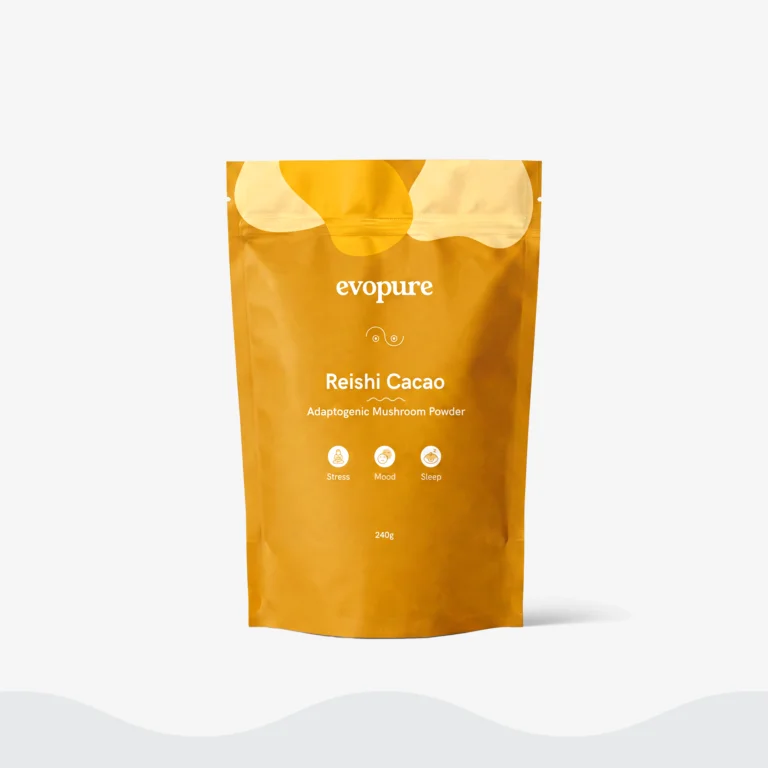
Our Reishi Mushroom Adaptogenic Complex is an evening hot chocolate with reishi extract, cacao, maca and coconut milk, enjoyed as a ritual rather than a remedy.
Safety
- Avoid mushroom supplements in pregnancy and breastfeeding.
- Check with a pharmacist if you take blood thinners, diabetes or blood pressure medicines, or immunosuppressants.
- Chaga is very high in oxalates; avoid it if you’ve had kidney stones.
- Raw or undercooked shiitake can cause an itchy rash in some people. See shiitake.
- Never forage wild mushrooms unless you’re an expert.
What lowers inflammation
- A Mediterranean-style diet: vegetables, fruit, wholegrains, beans, nuts, olive oil and oily fish.
- Regular activity and a healthy weight.
- Not smoking and drinking less alcohol.
- Good sleep and stress management.
- Treating underlying conditions with your GP’s help.
Related reading: CBD and turmeric.
FAQs
What mushrooms help with inflammation?
Shiitake has the best human hint: a small trial found eating it daily lowered a blood marker of inflammation. Other mushrooms have mostly lab evidence.
Is reishi anti-inflammatory?
It has anti-inflammatory effects in lab studies, but there’s no good evidence it reduces inflammation in people.
Are mushroom supplements better than eating mushrooms?
Not necessarily. The best human evidence comes from eating mushrooms, and supplements vary widely in quality.
Can mushrooms cause inflammation?
In people with a mushroom allergy, yes. Raw shiitake can also cause a skin rash in some people.
What is the best mushroom for inflammation?
None is proven. Adding everyday mushrooms like shiitake to a balanced diet is a sensible, low-risk choice.
Sources
- Dai X et al. Consuming shiitake mushrooms daily improves human immunity. J Am Coll Nutr, 2015.
- Klupp NL et al. Ganoderma lucidum mushroom for the treatment of cardiovascular risk factors. Cochrane Database Syst Rev, 2015.
- National Cancer Institute. Medicinal mushrooms (PDQ).
- Kwon O et al. Chaga mushroom-induced oxalate nephropathy: a case report. Medicine, 2022.