Last updated: October 2026
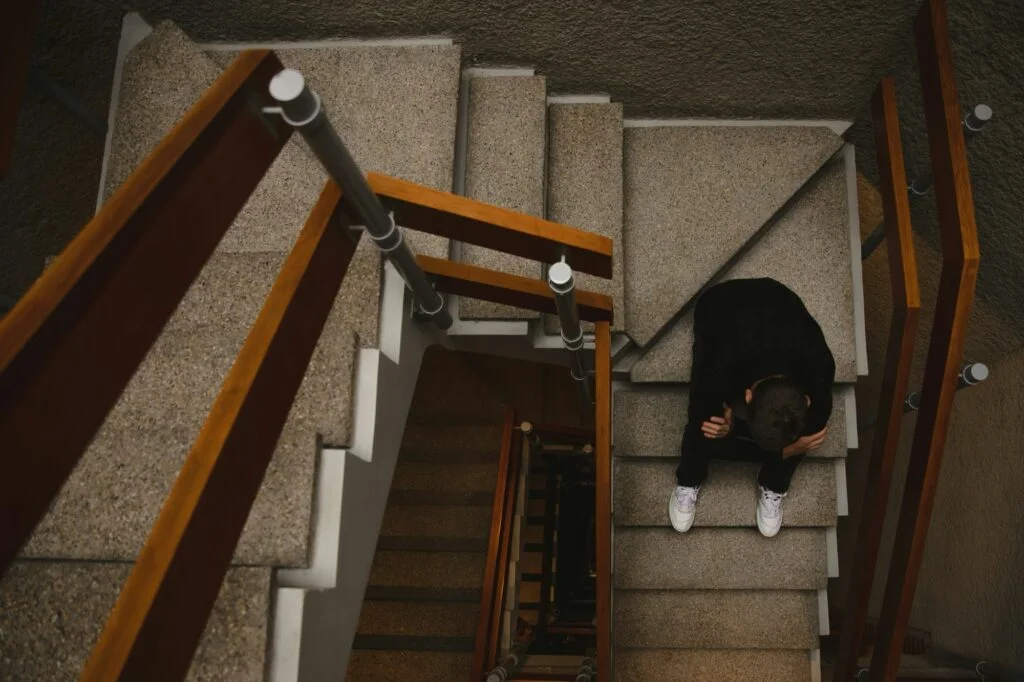
“Nervous breakdown” isn’t a medical term, but people use it to describe reaching a point where stress, anxiety or depression become so overwhelming that you can’t cope with daily life. Warning signs include feeling unable to function, constant exhaustion, crying, panic, poor sleep and withdrawing from people. It’s a sign to stop, get support and see a GP.
This guide covers what a nervous breakdown really is, the warning signs, causes, what to do right now, time off work and fit notes, recovery, and how to help someone else.
If you feel you can’t keep yourself safe, call 999 or go to A&E. You can also call NHS 111 (select the mental health option), Samaritans free on 116 123, or text SHOUT to 85258, any time of day or night. You don’t have to wait until things are this bad to ask for help.
What is a nervous breakdown?
Doctors don’t diagnose a “nervous breakdown”. Instead, the term usually describes a mental health crisis caused by something underneath, such as:
- Severe stress or burnout. See burnout symptoms and stress symptoms.
- Depression. See low mood vs depression.
- An anxiety disorder or panic attacks. See anxiety symptoms.
- A reaction to trauma or a major life event, such as a bereavement. See grief.
Calling it a “breakdown” can make it sound like something permanently broke. In reality, it’s your mind and body telling you the load has become too heavy. With rest, support and treatment, people recover.
Signs of a nervous breakdown
| Emotional | Physical | Behaviour |
|---|---|---|
| Feeling overwhelmed and unable to cope | Exhaustion that rest doesn’t fix | Unable to go to work or do daily tasks |
| Crying a lot, or feeling numb | Insomnia or sleeping far more than usual | Withdrawing from friends and family |
| Anxiety, panic or dread | Racing heart, chest tightness, shaking | Neglecting eating, washing or bills |
| Irritability or anger | Headaches, aches and stomach problems | Drinking more or using drugs to cope |
| Hopelessness, guilt or worthlessness | Changes in appetite or weight | Snapping at people or crying at work |
| Can’t think straight, concentrate or decide | Getting ill more often | Calling in sick repeatedly |
| Feeling detached or unreal | Feeling on edge all the time | Thoughts of self-harm or suicide |
Not everyone has every sign. The key feature is that it stops you functioning in your normal life.
Nervous breakdown vs burnout vs depression vs panic attack
These overlap, and one can lead to another, but it can help to know the differences.
| What it is | Typical signs | |
|---|---|---|
| Burnout | Exhaustion from long-term stress, usually work-related | Drained, cynical about work, less effective. See burnout |
| Depression | A mental health condition lasting 2 weeks or more | Low mood, loss of interest, hopelessness. See low mood vs depression |
| Panic attack | A sudden surge of intense fear, usually lasting minutes | Racing heart, breathlessness, feeling of doom. See panic attacks |
| “Nervous breakdown” | A non-medical term for reaching the point of not coping | Unable to function day to day, often from any of the above |
Early warning signs
A breakdown rarely comes out of nowhere. Often there are weeks or months of warning signs that are easy to brush off:
- Constantly tired but sleeping badly. See sleep deprivation
- Getting irritable over small things. See why am I so irritable?
- Struggling to switch off from work. See how to stop overthinking
- Losing interest in things you usually enjoy
- Relying on caffeine, sugar or alcohol to get through the day
- Feeling on the edge of tears much of the time. See crying for no reason
- Forgetting things and making mistakes
- Tension headaches and tight shoulders. See tension headaches
If several of these sound familiar, it’s a good time to act, before things get worse.
What causes a nervous breakdown?
It’s usually a build-up of several pressures at once rather than one thing:
- Work stress, long hours or job insecurity
- Money worries or debt
- Relationship breakdown or divorce
- Bereavement
- Caring for a family member
- Illness or chronic pain
- Trauma, past or present
- Big life changes, such as a new baby, moving or redundancy
- Hormonal changes. See perimenopause symptoms
- Taking on too much and finding it hard to say no. See people pleasing and the mental load
What to do if you’re having a breakdown
- Make sure you’re safe. If you’re having thoughts of harming yourself, call 999, NHS 111 or Samaritans on 116 123 now.
- Tell someone. A partner, friend or family member. Saying “I’m not coping” out loud is a big step.
- Book a GP appointment. Be honest about how bad things are. It can help to write it down first.
- Stop or reduce the pressure where you can. Take time off, cancel non-essential plans, ask for help with children or caring.
- Focus on the basics: sleep, simple meals, water, a short walk, a shower. Nothing more is expected right now.
- Calm your body in moments of panic. See how to stop a panic attack, box breathing and grounding techniques.
- Avoid alcohol and drugs, which make anxiety and depression worse.
- Refer yourself to NHS Talking Therapies if you’re in England. You don’t need to see a GP first.
The first week: a gentle plan
When everything feels too much, it helps to have very small, clear steps. This isn’t a cure, just a way to get through the first few days.
| Day | Focus |
|---|---|
| 1 | Tell one person. Book a GP appointment. Rest. |
| 2 | Sort time off work if needed. Eat three simple meals. |
| 3 | Step outside for 10 minutes in daylight. |
| 4 | Refer yourself to NHS Talking Therapies, or ask someone to help you do it. |
| 5 | Set a regular bedtime and wake time. Put screens away an hour before bed. |
| 6 | See or call a friend, even briefly. |
| 7 | Do one small thing you used to enjoy. |
If a step feels too much, skip it and try again tomorrow. If things get worse at any point, contact your GP, NHS 111 or Samaritans on 116 123.
Time off work, fit notes and sick pay (UK)
Taking time off for your mental health is just as valid as for a physical illness.
- Up to 7 days: you can self-certify, so you don’t need a note from a doctor.
- More than 7 days in a row (including weekends): you need a fit note. A GP can give you one, and so can some other healthcare professionals, such as nurses and pharmacists.
- Pay: you may get your employer’s sick pay or Statutory Sick Pay.
- You don’t have to give your employer every detail. The fit note can say “stress-related illness”, “anxiety” or “depression”.
- Going back: ask about a phased return, changed hours or duties, or support from occupational health or an Employee Assistance Programme. Under the Equality Act, employers may need to make reasonable adjustments if a mental health condition counts as a disability. Access to Work also offers mental health support.
The Health and Safety Executive says employers have a legal duty to assess and manage the risks of work-related stress.
Recovery: how long does it take?
There’s no fixed timeline. Some people feel much better within a few weeks of rest and support. For others, especially if depression or anxiety needs treatment, recovery takes a few months. Recovery usually isn’t a straight line, so expect good days and bad days.
Treatment depends on what’s underneath. It may include:
- talking therapy, such as CBT or counselling
- medication, such as antidepressants, if your GP recommends it
- support from a community mental health team, if needed
- practical help with money, housing or work
Things that help day to day include a gentle routine, daylight and short walks, regular meals, good sleep, seeing supportive people and slowly adding back activities you enjoy. See how to deal with anxiety and how to get motivated.
A calming evening routine can help your sleep get back on track. Our Magnesium Glycinate Sleep Complex is a caffeine-free berry drink with L-theanine, and magnesium contributes to normal psychological function and the reduction of tiredness and fatigue. Some people take our Flow CBD Oil as part of their daily routine. CBD is a food supplement, not a treatment for anxiety or depression. The FSA’s 10mg a day figure for CBD is precautionary advice rather than a legal limit, set while longer-term safety research continues. At Evopure we think it is a very cautious figure, and many adults use more. If you go above it, increase slowly. If you take antidepressants or any other medicine, check with your GP or pharmacist first.
How to stop it happening again
- Know your warning signs and write them down, with what you’ll do if they appear.
- Set boundaries at work and at home. Learn to say no.
- Build in daily recovery time, even 15 minutes. See self-care ideas.
- Protect sleep. See how to sleep better.
- Move every day. See healthy habits.
- Stay connected with people who support you.
- Keep up any therapy or treatment until you and your GP agree to stop.
How to help someone having a breakdown
- Stay calm and listen without judging or trying to fix everything.
- Ask directly if they’re thinking of harming themselves. It doesn’t put the idea in their head. If they’re in danger, call 999.
- Help practically: book the GP appointment, go with them, cook a meal, help with children.
- Encourage professional help without forcing it.
- Keep checking in over the following weeks.
- Look after yourself too. Supporting someone is draining.
FAQs
What are the signs of a nervous breakdown?
Feeling unable to cope with daily life, exhaustion, crying or numbness, panic, poor sleep, withdrawing from people, being unable to work and sometimes thoughts of self-harm.
Is a nervous breakdown a real medical condition?
It isn’t a medical diagnosis. It usually describes a mental health crisis caused by severe stress, burnout, depression or anxiety, which can be treated.
Can I get signed off work for a nervous breakdown?
Yes. You can self-certify for up to 7 days. After that, a GP or another healthcare professional can give you a fit note for stress, anxiety or depression.
How long does it take to recover from a nervous breakdown?
It varies. Some people improve within weeks with rest and support; others need a few months of treatment. Expect ups and downs along the way.
What is the difference between burnout and a nervous breakdown?
Burnout is exhaustion from long-term stress, usually work-related. A breakdown describes reaching the point where you can’t function, which can follow untreated burnout.
What should I do if I think I’m having a breakdown?
Tell someone you trust, see a GP, reduce pressure where you can and focus on basics like sleep and food. If you’re not safe, call 999 or Samaritans on 116 123.
Sources
- NHS. Stress.
- NHS. Where to get urgent help for mental health.
- GOV.UK. Taking sick leave.
- GOV.UK. Statutory Sick Pay.
- Health and Safety Executive. Work-related stress.
- NICE (2022). Depression in adults: treatment and management (NG222).
This guide is general information, not medical advice. Evopure makes the Magnesium Glycinate Sleep Complex and Flow CBD Oil.