
Last updated: October 2026
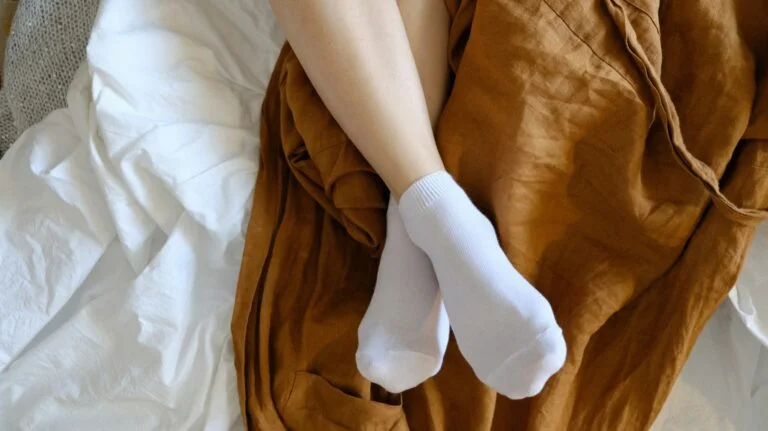
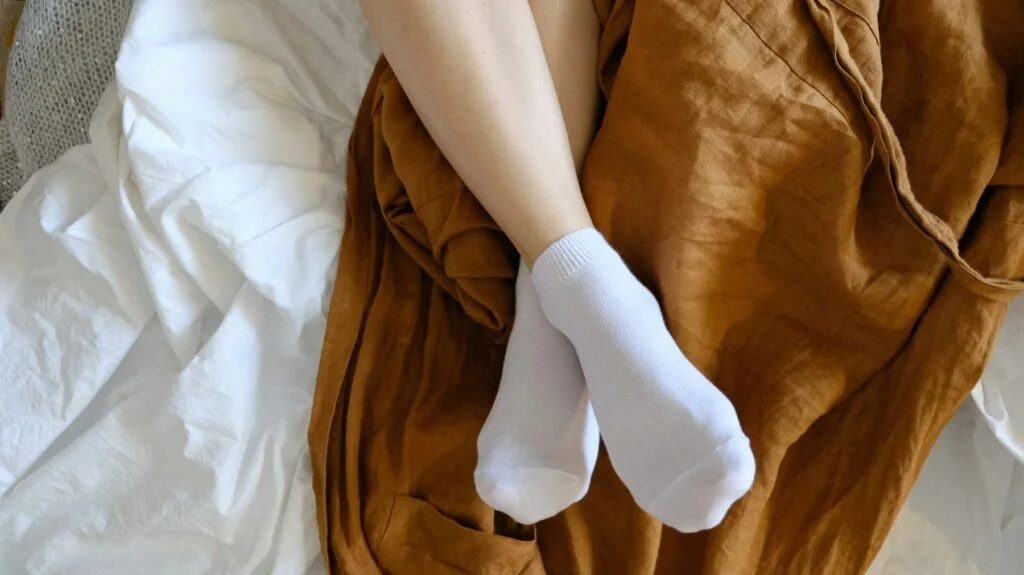
For most people, sleeping with socks on is fine, and it may help you fall asleep faster if cold feet keep you awake. Warm feet widen the blood vessels in your skin, which helps your body shed heat before sleep. Choose loose, clean, breathable socks, take them off if you get hot, and take extra care if you have diabetes.
Below: what the science says, the best socks for bed, who should skip them, babies and compression socks, other ways to warm your feet, and a quick myth-buster.
Why warm feet can help you nod off
To fall asleep, your core temperature needs to dip slightly. Your body does this by sending warm blood to your hands and feet, where the blood vessels widen and let heat escape through the skin. Scientists call this distal vasodilation.
Swiss sleep researchers described the link in a 1999 paper titled “Warm feet promote the rapid onset of sleep”. In a follow-up study, how much warmer people’s hands and feet were than their trunk predicted how fast they fell asleep better than core temperature, melatonin or sleepiness did. Icy feet keep those vessels narrow; socks help them open up.
The bed socks study
The study most articles quote is small. In 2018, Korean researchers asked six healthy young men to sleep for 7 hours in a cool 23°C room, once with bed socks and once without. With socks on, they:
- fell asleep about 7.5 minutes sooner
- slept about 32 minutes longer
- woke up less often, with sleep efficiency 7.6% higher
- kept their feet about 1.3°C warmer, while their core temperature didn’t change
Interestingly, the men didn’t rate their sleep as any better in the morning questionnaire. Six people is a tiny sample, so treat this as a promising hint rather than proof. If cold feet are a regular problem, see our full guide to cold feet.
Sleeping with socks on: good or bad?
For most adults, it’s personal choice. If your feet are already warm, you don’t need socks. If cold feet stop you dropping off, they’re worth a try.
| Socks on can suit you if | Socks off may be better if |
|---|---|
| Your feet are cold when you get into bed | You run hot at night or get night sweats |
| Your bedroom is cool in winter | Your feet sweat, or you have athlete’s foot |
| You have Raynaud’s or get chilblains, and want gentle warmth | Your only socks are tight or leave deep marks |
| Cold feet wake you in the night | You have diabetes with numb feet and haven’t checked with your GP or podiatrist |
The ideal is a cool room with warm feet. Our guide to the best temperature for sleep covers the room side.
The best socks to sleep in
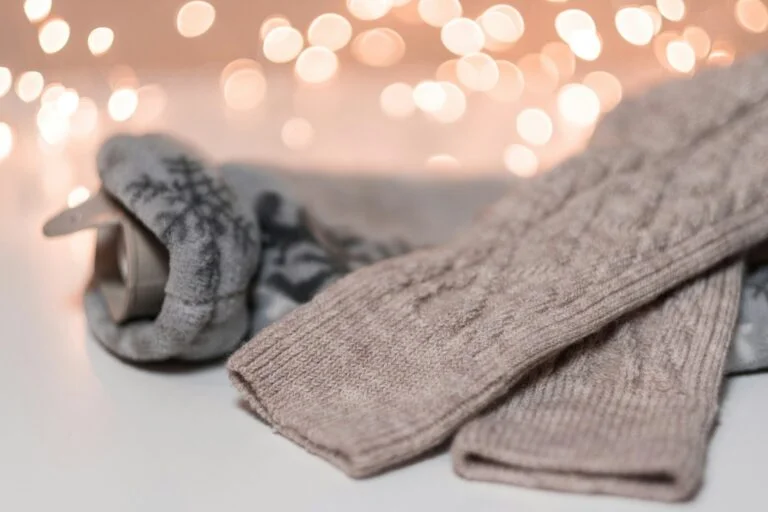
- Loose and soft. Pick a relaxed top that doesn’t dig in or leave a ridge on your skin.
- Breathable, natural fibres. Cotton, merino wool or bamboo are good choices. The NHS says cotton socks are best for preventing athlete’s foot.
- A clean pair. Put on fresh socks at bedtime rather than the ones you’ve worn all day.
- Thin rather than thick if you tend to overheat. You want warm feet, not hot, sweaty ones.
When not to sleep in socks
Diabetes and numb feet
The NHS explains that diabetes can damage the nerves and reduce the blood supply to your feet, causing a loss of feeling, so you may not notice if you’ve hurt your foot. It advises checking your feet every day. Diabetes UK suggests looking at them before you put your socks on in the morning and before bed, and avoiding socks that are too tight, too loose, rub, have holes or thick seams.
Loose, clean socks are often a safer way to keep numb feet warm than direct heat. Diabetes Scotland advises never resting your feet on a hot water bottle. If your foot turns very pale or blue, especially with new numbness or pain, NHS inform says to call 999 or go to A&E.
Tight elastic tops
Socks that leave a deep mark can press on your skin all night. Swap them for a loose pair, and see a GP if your ankles or feet are often swollen.
Fungal infections and sweaty feet
The NHS says you’re more likely to get athlete’s foot if you have wet or sweaty feet. If you’re treating it, keep your feet clean and dry and wear a fresh pair of socks every day, or let your feet breathe at night.
Overheating
If you wake hot or sweaty, take the socks off. Hot flushes, night sweats or a warm room are all reasons to keep your feet bare.
Should babies and children wear socks to bed?
For babies, the bigger concern is overheating. The NHS says overheating can increase the risk of sudden infant death syndrome (SIDS), and advises a room of about 16 to 20°C. To check your baby’s temperature, feel their chest or the back of their neck, not their hands or feet: cool hands or feet are normal.
So a baby doesn’t need socks just because their feet feel cool. Ask your health visitor if you’re unsure. Older children can wear loose, soft socks if they like them and aren’t hot.
Can you sleep in compression socks?
Not unless a health professional has told you to. The NHS says it’s best to wear compression stockings during the day and remove them at bedtime. It also says they’re not suitable if you have problems with blood flow in your arteries, so talk to a doctor or pharmacist to get the right type. If you were given stockings after an operation, follow the instructions from your hospital team.
Other ways to warm your feet before bed
- A warm bath or shower. A 2019 review of 17 studies linked a bath or shower at 40 to 42.5°C, taken 1 to 2 hours before bed, with falling asleep sooner, even when it lasted only 10 minutes. An Epsom salt bath works the same way.
- A warm footbath. In a small Japanese study of nine women, a hot footbath before bed helped them fall asleep sooner. If you have diabetes, Diabetes UK says to check the water with your wrist or elbow first.
- A hot water bottle, used safely. Don’t use boiling water, always use a cover, take it out of bed before you get in and replace it after about 3 years. Our hot water bottle safety guide explains the daisy wheel.
- An electric blanket to take the chill off the bed before you get in. Check yours first with our electric blanket safety checklist.
Bed socks are still the simplest option: no water, no wires. Pair them with a calm bedtime routine and our tips to fall asleep fast.
If a warm drink is part of your wind-down, our Magnesium Glycinate Sleep Complex is a caffeine-free berry drink made with magnesium bisglycinate and citrate, glycine, L-theanine and chamomile. Magnesium contributes to normal psychological function and to the normal functioning of the nervous system. Read more in magnesium for sleep. Our products are for adults only, and we don’t recommend our products during pregnancy or breastfeeding.
Sleeping in socks: myths and facts
| Myth | The facts |
|---|---|
| Sleeping in socks causes fungal infections | Not on its own. Damp, sweaty feet raise the risk of athlete’s foot, so wear a clean, dry, breathable pair. |
| Socks cut off your circulation | Only tight ones. Loose socks with a soft top don’t squeeze your feet. |
| Socks overheat your whole body | In the bed socks study, core temperature didn’t change. But if your feet feel hot or sweaty, take them off. |
| Compression socks are better for sleep | The NHS says to wear compression stockings in the day and remove them at bedtime unless you’ve been told otherwise. |
| Vapour rub and socks cure a night-time cough | We’ve found no good evidence that the feet are the place for it. See cough at night for what helps. |
| You need socks to sleep well | No. Plenty of people sleep well barefoot. Socks only help if your feet are cold. |
Still struggling to sleep even with warm feet? Read why can’t I sleep? for the common causes, or see whether a banana before bed lives up to its reputation.
FAQs
Is it bad to sleep with socks on every night?
No, not for most people. Wear a clean, loose, breathable pair each night, check your feet if you have diabetes, and take them off if you get too hot.
Do socks help you fall asleep faster?
They might if your feet are cold. In a small study of six young men in a cool room, bed socks cut the time to fall asleep by about 7.5 minutes and lengthened sleep by about 32 minutes.
Is sleeping in socks bad for circulation?
Loose socks aren’t. Tight socks with elastic tops can press on your skin, so choose a relaxed pair. See a GP if your feet change colour, go numb or swell often.
Should babies wear socks to bed?
They don’t need to. The NHS says overheating can increase the risk of SIDS and that cool hands or feet are normal. Check your baby’s chest or the back of their neck instead.
Can I sleep in compression socks?
Only if a health professional has told you to. The NHS says it’s best to wear compression stockings during the day and remove them at bedtime.
What socks are best for sleeping?
Soft, loose socks in breathable natural fibres such as cotton, merino wool or bamboo, with a top that doesn’t dig in. Put on a fresh pair at bedtime.
Sources
- Kräuchi K et al. Warm feet promote the rapid onset of sleep. Nature, 1999.
- Kräuchi K et al. Functional link between distal vasodilation and sleep-onset latency? Am J Physiol Regul Integr Comp Physiol, 2000.
- Ko Y, Lee JY. Effects of feet warming using bed socks on sleep quality and thermoregulatory responses in a cool environment. J Physiol Anthropol, 2018.
- Haghayegh S et al. Before-bedtime passive body heating by warm shower or bath to improve sleep: a systematic review and meta-analysis. Sleep Med Rev, 2019.
- Sung EJ, Tochihara Y. Effects of bathing and hot footbath on sleep in winter. J Physiol Anthropol Appl Human Sci, 2000.
- NHS. Diabetes complications.
- Diabetes UK. Taking care of your feet.
- NHS inform. Diabetic foot issues.
- NHS. Athlete’s foot.
- NHS. Reduce the risk of sudden infant death syndrome (SIDS).
- NHS. Varicose veins (compression stockings).
- Scottish Burns Network (COBIS). Help prevent hot water bottle scalds and burns this winter.
This guide is general information, not medical advice. Evopure makes the Magnesium Glycinate Sleep Complex.