Last updated: October 2026
Cold feet are usually your body protecting its core: in the cold, blood vessels in your feet narrow to save heat, and sitting still, stress, smoking and low body weight make it worse. They can also point to Raynaud’s, anaemia, an underactive thyroid, diabetes or narrowed leg arteries, so see a GP if they change colour or go numb.
Below: causes, a table of clues, cold feet in bed, what helps and when to see a GP. (Pre-wedding nerves are a different guide.)
The two-feet test: if both feet feel cold but look their normal colour and warm up soon after socks, a blanket or a walk, that is usually just your body saving heat. A foot that is colder than the other, stays pale, blue or numb, or comes with pain when you walk is different, and is worth showing a GP.
Why are my feet always cold?
Your feet are the furthest point from your heart. The NHS explains that cold makes the blood vessels in your fingers and toes get smaller, keeping warm blood around your vital organs, so feet cool first and warm up last. If you feel cold all over, see why am I always cold? This guide focuses on feet.
Everyday reasons
- Sitting still. Long spells at a desk or on the sofa mean your leg muscles aren’t helping blood along. The NHS says regular exercise helps circulation. A brisk interval walk is an easy start.
- Stress and anxiety. The NHS notes that fingers and toes can change colour when you’re anxious or stressed, not just cold. See stress symptoms.
- Smoking. The NHS calls smoking the most significant risk factor for peripheral arterial disease (narrowed leg arteries) and advises stopping to improve circulation.
- Caffeine and some decongestants. The NHS lists caffeine and blocked-nose medicines among things that can affect blood flow to fingers and toes. See how long caffeine lasts.
- Low body weight. Less fat means less insulation. The NHS lists feeling cold and poor circulation in hands and feet among the physical signs of anorexia. If you’re worried about eating or weight, talk to a GP.
- Damp feet and tight shoes. Sweaty socks and shoes that squeeze your toes both make feet colder.
Medical causes of cold feet
These are the conditions a GP will want to rule out, especially if your feet have changed recently.
Raynaud’s
The NHS describes Raynaud’s as blood not flowing properly to your fingers and toes when you’re cold, anxious or stressed. Skin turns white, then sometimes blue, then red as blood returns, often with numbness, pain or pins and needles. It’s common and usually managed by keeping warm: see our Raynaud’s guide. Chilblains are a different, itchy reaction to cold and damp.
Iron deficiency anaemia
The NHS lists tiredness, shortness of breath, palpitations, pale skin and headaches. In a small study, women with iron deficiency anaemia kept their core temperature less well in cool water than women with normal iron, and this improved after treatment. Don’t start iron tablets on a hunch: a GP can check with a simple blood test. See iron deficiency symptoms.
Underactive thyroid
The NHS lists “feeling cold more than usual” alongside tiredness, weight gain, constipation and dry skin. See underactive thyroid symptoms.
Diabetes and nerve damage
The NHS says diabetes can damage the nerves and blood supply to your feet, causing loss of feeling, so injuries can go unnoticed. It is the most common cause of peripheral neuropathy in the UK, which can bring numbness, tingling, burning pain and less ability to feel temperature in your feet. Low vitamin B12 can also cause pins and needles: see B12 deficiency symptoms.
Peripheral arterial disease (PAD)
PAD is common and often has no symptoms. The classic sign is a painful ache in your legs when you walk that eases after a few minutes’ rest (intermittent claudication). Other NHS-listed signs include hair loss on the legs and feet, brittle toenails, shiny or pale skin and sores that don’t heal. Smoking, diabetes, high blood pressure, high cholesterol and age raise the risk.
Cause, clues, what to do
| Cause | Clues | What to do |
|---|---|---|
| Normal response to cold | Both feet, normal colour, warm up quickly | Socks, layers, move around |
| Sitting still | Worse after long desk or sofa spells | Get up and move regularly, walk daily |
| Stress or anxiety | Cold, clammy feet when tense or worried | Slow breathing, breaks, wind-down routine |
| Smoking | Smoker or recently stopped, sometimes leg pain | Stop smoking; ask a GP or pharmacist for support |
| Low body weight | Always cold all over, low appetite or weight loss | See a GP, especially if eating feels hard |
| Raynaud’s | Toes turn white, blue, then red; numb or painful | Keep warm, avoid triggers, see a GP if new after 30 |
| Chilblains | Itchy, red or purple patches hours after cold | Warm up slowly, never on a radiator |
| Iron deficiency anaemia | Tired, pale, breathless, palpitations | GP blood test before taking iron |
| Underactive thyroid | Tired, weight gain, constipation, dry skin | GP blood test (TSH and T4) |
| Diabetes or neuropathy | Numb, tingling or burning feet, slow-healing cuts | Check feet daily, annual foot check, see GP |
| Peripheral arterial disease | One foot colder, leg pain on walking, shiny skin | See a GP; urgent help if sudden |
Cold feet in bed: why they keep you awake
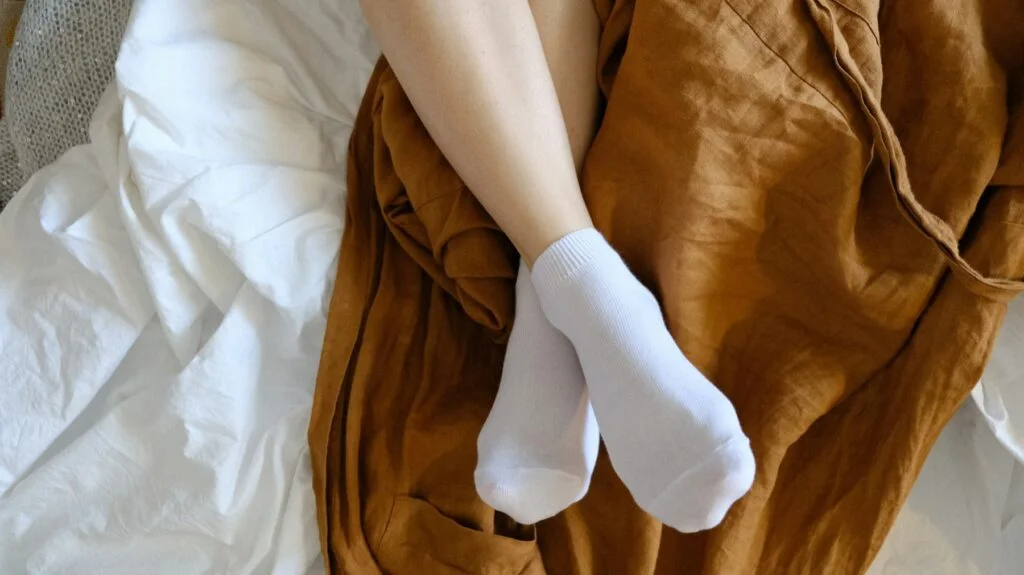
To fall asleep, your core temperature needs to drop, and your body sheds that heat through your hands and feet. Icy feet keep their blood vessels narrow, so heat escapes less easily.
In a Swiss sleep lab study from 2000, how much warmer people’s hands and feet were than their trunk predicted how quickly they fell asleep better than core temperature, melatonin or how sleepy they felt.
In a 2018 trial, six young men slept in a cool room with and without bed socks. With socks they fell asleep about 7.5 minutes faster, slept 32 minutes longer and woke less, and their feet stayed about 1.3°C warmer. In a Japanese study of nine women, a hot footbath before bed also helped them drop off sooner. These are tiny studies, so treat them as hints rather than proof.
A 2019 review of 17 studies linked a warm bath or shower (40 to 42.5°C) 1 to 2 hours before bed, even for 10 minutes, with falling asleep faster. See our guides to the best temperature for sleep and how to fall asleep fast.
How to warm cold feet safely
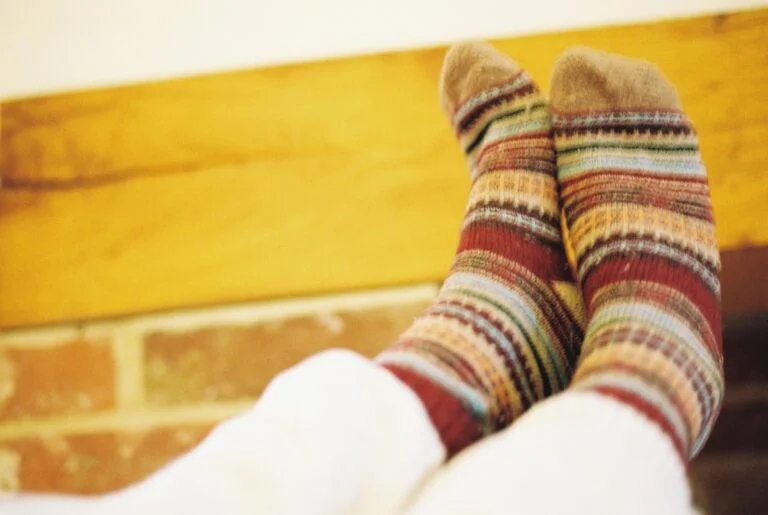
- Wear the right socks. Dry wool or thermal socks by day; soft, loose bed socks at night. Take them off if your feet get hot and sweaty.
- Layer up. The NHS advises warm clothes in cold weather, especially on hands and feet.
- Move. Walk, climb stairs, or do ankle circles and toe scrunches at your desk.
- Try a warm footbath. Warm, not hot, water for around 10 minutes, then dry well between your toes. An Epsom salt soak is fine if you enjoy it. If you have diabetes, Diabetes UK advises testing water with your wrist or elbow and avoiding soaking your feet.
- Warm the bed, not your feet. A hot water bottle needs hot, not boiling, water and a cover, and should never sit directly on your skin. With an electric blanket, UK fire services advise unplugging before you get into bed unless it’s designed for all-night use, and never using it with a hot water bottle.
- Don’t toast them on a radiator. To avoid chilblains, the NHS advises warming cold feet slowly, not on a radiator or under hot water.
- Keep your home warm. The NHS suggests at least 18°C in the rooms you use most, including the bedroom, if you can.
Numb feet and heat don’t mix. If you have diabetes, neuropathy or reduced feeling in your feet, you may not notice a burn. Use socks and blankets rather than direct heat on your skin, and check your feet afterwards.
A calm evening routine helps too. Our Magnesium Glycinate Sleep Complex is a caffeine-free berry drink with 148mg of magnesium per serving from bisglycinate and citrate, plus glycine and L-theanine. Magnesium contributes to a reduction of tiredness and fatigue and to normal functioning of the nervous system. It isn’t a treatment for cold feet or circulation problems. It’s for adults only, and we don’t recommend our products during pregnancy or breastfeeding.
Winter checklist for cold feet
- Waterproof, roomy shoes or boots with space for a thicker sock.
- Wool or thermal socks, plus a spare pair at work.
- Change damp socks straight away, and dry feet after swimming or the gym.
- A short walk most days, and regular breaks from sitting.
- Check your hot water bottle’s flower-shaped date mark and replace old ones.
- Moisturise dry heels, but not between your toes. See our tips for dry skin in winter.
- Have diabetes? Check your feet every day, including the soles, and book your annual foot check.
For the bigger picture, see our winter wellness guide.
When to see a GP about cold feet
See a GP if:
- one foot is noticeably colder or paler than the other
- your toes change colour (white, blue, purple or red), especially if this started after age 30
- you have numbness, tingling or burning in your feet
- you have a cut, sore or ulcer on your foot that isn’t healing
- your legs ache when you walk and the pain eases with rest
- you’re also tired, breathless or gaining weight
- you have diabetes and notice any pain, tingling, numbness or blisters
Get help immediately (call 999 or go to A&E) if a foot or leg suddenly turns cold, pale or blue and is very painful or numb, or if toes turn black. The NHS warns that circulation symptoms that come on quickly or suddenly get worse need immediate treatment.
If cold feet come with tingling, see our guide to pins and needles.
FAQs
Why are my feet always cold even with socks on?
Socks only hold in heat your feet already have. If blood flow to your feet is low from sitting still, stress or damp socks, they stay cold. Move around, layer up and keep socks dry. See a GP if they’re numb or change colour.
Is it good to sleep with socks on if my feet are cold?
Yes, for most people. In a small study, bed socks helped people fall asleep faster and wake less. Choose loose, clean socks and take them off if you get hot.
Are cold feet a sign of diabetes?
Not on their own. But diabetes can damage the nerves and blood supply to your feet. If you have numbness, tingling or burning, or feel thirsty and pee more than usual, see a GP.
What deficiency causes cold feet?
Iron deficiency anaemia is the best known, usually with tiredness and pale skin. An underactive thyroid also makes many people feel the cold. A GP blood test can check both.
Why is one of my feet colder than the other?
It can be harmless, but one-sided coldness can be a sign of narrowed arteries in the leg. See a GP, and get urgent help if it comes on suddenly with pain, pale or blue skin.
Why are my feet cold and purple?
Purple or blue toes in the cold can be Raynaud’s or chilblains. If they stay discoloured after warming, are painful, or you have sores, see a GP.
Sources
- NHS. Raynaud’s; Chilblains.
- NHS. Peripheral arterial disease (PAD).
- NHS. Peripheral neuropathy; Diabetes complications: foot problems.
- NHS. Iron deficiency anaemia; Underactive thyroid; Anorexia symptoms; Keep warm, keep well.
- Diabetes UK. Taking care of your feet.
- London Fire Brigade. Electric blankets. Children’s Burns Trust. Hot water bottles.
- Kräuchi K et al (2000). Functional link between distal vasodilation and sleep-onset latency? Am J Physiol. See also Warm feet promote the rapid onset of sleep, Nature (1999).
- Ko Y, Lee JY (2018). Effects of feet warming using bed socks on sleep quality and thermoregulatory responses in a cool environment. J Physiol Anthropol.
- Sung EJ, Tochihara Y (2000). Effects of bathing and hot footbath on sleep in winter. J Physiol Anthropol Appl Human Sci.
- Haghayegh S et al (2019). Before-bedtime passive body heating by warm shower or bath to improve sleep. Sleep Med Rev.
- Beard JL et al (1990). Impaired thermoregulation and thyroid function in iron-deficiency anemia. Am J Clin Nutr.
This guide is general information, not medical advice. Evopure makes the Magnesium Glycinate Sleep Complex.