Last updated: October 2026
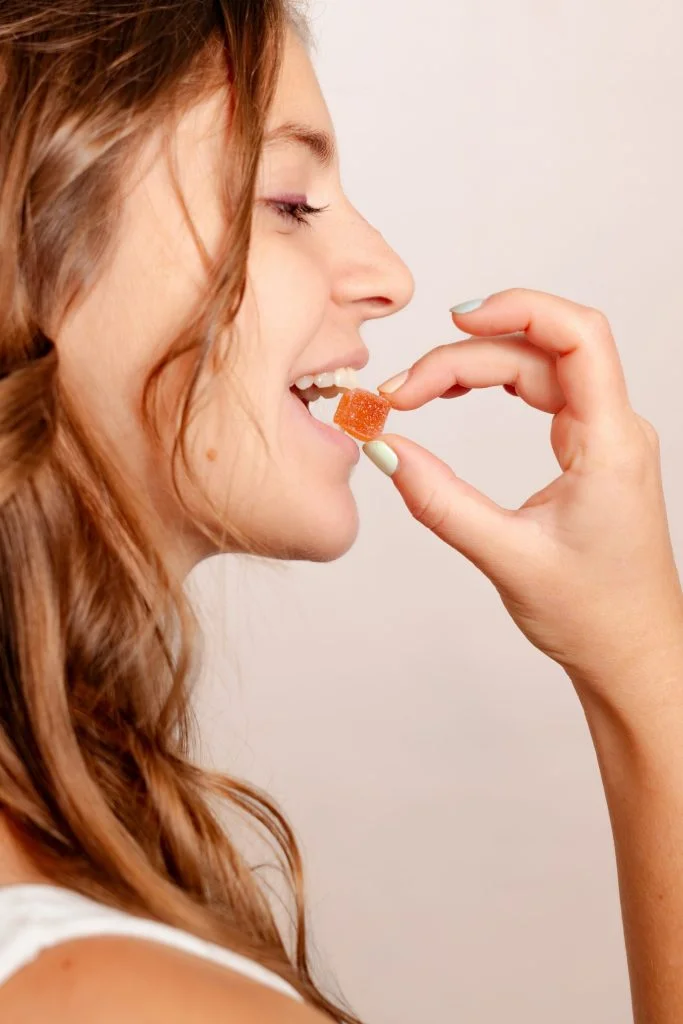
CBD oil and gummies contain the same CBD, but oil lets you adjust your amount drop by drop and usually costs less per mg, while gummies are pre-measured and taste better. Neither has been shown to work better for anxiety or sleep. Gummies often contain sugar and look like sweets, so keep them away from children.
Below: a side-by-side comparison, whether CBD gummies work, how much CBD a gummy holds, what’s known about speed, cost per mg, which suits sleep or stress routines, capsules as a middle option, and the safety points around gummies and children.
CBD oil vs gummies at a glance
| CBD oil | CBD gummies | CBD capsules | |
|---|---|---|---|
| Adjusting the amount | Easy, drop by drop | Fixed per gummy; can be cut | Fixed per capsule |
| Taste | Earthy unless flavoured | Sweet | None |
| Sugar | None | Usually some | None |
| Time to peak in the blood | About 4 hours (same as capsules in a UK study) | Not known: no published blood-level studies we found | About 4 hours |
| Cost per mg | Usually lowest | Usually higher | In between |
| Risk if found by children | Lower | Higher: look like sweets | Lower |
Do CBD gummies work?
CBD gummies get CBD into your body the same way as any other CBD you swallow, so an accurately labelled gummy delivers CBD much like oil or a capsule does. What nobody has shown is that gummies work better or faster. We found no published studies measuring blood levels after CBD gummies, and the things that change absorption most are food and dose, not the format.
Absorption: what the evidence says
Only part of any swallowed CBD reaches the bloodstream. A 2026 review of CBD in food supplements, covering oils, capsules and gummies, describes its oral bioavailability as low and variable. An earlier systematic review of 24 human studies found that no one had yet measured the absolute oral bioavailability of CBD in people, and that peak levels were higher when CBD was taken with food or in a fat-based formula.
Food makes a big difference. In a trial by the maker of the prescription CBD medicine Epidyolex, CBD taken after a high-fat meal gave 3.8 times the total exposure of CBD taken on an empty stomach. A low-fat meal raised it 2.7 times and a glass of whole milk 2.4 times. A gummy is mostly sugar and gelling agent rather than fat, so when you take it, and with what, is likely to matter more than the format itself. Our guide to CBD bioavailability explains the details.
Onset: do CBD gummies work straight away?
No swallowed format is instant. In a 2024 Loughborough University study, CBD oil held under the tongue and the same oil in capsules both peaked in the blood at about 4 hours. A gummy is chewed and swallowed too, so there is no reason to expect it to be quicker, although it hasn’t been measured. Blood levels aren’t the same as how you feel, and people’s experiences vary.
Sugar
Many gummies are made with sugar or glucose syrup. The NHS advises adults to have no more than 30g of free sugars a day and to keep sugary foods to mealtimes for the sake of your teeth. A daily gummy habit adds to that total, so check the sugar per gummy on the label. Plain oils and capsules don’t contain sugar.
Label accuracy
Whether a gummy “works” also depends on whether it contains what the label says. In a 2024 US test of 202 CBD products, including 48 gummies, 74% were at least 10% away from their stated CBD content. That is US data, from a far less regulated market, but it is the best reason to ask for an independent batch lab report whatever format you buy. And because gummies look like sweets, they need storing more carefully than oil or capsules: see gummies and children.
How much CBD is in a gummy?
It varies a lot, and many gummies hold more than the FSA’s advice in a single piece. The FSA advises healthy adults to limit CBD from food to 10mg a day, which it puts at about 4 to 5 drops of a 5% oil. When US researchers tested 56 CBD gummy products in 2025, the gummies contained an average of 21.4mg of CBD each, ranging from 5.7mg to 60mg. Seven in ten were more than 10% away from the amount on the label, and 39% contained some THC.
| Format | CBD per serving | Against the 10mg figure |
|---|---|---|
| Gummies (US test, 56 products) | 5.7mg to 60mg, average 21.4mg | Often above |
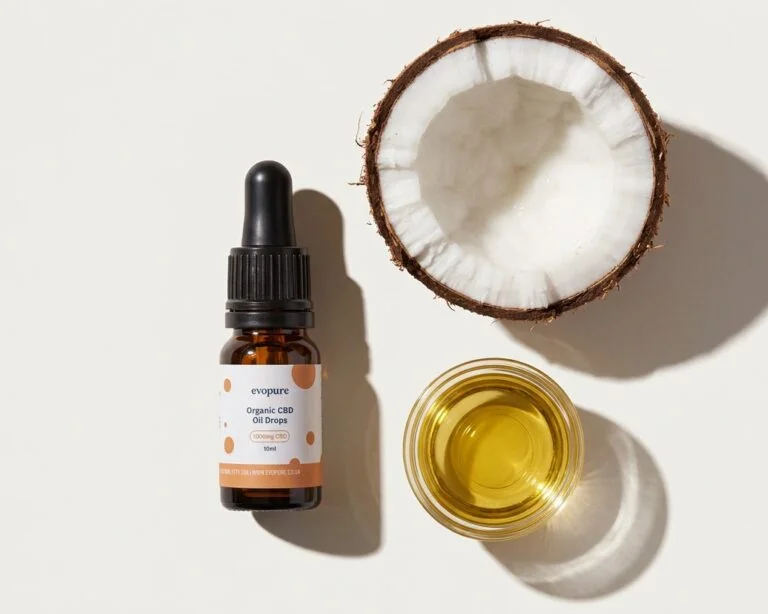
| Our Broad Spectrum CBD Oil | About 2.5, 5 or 10mg a drop | Adjust drop by drop |
| Our Broad Spectrum CBD Capsules | 10mg or 25mg | 10mg matches it |
A gummy can be cut in half, but that is less precise than counting drops. For how many drops or capsules make up a given amount, see our CBD dosage guide and drops chart, and for what the number on the bottle means, CBD strengths explained.
Which works faster?
There is no good evidence that one is faster. Oil can be held under the tongue, but most of it is still swallowed: in a 2024 UK study, drops held under the tongue and capsules of the same oil gave the same blood levels, both peaking at about 4 hours. A review of human studies found CBD taken by mouth typically peaks within about 0 to 4 hours. We found no published blood-level studies of CBD gummies, so how they compare isn’t known.
Taking CBD with food, especially fatty food, raises how much is absorbed several times over without changing the time to peak much. These are blood levels, not feelings, and people’s experiences vary. See how long CBD takes to work.
Which is better absorbed?
There’s no good evidence that gummies or oil are better absorbed in everyday use. Only a fraction of any swallowed CBD reaches the bloodstream, and the biggest factor is taking it with food. Claims that one format gives you “five times more CBD” usually come from marketing, not trials. If CBD doesn’t seem to do anything for you, the reason is more often the dose, the timing or the product than the format: see why CBD might not be working for you.
CBD oil vs gummies for sleep or anxiety: does the format matter?
No trials have compared oil and gummies for sleep or anxiety. Pick the format you’ll take consistently. Many people prefer oil in the evening because they can fine-tune the amount; others like the ritual of a gummy. For what research shows about CBD itself, see CBD for sleep and CBD for anxiety.
Two practical points do differ between the formats. The first is timing: if swallowed CBD peaks at around 4 hours, taking it at a consistent time each evening, with or after food, matters more than whether it comes as a drop or a gummy. The second is sugar: the NHS advises keeping sugary foods to mealtimes, so a sweet gummy after you have brushed your teeth isn’t ideal. That is one reason some people prefer an oil or a capsule in the evening.
CBD isn’t a treatment for insomnia or anxiety, and no study has tested gummies for either. If poor sleep or anxiety is affecting your daily life, speak to your GP. If you are choosing an oil for an evening routine, our guides to the best CBD oil for sleep and choosing a CBD oil for anxiety compare the options.
Capsules: the no-taste, fixed-dose middle option
If gummies appeal because you want a fixed amount and no earthy taste, capsules give you both without the sugar. Each capsule holds a set dose, there is nothing to measure, and they don’t look like sweets. In the Loughborough study, CBD oil swallowed in capsules gave the same blood levels and the same peak at about 4 hours as drops held under the tongue.
Our Broad Spectrum CBD Capsules come in 10mg or 25mg strengths in a plant-based HPMC shell, so they are vegan. One 10mg capsule matches the FSA’s 10mg a day figure exactly. Like all our CBD products they are broad spectrum with 0% THC, made in the UK and third-party lab tested. The trade-off is that you can’t fine-tune the amount as easily as with drops. If you’re unsure what broad spectrum means, see full spectrum vs broad spectrum vs isolate.
Are CBD gummies legal in the UK?
Yes, CBD gummies can be sold legally in the UK as a food, as long as they meet two conditions. First, in England and Wales the FSA expects CBD food products that aren’t on its public list of products linked to novel food applications to be withdrawn from sale. Second, they must not count as a controlled drug: products containing controlled cannabinoids such as THC are only legal if they meet the narrow “exempt product” rules. THC gummies sold online are very unlikely to meet them.
For the full picture, see UK CBD law explained and our guide to the FSA’s first CBD approvals.
What to check before buying CBD gummies
Gummy brands such as Cannaray and Orange County CBD are among the most searched in the UK right now. Whichever brand you are looking at, the same checks apply:
- CBD per gummy, not just per pack. A pack of 30 gummies at 25mg each holds 750mg in total, and each gummy is already 2.5 times the FSA’s 10mg figure.
- An independent batch lab report showing CBD per gummy and THC. See how to read a CBD lab report.
- The FSA public list. In England and Wales, the product should be on it.
- Sugar and other ingredients, including gelatin if you are vegetarian or vegan.
- Cost per mg. Divide the price by the total mg of CBD in the pack, then compare that figure across oils, capsules and gummies.
- No medical claims. CBD is sold as a food supplement in the UK, so a gummy that promises to fix sleep, pain or anxiety is a warning sign.
Gummies and children
CBD products, including gummies, aren’t suitable for under-18s, and the FSA doesn’t recommend CBD for children. Because gummies look like sweets, store them out of sight and reach. If a child eats CBD gummies, especially any that might contain THC, call 111 for advice, or 999 if they’re very drowsy or unwell. See CBD for kids.
How to choose
- Choose oil if you want flexibility and value. Flavoured oils solve the taste problem. See what CBD oil tastes like.
- Choose capsules if you want a fixed amount with no taste or sugar. See CBD oil vs capsules.
- Choose gummies if taste matters most, and check the sugar and CBD per gummy.
- Whatever the format: a batch lab report, a brand on the FSA public list, and no medical claims.
We make oils and capsules, not gummies. Start around 10mg a day. The FSA’s 10mg a day figure is precautionary advice rather than a legal limit, set while longer-term safety research continues. At Evopure we think it is a very cautious figure, and many adults use more. If you go above it, increase slowly, and check with your GP or pharmacist first if you take any medication.
Related guides
- Capsules are another tasteless option. See best CBD capsules UK.
- The best CBD oil in the UK.
- What a CBD strength like 1,000mg really means.
- CBD tea if you would rather take CBD in a drink.
- Are CBD oils and gummies legal in the UK?.
- Unregulated gummies are a common source of hidden THC: see does CBD show up on a drug test in the UK?
- Are CBD gummies halal? in our halal CBD guide.
- Gummies aren’t for children; for kids’ magnesium gummies specifically, see this parents’ guide.
- How to make CBD brownies at home.
- Whichever format you choose, the evidence is the same, so read what CBD oil does to you and what the research shows before you buy.
- The same dose-versus-taste trade-off applies to mushroom gummies.
- Thinking about CBD on the skin instead? See our guide to CBD oil vs balm, including how creams differ.
- Whatever the format, the drug-driving rules are the same; our guide to driving on CBD in the UK explains why.
- For drinks and powders, see what water-soluble CBD is and whether you need it.
- If taste is the main reason you’re looking at gummies, a flavoured oil may suit you; see how cherry and other flavoured CBD oils compare.
- Comparing shop shelves? See Holland and Barrett CBD gummies and oils: strengths per serving.
- Boots CBD gummies and oils compared by strength.
- For one brand’s gummy strengths per piece, see Orange County CBD gummies explained.
- Another fixed-dose format is the under-the-lip pouch: see CBD pouches: what they are and how to use them.
- See how one brand’s gummies and drops compare in our guide to Naturecan CBD gummies and oils.
- For one popular gummy brand in detail, see Cannaray CBD gummies: strengths and the FSA list.
- Weighing up the same choice for ashwagandha? Read ashwagandha gummies vs tincture, capsules and powder.
- Whichever format you choose, timing matters less than taking it with food at the same time each day: see the best time to take CBD oil.
- Many gummies are made with CBD isolate, because it has no taste to cover up.
FAQs
Is CBD oil or gummies better?
Neither is proven better. Oil is easier to adjust and usually cheaper per mg; gummies taste better but often contain sugar.
Do CBD gummies work as well as oil?
They contain the same CBD. We found no published blood-level studies of gummies, so whether they are slower isn’t known. Taking either with food helps absorption.
Are CBD gummies or oil better for anxiety?
No trials have compared them. Choose the format you’ll take consistently.
Are CBD gummies better for sleep?
There’s no evidence either format is better for sleep. Many people prefer oil in the evening so they can fine-tune the amount.
Can kids have CBD gummies?
No. CBD products aren’t suitable for under-18s. Keep gummies out of sight and reach of children.
Do CBD gummies work straight away?
No. Swallowed CBD takes time to absorb: in a UK study, CBD oil and capsules both peaked in the blood at about 4 hours. Gummies haven’t been measured, but they are swallowed too, so expect a similar timescale. Taking CBD with food increases how much is absorbed.
How many mg of CBD are in a gummy?
It varies by brand. In a 2025 US test of 56 gummy products, the average was 21.4mg of CBD per gummy, ranging from 5.7mg to 60mg. The FSA advises healthy adults to limit CBD from food to 10mg a day, so check the label and the lab report.
Are CBD gummies legal in the UK?
Yes, if they are sold as a food that is on the FSA public list of products linked to novel food applications (in England and Wales) and contain no controlled THC. Gummies sold as THC products are not a legal option.
Sources
- Johnson DA et al. Cannabidiol oil ingested as sublingual drops or within gelatin capsules shows similar pharmacokinetic profiles in healthy males. Cannabis Cannabinoid Res, 2024.
- Millar SA et al. A systematic review on the pharmacokinetics of cannabidiol in humans. Front Pharmacol, 2018.
- Crockett J et al. A phase 1, randomized, pharmacokinetic trial of the effect of different meal compositions, whole milk, and alcohol on cannabidiol exposure and safety in healthy subjects. Epilepsia, 2020.
- emc. Epidyolex: summary of product characteristics (effect of food).
- GOV.UK. FSA consumer advice on CBD.
- Talar-Śpionek A et al. Cannabidiol in Dietary Supplements: Characteristics, Routes of Administration, Bioavailability, and Research Challenges. Molecules, 2026.
- Johnson ED et al. Cannabidiol Gummy Products: LC-MS/MS Assessment of Cannabinoid Concentrations. Cannabis Cannabinoid Res, 2025.
- Gidal BE et al. Product labeling accuracy and contamination analysis of commercially available cannabidiol product samples. Front Pharmacol, 2024.
- GOV.UK. FSA business guidance on CBD as a novel food.
- GOV.UK. CBD products linked to novel food applications (FSA public list).
- NHS. How does sugar in our diet affect our health?.