Last updated: October 2026
A CBD lab report, or certificate of analysis (COA), is an independent test of one batch of a product. To read it, check the batch number matches your bottle, compare the CBD result with the label, confirm THC shows as “ND” (not detected), and look for passes on heavy metals, pesticides, solvents and microbes from an ISO 17025 accredited lab.
This guide walks you through every section of a CBD lab report, shows how to convert the numbers, and lists the red flags that mean you should shop elsewhere.
Why CBD lab reports matter
CBD is sold as a food supplement, not a licensed medicine, so nobody checks every bottle before it reaches the shelf. Independent tests of CBD products sold in the UK have repeatedly found products that contain much more or less CBD than the label says, and some that contain THC even when sold as THC-free.
A lab report is your proof of three things:
- Strength: you are getting the CBD you paid for.
- Legality: the product doesn’t contain controlled cannabinoids such as THC above the legal threshold.
- Safety: it has been screened for contaminants such as heavy metals and pesticides.
How to read a CBD lab report in 6 steps
- Check the batch number. It should match the batch or lot number printed on your bottle or box. A report for a different batch tells you nothing about yours.
- Check the date and the lab. The report should be recent, from a named independent lab, ideally ISO 17025 accredited, and not from the brand itself.
- Find the CBD result. Look for “CBD” in the cannabinoid table and compare it with the label (see the worked example below).
- Find the THC result. For broad spectrum and isolate, delta-9 THC should read “ND” (not detected) or below the limit of quantification.
- Check the other cannabinoids. A broad spectrum product should show some minor cannabinoids such as CBG or CBN. An isolate should show CBD only.
- Check the contaminant panels. Heavy metals, pesticides, residual solvents and microbes should all say “pass” or be below their limits.
The cannabinoid profile explained
This is the main table on most reports. It lists each cannabinoid tested and how much was found.
| You’ll see | What it means |
|---|---|
| CBD | Cannabidiol, the main ingredient you’re paying for |
| CBDA | The raw, acid form of CBD found in unheated extracts |
| CBG, CBN, CBC, CBDV | Minor cannabinoids, present in broad and full spectrum products |
| Δ9-THC (delta-9 THC) | The intoxicating cannabinoid, a controlled drug in the UK |
| THCA, THCV | Related cannabinoids that are also controlled |
| ND | Not detected: below the level the lab’s method can see |
| LOD / LOQ | Limit of detection / limit of quantification: the smallest amount the lab can detect or measure |
| % , mg/g, mg/ml | Units. 1% is the same as 10mg per gram |
Want to know what each cannabinoid does? See our cannabinoids guide and full spectrum vs broad spectrum vs isolate.
Checking the strength: a worked example
Labs often report CBD as a percentage or in mg per gram, while bottles show mg per bottle. Here’s how to compare them for a 10ml bottle labelled 1,000mg CBD:
| Step | Example |
|---|---|
| Label strength | 1,000mg in 10ml = 100mg per ml, or “10%” |
| Lab result | CBD 98mg/ml (or 9.8%) |
| Compare | 98 ÷ 100 = 98% of the label |
| Verdict | Within 10% of the label, which is a reasonable tolerance |
If the result is reported per gram rather than per ml, the numbers will be a little different, because oil weighs slightly less than water. A result far below the label (say 70%) or far above it is a warning sign. Our CBD dosage guide shows how many drops give 10mg in each strength.
Checking THC and UK legality
The often-quoted “0.2% THC” limit does not apply to UK CBD products; it relates to growing hemp. For finished products, the Home Office rule is that a product containing a controlled cannabinoid such as THC is only exempt if, among other conditions, it contains no more than 1mg of each controlled cannabinoid in the whole container.
That is a very small amount. In a 10ml bottle of oil, 1mg of THC works out at roughly 0.01%. So a report showing THC at 0.05% on a 10ml bottle would mean around 5mg of THC, well over the threshold, even though it sounds tiny.
For broad spectrum and isolate products, the simplest check is THC reading “ND”. Also glance at the limit of detection: a lab that can only detect THC above, say, 0.1% could report “ND” for a product that still contains too much. See is CBD legal in the UK? and does CBD show up on a drug test?
Contaminant tests
| Panel | What it checks | Why it matters |
|---|---|---|
| Heavy metals | Lead, cadmium, mercury, arsenic | Hemp draws metals from the soil it grows in |
| Pesticides | Residues of farm chemicals | They can concentrate during extraction |
| Residual solvents | Ethanol, butane and others used in extraction | Shows the extract was properly cleaned |
| Microbiology | Bacteria, yeasts and moulds | Shows the product was made and stored hygienically |
| Mycotoxins | Toxins from mould | Sometimes included on full reports |
Each result should show “pass”, “ND” or a figure below the stated limit. Not every brand publishes every panel for every batch, so ask if one is missing. See also how CBD oil is made.
Who should do the testing?
Look for an independent, third-party lab, not one owned by the brand. The gold standard is ISO/IEC 17025 accreditation, the international standard for testing labs, which in the UK is assessed by UKAS. Accredited labs have to show their methods are accurate and reliable. The lab’s name, address and accreditation number should be on the report, and you should be able to contact them.
Red flags to watch for
- No lab report at all, or the brand refuses to share one
- The batch number doesn’t match your product
- A report that is years old, or a single report used for every product
- No lab name, address or accreditation, or the “lab” is the brand itself
- CBD far above or below the label
- THC detected in a product sold as THC-free or broad spectrum
- Cannabinoids only, with no contaminant testing
- Signs of editing, such as mismatched fonts, blurred figures or missing pages
How Evopure tests
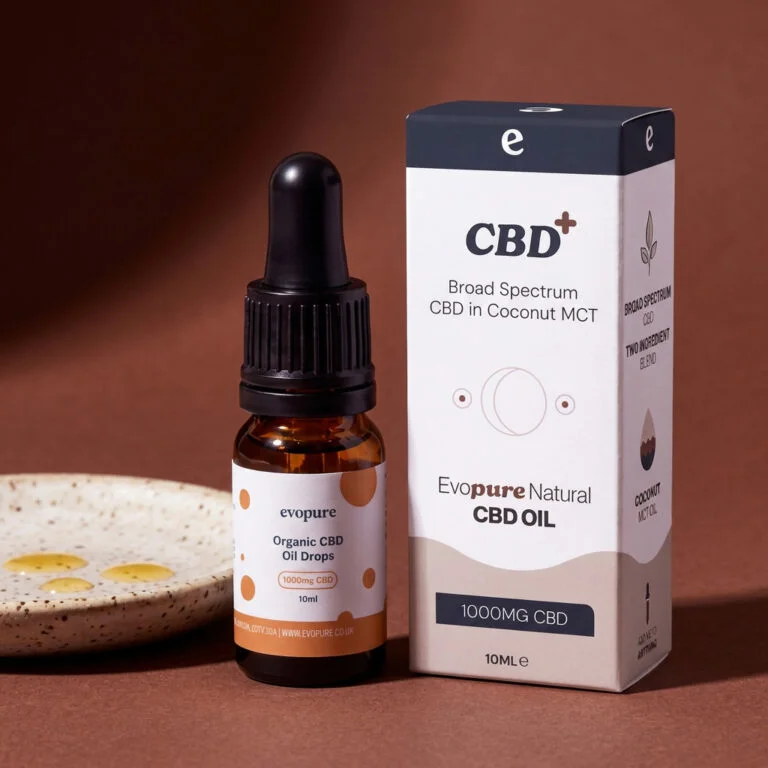
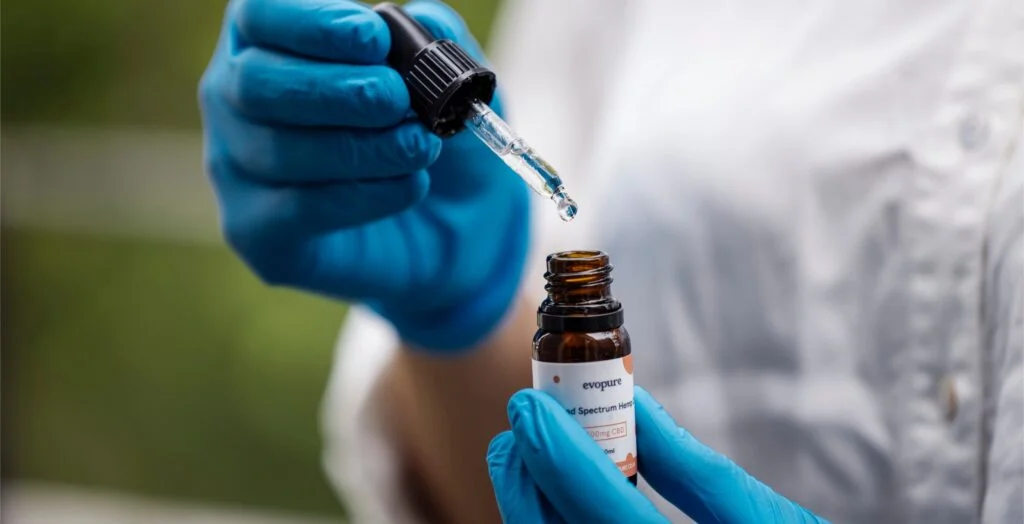
Every Evopure product is tested batch by batch by independent, ISO 17025 certified labs. The certificate confirms the CBD content matches the label, that the product is THC free, and screens for heavy metals, pesticides and microbial contamination. You can request the report for any product and batch on our lab testing page, and we’ll email it to you.
All our CBD products are broad spectrum with 0% THC, including the Evolabs flavoured range.
FAQs
What is a CBD certificate of analysis (COA)?
It is a report from an independent lab showing what one batch of a CBD product contains, including its CBD and THC levels and the results of contaminant tests.
What does ND mean on a CBD lab report?
ND means not detected: the substance was below the smallest amount the lab’s method can detect. Check the limit of detection to see how sensitive the test was.
How much THC is allowed in CBD oil in the UK?
Under Home Office rules, no more than 1mg of each controlled cannabinoid in the whole container, among other conditions. The 0.2% figure applies to growing hemp, not finished products.
How accurate should the CBD content be?
Within about 10% of the label is a reasonable tolerance. A result well outside that suggests poor quality control.
Can CBD lab reports be faked?
Yes, it happens. Check the lab is real and accredited, that the batch number matches your bottle, and contact the lab if anything looks wrong.
How often should CBD be lab tested?
Every batch. Each production run can vary, so a single old report doesn’t prove the product you have is the same.
Where can I find Evopure’s lab reports?
Request any report on our lab testing page and we’ll email it to you. Every batch is tested by ISO 17025 certified labs.
Sources
- Home Office. Drug licensing factsheet: cannabis, CBD and other cannabinoids.
- Food Standards Agency. Cannabidiol (CBD) guidance for businesses.
- UKAS. Find an accredited organisation (to check a lab’s accreditation).
This guide is general information, not legal advice.