Last updated: October 2026
CBD isolate is pure cannabidiol: a white powder or crystal that is usually 99% CBD or more, with every other cannabinoid, terpene and plant compound removed. It has no THC, taste or smell. In the UK it is legal in foods linked to the FSA’s public list, and the FSA’s first recommended approvals are all high-purity CBD (checked October 2026).
Want zero THC without stripping out the rest of the plant?
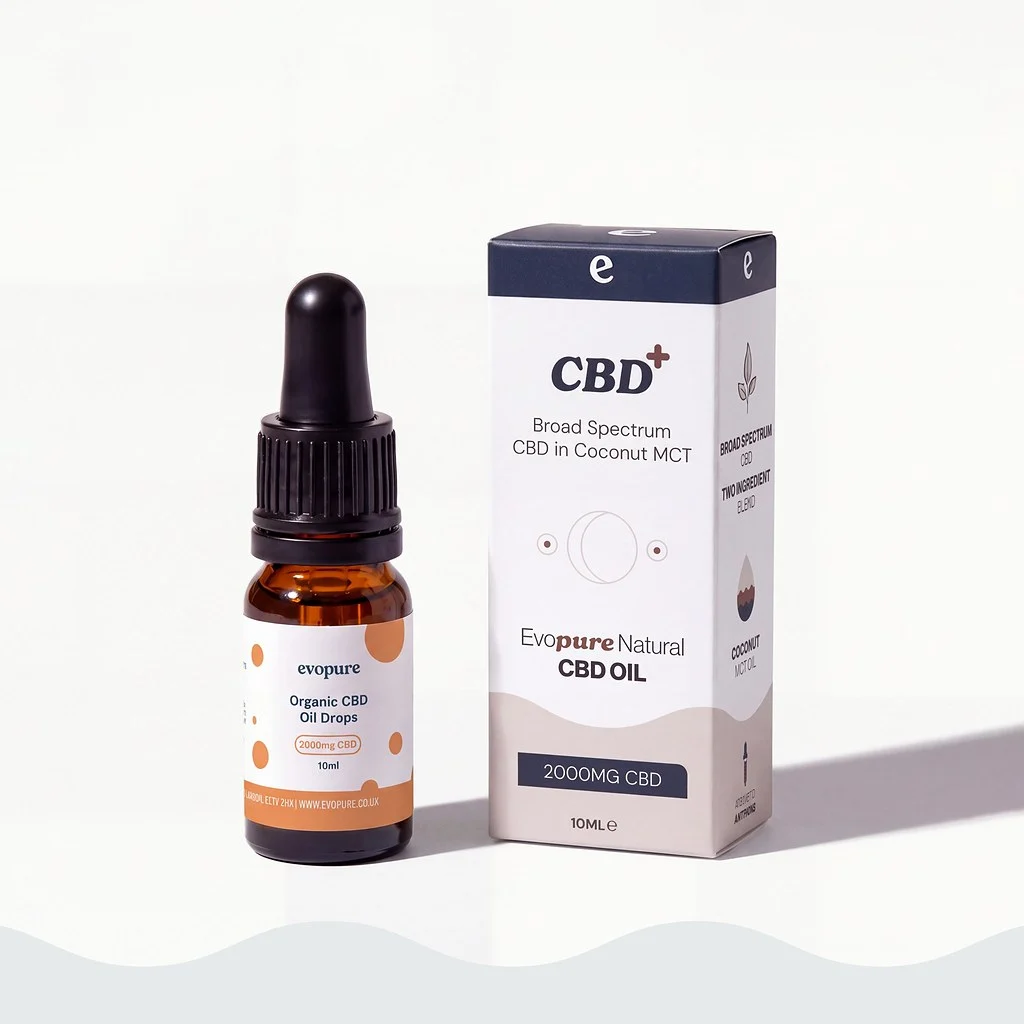
Our Broad Spectrum CBD Oil is broad spectrum CBD in MCT oil with 0% THC, and our Broad Spectrum CBD Capsules come pre-measured at 10mg or 25mg. Both are vegan, made in the UK and third-party lab tested, with reports on our lab testing page.
Add Broad Spectrum CBD Oil 500mg to bag or choose another strength
Broad spectrum with 0% THC, every batch third-party lab tested, made in the UK. Free UK delivery over £45, 14-day returns on unopened items.
What is CBD isolate?
CBD (cannabidiol) is one of more than a hundred cannabinoids made by the hemp plant. A normal hemp extract contains CBD alongside other cannabinoids such as CBG and CBN, plant aromas called terpenes, waxes and chlorophyll. CBD isolate is what you get when all of that is stripped away until only CBD is left.
You will see it sold in a few forms:
- Powder: the most common form, like icing sugar.
- Crystals or slabs: the same pure CBD in larger chunks.
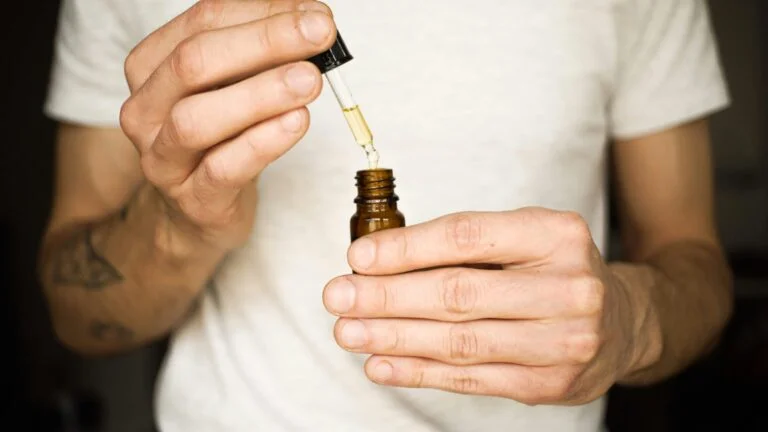
- CBD isolate oil: isolate dissolved in a carrier oil such as MCT. Many flavoured and “pure CBD” oils are made this way.
- Isolate-based products: gummies, capsules, drinks, vapes and balms.
What does “99% pure” mean?
It describes the powder, not the bottle: 99% of the isolate’s weight is CBD. Dissolve 1,000mg of it in 10ml of carrier oil and you have a 10% oil. The FSA’s 2025 safety assessment of one isolate (RP793) found it over 97% pure, and safe for adults at 10mg a day.
Isolate is not the same as distillate. Distillate is the stage before: highly refined, but still holding small amounts of other cannabinoids. See what is CBD distillate? and our guide to cannabinoids explained for the wider family.
Buying CBD in the UK: isolate or broad spectrum?
Most people looking to buy CBD isolate in the UK want a THC-free oil to take as drops. Isolate powder is mainly sold to manufacturers and needs a milligram scale (here’s why). A ready-made oil with THC not detected on its batch report gives you the zero THC without the weighing. We don’t sell isolate; these are the oils we’d point you to instead. If you’re drug tested in sport, read who might choose isolate first.
| If you want | Our pick | Bottle and 10mg | One click |
|---|---|---|---|
| Plain drops, the closest to isolate | Broad Spectrum CBD Oil: CBD and organic MCT oil only | 10ml, 500mg: about 4 drops | Add to bag |
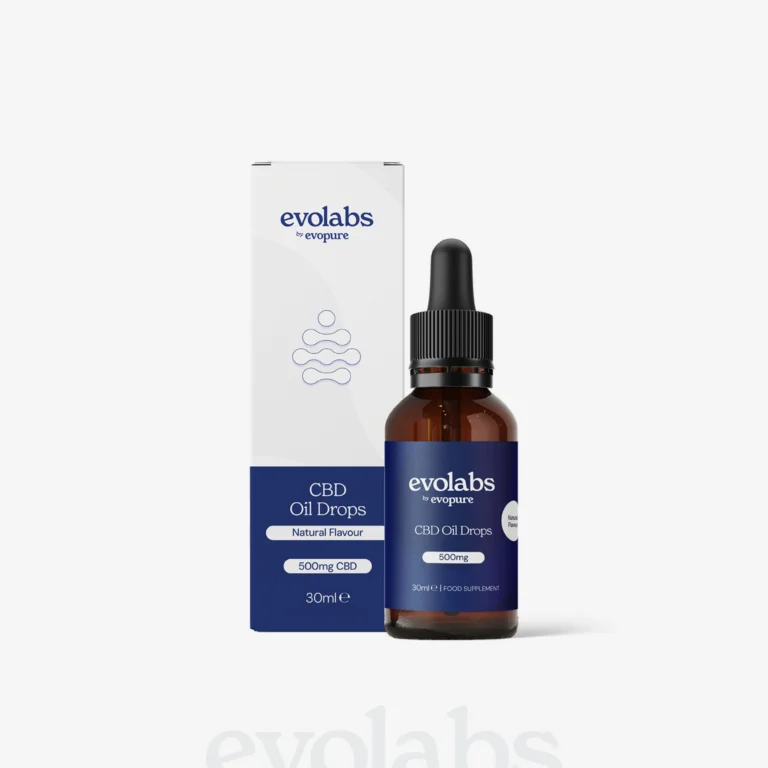
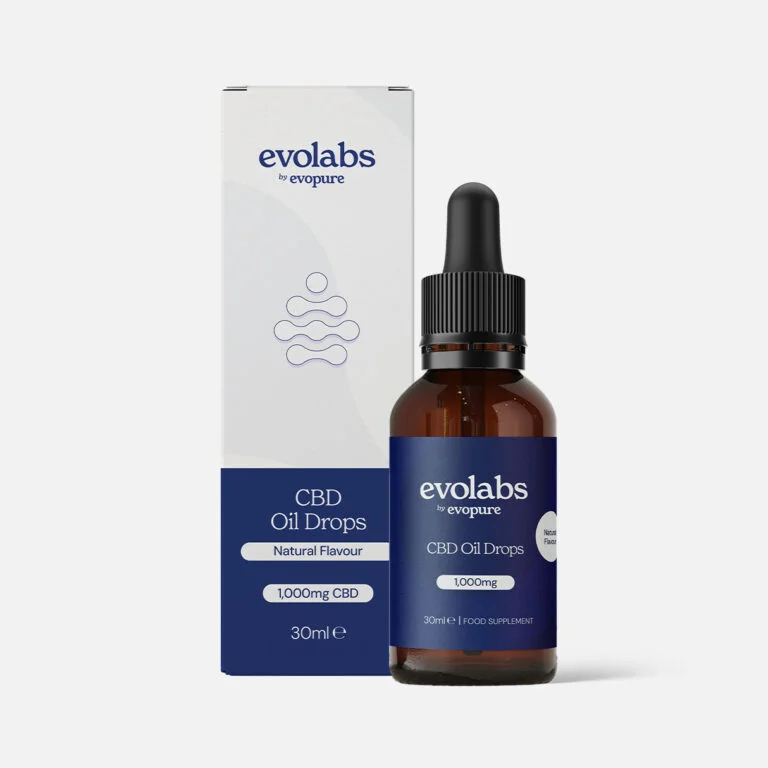
| A natural taste in a bigger bottle | Evolabs Natural CBD Oil | 30ml, 1,000mg: about 6 drops | Add to bag |
| A citrus flavour | Evolabs Orange CBD Oil | 30ml, 1,000mg: about 6 drops | Add to bag |
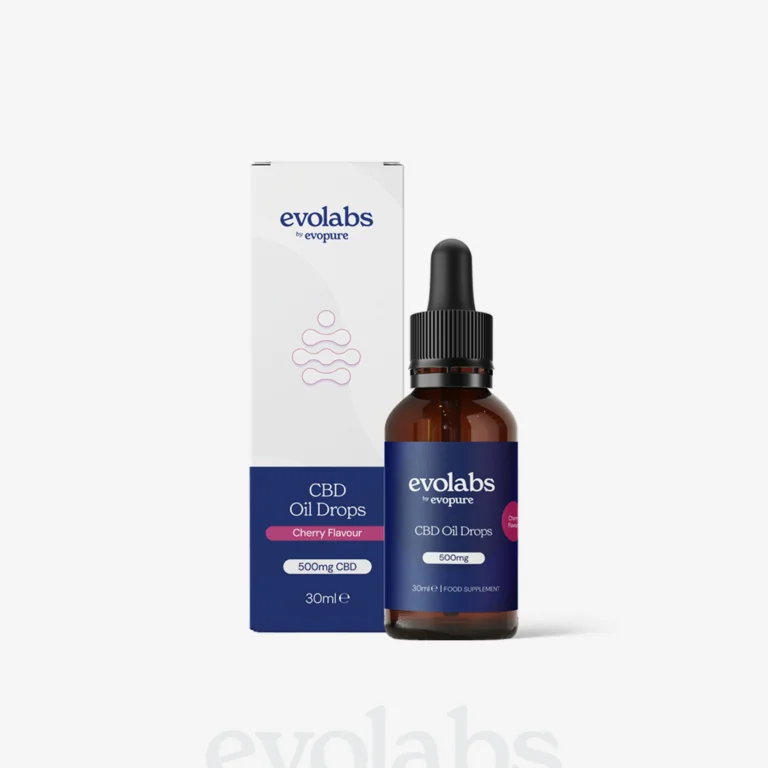
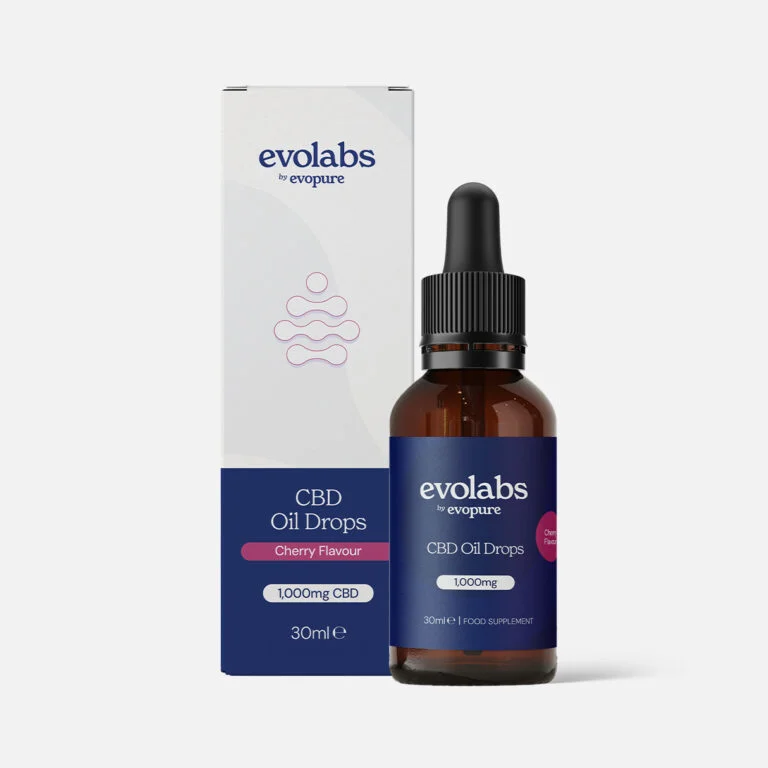
| A sweet fruit flavour | Evolabs Cherry CBD Oil | 30ml, 1,000mg: about 6 drops | Add to bag |
Our Broad Spectrum CBD Oil is broad spectrum with 0% THC, and the Evolabs oils are THC free on the batch report. All four are vegan, lab tested at ISO 17025 labs and on the FSA public list, linked to validated applications. Other strengths are on each product page, and the 2,000mg Evolabs oils work out cheapest per mg in our range. Prefer no drops at all? Our Broad Spectrum CBD Capsules come ready-measured at 10mg or 25mg.
Buying for aches and stiffness? Our guide to CBD oil for pain relief in the UK compares oils by strength, spectrum and value per mg.
iFor adults (18+) only. If you take any regular medicines, check with your GP or pharmacist first.
Which Evopure product fits your routine?
We don’t sell a CBD isolate. Everything below is broad spectrum, with the THC removed (why we chose it). If you need CBD and nothing else, see who might choose isolate. Checked against our product pages in October 2026:
| Product | Format and strengths | How people use it | For 10mg |
|---|---|---|---|
| Broad Spectrum CBD Oil | Oil, 500mg, 1,000mg or 2,000mg (5%, 10% or 20%) | Unflavoured drops: CBD and organic MCT oil only | About 4, 2 or 1 drop |
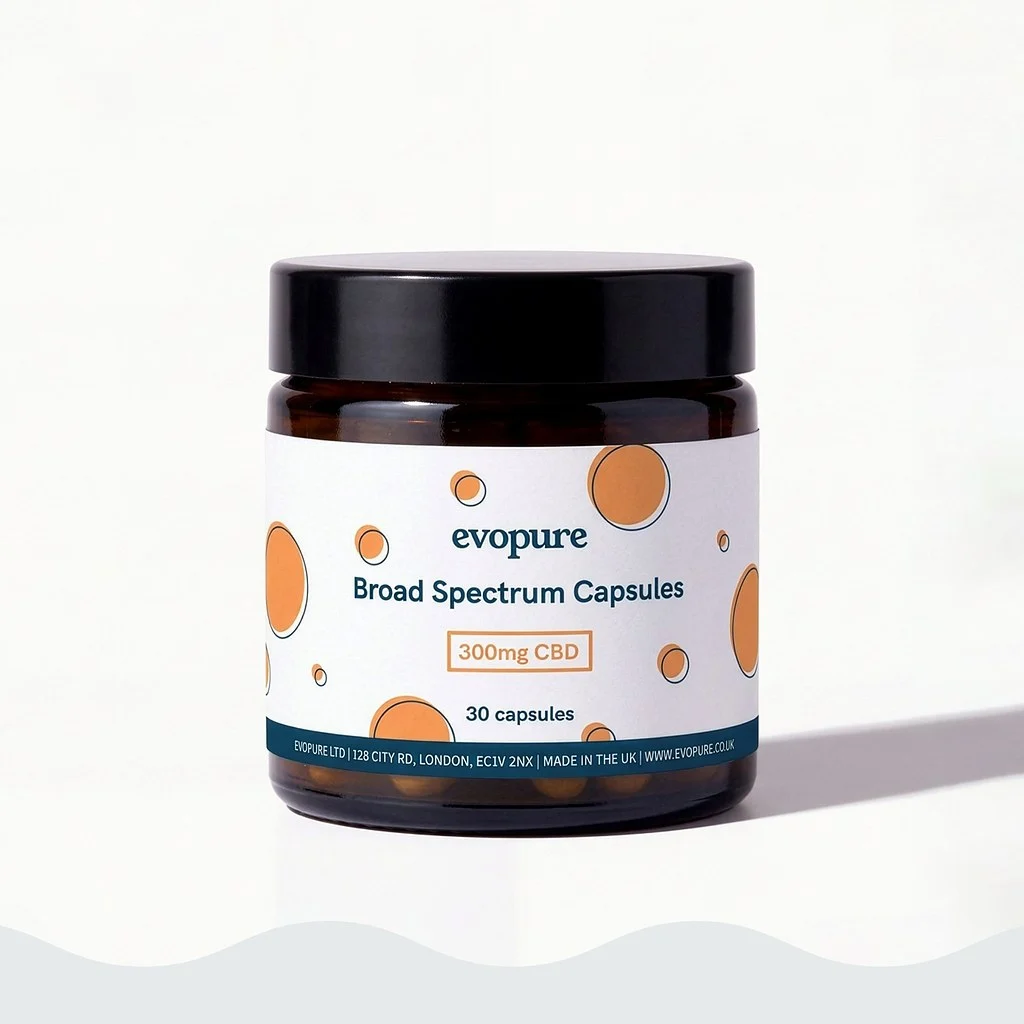
| Broad Spectrum CBD Capsules | Capsules, 10mg or 25mg, 30 a pack | One a day, no taste or measuring | One 10mg capsule |
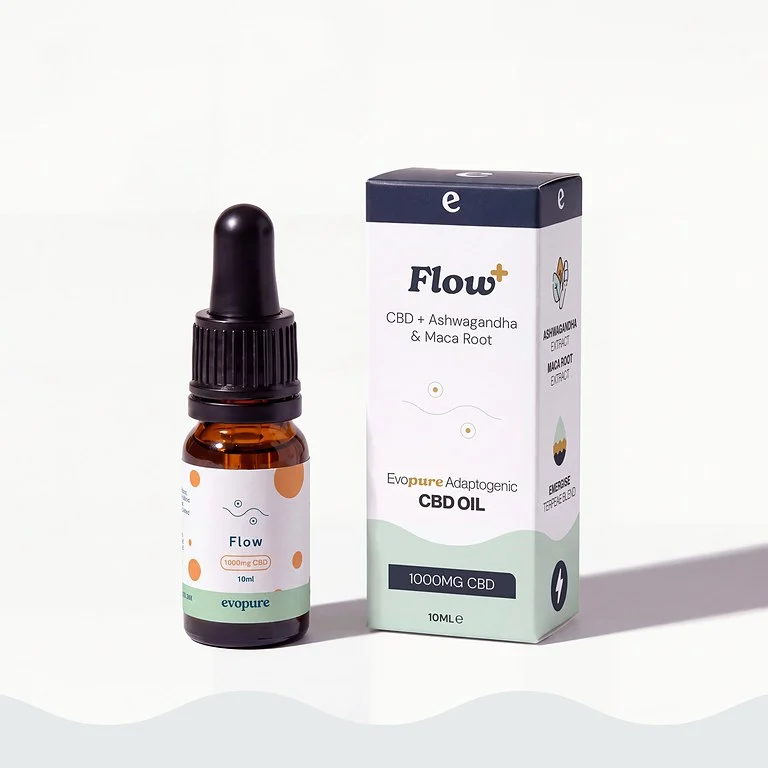
| Flow CBD Oil | Oil, 500mg or 1,000mg (5% or 10%) | Daytime drops with ashwagandha and maca | About 4 or 2 drops |
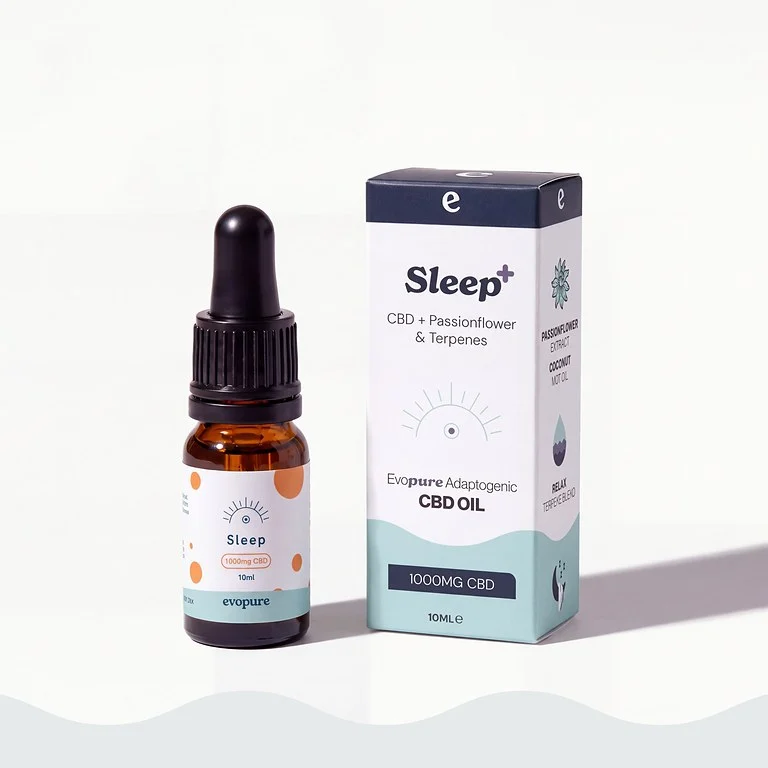
| Sleep CBD Oil | Oil, 500mg or 1,000mg (5% or 10%) | Evening drops with passion flower extract | About 4 or 2 drops |
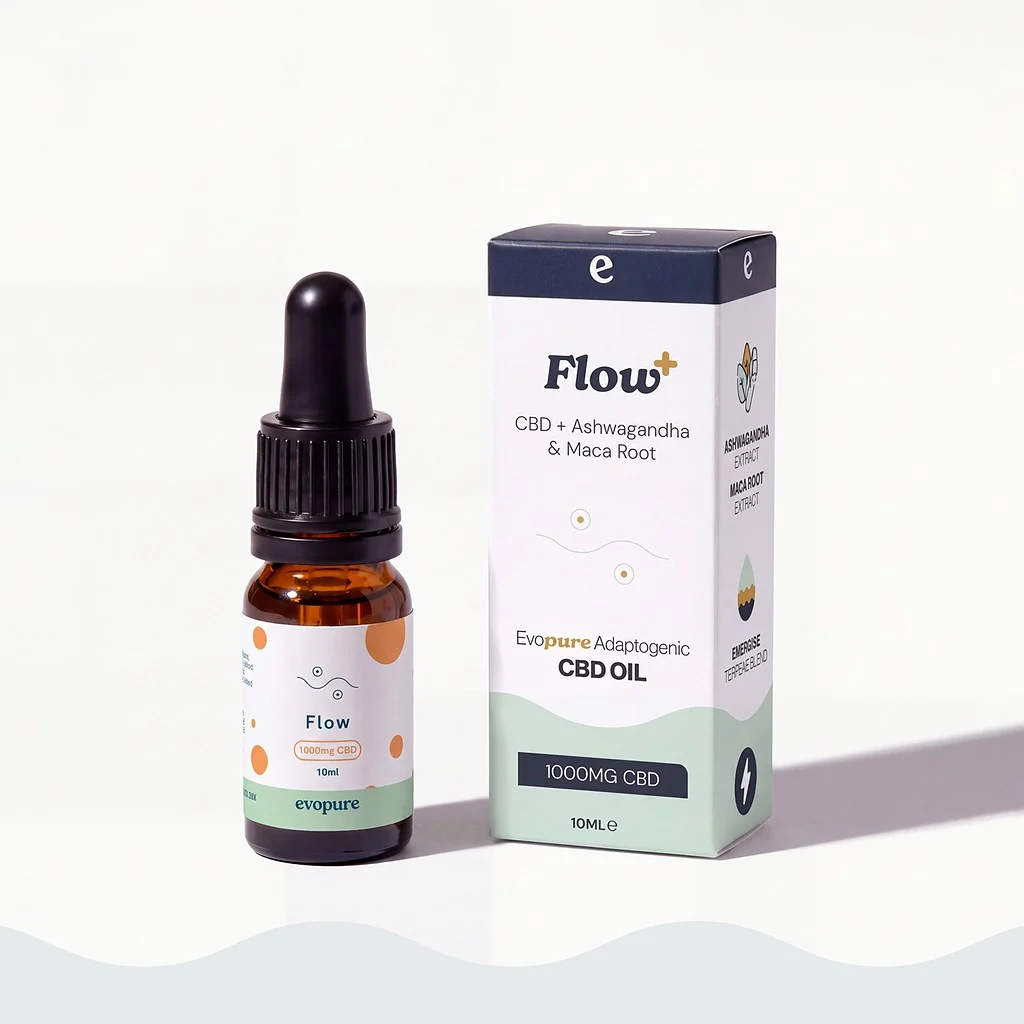
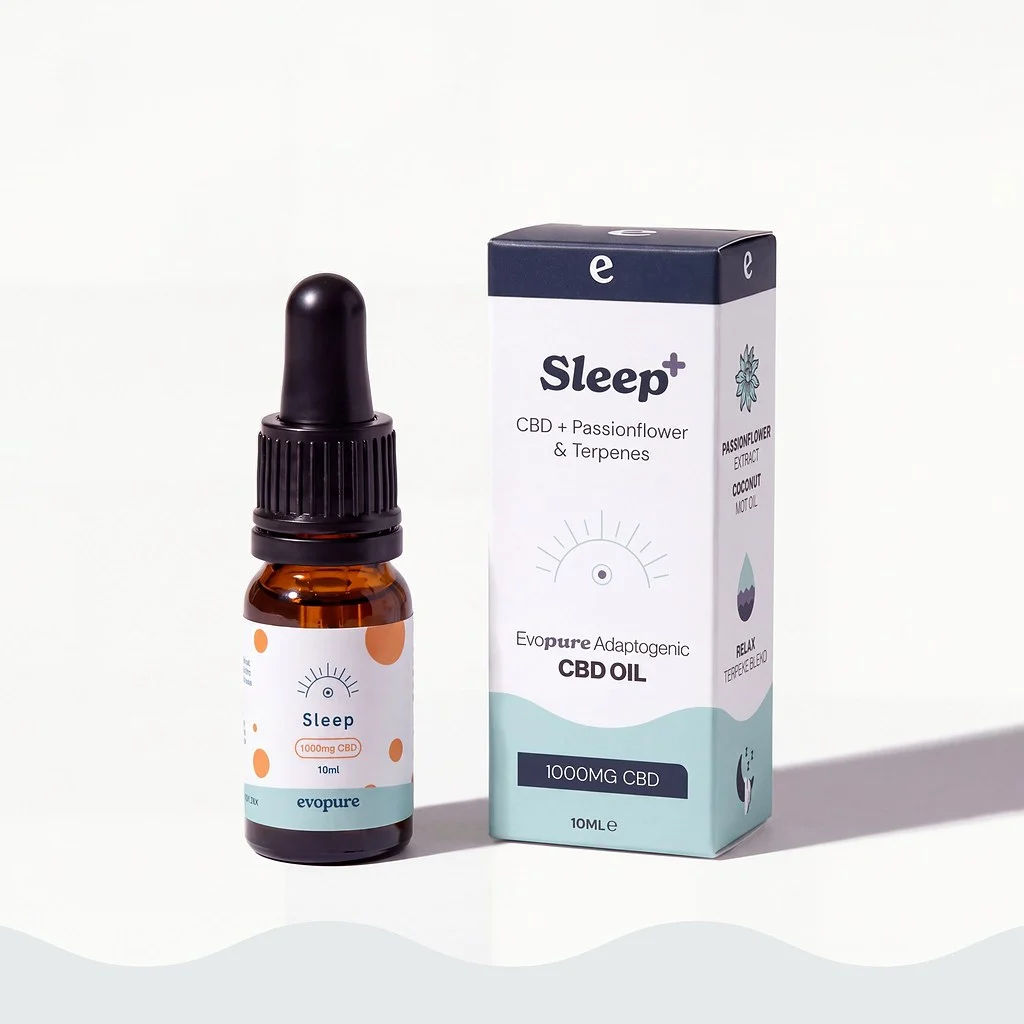
iFlow contains ashwagandha: don’t take it if you have a thyroid, liver or autoimmune condition, and check with your GP or pharmacist first if you take regular medication.
The FSA’s 10mg a day figure is precautionary advice rather than a legal limit, set while longer-term safety research continues. At Evopure we think it is a very cautious figure, and many adults use more. If you go above it, increase slowly, and check with your GP or pharmacist first if you take any medication.
Value: compare price per mg of CBD. Stronger bottles cost less per mg, so the 2,000mg Broad Spectrum CBD Oil is cheapest of the four; capsules cost more for the ready-measured dose. Our 30ml Evolabs oils (THC free on the batch report) cost less again. Subscribe and Save lowers every order, and you can skip, pause or cancel any time.
Why buy from Evopure:
- Every batch tested at ISO 17025 labs; reports on request at our lab testing page.
- Broad spectrum, with THC not detected on each batch’s lab report.
- Made in the UK, vegan and alcohol-free. On the FSA public list, linked to validated applications.
- Tracked Royal Mail delivery, same-day dispatch before 3pm Monday to Thursday (delivery). Unopened, unused items can be returned within 14 days (returns).
They’re food supplements, not medicines. Ready to choose? Try the Broad Spectrum CBD Oil for plain drops, the capsules for a fixed dose, or Sleep for your wind-down.
How is CBD isolate made?
- Extraction: CBD and other compounds are pulled from hemp using CO₂ or ethanol.
- Winterisation: the extract is chilled to separate out fats and waxes, which are filtered off.
- Decarboxylation: gentle heat converts CBDA, the raw acid form, into CBD.
- Distillation: the oil is refined into a concentrated CBD distillate.
- Crystallisation: CBD is crystallised out of the distillate, washed and dried, leaving a white powder or crystals.
Each step removes more of the plant, which is why isolate ends up with no taste, smell or colour. The Home Office notes that it is very hard to isolate CBD from cannabis without leaving traces of controlled cannabinoids, so purity still has to be proven batch by batch with a lab test. For the full process, read how CBD is extracted.
CBD isolate vs broad spectrum vs full spectrum
| Isolate | Broad spectrum | Full spectrum | |
|---|---|---|---|
| CBD | 99%+ pure | Yes | Yes |
| Other cannabinoids | No | Yes, minus THC | Yes |
| Terpenes | No | Usually | Yes |
| THC | None | Removed (0%, not detected) | Small amount |
| Taste | None | Mildly earthy | Earthy |
| Drug test risk | Lowest | Very low | Higher |
| UK legal as a food? | Yes, if on the FSA list | Yes, if on the FSA list and THC compliant | Only if THC meets strict limits |
Broad spectrum sits between the two: the wider plant profile without THC, which is why it is the type we use. For the side-by-side detail and which to choose, read full spectrum vs broad spectrum vs isolate, and for why full spectrum is tricky in the UK, what is full spectrum CBD?
What is CBD isolate used for?
Because it has no taste or smell and dissolves in fats and oils, isolate is popular with manufacturers. You’ll find it in:
- Gummies and sweets, where an earthy taste would be unwelcome (see CBD oil vs gummies)
- Drinks and coffee
- Flavoured oils and capsules
- Vape liquids (never vape an oil made for drops: see can you vape CBD oil?)
- Skincare and balms
Pros and cons of CBD isolate
| Pros | Cons |
|---|---|
| No THC in a pure isolate | No other cannabinoids or terpenes |
| No taste or smell, easy to add to food and drink | No “entourage effect”, if that theory matters to you |
| Simple, single ingredient, so the dose is easy to work out | Finished products made with it vary widely in quality |
| Lowest drug-test risk of the three types | Raw powder is hard to dose accurately at home |
| The form used in most human CBD research | In some single-dose studies, more CBD did not mean more effect |
The biggest debate is the entourage effect: the idea that CBD works better alongside the plant’s other compounds. It is a reasonable theory and some observational data points that way, but it hasn’t been proven in good head-to-head human trials. So isolate isn’t “worse”; it is simply CBD on its own. If you are curious about the plant compounds isolate leaves out, see what are terpenes?
Who might choose CBD isolate (and who might not)?
Isolate is the closer fit if:
- You’re drug tested in sport. CBD is permitted, but UK Anti-Doping says all other cannabinoids are prohibited in competition. Broad spectrum keeps minor cannabinoids such as CBG, so isolate fits the rules better, though UKAD says any CBD product is used at your own risk. See CBD for athletes.
- You want CBD and nothing else, with no hemp taste.
Broad spectrum suits you if you want zero THC with the wider hemp profile and aren’t tested in sport. Neither type has been shown in good trials to work better.
Is CBD isolate effective?
Much of the human research on CBD has used purified CBD, so isolate is far from inactive. The question is whether whole-plant extracts work better. Supporters of the “entourage effect” say they do, and one observational analysis of epilepsy data found people using plant extracts reported lower average doses than people using purified CBD. But those were not like-for-like products. In a 2023 US study, 374 app users took an isolate oil, then a broad spectrum one, and rated the broad spectrum higher, but with no placebo, no blinding and a fixed order, it isn’t proven either way. See the entourage effect explained and what the CBD research actually shows.
iCBD in any form isn’t a treatment for anxiety, sleep problems, pain or any other condition. If you have symptoms that worry you, start with your GP.
Does CBD isolate contain THC? Will it show up on a drug test?
Pure isolate shouldn’t contain any THC, and it is the lowest-risk type of CBD for drug testing, with broad spectrum close behind. Drug tests look for THC breakdown products, not CBD. In a small US study of six healthy adults given 100mg of pure CBD, no urine sample went over the standard confirmatory cut-off for THC, while a CBD-rich cannabis containing 3.7mg of THC did produce positive results.
The catch is that labels can’t always be trusted:
- A UK analysis of 29 over-the-counter CBD oils found 55% had measurable THC or CBN, both controlled drugs, and only 38% were within 10% of the CBD stated on the label.
- A 2024 US study of 202 CBD products found 26% did not match the type claimed on the pack (full spectrum, broad spectrum or isolate), and 74% were at least 10% off their stated CBD content.
So “isolate” on a label is only as good as the batch lab report behind it. Check it shows THC as “ND” (not detected). If you are tested at work, for driving or in sport, no CBD product can be called completely risk free: read does CBD show up on a drug test? and CBD vs THC: the key differences.
Is CBD isolate legal in the UK?
Yes, with conditions. According to the Home Office, pure CBD as an isolated substance isn’t a controlled drug. THC and CBN are controlled, so any product that contains them has to meet strict limits to stay legal.
You’ll often read that CBD is legal “under 0.2% THC”. The Home Office factsheet sets no such percentage for products: a product with a controlled cannabinoid must meet the “exempt product” rules, including no more than 1mg of it per container.
As a food, CBD isolate is a “novel food”. The FSA’s guidance names CBD isolates (highly purified CBD) alongside extracts and synthetic CBD, which means they need authorisation, and in the meantime CBD food products in England and Wales should be linked to an application on the FSA’s public list. That list does include isolate products, among them 1kg bulk isolate powders.
In September 2026 the FSA board recommended its first three CBD applications for authorisation: two CBD isolates and one synthetic CBD, all at least 98% pure, for adults at up to 10mg a day. Read the FSA’s first CBD approvals explained for what changes, and is CBD legal in the UK? for the wider rules.
CBD isolate oil vs powder and crystals
For most people, a finished product is simpler and safer than raw isolate:
| Isolate oil or capsules | Isolate powder or crystals | |
|---|---|---|
| Dosing | Set mg per drop or capsule on the label | You weigh it yourself |
| Equipment | None | A milligram scale |
| How it is used | Drops under the tongue, or swallowed | Mixed into fatty food, drinks or a carrier oil |
| Who it suits | Everyday users | Mainly manufacturers and experienced users |
The dosing problem with powder is scale. The FSA’s 10mg a day figure is 0.01g, and most kitchen scales only measure in 1g steps, so a pinch “by eye” could easily be many times what you meant. If you do use powder, you need a scale that reads to 0.001g, and it mixes best into something fatty, because CBD dissolves in fats rather than water. Our guide to carrier oils for CBD explains why MCT is the usual choice, and how to take CBD oil covers drops.
How much CBD isolate should you take?
The same as any other CBD: start low, around 10mg a day, and increase slowly if needed. The FSA’s provisional safe daily intake of 10mg was set for CBD that is at least 98% pure, so it applies directly to isolate. The FSA says 10mg is about 4 to 5 drops of a 5% CBD oil.
See our note on the FSA figure above. CBD is for adults only, and the FSA advises against it during pregnancy, breastfeeding or when trying to conceive. See our CBD dosage guide, CBD and medication and CBD side effects.
How to check a CBD isolate product
Whether you buy isolate or broad spectrum, ask for the batch certificate of analysis (COA) from an independent lab and check:
- CBD content: close to the amount on the label (within about 10%).
- THC and CBN: shown as “ND” (not detected) or within legal limits.
- Other cannabinoids: a true isolate should show almost nothing but CBD; if you see CBG, CBC or CBDV, it is closer to broad spectrum.
- Solvents, heavy metals and pesticides: tested and within limits.
- Batch number and date: matching the product in your hand, and recent.
- FSA public list: the product should be on it.
Our step-by-step guide shows you what each line means: how to read CBD lab reports.
Why Evopure uses broad spectrum, not isolate
We wanted the main advantage of isolate, 0% THC, without stripping out everything else the hemp plant makes. Broad spectrum gives us that: the THC is removed, but the other cannabinoids and terpenes stay. Whether those extras add anything is still a theory, as explained above, so this is our preference rather than a promise.
Our Broad Spectrum CBD Oil, capsules, Flow, Sleep and Relief are broad spectrum, and our 30ml Evolabs oils are THC free on the batch report. All our CBD products are vegan and third-party tested at ISO 17025 labs, and they are on the FSA public list, linked to validated applications RP438, RP821 and RP47, which are still going through assessment. CBD isn’t a treatment for any condition. Our products are for adults (18+) only, and we don’t recommend our products during pregnancy or breastfeeding. For help choosing, see best CBD oil UK: our picks by need and best CBD capsules UK.
Related guides
- Is CBD oil halal? THC-free isolate and broad spectrum
- How delta-8 is made from CBD, and why it is illegal
- CBD and driving in the UK
- Where CBD is legal abroad
- CBD oil strengths explained
- How long CBD stays in your system
- CBD Brothers Pure oils: isolate with added terpenes
- Broad spectrum CBD oil: what it is and how to choose
- Several UK ranges use isolate; our fourfive CBD guide covers one brand’s isolate sprays, gummies and capsules.
- Some brands build a whole range on isolate; see what’s in Vibes CBD gummies and capsules.
- Planning ahead? Our Black Friday CBD oil deals run from 27 to 30 November 2026, with up to 40% off.
Sources 13
- Home Office. Drug licensing factsheet: cannabis, CBD and other cannabinoids.
- Food Standards Agency. Cannabidiol (CBD) guidance for businesses.
- Food Standards Agency. Cannabidiol (CBD): consumer advice.
- Food Standards Agency. CBD products linked to novel food applications (public list).
- Food Standards Agency (September 2026). CBD novel food applications: recommendations to ministers on first authorisations.
- Liebling JP et al (2022). An analysis of over-the-counter cannabidiol products in the United Kingdom. Cannabis and Cannabinoid Research.
- Spindle TR et al (2020). Urinary pharmacokinetic profile of cannabinoids following administration of vaporized and oral cannabidiol and vaporized CBD-dominant cannabis. Journal of Analytical Toxicology.
- Gidal BE et al (2024). Product labeling accuracy and contamination analysis of commercially available cannabidiol product samples. Frontiers in Pharmacology.
- Linares IM et al (2019). Cannabidiol presents an inverted U-shaped dose-response curve in a simulated public speaking test. Brazilian Journal of Psychiatry.
- Food Standards Agency and Food Standards Scotland (2025). Safety assessment on the safety of cannabidiol (CBD) isolate as a novel food for use in food supplements (RP793).
- UK Anti-Doping. CBD (cannabidiol).
- Faraj M et al (2023). Effects of two cannabidiol oil products on self-reported stress relief: a quasi-experimental study. Medical Cannabis and Cannabinoids.
- Pamplona FA et al (2018). Potential clinical benefits of CBD-rich cannabis extracts over purified CBD in treatment-resistant epilepsy. Frontiers in Neurology.
This guide is general information, not legal or medical advice. Evopure makes the Broad Spectrum CBD Oil, capsules, Flow and Sleep CBD oils mentioned here.