Last updated: October 2026
If CBD isn’t working for you, the usual reasons are a dose well below what studies use, taking it without food, not taking it regularly for long enough, a product with less CBD than its label says, or expecting a feeling CBD doesn’t give. CBD isn’t intoxicating, and it isn’t a treatment for any condition.
This guide goes through each reason honestly: what the research actually shows about absorption (including how little is really known), how dose, food, timing and format change the amount that reaches your blood, how to check your product, whether tolerance is real, and when CBD simply isn’t the right approach and it’s time to speak to your GP.
Want to rule out the product?
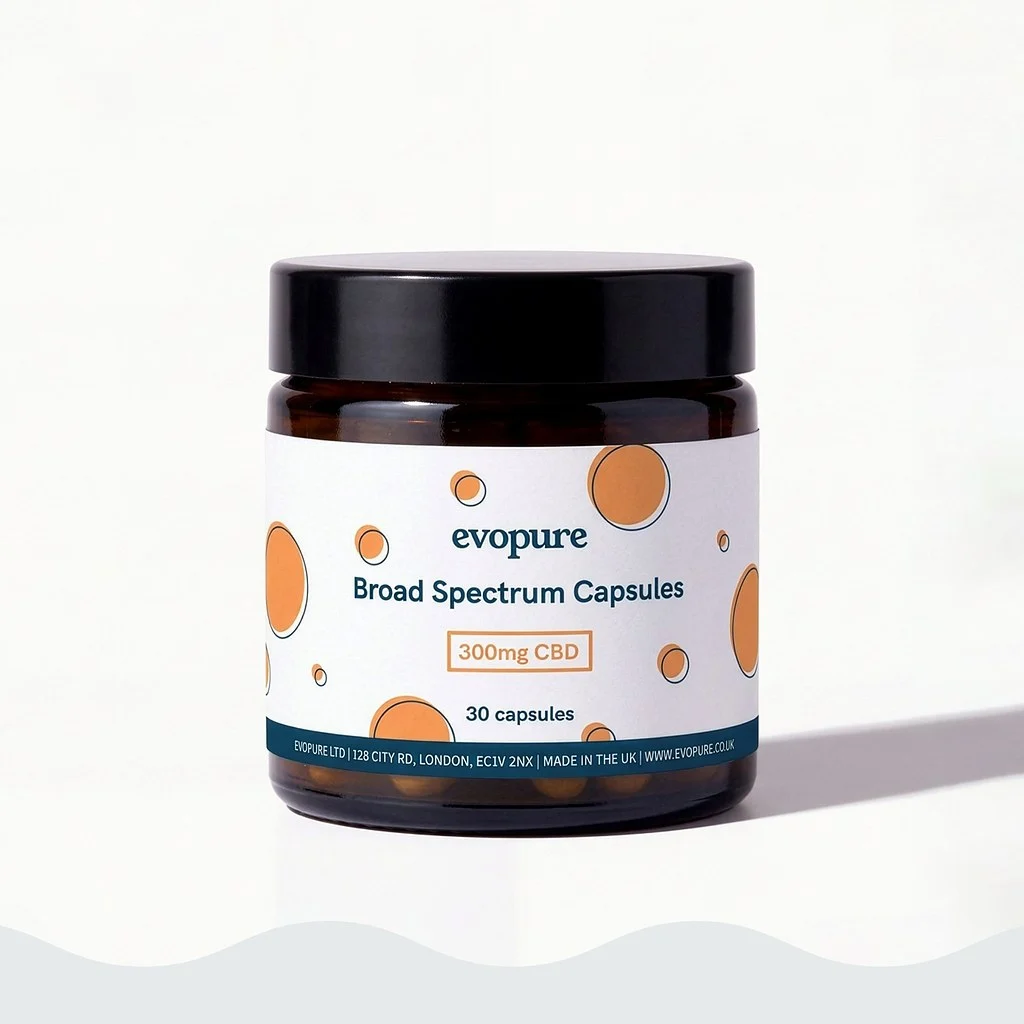
Our Broad Spectrum CBD Capsules come in 10mg or 25mg, so you know exactly how much you take, and our Broad Spectrum CBD Oil is simply CBD in MCT oil. Both are broad spectrum with 0% THC, vegan, made in the UK and tested at ISO 17025 accredited labs, with reports on our lab testing page. For adults 18+ only. We don’t recommend our products during pregnancy or breastfeeding, and if you take any medication, check with your GP or pharmacist first.
Add Broad Spectrum CBD Capsules 10mg to bag or choose another strength
Broad spectrum with 0% THC, every batch third-party lab tested, made in the UK. Free UK delivery over £45, 14-day returns on unopened items.
What does “working” mean with CBD?
Many people expect CBD to feel like something. It usually doesn’t. CBD is not intoxicating, so there is no “high”, no buzz and nothing that kicks in like a painkiller or a coffee. In a 2024 Loughborough University study, healthy men who took CBD oil reported no difference in how they felt compared with a placebo, even though the CBD was clearly measurable in their blood. Feeling nothing is normal, and on its own it doesn’t mean the CBD hasn’t been absorbed.
It’s also worth being straight about the research. Human studies of CBD are still early: a 2020 systematic review of 25 studies in adults found they varied widely in dose and design, and many had a high risk of bias. The NHS says there’s no guarantee that CBD products from health shops are of good quality or provide any health benefits. What people report from everyday use varies a lot from person to person.
Expectations play a part too. In a 2021 Canadian study, 43 healthy adults took CBD-free hemp seed oil on two occasions. When they were told it contained CBD, they reported feeling more sedated and their heart rate patterns changed, and those who strongly believed in CBD beforehand also reported less anxiety during a stress test. In other words, what we expect shapes what we notice, in both directions. That’s why it helps to judge any supplement calmly, over weeks, rather than by one dose.
For a fuller picture of what people do and don’t notice, see what CBD feels like.
Quick checklist: why your CBD may not be working
Work down this list before you give up or change product.
| Possible reason | Signs it might be you | What to check or change |
|---|---|---|
| Expecting a feeling | Waiting for something to “kick in” | CBD isn’t intoxicating. Judge it over a couple of weeks, not by one dose. |
| Low dose | A few drops of a 500mg oil, now and then | Work out your mg per day (see the CBD dosage guide) and read our view on the FSA’s 10mg advice below. |
| Empty stomach | Taking it first thing, before food | Take it with or just after a meal that contains some fat. |
| Inconsistent use | Taking it only on some days | Same time each day for at least two weeks. Keep a short note of how you feel. |
| Product quality | No batch lab report, or a very cheap product | Check a recent certificate of analysis matches the label. |
| Wrong format for you | Dislike the taste, so you skip doses | Capsules give the same blood levels as drops and a fixed dose. |
| Medication | You take prescribed or regular medicines | Speak to your GP or pharmacist before you start or change your dose. |
| It isn’t the right approach | Ongoing low mood, anxiety, sleep problems or pain | See your GP. CBD isn’t a treatment for any condition. |
Is your dose too low?
This is one of the most common gaps. Food supplement doses are small compared with the amounts used in research. The pharmacology trials of purified CBD in healthy volunteers gave 750mg to 1,500mg at a time, and a 2017 lab study compared single doses of 100mg, 300mg and 900mg. Even in that study, results did not simply rise with the dose. Whatever was seen at those amounts can’t be assumed at a few milligrams. The NHS also notes that health shop CBD products tend to contain only very small amounts of CBD.
The Food Standards Agency advises healthy adults to have no more than 10mg of CBD a day, and as a precaution it does not recommend CBD for under-18s, people taking any medication, those trying to conceive or anyone pregnant or breastfeeding, unless under medical direction. Our guide to the UK CBD daily limit explains where that figure comes from.
The FSA’s 10mg a day figure is precautionary advice rather than a legal limit, set while longer-term safety research continues. At Evopure we think it is a very cautious figure, and many adults use more. If you go above it, increase slowly, and check with your GP or pharmacist first if you take any medication.
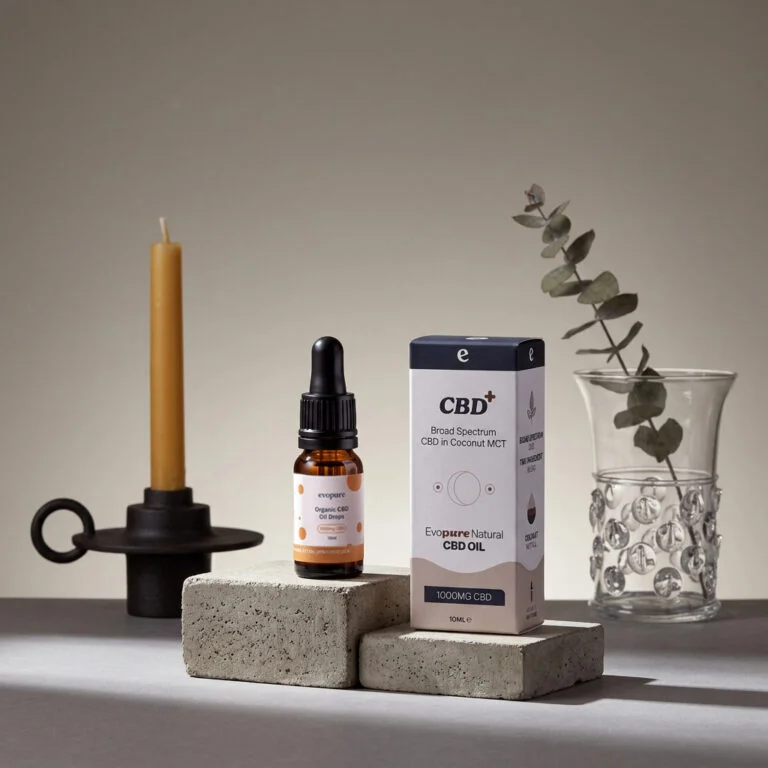
How many drops is 10mg? With our Broad Spectrum CBD Oil (10ml bottles), each drop holds about 2.5mg in the 500mg bottle, 5mg in the 1,000mg bottle and 10mg in the 2,000mg bottle. So 10mg is about 4 drops, 2 drops or 1 drop. One 10mg Broad Spectrum CBD Capsule is exactly 10mg. If you are not sure how much you are taking now, that is the first thing to work out.
Are you taking it on an empty stomach?
CBD is fat-soluble: it dissolves in fat, not water. Food makes a large and well-measured difference to how much reaches your blood.
- In a 2018 trial in healthy adults, a high-fat meal raised the amount of CBD in the blood about 4 to 5 times compared with taking it fasted.
- In a 2020 trial, a high-fat meal raised overall CBD exposure about 3.8 times, a low-fat meal about 2.7 times and a glass of whole milk about 2.4 times.
Both trials used a pharmaceutical CBD solution at much higher doses than supplements, so the exact multiples may not carry over to a few drops of oil. The direction is clear, though: take CBD with or just after a meal rather than on an empty stomach. A breakfast with eggs, yoghurt or nut butter, or your evening meal, both work. Food did not change how quickly CBD peaked in the blood. Our guide to the best time to take CBD oil covers morning versus evening.
What is bioavailability, and how much do you absorb?
Bioavailability is the share of a dose that reaches your bloodstream. When you swallow CBD, some is not absorbed from the gut, and much of what is absorbed is broken down by the liver before it reaches the rest of the body.
You will often see figures like “6% to 10%” quoted as fact. The honest answer is that nobody has measured it properly. A 2018 systematic review of CBD in humans found that no study had measured the absolute bioavailability of swallowed CBD, even though the methods to do so exist. A 2020 review estimated it at about 6% when taken fasting, while stressing that detailed studies have not been published, and suggested that a high-fat meal raises it roughly fourfold. Treat any precise percentage as an estimate, not a fact.
Holding oil under your tongue is often said to bypass the gut and liver, but most of it is swallowed anyway. In a 2024 UK study, drops held under the tongue and capsules of the same oil gave similar blood levels, both peaking at about 4 hours. You can still hold drops under your tongue for 60 to 90 seconds if you like, but don’t expect it to change much. Taking it with food matters more. For a deeper look at every route, see our full guide to CBD bioavailability, and for timings, how long CBD takes to work.
Have you taken it long enough, and every day?
CBD builds up in the body to a point with regular use. In a trial in healthy adults taking CBD twice a day, blood levels reached a steady state after about 2 days, and the effective half-life was about 10 to 17 hours. Taking it on and off means you never reach that steady level, which is one reason to take it at the same time each day and judge it over a couple of weeks rather than a single dose. Our guide to how long CBD stays in your system explains the half-life in more detail.
A simple two-week check:
- Pick one product and one daily amount in mg, and write it down.
- Take it at the same time each day, with food.
- Jot down one line a day: how you slept, your energy and your mood, from 1 to 10.
- After two weeks, look back at your notes rather than trying to remember.
If you want to adjust the amount, change one thing at a time and give each change another week. Our guide on how to take CBD oil covers the basics.
Is the product what the label says?
Sometimes the problem really is the product. Two independent UK studies have tested CBD products bought in shops and online:
- A 2022 analysis of 29 widely available UK CBD products found only 11 (38%) were within 10% of the CBD content on the label, and 55% had measurable levels of the controlled substances THC or CBN.
- A 2023 Loughborough University study of 63 UK products found only 5 (8%) were within 10% of the advertised CBD content, and most contained less. Oils were the closest to their labels, with a median shortfall of about 19%. Water-based tinctures were furthest out, at about 51% below, and drinks about 66% below.
So if a product contains half the CBD it claims, you are taking half the dose you think you are. Before you decide CBD isn’t for you, ask for the batch certificate of analysis and check that it matches the label, is recent and comes from an accredited lab. Our guide to reading CBD lab reports shows what to look for. Evopure batch reports are available on our lab testing page.
Does the format or carrier oil matter?
Drops or capsules: the 2024 UK study above found no meaningful difference in blood levels. Choose the one you will take every day. Capsules give a fixed dose and no taste, which suits a lot of people. Our CBD oil vs capsules guide compares them in full, and choosing CBD capsules covers strengths per capsule.
Carrier oil: CBD is dissolved in a carrier such as MCT (from coconut), hemp seed or olive oil. Reviews note that CBD levels in the blood are higher when it is taken in fat or with food, but there is very little head-to-head research comparing carrier oils in people. Taking it with a meal makes a far bigger, better-proven difference. See MCT vs hemp seed vs olive oil for what is known.
Water-soluble CBD: it is marketed as better absorbed, but in the 2023 UK study the water-based products were the furthest from their labelled strength. Read what water-soluble CBD is before paying extra for it.
Other routes: CBD on the skin is a different route again; see does CBD absorb through the skin? Inhaled CBD is absorbed differently, but never vape oil drops: see can you vape CBD oil?
Does CBD stop working over time?
Some people feel CBD did something at first and then faded. There is little evidence that CBD causes tolerance the way THC does, and our guide to CBD tolerance goes through what the research shows, including the one study that did report it at very high doses. If CBD seems to have stopped working, the likelier causes are the ones above: a new batch or brand with less CBD in it, a change in when or how you take it, or simply the novelty and expectation wearing off. Check those before you increase the amount.
Broad spectrum, full spectrum and THC
Some articles suggest CBD “doesn’t work” without THC. In the UK, THC is a controlled substance, and the FSA sets a safe upper limit of 70 micrograms of THC a day from food. That is why our products are broad spectrum with 0% THC: they keep other hemp compounds but not THC. The idea that these compounds work better together, the “entourage effect”, is still mostly theory in people. Our guides to full vs broad spectrum CBD and the entourage effect explain what the evidence does and doesn’t show.
Hoping CBD would help anxiety, sleep or pain?
Many people search for “CBD not working for anxiety”, “for sleep” or “for pain”. CBD isn’t a treatment for anxiety, insomnia, pain or any other condition, and food supplements can’t be sold as one. If you have ongoing worry or low mood, trouble sleeping that affects your days, or pain that won’t settle, please speak to your GP. These things deserve a proper assessment, and there are effective, evidence-based options.
If you take medication, speak to your GP or pharmacist before taking CBD. CBD is broken down by the liver, and it can interact with some medicines. Our guide to CBD and medication explains which ones, and CBD side effects covers what to watch for. Our products are for adults 18+ only, and we don’t recommend our products during pregnancy or breastfeeding.
Video: CBD bioavailability
A short explainer on how CBD is absorbed.
The bottom line
If CBD hasn’t seemed to work, start with the basics: know your dose in mg, take it with food at the same time every day, give it two weeks, and check your product’s lab report. Expect subtle or no sensations rather than a noticeable effect. If you were hoping it would fix a health problem, your GP is the right first stop. For more, see our dosage guide or our range of broad spectrum CBD oils.
Sources 12
- Millar SA et al. A systematic review on the pharmacokinetics of cannabidiol in humans. Front Pharmacol, 2018.
- Perucca E, Bialer M. Critical aspects affecting cannabidiol oral bioavailability and metabolic elimination, and related clinical implications. CNS Drugs, 2020.
- Taylor L et al. A phase I, randomized, double-blind, placebo-controlled, single ascending dose, multiple dose, and food effect trial of the safety, tolerability and pharmacokinetics of highly purified cannabidiol in healthy subjects. CNS Drugs, 2018.
- Crockett J et al. A phase 1, randomized, pharmacokinetic trial of the effect of different meal compositions, whole milk, and alcohol on cannabidiol exposure and safety in healthy subjects. Epilepsia, 2020.
- Johnson DA et al. Cannabidiol oil ingested as sublingual drops or within gelatin capsules shows similar pharmacokinetic profiles in healthy males. Cannabis Cannabinoid Res, 2024.
- Liebling JP et al. An analysis of over-the-counter cannabidiol products in the United Kingdom. Cannabis Cannabinoid Res, 2022.
- Johnson DA et al. A comparison of advertised versus actual cannabidiol (CBD) content of oils, aqueous tinctures, e-liquids and drinks purchased in the UK. J Cannabis Res, 2023.
- Spinella TC et al. Evaluating cannabidiol (CBD) expectancy effects on acute stress and anxiety in healthy adults: a randomized crossover study. Psychopharmacology, 2021.
- Larsen C, Shahinas J. Dosage, efficacy and safety of cannabidiol administration in adults: a systematic review of human trials. J Clin Med Res, 2020.
- Zuardi AW et al. Inverted U-shaped dose-response curve of the anxiolytic effect of cannabidiol during public speaking in real life. Front Pharmacol, 2017.
- Food Standards Agency. Cannabidiol (CBD) guidance. GOV.UK.
- NHS. Medical cannabis (cannabis oil).
This guide is general information, not medical advice. Evopure makes broad spectrum CBD oils and capsules.