Last updated: October 2026
No mushroom treats anxiety or depression. Lion’s mane has the most human research: three small trials hint at lower anxiety, low mood or stress scores over 4 to 8 weeks. Reishi has less direct evidence, and cordyceps has none (checked October 2026). Mushrooms are an extra at most, not a replacement for talking therapy, your GP or prescribed medicine.
iThis is not a treatment guide. For anxiety or low mood, start with your GP or NHS Talking Therapies; for help now, call Samaritans on 116 123, NHS 111 or, in an emergency, 999 (see where to get help).
Our mushroom blend
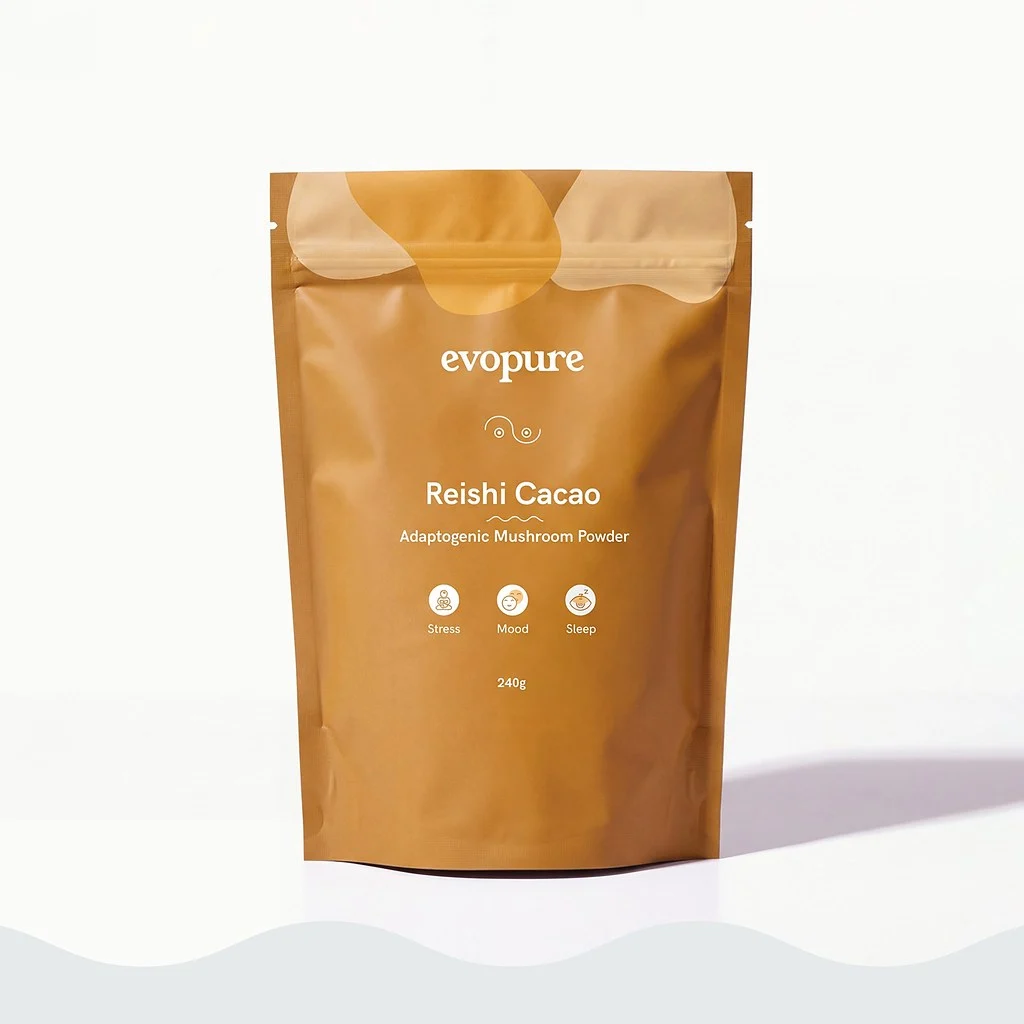
Reishi Mushroom Adaptogenic Complex
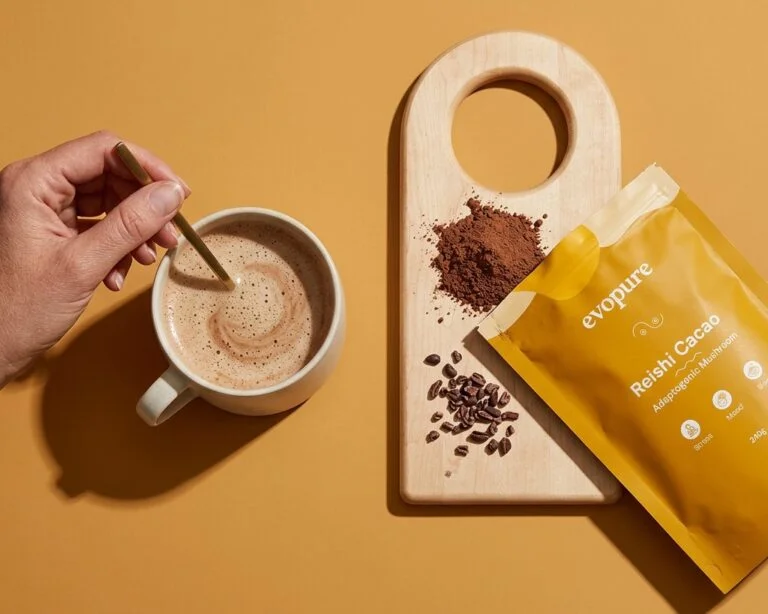
Reishi Mushroom Adaptogenic Complex is reishi mushroom with cocoa, maca, coconut sugar, for a reishi hot chocolate with a little natural caffeine. Vegan and made in the UK.
Add Reishi Cacao to bag See ingredients and reviews
Vegan and made in the UK. Free UK delivery over £45, 14-day returns on unopened items.
Subscribe £22.49One-off £29.99
View productBest mushrooms for anxiety, ranked by evidence
Here is the honest league table. “Evidence strength” is our plain-English summary of the human trials, not a promise of how you’ll feel. None of these mushrooms has been tested in people with a diagnosed anxiety disorder in a large, well-run trial.
| Mushroom | What the research looked at | Quality of evidence | Caution |
|---|---|---|---|
| 1. Lion’s mane | Anxiety, low mood and stress scores in 3 small trials (30, 77 and 41 people), 4 to 8 weeks | Limited: mixed results, one trial had no placebo | Stomach upset, headache, allergy. Avoid if allergic to mushrooms |
| 2. Reishi | Fatigue and mood in neurasthenia, breast cancer fatigue and fibromyalgia | Very limited for anxiety; the mood trial found no clear difference from placebo | May raise bleeding risk with blood thinners; check first if on blood pressure medicines. Rare liver injury |
| 3. Cordyceps | Exercise tolerance, not anxiety | None for anxiety | Blood thinners and diabetes medicines |
| Chaga, turkey tail | Not studied for anxiety in people | None for anxiety | Chaga linked to kidney damage with long-term use |
So if you want to try a mushroom for a calmer day, lion’s mane is the one with the most human data and reishi is the traditional evening choice. Keep your expectations modest. For a wider look at all eight common functional mushrooms, see our functional mushrooms UK guide.
Which Evopure product fits your routine?
None of our products treats anxiety or depression or replaces your GP, therapy or medicine; if you’d like one alongside that care, choose by routine (checked October 2026).
Our one mushroom product, the Reishi Mushroom Adaptogenic Complex, is a reishi hot chocolate. To be straight with you, its label doesn’t yet state the reishi per serving, extract ratio or fruiting body versus mycelium (we’ve asked for them), so judge it as a hot chocolate, not a high-strength supplement.
| Product | Format | How people use it | What to know |
|---|---|---|---|
| Reishi Cacao | Reishi hot chocolate powder with cacao and maca | 1 to 2 teaspoons in warm milk, evenings | A little natural caffeine. Reishi mg not on the label yet |
| Magnesium Glycinate Sleep Complex | Berry drink powder, 148mg magnesium per serving | One scoop in water, evenings | With L-theanine, glycine and herbal extracts. No caffeine |
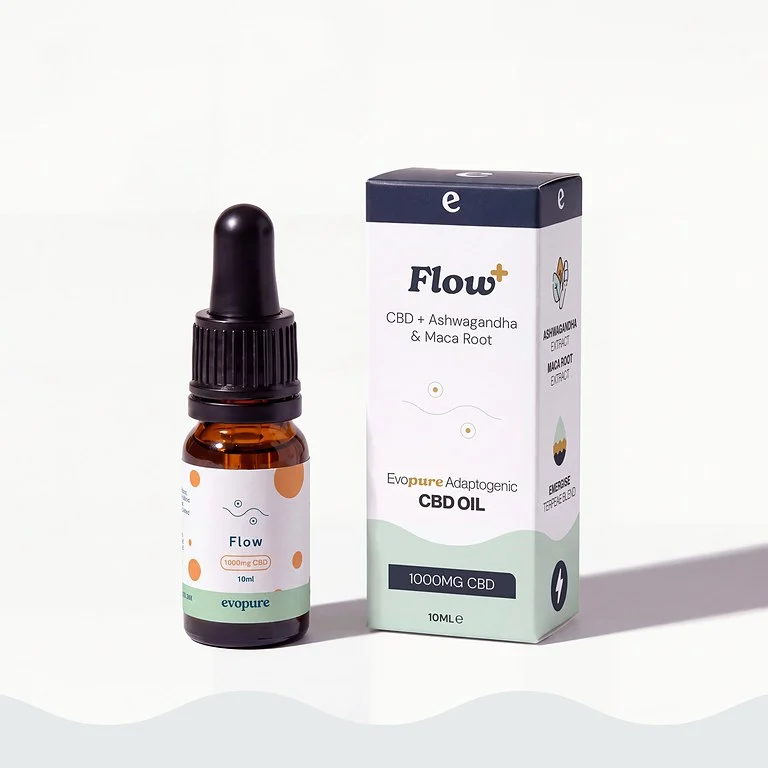
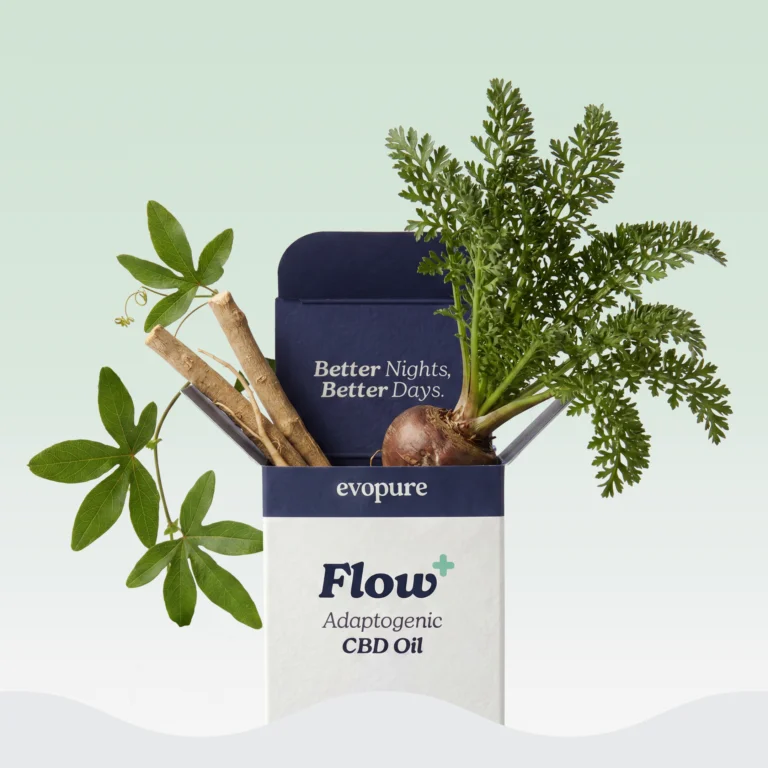
| Flow CBD Oil | Broad spectrum CBD with ashwagandha and maca, 500mg or 1,000mg | Drops under the tongue, daytime | 4 drops (500mg) or 2 drops (1,000mg) for 10mg. Contains ashwagandha |
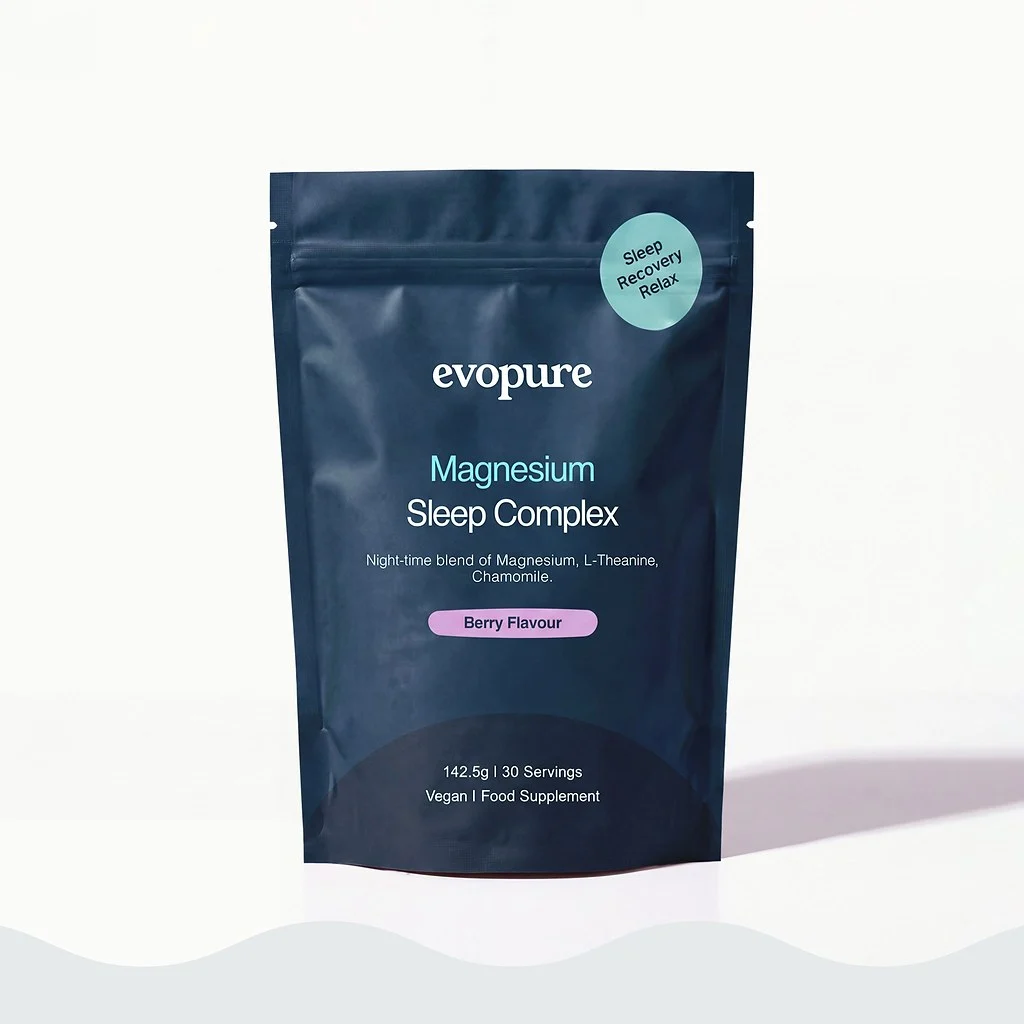
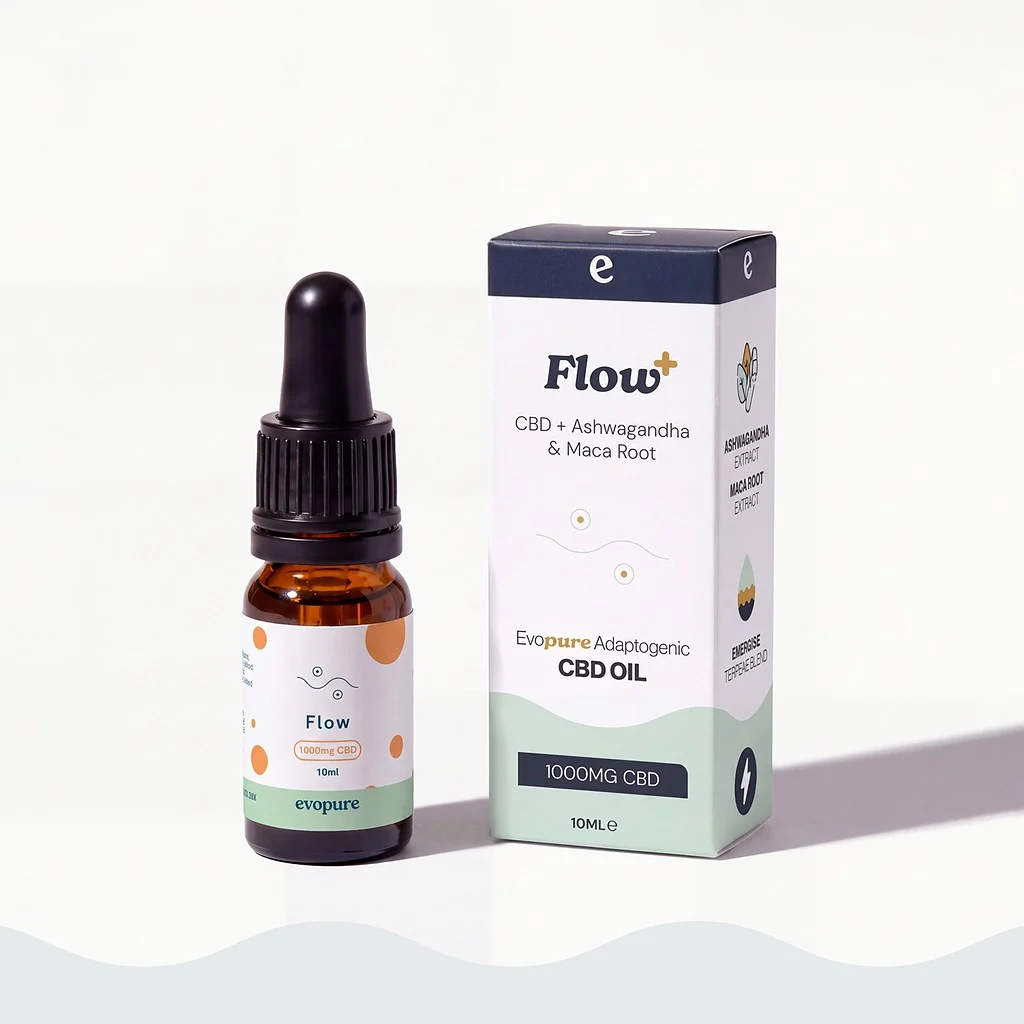
Magnesium contributes to normal psychological function and contributes to a reduction of tiredness and fatigue. Reishi, maca and the herbs have no authorised health claims.
Safety first: Flow contains ashwagandha, under safety review in the UK (see our ashwagandha UK safety review), so skip it with a thyroid, liver or autoimmune condition or before surgery. On antidepressants or any regular medication? Ask your GP or pharmacist first. Reishi may raise bleeding risk with blood thinners; check first on blood pressure medicines too. We don’t recommend our products during pregnancy or breastfeeding. Adults (18+) only.
The FSA’s 10mg a day figure is precautionary advice rather than a legal limit, set while longer-term safety research continues. At Evopure we think it is a very cautious figure, and many adults use more. If you go above it, increase slowly, and check with your GP or pharmacist first if you take any medication.
Value: a Reishi Cacao pouch is around 30 servings. Flow’s 1,000mg bottle is cheaper per mg of CBD than the 500mg. Subscribe and Save lowers every order; skip, pause or cancel any time.
What you get with Evopure:
- Our CBD products: every batch third-party tested at ISO 17025 labs; request a batch report on our lab testing page.
- Made in the UK, vegan and alcohol-free.
- Our CBD is broad spectrum and THC free, confirmed on each batch report, and on the FSA public list, linked to validated applications.
- Tracked Royal Mail delivery, dispatched the same day if you order before 3pm Monday to Thursday (delivery details). Unopened, unused items can be returned within 14 days of delivery (returns policy).
These are food supplements, not medicines, and we don’t claim they treat or relieve anxiety or depression. Compare reishi drinks in our mushroom hot chocolate guide, or CBD in best CBD oil for anxiety UK. Ready to choose? Reishi Cacao for an evening mug, the Magnesium Sleep Complex without caffeine, or Flow by day.
1. Lion’s mane
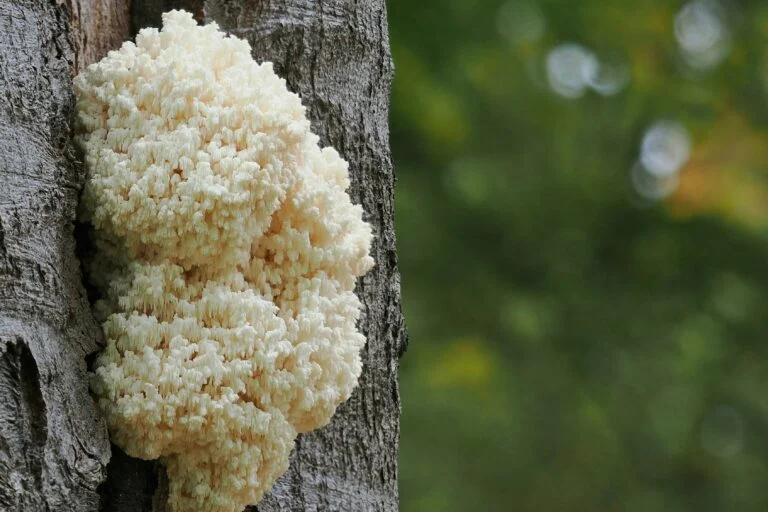
Lion’s mane (Hericium erinaceus) is an edible mushroom that looks a bit like a white pom-pom. It contains compounds called hericenones and erinacines, which stimulate nerve growth factor in lab studies. That’s the reason it gets talked about for the brain, but lab findings don’t tell you what happens when a person eats it.
The human studies are small:
- Japan, 2010. 30 women ate lion’s mane cookies or placebo cookies for 4 weeks. Depression scores fell in the lion’s mane group compared with their own starting point, and feeling “anxious” tended to be lower than on placebo, but that difference wasn’t statistically clear.
- Italy, 2019. 77 adults with overweight or obesity on a low-calorie diet, all with mood or sleep problems, took 3 capsules a day (about 1.5g, mostly mycelium) or just followed the diet for 8 weeks. Depression, anxiety and sleep scores improved in the lion’s mane group. There was no placebo, which the authors list as a limitation.
- UK, 2023. At Northumbria University, 41 healthy adults aged 18 to 45 took 1.8g of lion’s mane or a placebo daily for 28 days. There was a trend towards lower stress that just missed statistical significance.
Put together, that’s a hint rather than a finding. Lion’s mane is usually taken in the morning or daytime, and it isn’t psychoactive: it won’t change how you perceive things the way magic mushrooms do. For dosage, forms and side effects in more depth, read our lion’s mane guide.
2. Reishi
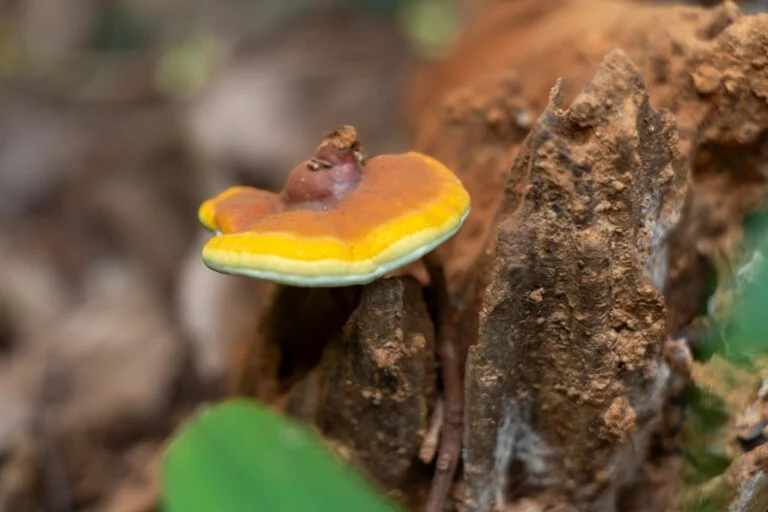
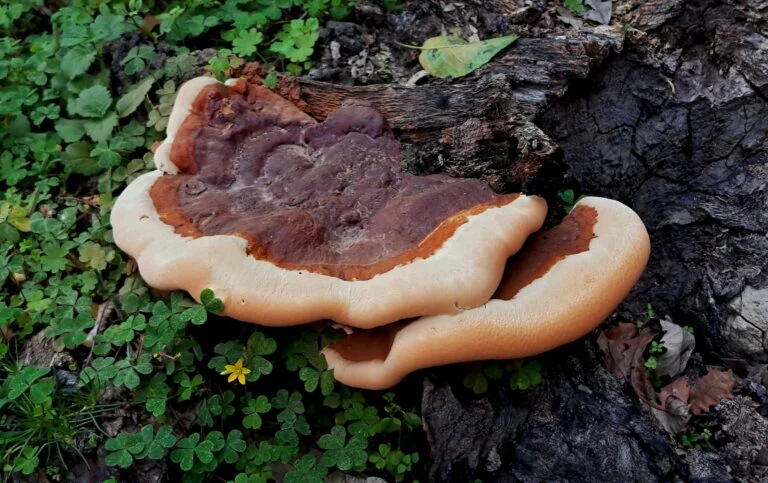
Reishi (Ganoderma lucidum) is the classic “calming” mushroom of traditional Chinese medicine, and it’s the one most people picture as an evening mushroom. The modern evidence is thinner than its reputation:
- Neurasthenia, 2005. 132 adults with neurasthenia, a diagnosis involving long-term fatigue, irritability and poor sleep, took a reishi polysaccharide extract (1,800mg three times a day) or placebo for 8 weeks. Fatigue and overall severity scores improved more on reishi, and it was well tolerated.
- Breast cancer fatigue, 2012. In a pilot trial, 48 women on hormone therapy for breast cancer were randomly assigned to reishi spore powder or a control group for 4 weeks. The reishi group reported less fatigue, less anxiety and depression, and better quality of life.
- Fibromyalgia, 2020. A small pilot trial gave women with fibromyalgia 6g a day of milled reishi or a placebo for 6 weeks. There were no statistically significant differences between groups, although mood scores trended in the right direction.
Animal studies show calming effects, but there’s still no good trial of reishi in people whose main problem is anxiety. If you like the idea of reishi as part of a wind-down routine, that’s a reasonable thing to try, as long as you know it’s a ritual rather than a remedy.
Our Reishi Cacao is a hot chocolate with a little natural caffeine (see your routine). It isn’t a treatment for anxiety and we make no mood claims for it. More on the ingredients in reishi cacao benefits, and on the mushroom itself in our reishi guide.
3. Cordyceps
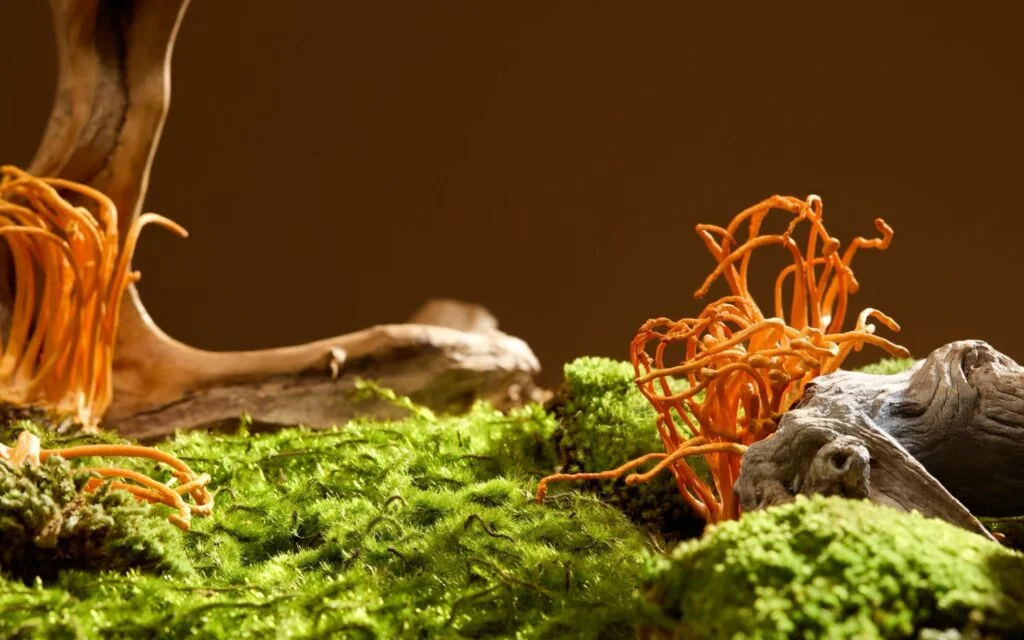
Cordyceps is best known for energy and exercise. A 2017 trial found a cordyceps blend improved tolerance to high-intensity exercise after 3 weeks. Some people find that feeling more energetic helps them cope with stress, but there’s no good evidence that cordyceps reduces anxiety directly. If anxiety makes you jittery, take it earlier in the day. Read more in our cordyceps guide, or see how the three compare in lion’s mane vs reishi vs cordyceps.
Mushrooms for anxiety and depression
Most people searching for the best mushroom for anxiety also ask about low mood, and the evidence overlaps:
| Evidence | What it found |
|---|---|
| Lion’s mane, 2010 (30 women, 4 weeks) | Lower depression scores than at the start; anxiety tended to be lower than placebo |
| Lion’s mane, 2019 (77 adults with overweight, 8 weeks, no placebo) | Lower depression, anxiety and sleep-problem scores |
| Reishi, 2012 (48 women with breast cancer fatigue, 4 weeks) | Less fatigue, anxiety and depression reported than the comparison group |
| Reishi, 2020 (women with fibromyalgia, 6 weeks) | No significant difference from placebo; a trend towards better mood |
| Eating mushrooms, 2021 (24,699 US adults) | People who ate mushrooms had lower odds of depression; this shows a link, not cause and effect |
So lion’s mane is the most studied mushroom for mood, but the trials are small and short, and none was a large, well-run trial in people diagnosed with depression. No mushroom treats depression, and no supplement should replace treatment you’ve been offered. Depression needs proper support: see your GP (the NHS advises not to delay) or refer yourself to NHS Talking Therapies. For urgent help, call NHS 111 (mental health option) or Samaritans free on 116 123. If you can’t keep yourself safe, call 999 or go to A&E.
Our guide to low mood covers the everyday basics.
Mushrooms for anxiety and sleep
Anxiety and poor sleep tend to feed each other, which is why “mushrooms for anxiety and sleep” is such a common search. Two of the small trials above measured sleep: the 2019 lion’s mane study reported better sleep scores, and the 2005 reishi trial was in people whose symptoms included poor sleep. Neither was a sleep trial in the usual sense.
If you’re going to experiment, the usual pattern is lion’s mane in the morning and reishi in the evening. Our reishi for sleep guide goes through timing and what the sleep research does and doesn’t show. If night-time worry is the main problem, our guide to anxiety at night has practical steps that don’t involve any supplement.
Mushroom coffee and gummies: do they help anxiety?
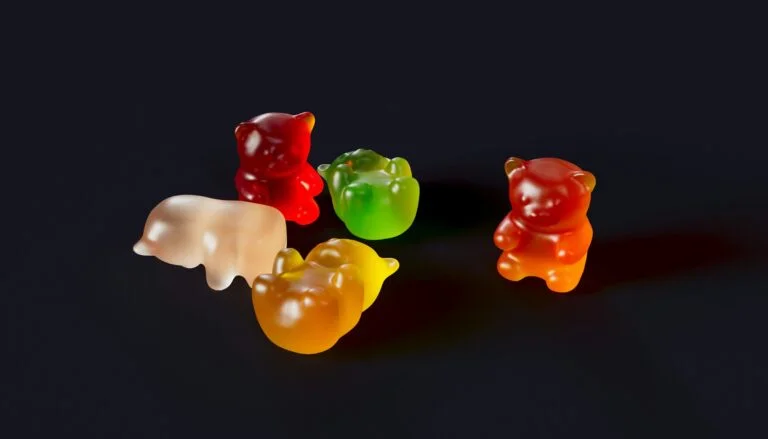
Mushroom coffee and gummies are the formats people see most on social media. Neither has been tested for anxiety. Two practical points are worth knowing.
- Mushroom coffee still has caffeine. If you feel more on edge after a mushroom coffee, the coffee is a more likely culprit than the mushroom. Our guide to caffeine and anxiety explains why some people are more sensitive, and mushroom coffee covers what’s actually in it.
- Check the amount in gummies. The trials above used grams of mushroom a day. Look for the extract amount per serving and whether it’s fruiting body or mycelium, and compare it with the trial amounts in the lion’s mane and reishi sections.
Mushroom supplements, including ours, are for adults. Don’t give them to teenagers or children, and never give them to pets.
What about chaga and turkey tail?
Chaga and turkey tail are popular for general wellbeing, but there’s no human evidence for anxiety. Chaga is also high in oxalates and has been linked to kidney damage in people who took chaga powder daily for months. See chaga mushroom and turkey tail.
How to take mushrooms for anxiety
- Choose an extract with the mushroom part (fruiting body or mycelium) and the extract amount clearly stated, rather than a vague “proprietary blend”.
- Follow the label dose and take it daily; the studies ran for 4 to 8 weeks.
- Match the mushroom to the time of day: lion’s mane or cordyceps in the morning, reishi in the evening.
- Pick a format you’ll stick with: capsules, powders in coffee or hot chocolate, or tea. See how to make mushroom tea.
- Keep a simple diary of mood and sleep so you can judge any change honestly. If nothing has changed after 8 weeks, it’s fine to stop.
Compare mushrooms in lion’s mane vs reishi vs cordyceps, and see how to choose a mushroom supplement before you buy.
Side effects and who should avoid them
Functional mushrooms are generally well tolerated in short trials. Reported side effects of lion’s mane include stomach discomfort, headache and allergic reactions. Reishi has been linked to nausea, dry mouth and itching, and there are rare case reports of liver injury with reishi powder, including one death, sometimes alongside other medicines or alcohol.
Stop and get advice if your skin or the whites of your eyes turn yellow, or you notice darker pee or paler poo than usual while taking any mushroom supplement. The NHS advises an urgent GP appointment or a call to 111 for yellowing skin or eyes.
iCheck with your GP or pharmacist first if you:
- take blood thinners such as warfarin (reishi, cordyceps and chaga may increase bleeding risk)
- take immunosuppressants, have had a transplant or have an autoimmune condition
- take antidepressants, anti-anxiety medicines, diabetes or blood pressure medicines
- are having chemotherapy
- have liver or kidney disease
- are pregnant or breastfeeding (we don’t recommend our products during pregnancy or breastfeeding)
- are allergic to mushrooms or moulds
Don’t stop or change prescribed medication without speaking to your doctor, even if you feel better. Our products are for adults (18+) only.
Why no mushroom label can promise calm
In Great Britain, food supplements can only make health claims that appear as authorised on the government’s nutrition and health claims register. There are no authorised health claims for lion’s mane, reishi, cordyceps or any other mushroom. If a mushroom product says it reduces anxiety, calms your nervous system or lowers cortisol, that wording isn’t backed by an authorised claim.
Some nutrients do have authorised claims. Magnesium, for example, contributes to normal psychological function, which is one reason we cover it separately in magnesium for anxiety.
Magic mushrooms (psilocybin) and anxiety
Psilocybin, the active compound in “magic” mushrooms, is a different subject altogether. In the UK, magic mushrooms, fresh or dried, are a Class A drug: possession can carry up to 7 years in prison and supply up to life. The research you may have read about takes place in clinical trials, with carefully screened volunteers and therapists supporting them before, during and after each session. A 2024 Cochrane review of those trials, in people with life-threatening illnesses, rated the evidence on anxiety as low certainty. Outside that setting, magic mushrooms can make you feel anxious, panicked or paranoid, can make existing mental health problems worse, and are easy to confuse with poisonous mushrooms. Psilocybin isn’t one of the NHS treatments for anxiety, and none of the functional mushrooms in this guide contain it.
Getting help for anxiety and depression in the UK
If anxiety or low mood is affecting your work, sleep or relationships, the most useful step is usually a conversation, not a supplement. Not sure what you’re feeling? See anxiety symptoms.
- See your GP if you think you might have generalised anxiety disorder, or if treatment you’ve had isn’t helping. GPs usually suggest talking therapy, most often cognitive behavioural therapy (CBT), and may offer medicine such as an SSRI.
- Refer yourself to NHS Talking Therapies if you live in England and are 18 or over (16 or 17 in some areas). You don’t need a diagnosis or a GP referral, and it covers depression as well as anxiety.
- Try some self-help alongside: our guides to dealing with anxiety and stopping a panic attack are a good place to start.
Need to talk now? Samaritans are there 24 hours a day on 116 123, free. If you need urgent help but it isn’t an emergency, call NHS 111 and choose the mental health option. If you feel you can’t keep yourself safe, or someone else is in immediate danger, call 999 or go to A&E.
Other options with better evidence
For anxiety, the strongest evidence is for talking therapies such as CBT, regular exercise, good sleep and, where needed, medication. Supplements that some people try include magnesium (which contributes to normal psychological function), L-theanine, ashwagandha and CBD. If you’re choosing between an adaptogen and a mushroom, reishi vs ashwagandha sets out the differences.
Related guides
- The best natural supplements for anxiety, ranked by evidence.
- Natural ways to lift your mood.
- We look at doses, sugar and safety in more detail in our guide to mushroom gummies.
Sources 22
- Nagano M et al (2010). Reduction of depression and anxiety by 4 weeks Hericium erinaceus intake. Biomedical Research. PMID 20834180.
- Vigna L et al (2019). Hericium erinaceus improves mood and sleep disorders in patients affected by overweight or obesity. Evidence-Based Complementary and Alternative Medicine. PMID 31118969.
- Docherty S et al (2023). The acute and chronic effects of lion’s mane mushroom supplementation on cognitive function, stress and mood in young adults. Nutrients. PMID 38004235.
- Menon A et al (2025). Benefits, side effects, and uses of Hericium erinaceus as a supplement: a systematic review. Frontiers in Nutrition. PMID 40959699.
- Tang W et al (2005). A randomized, double-blind and placebo-controlled study of a Ganoderma lucidum polysaccharide extract in neurasthenia. Journal of Medicinal Food. PMID 15857210.
- Zhao H et al (2012). Spore powder of Ganoderma lucidum improves cancer-related fatigue in breast cancer patients undergoing endocrine therapy: a pilot clinical trial. Evidence-Based Complementary and Alternative Medicine. PMID 22203880.
- Pazzi F et al (2020). Ganoderma lucidum effects on mood and health-related quality of life in women with fibromyalgia. Healthcare. PMID 33265969.
- Wanmuang H et al (2007). Fatal fulminant hepatitis associated with Ganoderma lucidum (Lingzhi) mushroom powder. Journal of the Medical Association of Thailand. PMID 17621752.
- Guedikian R et al (2023). Ganoderma lingzhi (reishi mushroom)-induced acute liver injury in the setting of alcohol use: a case report and review of the literature. Cureus. PMID 37885515.
- Ba DM et al (2021). Mushroom intake and depression: a population-based study using data from NHANES, 2005 to 2016. Journal of Affective Disorders. PMID 34333177.
- Hirsch KR et al (2017). Cordyceps militaris improves tolerance to high-intensity exercise after acute and chronic supplementation. Journal of Dietary Supplements. PMID 27408987.
- Schipper S et al (2024). Psychedelic-assisted therapy for treating anxiety, depression, and existential distress in people with life-threatening diseases. Cochrane Database of Systematic Reviews. PMID 39260823.
- Memorial Sloan Kettering Cancer Center. Reishi mushroom, Cordyceps and Chaga mushroom.
- GOV.UK. Drugs penalties.
- Talk to Frank. Magic mushrooms.
- GOV.UK. Great Britain nutrition and health claims (NHC) register.
- NHS. Generalised anxiety disorder in adults.
- NHS. Find NHS talking therapies for anxiety and depression.
- NHS. Depression in adults: overview.
- NHS. Jaundice.
- NHS. Where to get urgent help for mental health.
- Samaritans. Contact Samaritans.
This guide is general information, not medical advice. Evopure makes the Reishi Mushroom Adaptogenic Complex.