













Last updated: 11 November 2026
To stop snoring at night, sleep on your side, lose weight if you’re overweight, cut back on alcohol, stop smoking and avoid sleeping pills. Nasal strips help a blocked nose, and a mouthpiece can help if your tongue blocks your throat. See a GP if you gasp, choke or stop breathing in your sleep.
iBelow: what causes snoring, 10 ways to stop, why men snore more, stop snoring aids compared, whether mouth tape works, snoring or sleep apnoea, tips and earplugs for the partner kept awake, snoring in pregnancy, and when to see a GP.
Black Friday sale on now, until the end of Monday 30 November: 25% off any order, 30% off when you spend £50 and 40% off when you spend £100, with free standard UK delivery on every order. See the Black Friday offer.
See a GP first
Magnesium Glycinate Sleep Complex
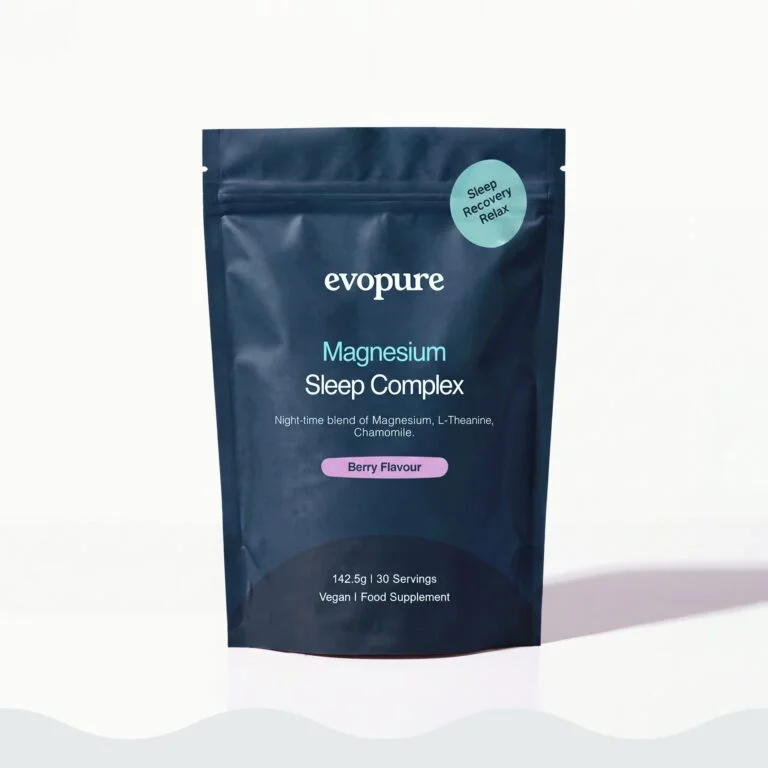
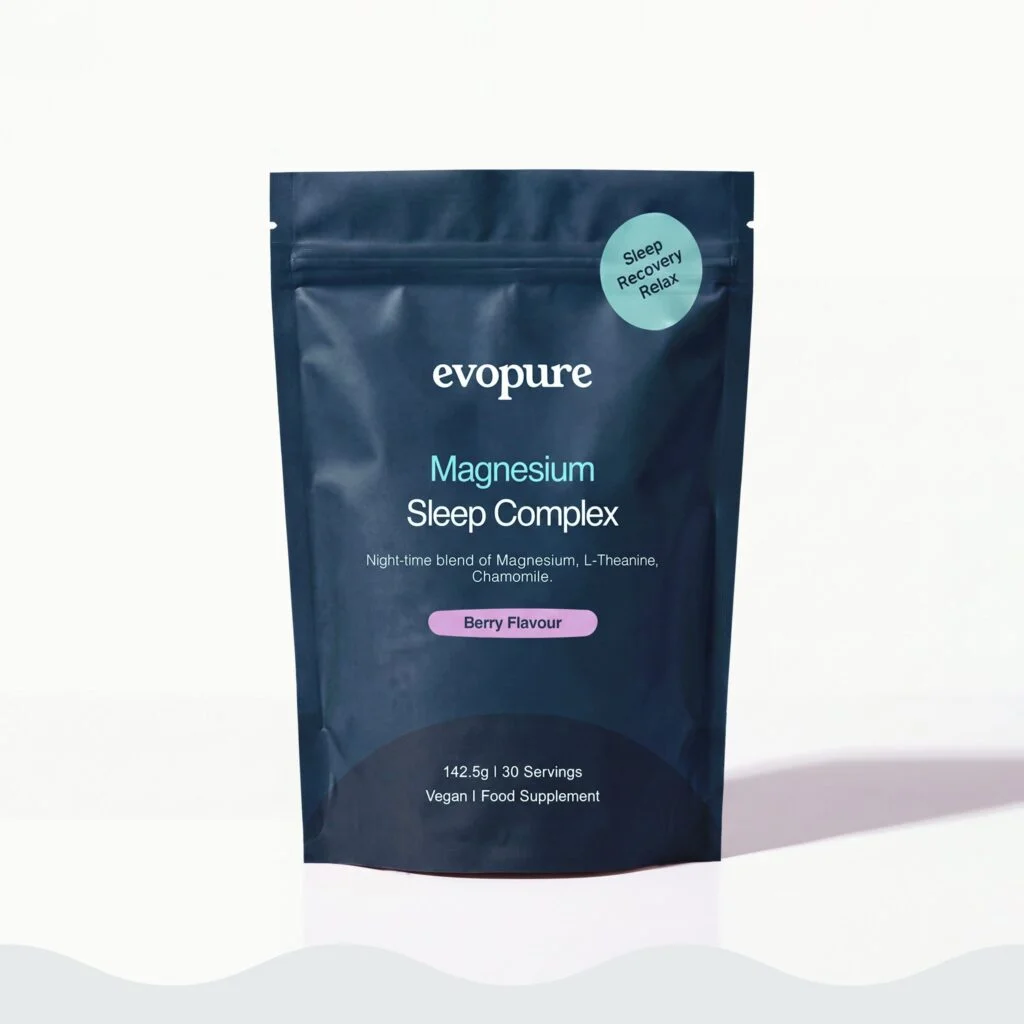
if you gasp, choke or stop breathing in your sleep. For your bedtime routine, or your partner’s: Evopure Magnesium Glycinate Sleep Complex is a berry drink powder with 290mg of magnesium (77% NRV) per 4.75g serving, from magnesium bisglycinate and citrate. It isn’t a treatment for snoring. Magnesium contributes to a reduction of tiredness and fatigue.
Add Magnesium Glycinate Sleep Complex to bag See ingredients and reviews
Vegan. Made in the UK. For adults (18+). If you have kidney problems or take any regular medicines, check with your GP or pharmacist first. We don’t recommend our products during pregnancy or breastfeeding.
Subscribe £17.99One-off £29.99
View productWhat causes snoring?
Snoring happens when relaxed tissues in your mouth, throat or nose vibrate as you breathe in your sleep. If CBD is on your list to try, see our picks for the best CBD oil for sleep UK. The NHS lists these common causes:
| Cause | Why |
|---|---|
| Sleeping on your back | Your tongue and soft palate fall back and narrow the airway |
| Being overweight | Extra tissue around the neck narrows the airway |
| Alcohol | Relaxes the throat muscles. See alcohol and sleep |
| Smoking | Irritates and swells the airways |
| Sleeping pills | Can relax the throat muscles |
| A blocked nose | Colds and allergies make you breathe through your mouth. See how to sleep with a cold |
| Sleep apnoea | Sometimes snoring is a sign of this condition. See sleep apnoea symptoms and tests |
Snoring is very common. A 2024 review estimates that about 45% of adults snore now and then and 25% snore regularly, more often men, with a rise in women after the menopause. See perimenopause symptoms.
Our pick
Magnesium Glycinate Sleep Complex
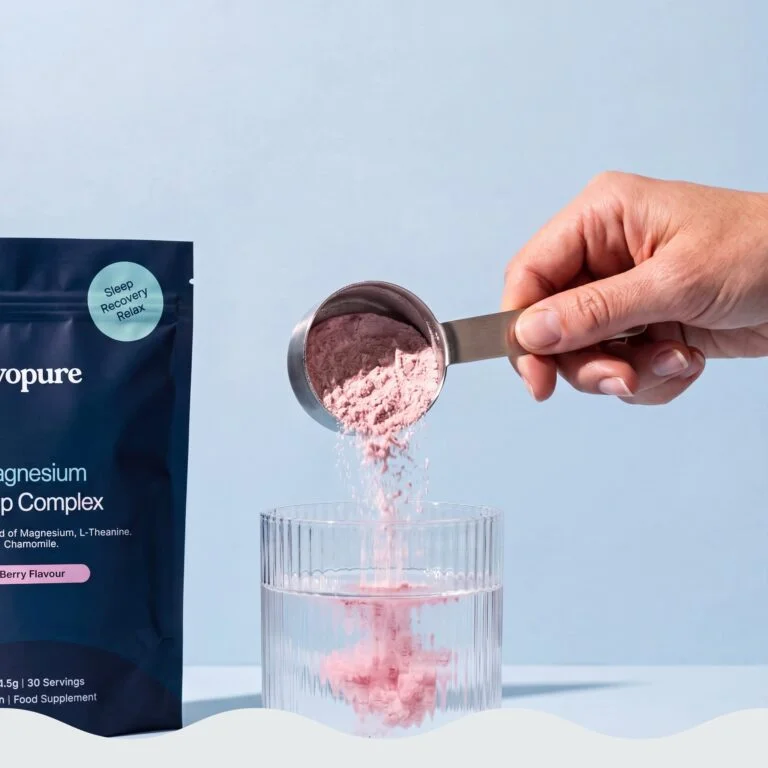
Magnesium Glycinate Sleep Complex is a berry drink powder with 290mg of magnesium a scoop from bisglycinate and citrate, plus glycine and L-theanine. Magnesium contributes to a reduction of tiredness and fatigue.
Add Magnesium Glycinate Sleep Complex to bag See ingredients and reviews
Vegan and made in the UK, 14-day returns on unopened items. Subscribe and save 25% on your first order, then 20%. New to Evopure? Join our emails for 20% off a one-off first order. Free UK delivery over £40.
Subscribe £17.99One-off £29.99
View productHow to stop snoring so loud
To stop snoring so loud, tackle the two biggest triggers first: sleeping on your back and alcohol. Sleep on your side, have no alcohol in the 3 to 4 hours before bed, and clear a blocked nose. The NHS also lists losing weight and stopping smoking. Very loud snoring with pauses or gasps can be sleep apnoea, so see a GP.
Loud snoring that leaves you tired all day, even after a full night, is worth taking seriously: see still tired after 8 hours of sleep? and our sleep apnoea guide for the tests and treatment.
10 ways to stop snoring
How can I stop snoring at night?
You can stop snoring at night by sleeping on your side, avoiding alcohol for 3 to 4 hours before bed, clearing a blocked nose and keeping regular sleep times. Over weeks, losing weight if you’re overweight and stopping smoking help most. If snoring is loud with pauses, gasps or daytime sleepiness, see a GP, as it can be sleep apnoea.
- Sleep on your side. A body pillow, a bed wedge or a tennis ball sewn into the back of a top can stop you rolling over. See the best sleeping position for snoring.
- Lose weight if you’re overweight. Short sleep can make that harder: see sleep and weight loss.
- Cut back on alcohol, especially in the 3 to 4 hours before bed.
- Stop smoking.
- Avoid sleeping pills unless prescribed.
- Clear a blocked nose with a steamy shower, nasal strips or a short course of decongestant from a pharmacist.
- Raise the head of your bed slightly.
- Keep regular sleep times. Being overtired can make snoring worse. See how to sleep better.
- Stay hydrated through the day.
- Try a mouthpiece if lifestyle changes don’t work (see below).
How to stop snoring (for men)
What causes snoring in men?
Snoring in men is mostly caused by anatomy, weight and alcohol. Men tend to have a longer, more collapsible airway in the throat and a larger soft palate, carry more weight around the neck, and alcohol relaxes the throat muscles. Smoking, a blocked nose and sleeping on your back add to it. Loud snoring with pauses can be sleep apnoea.
Men snore more than women, and they are more likely to have sleep apnoea too. In a large US study of 602 working adults aged 30 to 60, 24% of men and 9% of women had at least 5 breathing pauses or shallow breaths an hour in their sleep. Three things explain a lot of the gap.
- Anatomy. In a Harvard imaging study, men had a longer airway in the throat and a larger soft palate than women. A computer model built from those scans showed the male airway was more collapsible, purely because of its shape.
- Weight and neck size. The NHS lists being overweight as a cause of snoring, and a large neck as a risk factor for sleep apnoea.
- Alcohol. Drink relaxes the throat muscles. A 2020 review of 13 sleep lab studies found that alcohol was linked with worse snoring and more breathing pauses in people prone to snoring and sleep apnoea.
What to do
- Train yourself to sleep on your side. Back sleeping lets the tongue fall back. A tennis ball in the back of a T-shirt is the cheapest positional aid there is.
- Work on your weight if you’re carrying extra, especially around the neck and middle. The NHS lists being overweight as one of the main causes of snoring.
- Make the last drink earlier. Have alcohol-free evenings, and stop drinking a few hours before bed. See when to stop drinking before bed.
- Stop smoking. The NHS offers free help to quit.
- Ask your partner what they hear, or record yourself. Steady snoring is one thing; pauses followed by gasps are another (see snoring or sleep apnoea).
Late nights, stress and an extra drink often travel together. Our Movember guide to stress in men covers what stress does to sleep and what helps.
Stop snoring aids: what works
What are the best snoring aids?
The best snoring aids are the ones that match the cause: a side-sleeping aid or wedge if you snore on your back, nasal strips or dilators for a blocked nose, and a mandibular advancement mouthpiece if your tongue falls back, ideally with a dentist’s advice. Throat sprays and most “anti-snoring” pillows have little evidence. No aid treats sleep apnoea.
Match the aid to the cause
| If snoring is caused by… | Try (NHS) |
|---|---|
| Your tongue blocking your throat | A mouthpiece that moves your jaw and tongue forward (mandibular advancement device) |
| Your mouth falling open | A chin strap, or a device that encourages nose breathing |
| A blocked or narrow nose | Nasal dilators or strips, or decongestant sprays for a short time |
Every aid compared
| Aid | Best for | What the evidence says |
|---|---|---|
| Side-sleeping aids and positional devices (tennis ball, wedge, positional pillow, vibration alarm) | People who snore mainly on their back | The NHS suggests sleeping on your side. A 2024 review found positional devices and raising the head of the bed can reduce snoring, though some people find them uncomfortable |
| Nasal strips and dilators | A blocked or narrow nose | On the NHS list for nose-related snoring. A small 2004 trial in general snorers found no benefit from a nasal strip, so don’t expect them to fix snoring that comes from the throat |
| Mandibular advancement device (a mouthpiece like a gum shield) | The tongue falling back and blocking the throat | The NHS lists it as a treatment for this type of snoring. Ask a dentist before you buy: NICE notes these devices may not suit people with gum disease, untreated tooth decay or few teeth |
| Chin strap or vestibular shield | Your mouth falling open | Both on the NHS list for mouth-open snoring |
| Anti-snoring throat sprays | Not recommended | Little evidence. A 2004 trial found no benefit from a lubricant spray, and a 2015 review found no consistent data for any spray or medicine for snoring |
| “Anti-snoring” pillows | Back sleepers, if anything | Mixed. The 2004 trial found no benefit from a head-positioning pillow; newer studies are small and the 2024 review says better comparisons are needed |
| CPAP machine | Diagnosed sleep apnoea only | Not a snoring gadget. A CPAP machine pumps air through a mask to keep the airway open, and the NHS provides one free if you need it after a sleep test. See sleep apnoea treatment |
| Surgery | When other treatments haven’t helped | The NHS says surgery is not widely available on the NHS, doesn’t always work, and snoring can come back |
Do nose strips help with snoring?
Nose strips help with snoring only when the noise starts in a blocked or narrow nose. The NHS lists nasal strips and dilators for that type of snoring. In a 2004 trial of 40 snorers, though, a nasal strip made no measurable difference overall, so treat strips as a cheap thing to try rather than a cure.
Do anti-snoring pillows work?
Anti-snoring pillows work for some back sleepers, but the evidence is small. In a 2004 trial of 40 snorers, a head-positioning pillow gave no benefit. In a 2017 German study of 20 snorers, a pillow designed to change the head position cut snoring (one author worked for a pillow company), and in a 2022 study of 32 people with sleep apnoea, a memory foam pillow reduced snoring events by about 47% over 3 hours.
The NHS view is simpler: a special pillow or bed wedge is useful if it keeps you on your side. No pillow treats sleep apnoea, so loud snoring with pauses still needs a GP.
Does a wedge pillow help with snoring?
A wedge pillow can help some people snore less by raising the head and upper body, so the tongue and soft palate are less likely to fall back. A 2024 review found raising the head of the bed can reduce snoring, but the studies were small. It suits back sleepers and people with reflux. It won’t treat sleep apnoea.
- Raise your whole upper body, not just your head. Stacking ordinary pillows bends your neck forward, which can narrow the airway.
- Try raising the bed instead: blocks under the legs at the head end do the same job if a wedge feels awkward.
- Pair it with side sleeping if you still roll onto your back. A body pillow behind you helps.
Do nose clips for snoring work?
Nose clips for snoring, also called nasal dilators, can help only when the snoring starts in a narrow or blocked nose. They sit inside the nostrils to hold them open, and the NHS lists nasal dilators for that type of snoring. Evidence is small, and they won’t help snoring from the throat or tongue. Magnetic clips have no good evidence.
iChoose a soft, medical-grade silicone dilator in the right size, clean it daily and stop if it rubs. If your nose is always blocked, ask a pharmacist or GP about the cause, such as allergies or nasal polyps, rather than relying on a clip.
If your mouth falls open at night, work out why before buying anything: see mouth breathing at night.
Does mouth tape help with snoring?
Mouth tape probably doesn’t help most snorers, and it can be risky. A 2025 systematic review found only 10 small studies of mouth taping, with 213 people in total. Two showed improvements in sleep apnoea measures and the others showed no difference. The authors warned of a potentially serious risk of harm, including suffocation if the nose is blocked.
Don’t tape your mouth if:
- you might have sleep apnoea (loud snoring with pauses, gasping or choking, or feeling very sleepy in the day)
- your nose is blocked from a cold, hay fever or anything else
- you’ve been drinking alcohol or taken anything that makes you drowsy
- it’s for a child: never tape a child’s mouth
For the research, the safety checks and safer alternatives, see our full guide to mouth taping for snoring.
Does vitamin C help with snoring?
There’s no good evidence that vitamin C helps with snoring. No trials have tested it as a snoring treatment, and a 2015 review found no consistent evidence for any medicine or spray for snoring. Vitamin C won’t clear a blocked nose either. Adults need 40mg a day (NHS), which most people get from food.
A Cochrane review found regular vitamin C didn’t stop most adults catching colds and only slightly shortened them. Taking more than 1,000mg a day can cause stomach pain, diarrhoea and wind (NHS). If a blocked nose is behind your snoring, nasal strips, a steamy shower or a pharmacist’s advice will do more.
Snoring or sleep apnoea?
| Simple snoring | Possible sleep apnoea |
|---|---|
| Steady snoring | Loud snoring with pauses, then gasping or choking |
| You wake feeling rested | You feel very sleepy in the day, even after a full night |
| Mainly a nuisance | Can be serious if not treated, and is linked to high blood pressure |
Red flags: see a GP if someone has seen your breathing stop and start in your sleep, you wake gasping, snorting or choking, or you feel very sleepy in the day even after a full night. The NHS says sleep apnoea can be serious if it’s not diagnosed and treated. Take someone who has heard you sleep, or a recording.
NICE tells doctors to assess for sleep apnoea when someone has 2 or more features such as snoring, witnessed pauses in breathing, unrefreshing sleep, waking headaches, unexplained sleepiness, choking during sleep or waking to pee. Sleep apnoea can also affect whether you can drive: our sleep apnoea guide explains the tests, treatment and when to tell the DVLA.
If you feel tired all the time, see why am I always tired?
If your partner snores
- Earplugs are the simplest fix, as the NHS suggests.
- Go to sleep first, before the snoring starts.
- Try white noise or a fan. See brown noise vs white noise for which masks snoring best.
- Talk about it kindly and suggest the tips above together.
- Sleep apart sometimes if you need to. It’s more common than you’d think. See sleep divorce.
Earplugs for your partner
When choosing earplugs to block snoring, look at:
- The SNR (single number rating) on the pack. It shows how much sound a plug blocks in lab tests. Higher blocks more, but a good fit matters more than the number.
- Comfort for how you sleep. If you sleep on your side, pick a soft, low-profile plug that doesn’t press when your ear is on the pillow.
- Fit. Foam plugs need rolling and inserting properly to work well. Try a couple of sizes or shapes before settling on one.
Our guide to earplugs for sleeping compares the types and covers whether they’re safe to wear every night.
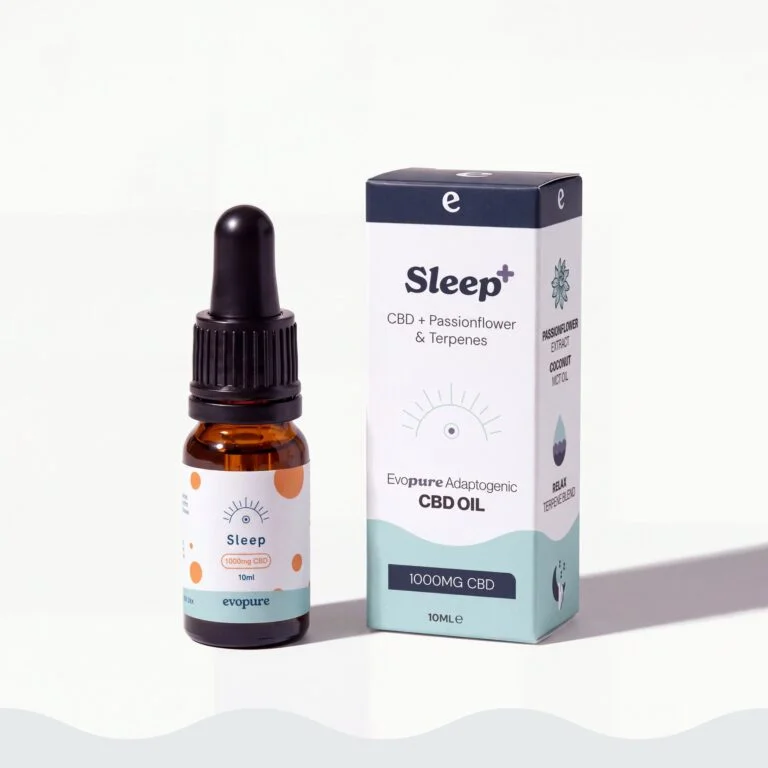
Broken nights add up. A calm wind-down helps you drop off before the snoring starts. Our Magnesium Glycinate Sleep Complex is a bedtime drink, and magnesium contributes to a reduction of tiredness and fatigue. Our Sleep CBD Oil pairs broad spectrum CBD with passion flower for evenings. The FSA’s 10mg a day figure is precautionary advice rather than a legal limit, set while longer-term safety research continues. At Evopure we think it is a very cautious figure, and many adults use more. If you go above it, increase slowly, and check with your GP or pharmacist first if you take any medication. The FSA advises healthy adults to take no more than 10mg of CBD a day: about 0.2ml of the 500mg (0.1ml of the 1,000mg) gives 10mg. Neither product is a treatment for snoring, and both are for adults only. See how to fall asleep fast and best tea for sleep.
Snoring during pregnancy
Snoring is common in pregnancy, and it becomes more common as pregnancy goes on. In a Swedish study of pregnant women, 7.9% snored in the first trimester, rising to 21.2% in the third. Those who snored were more likely to have swelling (oedema) in late pregnancy.
What it means is less clear. A US study of 1,719 women found that snoring which started during pregnancy was linked with high blood pressure in pregnancy and pre-eclampsia, while the Swedish study found no link between snoring and how the pregnancy turned out. NICE also tells doctors that sleep apnoea is more common in people who are overweight in pregnancy.
- Mention it to your midwife, especially if the snoring is new and loud, if you stop breathing or gasp in your sleep, if you feel very sleepy in the day, or if you’ve been told your blood pressure is high.
- Get swelling checked straight away. The NHS says sudden swelling of the face, hands or feet, a severe headache, vision problems or pain below the ribs can be signs of pre-eclampsia. Call your maternity unit, or 111 if you can’t reach them.
- Check before using anything, including decongestant sprays: ask your midwife or pharmacist first. Don’t tape your mouth.
- Sleep on your side if you can. See the best sleeping position for pregnancy tips.
We don’t recommend our products during pregnancy or breastfeeding.
When to see a GP
The NHS advises seeing a GP if lifestyle changes haven’t helped, snoring is affecting your life or your partner’s, or you feel very sleepy in the day, your breathing stops and starts, or you gasp or choke in your sleep. These can be signs of sleep apnoea, which needs treatment. Your GP may look in your mouth and nose, and can refer you to a specialist if the cause isn’t clear.
Related guides
- See which position suits you best in our guide to the best sleeping position.
- Loud snoring can leave you waking up tired.
- Teeth grinding (bruxism).
- Waking up with a headache, a possible sign of sleep apnoea.
- How to stop sleep talking.
- Using white noise to mask a partner’s snoring.
- If your mouth falls open at night, see mouth breathing at night for the causes and how to stop it.
- A nose that is always blocked at night can be down to dust mites in your bedding; see dust mite allergy and how to reduce dust mites.
- If you’re the one lying awake, see our guide to earplugs for sleeping, including the best types for side sleepers.
- Sharing a bed with a snorer and a light sleeper yourself? See light sleeper tips.
- Snoring plus frequent night-time peeing can point to sleep apnoea; see waking up to pee at night.
- Why your cough gets worse when you lie down.
- Feeling on edge the morning after a few drinks? See hangxiety.
- Snoring with drenched sheets can point to sleep apnoea; see night sweats: causes and when to worry.
- Snoring with your mouth open can leave you waking with a dry, scratchy throat: see our guide to sore throat remedies for what eases it.
- Why loud snoring and sleep apnoea matter for the brain.
- Our Movember guide to men’s sleep, stress and health checks.
- Earplugs and a white noise machine make thoughtful sleep gifts for the partner of a snorer.
- Still tired after 8 hours of sleep? The common causes.
Next step
Magnesium Glycinate Sleep Complex
For a calmer wind-down for either of you, Magnesium Glycinate Sleep Complex is a caffeine-free berry bedtime drink with 290mg of magnesium (77% NRV) per 4.75g serving, from bisglycinate and citrate, plus glycine and L-theanine. Magnesium contributes to a reduction of tiredness and fatigue. It isn’t a treatment for snoring or sleep apnoea.
Add Magnesium Glycinate Sleep Complex to bag See ingredients and reviews
Subscribe and save 25% on your first order, then 20%. New to Evopure? Join our emails for 20% off a one-off first order. Free UK delivery over £40. If you take any regular medicines, check with your GP or pharmacist first. We don’t recommend our products during pregnancy or breastfeeding.
Subscribe £17.99One-off £29.99
View productSources 18
- NHS. Snoring.
- NHS. Sleep apnoea.
- NHS. Pre-eclampsia.
- NHS. Quit smoking.
- NICE (2021). Obstructive sleep apnoea/hypopnoea syndrome and obesity hypoventilation syndrome in over 16s (NG202).
- Moffa A et al (2024). The potential effect of changing patient position on snoring: a systematic review. Journal of Personalized Medicine. PMID 39063969.
- Young T et al (1993). The occurrence of sleep-disordered breathing among middle-aged adults. New England Journal of Medicine. PMID 8464434.
- Malhotra A et al (2002). The male predisposition to pharyngeal collapse: importance of airway length. American Journal of Respiratory and Critical Care Medicine. PMID 12421747.
- Burgos-Sanchez C et al (2020). Impact of alcohol consumption on snoring and sleep apnea: a systematic review and meta-analysis. Otolaryngology Head and Neck Surgery. PMID 32513091.
- Michaelson PG, Mair EA (2004). Popular snore aids: do they work? Otolaryngology Head and Neck Surgery. PMID 15195048.
- Achuthan S, Medhi B (2015). A systematic review of the pharmacological approaches against snoring. Sleep and Breathing. PMID 25680547.
- Hemilä H, Chalker E (2013). Vitamin C for preventing and treating the common cold. Cochrane Database of Systematic Reviews. PMID 23440782.
- NHS. Vitamin C.
- Rhee J et al (2025). Breaking social media fads and uncovering the safety and efficacy of mouth taping: a systematic review. PLoS One. PMID 40397877.
- Sarberg M et al (2014). Snoring during pregnancy and its relation to sleepiness and pregnancy outcome. BMC Pregnancy and Childbirth. PMID 24418321.
- O’Brien LM et al (2012). Pregnancy-onset habitual snoring, gestational hypertension, and preeclampsia: prospective cohort study. American Journal of Obstetrics and Gynecology. PMID 22999158.
- Cazan D et al (2017). The effect on snoring of using a pillow to change the head position. Sleep and Breathing. PMID 28127672.
- Stavrou VT et al (2022). Memory foam pillow as an intervention in obstructive sleep apnea syndrome: a preliminary randomized study. Frontiers in Medicine. PMID 35372428.
This guide is general information, not medical advice. Evopure makes the Magnesium Glycinate Sleep Complex and Sleep CBD Oil. Our products are for adults only. We don’t recommend our products during pregnancy or breastfeeding.