Last updated: 11 November 2026
Ashwagandha can raise thyroid hormone levels in some people, so it isn’t a good match for thyroid medicine. Small trials found it shifted thyroid blood tests, and case reports describe an overactive thyroid after taking it. If you take levothyroxine or have any thyroid condition, don’t take ashwagandha unless your GP says it’s OK.
Below: what the studies and case reports show, what it means for an underactive or overactive thyroid, other supplements that affect levothyroxine, and the warning signs to know. This is general information, not medical advice.
Can you take ashwagandha with levothyroxine?
Not without your GP’s OK. Levothyroxine replaces thyroid hormone at a dose set by your blood tests. Ashwagandha may push thyroid hormone up as well, which could leave you with too much, and nobody has studied the two together. The US National Institutes of Health lists thyroid medicine among ashwagandha’s possible interactions.
iIf your GP agrees to you trying it, ask whether you need an earlier thyroid blood test to check your dose is still right. Don’t change your levothyroxine dose yourself.
How ashwagandha affects the thyroid
Nobody knows exactly how. In mice, ashwagandha root raised T3 and T4, the two main thyroid hormones, and small human studies have seen the same direction of change. Because it can nudge thyroid hormone up, it may work alongside levothyroxine and against medicines that bring thyroid hormone down, such as carbimazole.
European food safety bodies list thyroid effects among their main concerns. Germany’s BfR flagged effects on thyroid and sex hormones in 2024, and Denmark banned ashwagandha in food supplements in 2023 after a report that couldn’t set a safe level. More in our UK ashwagandha safety review.
What the studies and case reports show
| Study | Who | What happened | The catch |
|---|---|---|---|
| Sharma 2018, India | 50 adults with subclinical hypothyroidism (raised TSH, not on treatment) | 600mg root extract a day for 8 weeks moved TSH, T3 and T4 towards normal compared with placebo | Small, short, single centre; people on thyroid medicine weren’t included |
| Gannon 2014, USA | Thyroid tests from a trial in people with bipolar disorder | All 3 people on ashwagandha with abnormal thyroid tests had T4 rises of 7% to 24% | Tiny numbers; thyroid wasn’t the main question |
| van der Hooft 2005, Netherlands | Healthy woman, 32, no other medicines | Developed an overactive thyroid after increasing her dose; recovered after stopping | Single case report |
| Kamal 2022, USA | Woman, 73, with an underactive thyroid | Used ashwagandha for two years to self-treat her thyroid and developed a fast heart rhythm and thyroid hormone excess; recovered after stopping | Single case report |
iPut together, the evidence suggests ashwagandha can raise thyroid hormone in some people, but not by how much or in whom. That uncertainty is the reason to check with your GP first.
Ashwagandha and an underactive thyroid
An underactive thyroid (hypothyroidism) is treated with daily levothyroxine, adjusted with blood tests until your levels are right. Adding ashwagandha could change those levels, so take it only if your GP agrees, and expect them to want a blood test. The one trial in subclinical hypothyroidism didn’t include anyone on levothyroxine.
iTiredness, weight gain, low mood and feeling cold are common signs of an underactive thyroid. If you have them, see your GP for a blood test rather than trying a supplement. See underactive thyroid symptoms.
Ashwagandha and an overactive thyroid
If you have an overactive thyroid (hyperthyroidism), such as Graves’ disease, avoid ashwagandha. Your treatment, often carbimazole or propylthiouracil, works by lowering thyroid hormone, and ashwagandha may push the other way. Case reports describe ashwagandha causing an overactive thyroid in people who didn’t have one before.
A racing heart, weight loss, shaking, sweating and anxiety can all be signs of too much thyroid hormone. See overactive thyroid symptoms.
Ashwagandha and Hashimoto’s
Hashimoto’s thyroiditis is an autoimmune condition and the most common cause of an underactive thyroid in the UK. There are no good trials of ashwagandha in Hashimoto’s. Ashwagandha is usually advised against for autoimmune conditions, as lab studies suggest it can stimulate the immune system, and it may change thyroid levels too.
iSo the answer is the same: check with your GP first, and don’t use it to try to treat the condition.
Can ashwagandha replace thyroid medicine?
No. Ashwagandha is a food supplement with no authorised health claims, and the amount of active compounds varies between products. The 73-year-old woman in the 2022 case report used it in place of thyroid treatment and ended up in hospital with a fast heart rhythm. Never stop or change your levothyroxine without your GP.
Supplements and thyroid blood tests
Tell your GP about every supplement you take before a thyroid test. Ashwagandha may change your results, which could lead to your levothyroxine dose being changed for the wrong reason. The NHS also warns that biotin (vitamin B7), found in many hair and nail supplements, can affect thyroid test results (see biotin and blood tests).
Other supplements and levothyroxine
The NHS lists calcium and iron supplements and indigestion remedies (antacids) as things that may not mix well with levothyroxine, because they can stop it being absorbed. Many antacids contain magnesium or aluminium. Pharmacists often advise taking these about 4 hours apart from levothyroxine, which the NHS says to take 30 to 60 minutes before breakfast.
| Supplement | With levothyroxine |
|---|---|
| Ashwagandha | Only with your GP’s OK; may raise thyroid hormone |
| Calcium, iron, antacids | May reduce absorption; ask your pharmacist about spacing |
| Magnesium | Minerals can reduce absorption; ask your pharmacist how far apart to take it |
| Biotin | Can affect thyroid blood tests; tell your GP before a test |
| St John’s wort | Listed by the NHS as not mixing well with levothyroxine |
| Kelp, iodine | Can affect the thyroid; ask your GP first |
For other common combinations, see St John’s wort interactions and L-carnitine, which also carries a thyroid caution.
Signs your thyroid levels have changed
| Too much thyroid hormone | Too little thyroid hormone |
|---|---|
| Fast or irregular heartbeat | Tiredness |
| Shaking, sweating, feeling hot | Feeling cold |
| Weight loss despite a bigger appetite | Weight gain |
| Anxiety, irritability, poor sleep | Low mood, constipation |
iIf you notice these after starting ashwagandha, stop it and see your GP for a blood test.
Call 999 or go to A&E if you have a very fast or irregular heartbeat with a high temperature, feel faint or confused, or have chest pain. The NHS warns that a sudden rise in thyroid hormone can cause a thyroid crisis. Call NHS 111 if you feel unwell and aren’t sure what to do.
What to ask your GP or pharmacist
Take the supplement, or a photo of its label showing the amount of ashwagandha, and ask:
- Is ashwagandha OK with my thyroid condition and medicine?
- If I try it, when should my thyroid levels be rechecked?
- How far apart should I take my levothyroxine and any mineral supplements?
Ashwagandha also has cautions for pregnancy, breastfeeding, liver conditions and autoimmune conditions, and its safety is being reviewed by the UK’s Committee on Toxicity. See ashwagandha side effects. Taking an antidepressant too? See ashwagandha and antidepressants.
Evopure products and thyroid conditions
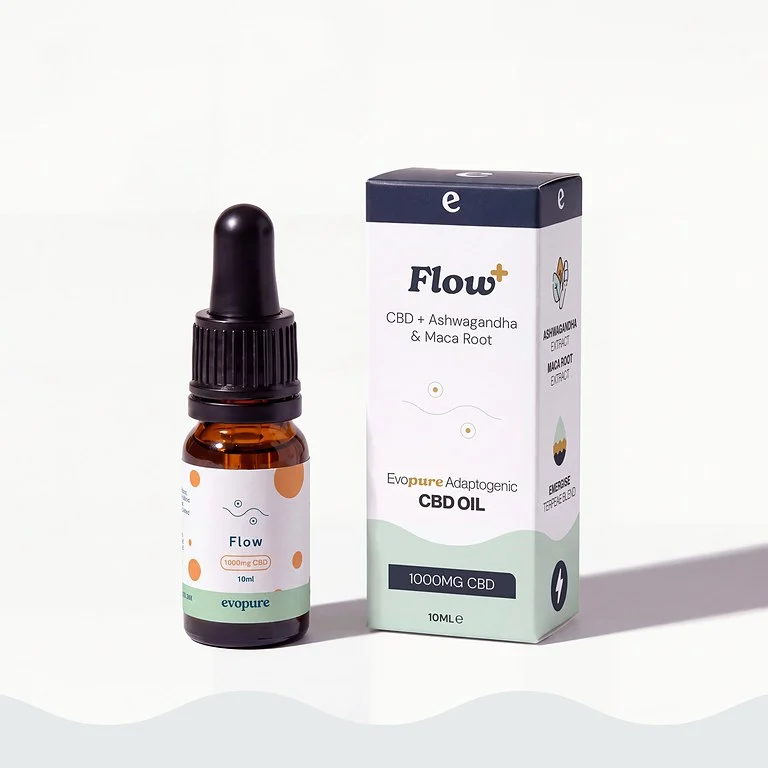
Our Flow CBD Oil contains ashwagandha, so it isn’t suitable for people with a thyroid condition unless their GP says otherwise. Our other products don’t contain ashwagandha, but if you take any regular medicine, check with your GP or pharmacist before adding a supplement. For CBD and medicines generally, see can CBD interact with medication? and our guides to CBD and antidepressants, CBD and blood thinners and CBD and blood pressure medication.
Next step
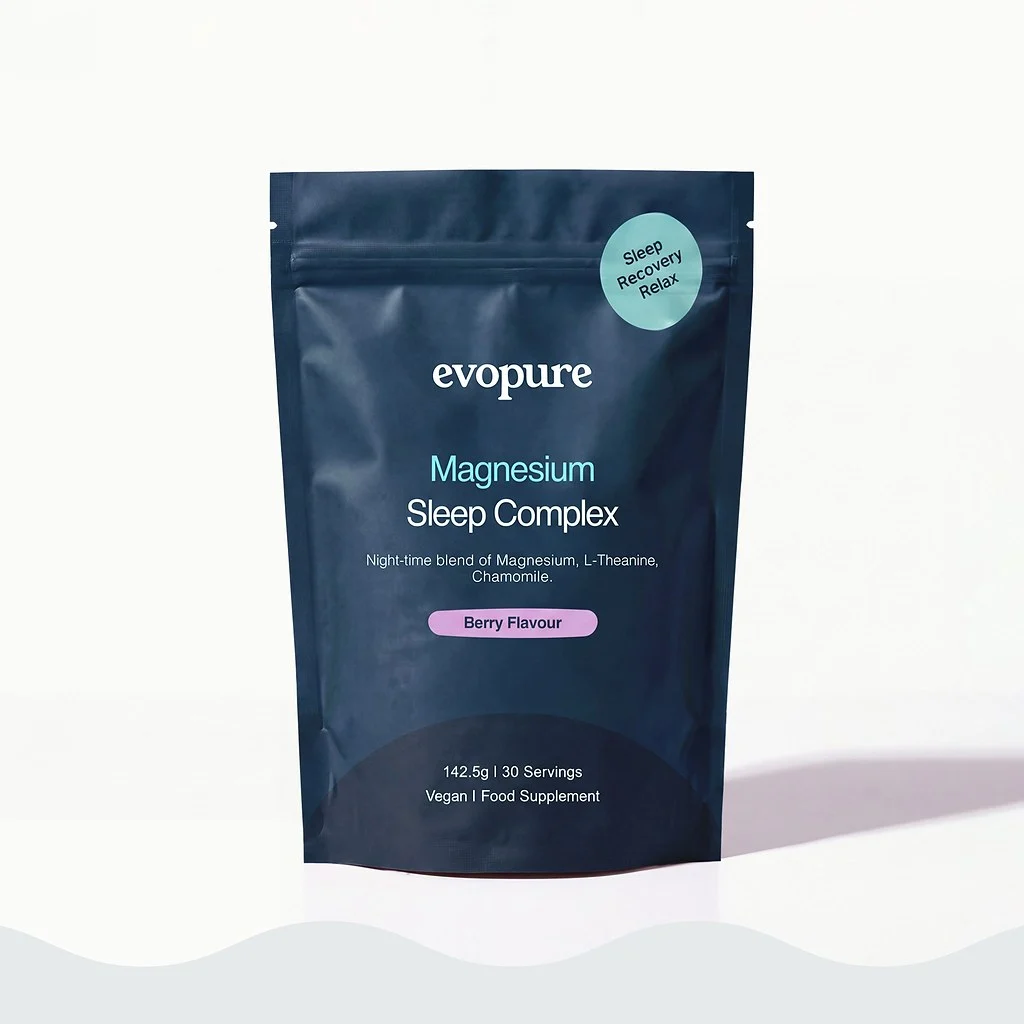
Magnesium Glycinate Sleep Complex
If your GP or pharmacist has said a magnesium supplement is OK, Magnesium Glycinate Sleep Complex is a berry drink powder with 290mg of magnesium (77% NRV) per 4.75g serving, from magnesium bisglycinate and citrate, and no ashwagandha. Magnesium contributes to a reduction of tiredness and fatigue. Ask your pharmacist how far apart to take it from levothyroxine.
Add Magnesium Glycinate Sleep Complex to bag
Adults only. We don’t recommend our products during pregnancy or breastfeeding. Subscribe and save 25% on your first order, then 20%. New to Evopure? Join our emails for 20% off a one-off first order. Free UK delivery over £40.
Subscribe £22.49One-off £29.99
View productSources 10
- Sharma AK, Basu I, Singh S. Efficacy and safety of ashwagandha root extract in subclinical hypothyroid patients: a double-blind, randomized placebo-controlled trial. J Altern Complement Med, 2018.
- Gannon JM, Forrest PE, Roy Chengappa KN. Subtle changes in thyroid indices during a placebo-controlled study of an extract of Withania somnifera in persons with bipolar disorder. J Ayurveda Integr Med, 2014.
- van der Hooft CS et al. Thyrotoxicosis following the use of ashwagandha. Ned Tijdschr Geneeskd, 2005.
- Kamal HI et al. Ashwagandha as a unique cause of thyrotoxicosis presenting with supraventricular tachycardia. Cureus, 2022.
- NIH Office of Dietary Supplements. Ashwagandha: fact sheet for health professionals.
- NHS. Levothyroxine.
- NHS. Underactive thyroid (hypothyroidism).
- NHS. Overactive thyroid (hyperthyroidism).
- BfR. Ashwagandha: food supplements with potential health risks, 2024.
- FSA (GOV.UK). Summary of responses to call for evidence on ashwagandha, June 2026.