Last updated: October 2026
CBD with turmeric is a CBD oil, capsule or gummy that contains turmeric, usually with black pepper extract. Most healthy adults can take CBD and turmeric together: no harmful interaction has been reported, though no study has tested the pair. Both pass through the liver, so if you take any regular medicines, check with your GP or pharmacist first.
This guide covers the formats on sale, how CBD and turmeric compare, why black pepper is added, how much turmeric is sensible and which medicines to check.
Our pick
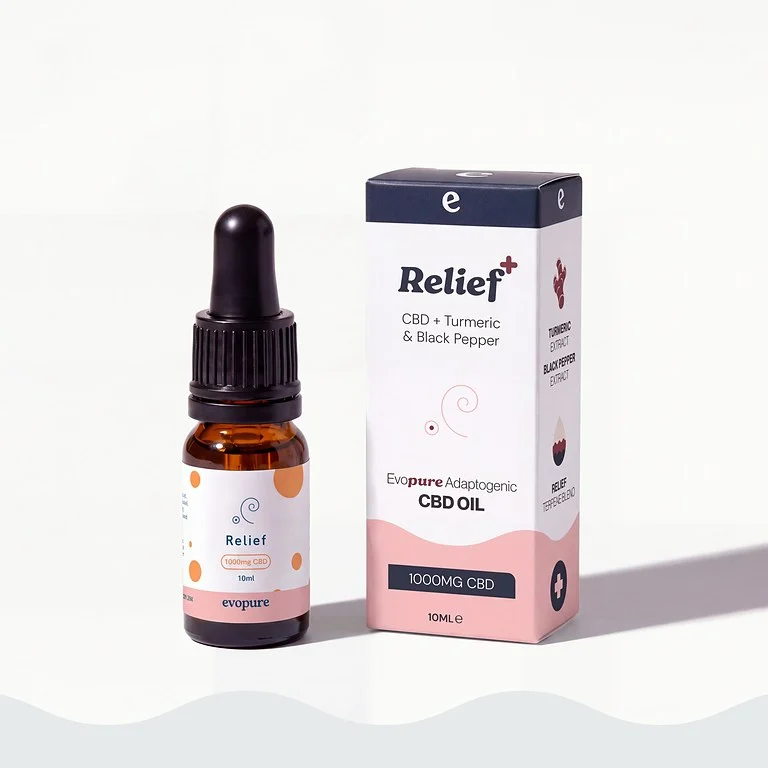
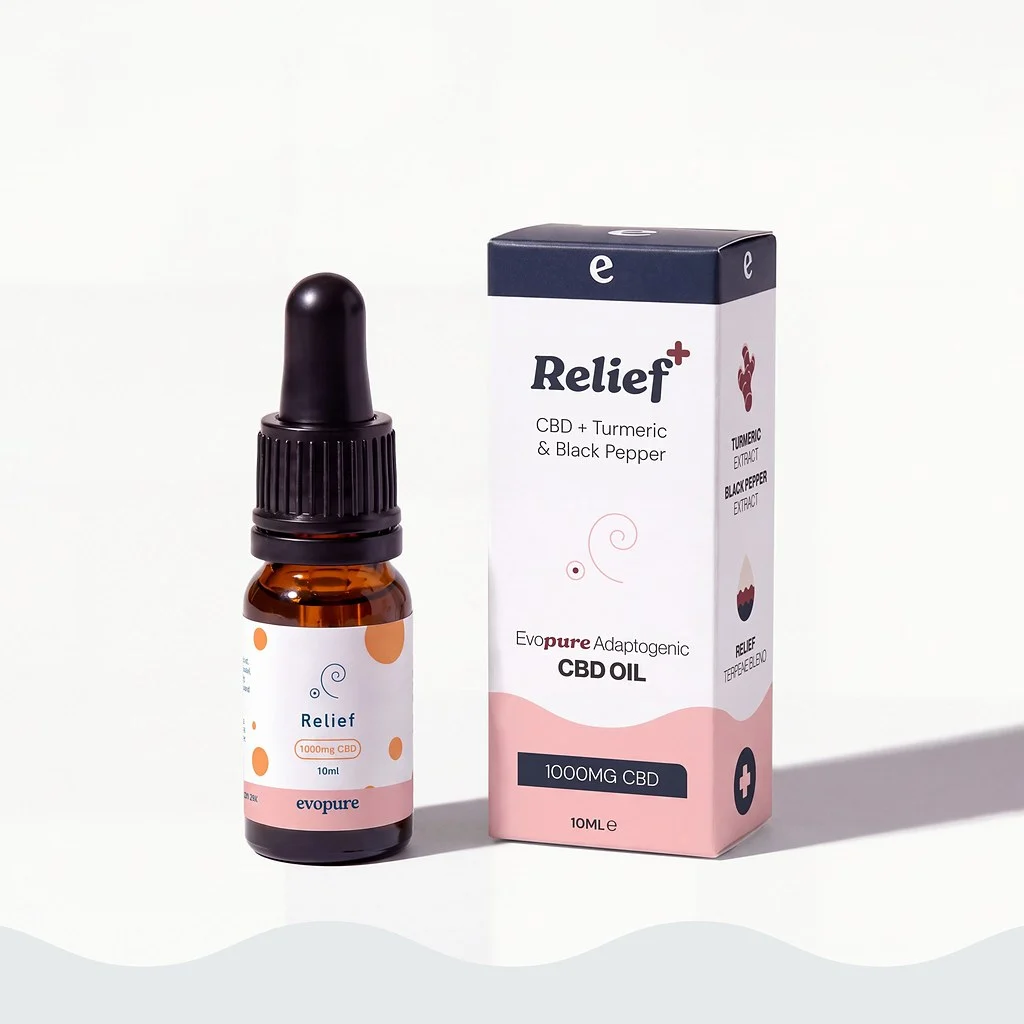
Relief CBD Oil With Turmeric & Black Pepper
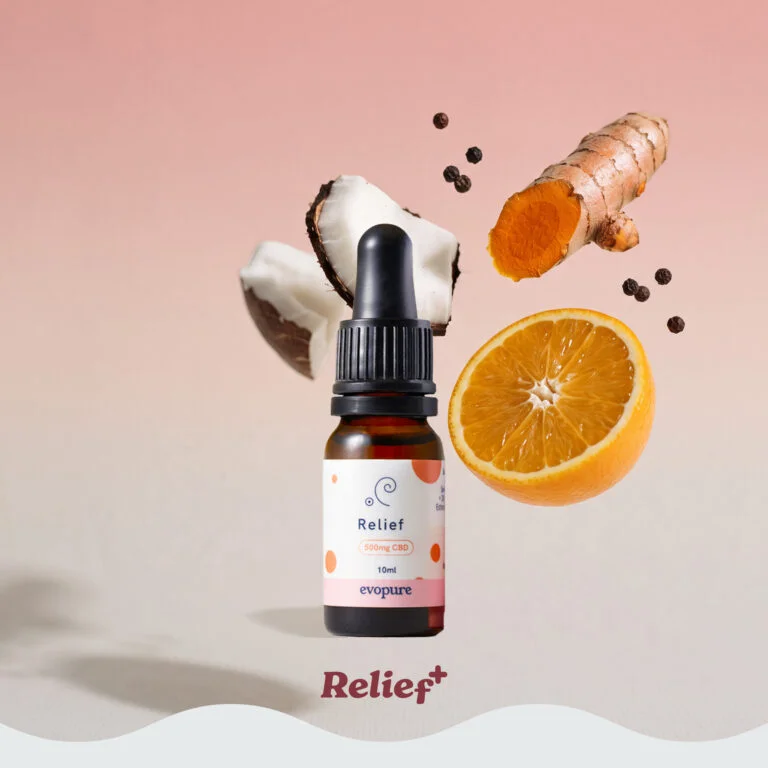
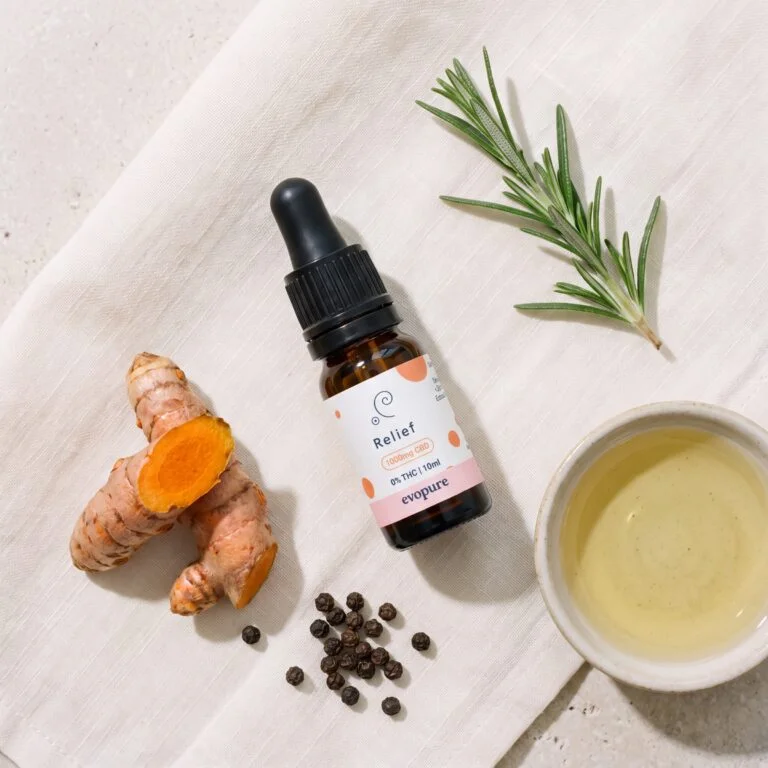
Relief CBD Oil with Turmeric and Black Pepper is broad spectrum CBD with turmeric extract and black pepper extract in MCT oil, so CBD with turmeric comes in a single dropper. It comes in 500mg and 1,000mg strengths. It is a food supplement, not a medicine, and the safety points below still apply.
Add Relief CBD Oil 500mg to bag or choose another strength
Broad spectrum with 0% THC, every batch third-party lab tested, made in the UK. Free UK delivery over £45, 14-day returns on unopened items.
Subscribe from £22.49One-off from £29.99
View productCan you take CBD and turmeric together?
For most healthy adults, yes. CBD and turmeric work through different pathways: CBD acts on the endocannabinoid system, while curcumin, turmeric’s main active compound, affects inflammation signalling in the body. No harmful interaction between the two has been reported, and they’re often combined in oils, capsules and gummies.
That said, nobody has run a safety study on the combination, so the sensible approach is to look at where the two overlap:
- The liver. CBD is broken down in the liver and can change levels of some medicines. In rare cases, both CBD at high doses and concentrated turmeric supplements have been linked to raised liver enzymes or liver injury.
- Blood thinners. CBD has been linked to a raised INR (a blood clotting test) in people on warfarin in a handful of case reports, and turmeric is often listed as a caution with blood thinners.
- Black pepper. Piperine, the black pepper extract added to most turmeric products, can raise blood levels of some medicines.
None of this is a problem for most people taking normal amounts of either. It matters if you take regular medication or have a liver or gallbladder condition. The details are in CBD, turmeric and medicines below, and our guide to whether CBD interacts with medication covers CBD on its own.
CBD with turmeric: oil, capsules, gummies or balm?
CBD and turmeric are sold together in four main formats.
| Format | How you take it | Worth knowing |
|---|---|---|
| Oil | Drops under the tongue or in food | Easy to adjust the amount, a little at a time |
| Capsules | Swallowed with water | A fixed dose and no taste |
| Gummies | Chewed like a sweet | Often contain sugar and extras such as ginger or spirulina |
| Balm or cream | Massaged into the skin | Not swallowed, so a different product altogether |
Whichever you choose, check the label for:
- CBD per serving, so you can compare it with the FSA’s 10mg a day advice.
- Turmeric or curcumin per serving. If you also take a turmeric supplement, add them up (see how much turmeric is sensible). If a label doesn’t say, ask the brand.
- Black pepper extract (piperine), which matters if you take regular medicines.
- The FSA public list and a batch lab report showing the CBD content and 0% THC (see how to choose a CBD oil).
CBD vs turmeric at a glance
| CBD | Turmeric (curcumin) | |
|---|---|---|
| What it is | A non-intoxicating compound from hemp | A root spice in the ginger family; curcumin is the main active compound |
| Best human evidence | Early, mostly small trials; a topical CBD cream trial for thumb arthritis | Small trials for joint symptoms, about 1,000mg of curcumin a day |
| Absorption | Better with food containing fat | Poor on its own; black pepper, fat and special formulations raise it |
| How quickly | Within an hour; steadier over weeks | Trials ran for weeks |
| UK guidance on amount | FSA advises healthy adults no more than 10mg a day (precautionary) | No UK recommended amount; food safety limit for curcumin is 3mg per kg of body weight, about 210mg for a 70kg adult |
| UK status | Novel food; products must be on the FSA public list | Food, spice and food supplement |
| Main safety point | Can affect how some medicines are broken down; raised liver enzymes at high doses | Rare liver injury from supplements; caution with blood thinners |
iNeither CBD nor turmeric is a treatment for any medical condition. If you have ongoing joint pain or swelling, see your GP.
What the research says about turmeric
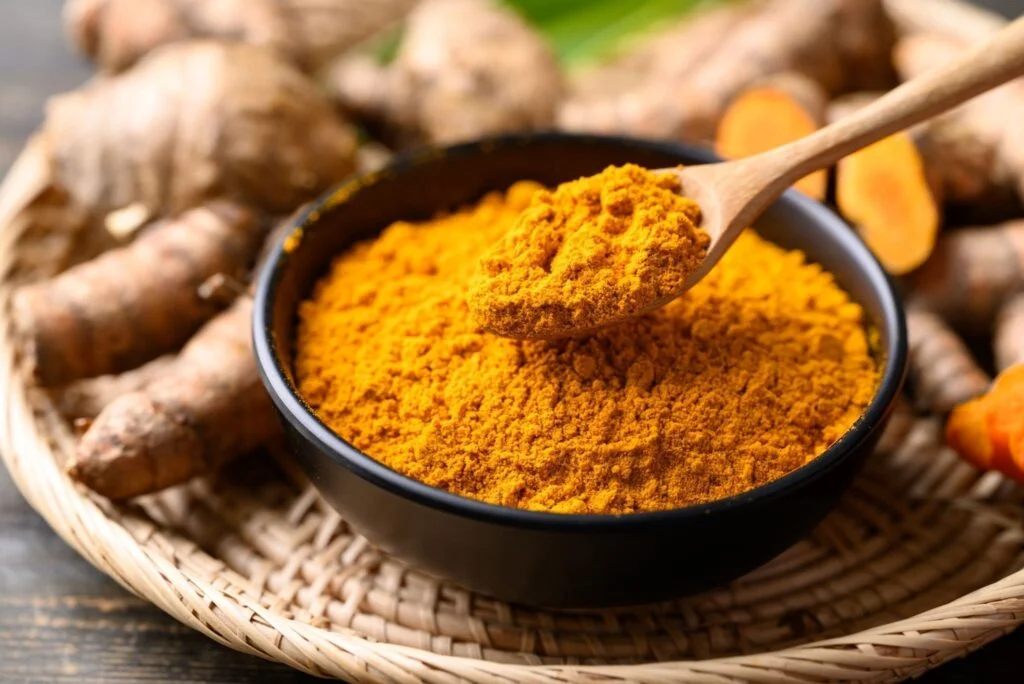
Turmeric has a long history in Ayurvedic and traditional Chinese medicine. The best human evidence is for joint symptoms: a 2016 review of 8 controlled trials found that turmeric extracts, at around 1,000mg of curcumin a day, reduced arthritis pain and stiffness compared with placebo, and worked about as well as common painkillers in the studies that compared them. The trials were small, so the authors called for larger studies. Curcumin also lowers inflammation markers in many lab studies.
Note that food amounts of turmeric, or the small amounts in many blends, are much lower than the doses used in these trials. The US National Center for Complementary and Integrative Health sums it up as not yet enough evidence to say turmeric is beneficial for any health purpose. For the full picture, including digestion, mood and exercise recovery, see turmeric benefits: what the research shows.
What the research says about CBD
CBD’s anti-inflammatory effects are well documented in lab and animal studies, and a small 2022 trial found a CBD cream improved thumb arthritis pain compared with a plain cream. Human evidence for CBD taken by mouth for joint comfort is still limited, and CBD isn’t a treatment for pain or arthritis. See CBD for pain: what the trials show, CBD for arthritis and CBD balm for muscle pain.
CBD or turmeric: which is better?
It depends what you’re comparing. On the strength of human research for joint symptoms, turmeric is ahead: it has several controlled trials, while most CBD research is early or in the lab. On safety in normal amounts, both are well tolerated by most adults, and both come with the same practical caution about medicines and the liver.
They’re also different kinds of product. Turmeric is a spice you can cook with every day, and supplements give much larger amounts of curcumin. CBD is taken in small, measured doses as an oil or capsule. Many people don’t choose: they use both as part of a daily routine, which is why combined oils exist. If you’re weighing up other options for stiff joints, our guides to glucosamine, ginger, turmeric’s cousin and mushrooms and inflammation look at the evidence the same way.
Why black pepper matters
On its own, very little curcumin is absorbed, because the liver and gut break it down quickly. Piperine, the compound that gives black pepper its heat, slows that process. In a small 1998 study in healthy volunteers, adding 20mg of piperine to 2g of curcumin increased curcumin absorption by 2,000%. That’s why turmeric supplements and blends usually include black pepper extract. Fat helps too, because curcumin and CBD are both fat-soluble (see CBD bioavailability).
The evidence is thinner than the marketing suggests. The 2,000% figure comes from one small study, and the UK Committee on Toxicity, which advises the Food Standards Agency, described the claim that piperine improves curcumin absorption as questionable, with high uncertainty. The committee also warned that the safety limit set for curcumin in food may not be appropriate for supplements designed to raise absorption.
The flip side is that piperine can raise blood levels of some medicines too. In a small study in healthy volunteers, 20mg of piperine a day for a week increased levels of propranolol (a beta blocker) and theophylline (an asthma medicine). That’s another reason to check with a pharmacist if you take any regular medication.
Is CBD with turmeric better than either alone?
It hasn’t been tested in people. Lab studies have looked at cannabinoids combined with curcumin and piperine, but there are no human trials of the combination, so any extra benefit is unproven. Be wary of products that promise a “synergy”. The appeal is practical: one product covering two popular ingredients in a daily routine.
CBD, turmeric and medicines
This is the part that matters most. The Food Standards Agency doesn’t recommend CBD for people taking any medication unless under medical direction, and its general supplement advice is that some supplements can interact with prescribed medicines. Here is what is known about each overlap.
Liver enzymes
A 2026 systematic review of four experimental studies found that CBD slowed several liver enzymes that break down medicines, including CYP3A4, CYP2C9 and CYP2C19, and called for clinical studies to check what this means for patients. In people the picture is narrower: CBD did not meaningfully affect midazolam, a standard test medicine for CYP3A4, and the clearest interactions are with a few medicines such as clobazam, tacrolimus and warfarin. See how CBD interacts with medicines. Curcumin and piperine are processed by the liver too, which is why the advice is to check any regular medicine before adding either.
Blood thinners
iIf you take warfarin or another blood thinner, speak to your anticoagulant clinic, GP or pharmacist before starting CBD, turmeric supplements or a combined oil. The NHS advises telling your doctor about any herbal remedies or supplements before taking warfarin.
Other medicines to ask about
Ask your pharmacist before taking CBD with turmeric if you take diabetes medicines, as turmeric may lower blood sugar; medicines with a grapefruit warning, which is a useful prompt to ask rather than a sign of a definite interaction; or any medicine where small changes in blood level matter. Take your bottle or the ingredients list with you.
For older readers
Many people who try CBD with turmeric are in their 50s, 60s and 70s, when regular medicines such as blood thinners, blood pressure tablets or statins are more common. Turmeric with a blood thinner is a question for your prescriber, not a label. If you take any regular medicines, check with your GP or pharmacist first, and see CBD and medication.
How to take CBD and turmeric
- Take them with food containing some fat, which helps absorb both.
- Choose turmeric with black pepper if you take it separately, or have it the traditional way in a warm golden milk (our CBD tea guide includes a golden milk recipe).
- Be consistent: trials of turmeric ran for several weeks.
- Start low with CBD, around 10mg a day, and see what the FSA’s 10mg advice means.
- Don’t double up on high-strength turmeric capsules and a turmeric-containing CBD oil without checking the total amount of curcumin.
How much turmeric is sensible?
There’s no UK recommended amount, and cooking amounts are fine. The food safety limit (acceptable daily intake) for curcumin is up to 3mg per kg of body weight, about 210mg a day for a 70kg adult. The Committee on Toxicity found that most supplements taken as directed stay close to that, but 2 of 15 products it looked at would take people over it. Joint trials used around 1,000mg of curcumin a day, which is well above it, so follow the label and don’t stack products.
See how much CBD to take and when to take CBD oil.
Our Relief CBD Oil with Turmeric and Black Pepper
Our Relief CBD Oil combines broad spectrum CBD with turmeric extract, black pepper extract and a terpene blend (limonene, caryophyllene, humulene and alpha-pinene) in MCT oil, in 500mg and 1,000mg strengths. It has 0% THC, is vegan and made in the UK, is third-party lab tested, and is on the FSA public list of CBD products linked to novel food applications. Some people pair it with our Muscle and Joint Support CBD Balm for massage. Neither is a medicine or a treatment for pain or inflammation.
The FSA’s 10mg a day figure is precautionary advice rather than a legal limit, set while longer-term safety research continues. At Evopure we think it is a very cautious figure, and many adults use more. If you go above it, increase slowly, and check with your GP or pharmacist first if you take any medication.
Because Relief contains turmeric and black pepper, everything in this guide about medicines and the liver applies to it too. Don’t take it alongside a separate high-strength turmeric supplement without checking, and it’s for adults only. If you’re comparing oils, see how to choose a CBD oil and broad vs full spectrum CBD.
Side effects and who should be careful
Turmeric in food is safe for almost everyone. Concentrated supplements can cause stomach upset, and rarely liver injury. In 2024 the UK Committee on Toxicity concluded there is reasonable evidence linking turmeric supplements to liver toxicity, because the problems appeared when people took them and cleared when they stopped. The reaction seems to be unpredictable and may be genetic, so it can happen even below the food safety limit. An Italian review of cases found most involved high-strength turmeric products designed for high absorption, often taken alongside other medicines.
CBD can also affect the liver at high doses. In a 2025 trial in 201 healthy adults, 5.6% of those taking 5mg of CBD per kg of body weight a day (about 350mg for a 70kg adult) had raised liver enzymes within 4 weeks, compared with none on placebo. That’s far above the amounts in most CBD oils, but it’s a reason not to combine high doses of both.
iStop and see a doctor if you notice yellowing skin or eyes, dark urine, unusual tiredness, nausea or loss of appetite.
iSpeak to your GP or pharmacist before taking CBD with turmeric if you:
- take blood thinners such as warfarin, or antiplatelet medicines
- take diabetes medicines, as turmeric may lower blood sugar
- have liver disease, gallstones or a bile duct problem
- take medicines with a grapefruit warning (see how CBD interacts with medicines)
- have surgery planned
We don’t recommend our products during pregnancy or breastfeeding, and they are for adults (18+) only.
See also CBD side effects and is CBD bad for your liver?
Related guides
- Black pepper also contains the terpene beta-caryophyllene. See what are terpenes?
- For how turmeric compares with boswellia, ginger, collagen and glucosamine, see the best supplements for joint pain ranked by evidence.
- Both are often paused before an operation; see our guide to CBD before surgery.
- Grass and Co EASE, which pairs CBD with turmeric and ginger.
- For a kitchen way to enjoy turmeric and black pepper, see our ginger and turmeric shot recipe and who should avoid them.
- For the wider picture, our guide to the best supplements for joint pain ranks turmeric alongside omega-3, collagen and glucosamine.
Sources 15
- Shoba G et al (1998). Influence of piperine on the pharmacokinetics of curcumin in animals and human volunteers. Planta Medica.
- Daily JW et al (2016). Efficacy of turmeric extracts and curcumin for alleviating the symptoms of joint arthritis: a systematic review and meta-analysis of randomized clinical trials. Journal of Medicinal Food.
- Lombardi N et al (2021). Acute liver injury following turmeric use in Tuscany: an analysis of the Italian Phytovigilance database and systematic review of case reports. British Journal of Clinical Pharmacology.
- Heineman JT et al (2022). A randomized controlled trial of topical cannabidiol for the treatment of thumb basal joint arthritis. Journal of Hand Surgery.
- Smythe MA et al (2023). Anticoagulant drug-drug interactions with cannabinoids: a systematic review. Pharmacotherapy.
- Dos Santos MC et al (2026). The influence of CBD and THC on hepatic enzymes of the human cytochrome P450 complex family: a systematic literature review. European Journal of Drug Metabolism and Pharmacokinetics.
- Patsalos PN et al (2020). Clinical implications of trials investigating drug-drug interactions between cannabidiol and enzyme inducers or inhibitors or common antiseizure drugs. Epilepsia.
- Florian J et al (2025). Cannabidiol and liver enzyme level elevations in healthy adults: a randomized clinical trial. JAMA Internal Medicine.
- Bano G et al (1991). Effect of piperine on bioavailability and pharmacokinetics of propranolol and theophylline in healthy volunteers. European Journal of Clinical Pharmacology.
- Hu S et al (2018). Interaction study between antiplatelet agents, anticoagulants, thyroid replacement therapy and a bioavailable formulation of curcumin (Meriva). European Review for Medical and Pharmacological Sciences.
- Committee on Toxicity (2024). Statement on the potential risk to human health of turmeric and curcumin supplements: summary and conclusions (COT/2024/07, archived copy).
- Food Standards Agency. Cannabidiol (CBD) guidance. GOV.UK.
- Food Standards Agency (2026). Food supplements: guidance for consumers. GOV.UK.
- NHS. Warfarin.
- National Center for Complementary and Integrative Health. Turmeric and Ginger.
This guide is general information, not medical advice. Evopure makes Relief CBD Oil.