Last updated: October 2026
You’re a light sleeper if noise, light or movement wakes you more easily than most people. It’s partly how your brain is built, and deep sleep falls with age, so most of us sleep more lightly from our 40s and 50s. Stress, caffeine, alcohol, a restless partner and your bedroom add to it. A dark, quiet, cool room helps most.
iBelow: causes, sudden changes, sleep after 50, a two-week plan and when to see a GP.
What is a light sleeper?
“Light sleeper” isn’t a diagnosis. It describes someone woken by things others sleep through: a car door, a partner turning over, the heating clicking on. Researchers call this your arousal threshold, how loud or strong something must be to wake you. Light sleepers have a lower threshold; heavy sleepers a higher one.
Your threshold also changes through the night. It rises with deep sleep, which is why researchers use it as a measure of how deeply someone is sleeping, and in one lab study it dropped steadily as the night went on. That’s why birds, bin lorries and a snoring partner are most likely to wake you in the early hours.
Is it bad to be a light sleeper? Not in itself, if you drop back off and feel fine in the day. It matters when the waking adds up: a major review of noise and health found night-time noise disturbs sleep and causes daytime sleepiness.

Our pick
Magnesium Glycinate Sleep Complex
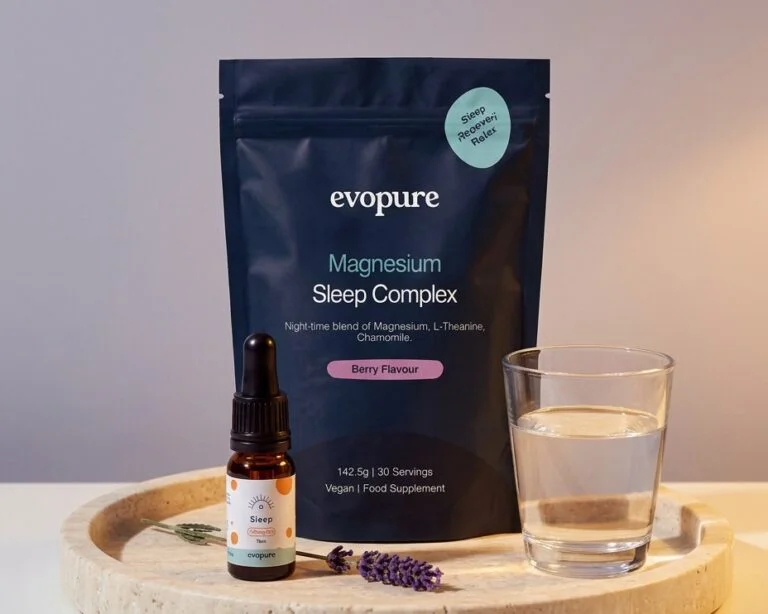
Magnesium Glycinate Sleep Complex is a berry drink powder with 290mg of magnesium a scoop from bisglycinate and citrate, plus glycine and L-theanine. Magnesium contributes to a reduction of tiredness and fatigue. A drink is also easier than tablets if you struggle to swallow pills.
Add Magnesium Glycinate Sleep Complex to bag See ingredients and reviews
Vegan and made in the UK. Free UK delivery over £45, 14-day returns on unopened items.
Subscribe £22.49One-off £29.99
View productWhy am I a light sleeper? Causes, clues and what helps
Most light sleepers have a sensitive brain to start with, then one or two everyday triggers on top. Spot yours:
| Cause | Clues | What helps |
|---|---|---|
| Your brain wiring | You’ve always been this way; a parent is too | Protect the bedroom: earplugs, steady background sound |
| Getting older | You sleep more lightly and wake more than you did in your twenties | Daylight and activity in the day, a fixed wake time |
| Stress and hyperarousal | Racing mind, waking with a jolt | A wind-down, a worry list, CBT for insomnia if it persists |
| Caffeine | Tea, coffee, cola or energy drinks after lunch | Nothing caffeinated within 6 hours of bed |
| Alcohol | You drop off fast, then wake in the early hours | Alcohol-free weeknights; finish drinks earlier |
| Partner snoring or moving | You wake; they don’t | Earplugs, separate duvets, a bigger bed or separate rooms |
| Noise | Traffic, neighbours, birds at dawn | Earplugs, white or brown noise, heavier curtains |
| Light | Streetlights, summer dawns, standby lights | Blackout blinds, a sleep mask, cover LEDs |
| Too warm | Kicking off the duvet, waking hot | A cooler bedroom and lighter layers |
| Perimenopause | Night sweats, hot flushes, changing periods | Cool room, layers, a GP chat about options |
| Sleep apnoea or restless legs | Loud snoring and gasping, or an urge to move your legs | See a GP |
Sleep spindles and genetics
Sleep spindles are short bursts of brain activity during sleep that seem to act as a gate against the outside world. In a 2010 Harvard study, people who made more spindles on a quiet night stayed asleep better through noise played the next night. Spindle rate is stable from night to night, so it behaves like a trait.
That trait looks largely inherited. A twin study estimated the heritability of the brain activity pattern that includes spindles at 96%. If you’ve always been a light sleeper, it may simply be how you’re built. You can’t swap your brain, but you can change what reaches it.
Age and stress
Sleep also gets lighter with age (more below). Stress adds to it: insomnia research describes “hyperarousal”, where heart rate, stress hormones and brain activity stay raised at night. If you lie in bed on edge, you may be tired but wired.
Why am I a light sleeper all of a sudden?
A sudden change usually has a trigger. If you used to sleep well and now wake at every sound, look at what has changed recently:
- A stressful patch: work, money, illness or grief.
- More caffeine or alcohol, or drinking it later than before.
- A new noise or light: a new neighbour, a streetlight, lighter mornings.
- A new bed partner, baby or pet, or a partner who has started snoring.
- Perimenopause. The NHS lists trouble getting to sleep or staying asleep as a symptom, often worse with night sweats. See perimenopause and sleep.
- Pregnancy, which often changes sleep. Talk to your midwife or GP. We don’t recommend our products during pregnancy or breastfeeding.
- A new medicine. The NHS notes many medicines can cause insomnia; ask your pharmacist.
- New snoring or gasping. The NHS lists waking up a lot as a sign of sleep apnoea, which is more likely as you get older. See a GP.
iNo obvious trigger after a few weeks, or tired every day? See a GP.
Why you sleep more lightly as you get older
In your 50s, 60s or 70s and waking far more easily than you used to? Age is part of the answer. An analysis of 65 sleep studies found that through adult life, deep and REM sleep fall while light sleep and night waking rise. Most changes level off after about 60, except sleep efficiency, the share of time in bed spent asleep.
Health plays a big part too. Common wake-ups after 50:
- Loo trips, aches and hot flushes. See waking up to pee at night and menopause and sleep.
- Medicines. Older people are more likely to take medicines that can interfere with sleep; ask your pharmacist.
Most adults still need 7 to 9 hours, even later in life. For early waking and naps, see sleep as you get older.
Light sleeper vs insomnia vs waking in the night
| Light sleeper | Waking in the night | Insomnia | |
|---|---|---|---|
| What happens | Woken easily by things around you, usually back asleep quickly | Waking in the small hours and lying awake | Regular trouble getting to sleep, staying asleep or waking too early |
| Usual trigger | Outside: noise, light, movement | Often inside: stress, alcohol, needing the loo, hot flushes | Stress and habits that keep it going |
| Daytime | Often fine | Tired on bad nights | Tired, irritable, hard to concentrate |
| Start with | Bedroom fixes below | Waking at 3am | Insomnia guide and CBT |
Light sleep can slide into insomnia: dreading being woken keeps you alert. The NHS calls insomnia lasting 3 months or longer long-term insomnia. Not sure which you have? Why can’t I sleep? walks through 14 common causes.
How to stop being a light sleeper: a two-week plan
You can’t change your spindles, but you can cut what reaches your brain. Change a few things at once and give it two weeks.
- Fix your wake-up time, seven days a week, even after a bad night. Our 7-day sleep schedule reset shows how.
- Block the noise. Foam or silicone earplugs are the cheapest fix, and the NHS suggests them if noise is a problem.
- Mask what’s left. A fan or steady background sound can cover sudden noises. Keep it quiet: the evidence for continuous noise is still very weak, so treat it as an experiment.
- Make it properly dark. Blackout blinds or a sleep mask, and cover standby lights.
- Keep it cool, with layers you can shed rather than one heavy duvet.
- Cut caffeine after lunch. In one study, a moderate dose of caffeine taken 6 hours before bed still disrupted sleep, and the NHS advises no tea or coffee for at least 6 hours before bed. Check how long caffeine lasts.
- Go easy on alcohol. It helps you nod off, then makes the second half of the night more broken. See alcohol and sleep.
- Move in the day. Regular exercise is linked to better sleep quality and a little more deep sleep. The NHS suggests not exercising in the 4 hours before bed.
- Wind down for an hour. Dim lights, no work, a bath or a book.
- If you wake, don’t check the time. Breathe slowly and let yourself drift. If you’re still awake after a while, get up somewhere dim until you feel sleepy.
If a warm drink is part of your wind-down, our Magnesium Glycinate Sleep Complex is a berry-flavoured evening drink with magnesium bisglycinate and citrate, glycine, L-theanine and chamomile. Magnesium contributes to a reduction of tiredness and fatigue and to normal functioning of the nervous system. It won’t make you a heavier sleeper or drown out a snoring partner: the bedroom and habit changes do the heavy lifting.
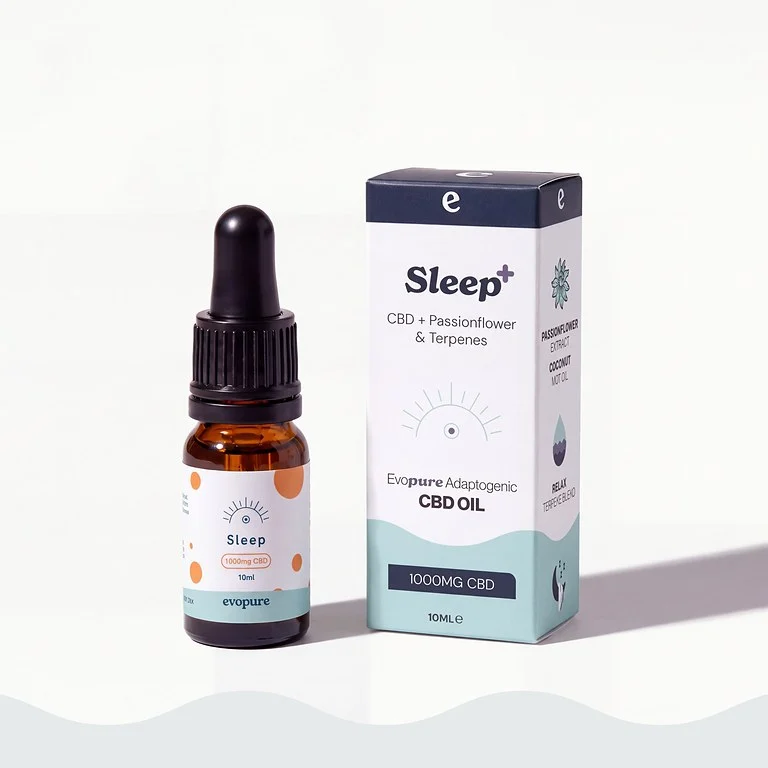
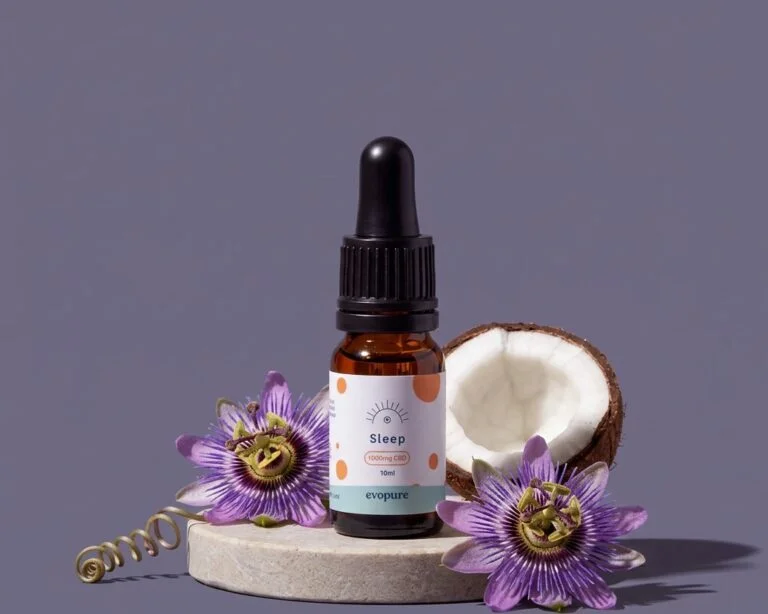
iPrefer drops? Our Sleep CBD Oil pairs broad spectrum CBD with passion flower extract. CBD isn’t a treatment for sleep problems. If you take any regular medicines, check with your GP or pharmacist first (see CBD oil for older adults).
The FSA’s 10mg a day figure for CBD is precautionary advice rather than a legal limit, set while longer-term safety research continues. At Evopure we think it is a very cautious figure, and many adults use more. If you go above it, increase slowly, and check with your GP or pharmacist first if you take any medication.
Can you make yourself a deeper sleeper?
Honestly, only a little. Your baseline is largely set by genes and age, but you can protect what you have:
- Exercise. A meta-analysis of 66 studies found small benefits for deep sleep and moderate benefits for night waking and overall sleep quality.
- Regular hours. A steady schedule protects the first part of the night, when most deep sleep happens.
- No lie-ins to catch up. The NHS advises sticking to your usual hours after a bad night.
- Alcohol is a false friend. A review of studies found it adds deep sleep early in the night but brings more broken sleep later.
The Harvard spindle researchers suggested future studies could try to boost spindle production, but no app, gadget or supplement has been shown to turn a light sleeper into a heavy one. Treat a tracker’s “deep sleep” score with caution too.
Sharing a bed with a snorer, a fidget or a pet
Often the problem is lying next to you: snoring, kicking, a phone screen or a different bedtime.
- Snoring: earplugs for you, and see how to stop snoring for them. Loud snoring with gasps or pauses needs a GP.
- Movement: two single duvets, a bigger bed or a mattress that passes on less motion.
- Different hours: the later one comes to bed quietly, with no main light and no screen.
- Pets: a dog or cat on the bed shifts, scratches and wakes early. Try a pet bed on the floor or in another room.
If nothing works, sleeping apart on some nights doesn’t have to mean a problem in the relationship. Our guide to sleep divorce covers how couples make it work.
When to see a GP
iBeing a light sleeper is usually something you manage at home, but see a GP if:
- changing your habits hasn’t helped and you’ve had trouble sleeping for months (3 months or longer is long-term insomnia)
- poor sleep is making it hard to cope with daily life
- you snore loudly, or someone has noticed you stop breathing, gasp, snort or choke in your sleep, or you feel very tired every day: these can be signs of sleep apnoea
- you have an urge to move your legs in the evening or at night (restless legs)
- you have night sweats or hot flushes that are keeping you awake
- you feel low or anxious most days
- your sleep changed after a new medicine (don’t stop it without advice)
The NHS says GPs may offer cognitive behavioural therapy for insomnia (CBT), face to face or through an online programme, and can refer you to a sleep clinic if they suspect a condition such as sleep apnoea.
Related guides
- If trips to the toilet break up your night, see how to stop waking up to pee at night.
- How to stay asleep all night, with a table of causes, clues and fixes.
- Thinking about adding magnesium to your evening? See which magnesium for sleep suits you.
- If you wake on your own and lie awake for long stretches, read about sleep maintenance insomnia.
- Buying for a light sleeper? Our sleep gifts guide rounds up masks, earplugs and noise machines.
- If fireworks or a restless pet keep you up in autumn, see our guide for a dog scared of fireworks.
- Weighted blankets for sleep: what the research shows and who shouldn’t use one.
- For the online CBT-I programme NICE recommends, see Sleepio: free on the NHS?
- If it’s an urge to move your legs that keeps waking you, our guide to magnesium for restless legs covers what the research shows and why iron is worth checking first.
- Before buying anything, see which natural sleep aids work and which have little evidence.
- If you sleep worse around a full moon, moonlight and expectation may both play a part; read our guide to full moon insomnia.
- Light, broken sleep is a common reason people feel tired all the time even after a full night.
- If the jolt comes from your own body as you drift off rather than from a noise, read what being jolted awake means.
Sources 15
- NHS. Insomnia.
- NHS. Sleep apnoea.
- NHS. Symptoms of menopause and perimenopause.
- NHS Every Mind Matters. How to fall asleep faster and sleep better.
- National Institute of Neurological Disorders and Stroke. Brain basics: understanding sleep.
- Dang-Vu TT et al (2010). Spontaneous brain rhythms predict sleep stability in the face of noise. Current Biology.
- De Gennaro L et al (2008). The electroencephalographic fingerprint of sleep is genetically determined: a twin study. Annals of Neurology.
- Ferrara M et al (1999). Auditory arousal thresholds after selective slow-wave sleep deprivation. Clinical Neurophysiology.
- Ohayon MM et al (2004). Meta-analysis of quantitative sleep parameters from childhood to old age in healthy individuals. Sleep.
- Riemann D et al (2010). The hyperarousal model of insomnia: a review of the concept and its evidence. Sleep Medicine Reviews.
- Basner M et al (2014). Auditory and non-auditory effects of noise on health. The Lancet.
- Riedy SM et al (2021). Noise as a sleep aid: a systematic review. Sleep Medicine Reviews.
- Drake C et al (2013). Caffeine effects on sleep taken 0, 3, or 6 hours before going to bed. Journal of Clinical Sleep Medicine.
- Ebrahim IO et al (2013). Alcohol and sleep I: effects on normal sleep. Alcoholism: Clinical and Experimental Research.
- Kredlow MA et al (2015). The effects of physical activity on sleep: a meta-analytic review. Journal of Behavioral Medicine.
This guide is general information, not medical advice. Evopure makes the Magnesium Glycinate Sleep Complex.