Last updated: October 2026
Full spectrum CBD oil is a hemp extract in a carrier oil that keeps the plant’s natural compounds: CBD, minor cannabinoids such as CBG and CBN, terpenes, flavonoids and a little THC. THC is a controlled drug, so a UK-legal bottle can hold no more than 1mg of THC in total, not the “0.2%” often quoted (checked October 2026).
Here’s what full spectrum CBD oil contains, how much THC it can legally have in the UK, whether you can buy it here, what the entourage effect evidence really says, how it affects drug tests, and how to check the THC result on a lab report. If you’re still deciding between types, see which type to choose.
Our pick
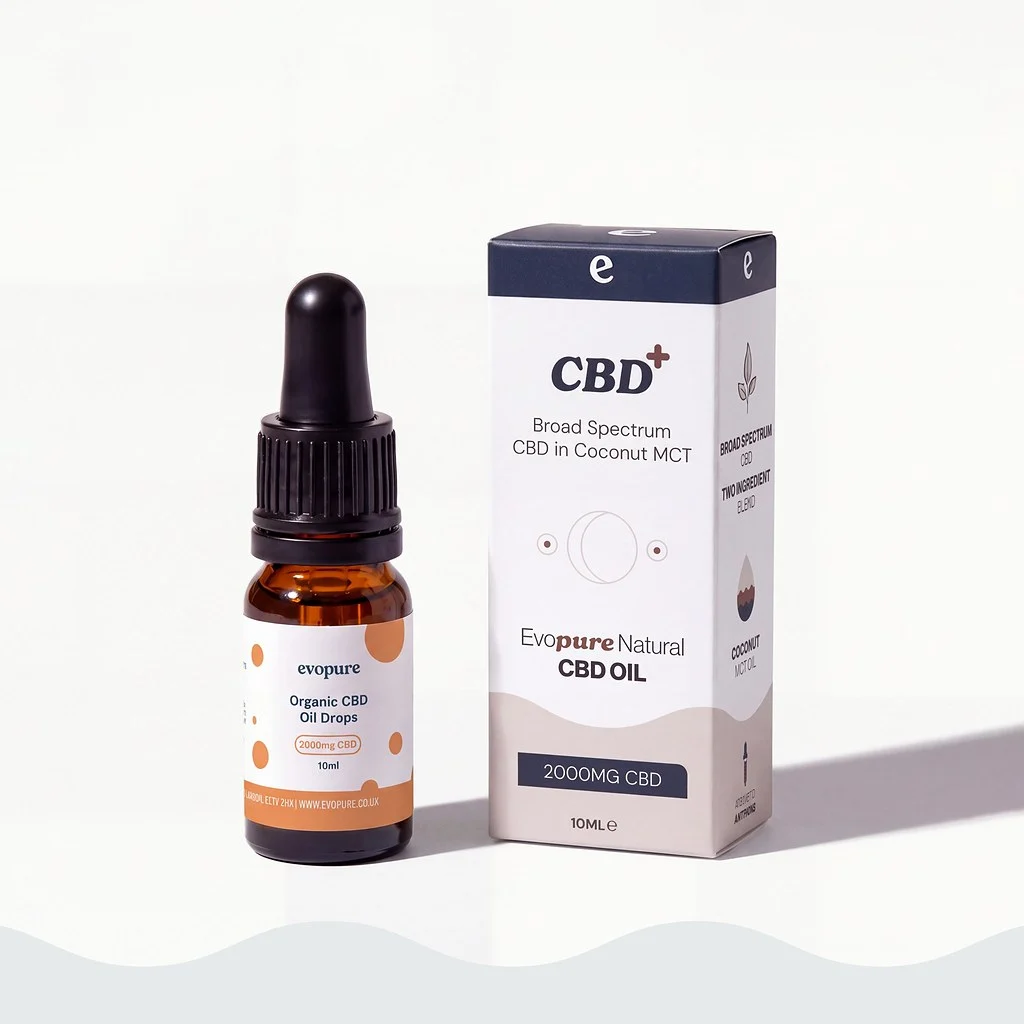
CBD Oil Broad Spectrum
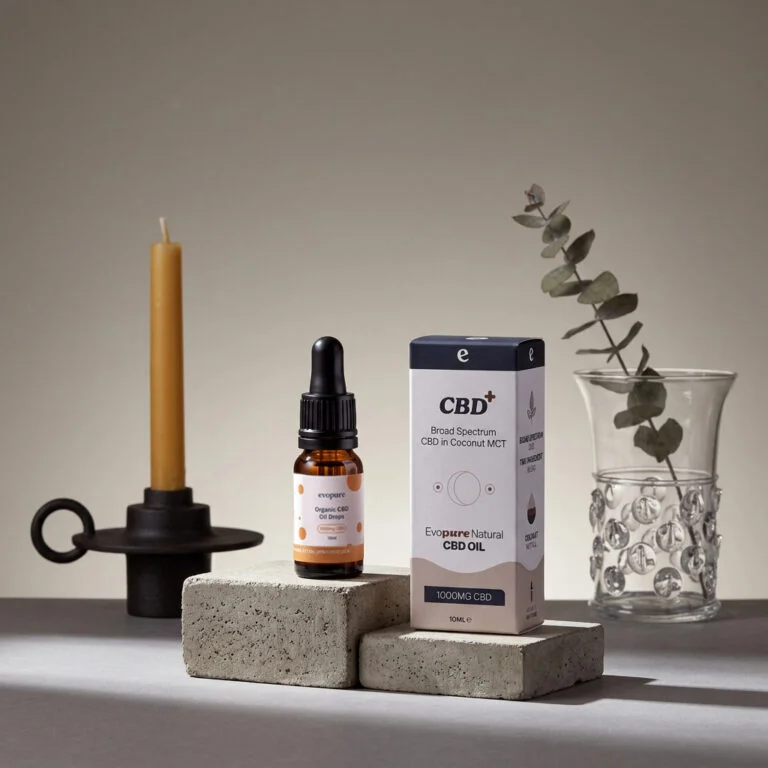
Broad Spectrum CBD Oil keeps the wider hemp profile without the THC question: just broad spectrum CBD and organic MCT oil, with 0% THC on every batch report. Choose 500mg, 1,000mg or 2,000mg; about 4, 2 or 1 drop gives 10mg.
Add Broad Spectrum CBD Oil 500mg to bag or choose another strength
Broad spectrum with 0% THC, every batch third-party lab tested, made in the UK. For adults only. We don’t recommend our products during pregnancy or breastfeeding. Free UK delivery over £45, 14-day returns on unopened items.
Subscribe from £18.74One-off from £24.99
View productWhat’s in full spectrum CBD oil?
“Full spectrum” describes the extract, not the strength. It means the hemp extract has been kept close to the plant’s natural make-up rather than refined down to CBD alone. You’ll sometimes see it called “whole plant” extract.
| Compound | Examples | What it is |
|---|---|---|
| CBD | Cannabidiol | The main, non-intoxicating cannabinoid |
| Minor cannabinoids | CBG, CBN, CBC, CBDV | Present in smaller amounts |
| THC | Delta-9 THC, THCA, THCV | Intoxicating at higher amounts; controlled in the UK |
| Terpenes | Myrcene, linalool, limonene, beta-caryophyllene | Aromatic compounds that give hemp its smell and taste |
| Flavonoids | Cannflavins, quercetin | Plant pigments, also found in fruit and vegetables |
The exact mix varies with the hemp variety, how it’s grown and how it’s extracted, which is why the batch lab report matters. Read more in our cannabinoids guide, what are terpenes? and how CBD is extracted and refined.
How much THC is in full spectrum CBD?
It depends on the product, and that’s the problem. In the UK the limit is set per container: no more than 1mg of THC in the whole bottle or pack. Because the limit is a fixed amount rather than a percentage, the bigger the bottle, the lower the THC percentage has to be.
| Bottle size | 1mg of THC as a share of the oil (approx.) | THC in the same bottle at the US “0.3%” hemp limit (approx.) |
|---|---|---|
| 10ml | about 0.01% | about 30mg |
| 30ml | about 0.003% | about 90mg |
Figures are rounded and treat 1ml of oil as roughly 1g. They show why an oil made to US rules can hold many times the UK limit.
Real products vary widely. In a UK analysis of 29 widely available CBD products, 55% contained measurable THC or CBN, both controlled substances. In a US study of a full spectrum product, the oil held 0.02% THC, which works out at about 2.3mg in a 10ml bottle, more than twice the UK limit.
The FSA also sets a separate food safety figure: a safe upper limit of 70 micrograms (0.07mg) of delta-9 THC a day. For the difference between the two cannabinoids, see CBD vs THC.
Full spectrum vs broad spectrum vs isolate
| Full spectrum | Broad spectrum | Isolate | |
|---|---|---|---|
| CBD | Yes | Yes | Yes |
| Other cannabinoids and terpenes | Yes | Yes | No |
| THC | Small amount | Removed | None |
| Drug test risk | Higher | Very low | Lowest |
| UK legal risk | Depends on the THC result | Low | Low |
The key difference between full and broad spectrum is THC. For the side-by-side detail, including taste, cost and which suits whom, read full spectrum vs broad spectrum vs isolate, plus what is CBD isolate? and what is CBD distillate?
Is full spectrum better? The entourage effect
Supporters of full spectrum point to the “entourage effect”: the idea that hemp’s compounds work better together than CBD alone. It is a reasonable theory. The term dates from the late 1990s, and a widely cited 2011 review explored how cannabinoids and terpenes might interact.
The human evidence is thin. A 2023 scoping review found the research so far is mostly simple in design and contradictory, with the clinical side relying largely on anecdotes and real-world reports. A 2024 review concluded there is limited evidence that the entourage effect is a stable, predictable effect, and cautioned against presenting it as proven. One analysis of observational data in treatment-resistant epilepsy found people using CBD-rich extracts reported lower doses than those using purified CBD, but on the standard clinical measure there was no difference between the two, and these were medical treatments, not food supplements.
So there are no good head-to-head trials showing full spectrum works better than broad spectrum or isolate. Broad spectrum keeps most of the same plant compounds without the THC, which is why it’s the most popular choice in the UK and the type we use. Read the entourage effect explained.
Is full spectrum CBD oil legal in the UK?
Only if it meets strict conditions. THC is a Class B controlled drug, and the Home Office says any CBD product containing controlled cannabinoids is classed as a controlled drug too, unless it meets the “exempt product” definition in the Misuse of Drugs Regulations 2001. All three conditions must be met:
- The product is not designed to give the controlled drug to a person or animal.
- The controlled drug can’t be easily recovered from it, or not in an amount that is a risk to health.
- No one component part contains more than 1mg of the controlled drug.
The Home Office is clear that the 1mg applies to the container, such as a bottle of oil, not to a single dose. It also expects producers to show compliant levels of delta-9 THC, delta-8 THC and CBN, so the lab report should list all three.
Where does “0.2% THC” come from?
You’ll often read that full spectrum is legal “up to 0.2% THC”. That’s a myth for finished products. The 0.2% figure comes from Home Office hemp licensing: farmers may only grow approved seed varieties with no more than 0.2% THC, and the Home Office says this figure is used only to identify which varieties can be grown. The hemp licence also covers only the seed and fibre, not the flowers or leaves, which is where most of the cannabinoids are found.
The FSA rules on top
CBD is also a novel food: its status was confirmed in January 2019. The FSA expects CBD food products to be linked to an application on its public list, and products not on the list must be withdrawn. The NHS warns that many cannabis products sold online without a prescription, even some called CBD oils, are likely to be illegal to possess or supply and may contain THC. For the full picture, see is CBD legal in the UK? and the FSA’s first CBD approvals explained.
Can you buy full spectrum CBD oil in the UK?
Yes. Full spectrum oils are sold online and in some UK shops, but one is only legal here if every bottle meets the exempt product rules above and it is linked to the FSA public list. The Home Office says proving the 1mg limit needs a test by an ISO/IEC 17025 accredited lab (UKAS in the UK), sensitive enough for the bottle size.
Why many UK brands choose broad spectrum or isolate
| UK rule | Set by | What it means for full spectrum |
|---|---|---|
| No more than 1mg of each controlled cannabinoid per container | Home Office | A 6,000mg bottle gets the same 1mg THC allowance as a 500mg one |
| Not designed to give the controlled drug to a person | Home Office | Makers may need to show THC is a trace they took steps to minimise |
| Safe upper limit of 70 micrograms of delta-9 THC a day | FSA | At 1mg a bottle, more than about a fourteenth of the bottle a day goes over it |
| Public list excludes controlled substances | FSA | A product that isn’t exempt must come off sale |
| First authorisations recommended to ministers | FSA | All three are 98%+ pure CBD: one synthetic, two isolates |
Put simply, it is much easier to prove a bottle holds well under 1mg of THC once the THC has been taken out. Broad spectrum removes the THC but keeps most other plant compounds. Isolate is purified CBD, which the Home Office says isn’t controlled as an isolated substance. That’s why many UK brands, Evopure included, choose them.
Regulation points the same way. In September 2026 the FSA asked its board to support recommendations to ministers on the first three CBD novel food applications, all at least 98% pure CBD for adults at up to 10mg a day, with strict limits on THC. Ministers make the final decision. Products linked to other validated applications, including ours, can stay on sale while they’re assessed.
High strength full spectrum oils
The 1mg rule covers THC, not CBD, so you’ll see full spectrum oils sold at 3,000mg, 6,000mg or more a bottle. The THC allowance doesn’t grow with the strength: a 6,000mg bottle still has to stay within 1mg of THC in total, so the extract needs very little THC compared with its CBD. A strong oil also takes you past the FSA’s advice of 10mg of CBD a day in very few drops. Check the lab report gives THC per bottle, not just a percentage, and see CBD oil strengths explained.
Will full spectrum CBD get you high?
Not at UK-legal levels. 1mg of THC spread across a whole bottle is far below the amount that causes intoxication. In a controlled US study, adults took 100mg of CBD with up to 3.7mg of THC per dose, and there were no meaningful differences in drug effects or performance compared with CBD alone. Products with much higher THC, often bought from abroad or unregulated sellers, could have noticeable effects and are illegal here. Read can CBD get you high?
Full spectrum CBD and drug tests
Drug tests look for THC and its breakdown product, THC-COOH, not CBD. Low doses that don’t make you feel anything can still be enough for a positive result, and with daily use THC metabolites can build up. Three US studies show the pattern:
- Pure CBD, single dose: after 100mg of pure CBD, none of 218 urine samples confirmed positive. After vaping CBD-dominant cannabis containing 3.7mg THC, some samples did.
- Full spectrum, daily for 4 weeks: people taking a full spectrum oil with 0.02% THC (about 0.8mg THC a day) had their urine tested; 7 of 14 were positive for THC-COOH.
- CBD with low THC, twice daily for 2 weeks: every group whose oil contained any THC (0.5mg to 3.7mg a dose) produced positive urine tests, one sample from the CBD-only group was positive too, and two samples were still positive a week after stopping.
The researchers’ conclusion was blunt: standard drug tests can’t reliably tell legal hemp products apart from illegal cannabis.
Who should avoid full spectrum
- Drivers. In England, Scotland and Wales it’s illegal to drive with certain levels of illegal drugs in your blood, even if your driving isn’t affected, and police roadside kits screen for cannabis. See CBD and driving in the UK.
- Athletes. UK Anti-Doping says CBD itself isn’t prohibited, but THC and all other cannabinoids are prohibited in competition, and athletes are responsible for anything found in their sample. See CBD for athletes.
- Anyone tested at work. Workplace urine tests look for the same THC breakdown product measured in the studies above.
If any of these apply, choose broad spectrum or isolate with a batch lab report showing THC “not detected”. More in does CBD show up on a drug test? and how long does CBD stay in your system?
Full spectrum CBD vs hemp seed oil
They’re often confused because both come from hemp. Full spectrum CBD is extracted from the flowers and leaves, where cannabinoids are concentrated. Hemp seed oil is pressed from the seeds, which the Home Office treats as non-controlled parts of the plant, and it contains little or no CBD. The FSA lists hemp seed oil among the hemp foods that aren’t novel. If a label only says “hemp oil” with no CBD amount in mg, it’s probably seed oil. Read hemp oil vs CBD oil and hemp vs marijuana.
Why Evopure uses broad spectrum
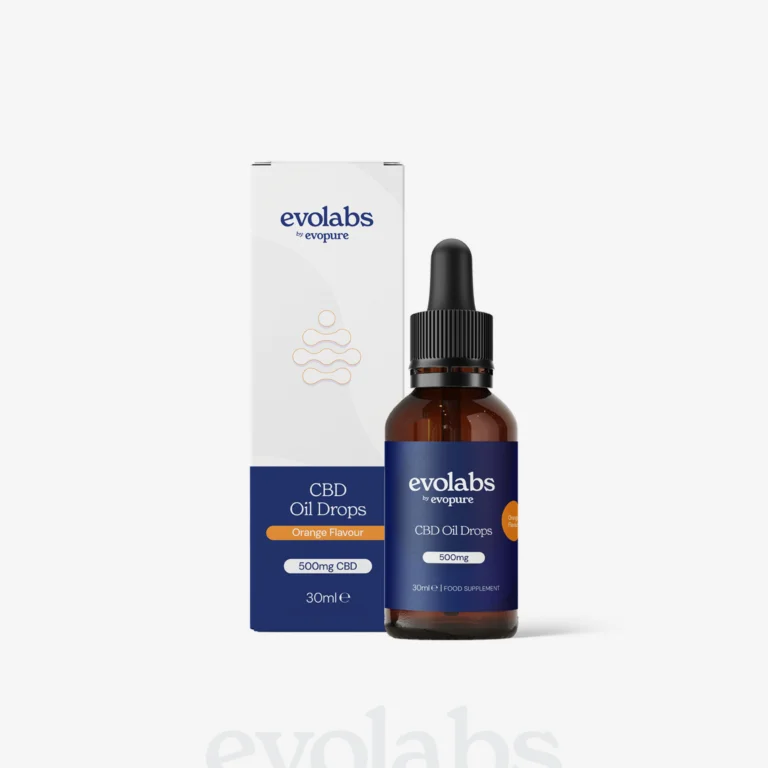
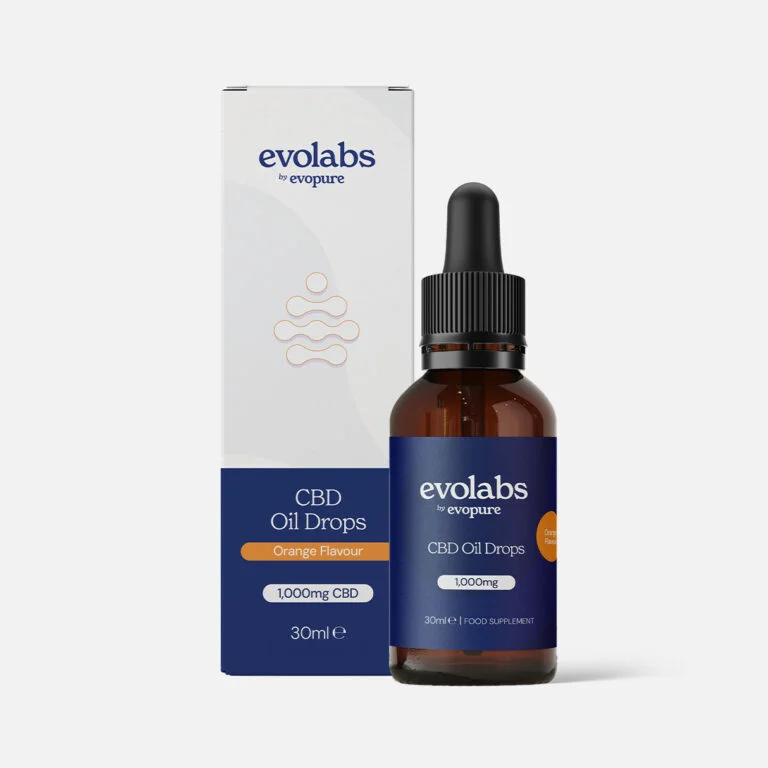
We wanted the wider hemp profile without the THC question. Every Evopure CBD product, including the Evolabs flavoured oils, is broad spectrum with 0% THC. Our products are on the FSA public list, linked to validated applications RP438, RP821 and RP47, and each batch is third-party tested at ISO 17025 accredited labs. Reports are available on request from our lab testing page.
- Broad Spectrum CBD Oil: broad spectrum CBD in MCT oil and nothing else. 500mg, 1,000mg or 2,000mg in a 10ml bottle, about 2.5mg, 5mg or 10mg per drop.
- Broad Spectrum CBD Capsules: 10mg or 25mg of CBD per vegan HPMC capsule, with inulin, for a fixed amount each time.
Both are vegan and made in the UK. CBD food supplements aren’t a treatment for any condition. Our products are for adults (18+) only, and we don’t recommend our products during pregnancy or breastfeeding.
The FSA’s 10mg a day figure is precautionary advice rather than a legal limit, set while longer-term safety research continues. At Evopure we think it is a very cautious figure, and many adults use more. If you go above it, increase slowly, and check with your GP or pharmacist first if you take any medication.
See our CBD dosage guide, what the FSA’s 10mg advice means and CBD oil vs capsules.
How to check the THC on a lab report
Whether you buy full spectrum or broad spectrum, the batch certificate of analysis (COA) is the only way to know what’s in the bottle. Here’s what to look for:
- Match the batch. The batch number on the report should match the one on your bottle.
- Find the controlled cannabinoids. Look for delta-9 THC, delta-8 THC and CBN. “ND” means not detected.
- Do the sum. If THC is given as a percentage or mg per ml, multiply it out to the whole bottle. A 10ml oil at 0.02% THC holds about 2mg, over the UK limit.
- Check the lab. It should be independent and ideally ISO 17025 accredited.
- Check the FSA public list. The product should be linked to an application on it.
- Be wary of US-style labels such as “under 0.3% THC”, which don’t meet UK rules.
Our step-by-step guide shows how to read every part of a report: how to read CBD lab reports (COAs).
Related guides
- The best CBD oil in the UK.
- Best CBD capsules in the UK, and which spectrum each type uses.
- THC is one of the things to consider with heart symptoms. Our guide to CBD and heart palpitations looks at the evidence.
- Delta-8 THC in the UK, and why it’s controlled too.
- What CBC oil is and what the research shows.
- Halal CBD: what Muslim customers check.
- Does full spectrum CBD cause tolerance?
- For more on one of these minor cannabinoids, see what CBDV is and what the research shows.
- Some UK brands sell full spectrum and zero THC versions side by side: our Blessed CBD guide shows how the labels compare.
- If you want the wider plant profile without THC, read our guide to broad spectrum CBD oil.
- Some minor cannabinoids are controlled too, including THCV (tetrahydrocannabivarin).
Sources 16
- Home Office. Drug licensing factsheet: cannabis, CBD and other cannabinoids.
- Home Office. Low THC cannabis (industrial hemp) licensing factsheet.
- Food Standards Agency. Cannabidiol (CBD) guidance.
- Food Standards Agency. CBD products linked to novel food applications (public list).
- Food Standards Agency (2026). CBD novel food applications: recommendations to ministers on first authorisations (September 2026 board paper).
- NHS. Medical cannabis (and cannabis oils).
- GOV.UK. Drugs and driving: the law.
- UK Anti-Doping. CBD products: what are they and can I take them?
- Liebling JP et al (2022). An analysis of over-the-counter cannabidiol products in the United Kingdom. Cannabis and Cannabinoid Research.
- Dahlgren MK et al (2021). Urinary tetrahydrocannabinol after 4 weeks of a full-spectrum, high-cannabidiol treatment in an open-label clinical trial. JAMA Psychiatry.
- Spindle TR et al (2020). Urinary pharmacokinetic profile of cannabinoids following administration of vaporized and oral cannabidiol and vaporized CBD-dominant cannabis. Journal of Analytical Toxicology.
- Wolinsky D et al (2026). The acute and chronic pharmacokinetics and pharmacodynamics of oral cannabidiol with and without low doses of delta-9-tetrahydrocannabinol. Journal of Analytical Toxicology.
- Christensen C et al (2023). Decoding the postulated entourage effect of medicinal cannabis: what it is and what it isn’t. Biomedicines.
- Simei JLQ et al (2024). Does the “entourage effect” in cannabinoids exist? A narrative scoping review. Cannabis and Cannabinoid Research.
- Russo EB (2011). Taming THC: potential cannabis synergy and phytocannabinoid-terpenoid entourage effects. British Journal of Pharmacology.
- Pamplona FA et al (2018). Potential clinical benefits of CBD-rich cannabis extracts over purified CBD in treatment-resistant epilepsy. Frontiers in Neurology.
This guide is general information, not legal or medical advice. Evopure makes broad spectrum CBD products.