Last updated: October 2026
Many athletes use CBD for recovery and sleep, and famous names from rugby’s George Kruis to golfer Bubba Watson and footballer Megan Rapinoe have backed CBD brands. CBD isn’t banned in sport, but THC and other cannabinoids are. The research is mixed: small studies show possible benefits for muscle recovery but no direct effect on performance.
Below: the athletes who use CBD, what sport science says, anti-doping rules for UK athletes, and how to choose a product if you’re tested.
Famous athletes who use CBD
| Athlete | Sport | CBD connection |
|---|---|---|
| George Kruis | Rugby union, England and Saracens | Co-founded the CBD brand fourfive in 2018 after a run of injuries |
| Dom Day | Rugby union, Wales and Saracens | Co-founded fourfive with Kruis |
| Eddie Hall | Strongman, World’s Strongest Man 2017 | Launched his own CBD range, Beast Pharm, in 2020 |
| Megan Rapinoe | Football, USA women’s team | Co-founded the CBD brand Mendi with her twin sister |
| Rob Gronkowski | American football, NFL | Partnered with CBD brand CBDMedic after retiring, saying CBD helped him manage pain |
| Bubba Watson | Golf, two-time Masters champion | Partnered with cbdMD in 2019 |
| Nate Diaz | UFC | Famously vaped CBD at a 2016 post-fight press conference |
| Eugene Monroe | American football, NFL | In 2016, became the first active NFL player to openly call for cannabinoids to be allowed for pain and injuries |
| Ross Rebagliati | Snowboarding, 1998 Olympic champion | Long-time cannabis advocate who later launched his own cannabis brand in Canada |
Many of these athletes have commercial ties to the brands they mention, so treat their experiences as personal stories rather than evidence. Evopure has no connection with any athlete listed.
Why athletes use CBD
Surveys of athletes suggest the most common reasons are recovery, sleep and managing aches, with some using it for pre-competition nerves. CBD is attractive because it’s non-intoxicating, not on the banned list and seen as a gentler option than some painkillers. It’s also used alongside massage, as a balm. See CBD for muscle recovery and CBD for runners and gym-goers.
What the research shows
| Study | Who and what | Result |
|---|---|---|
| Isenmann, 2021 | 16 trained adults, 60mg CBD after heavy squats | Small benefits for muscle-damage markers and squat strength at 72 hours |
| Crossland, 2022 | Single dose of CBD after strenuous exercise | No reduction in inflammation and no improvement in performance |
| Isenmann, 2024 | 17 well-trained athletes, 60mg CBD for several days | No clear overall benefit for recovery or performance |
| Sahinovic, 2025 | 25 endurance-trained adults, 50mg or 300mg CBD before running | No change in endurance, enjoyment or effort compared with placebo |
A 2020 review by sports scientists concluded CBD has plausible effects relevant to athletes, such as on sleep, anxiety and pain, but that direct evidence in athletes was scarce. Overall: CBD is unlikely to improve or harm performance, may offer modest recovery benefits for some, and the strongest reason athletes use it is sleep and general wellbeing. See CBD for sleep.
Is CBD allowed in sport? Anti-doping rules
- CBD is permitted. The World Anti-Doping Agency removed CBD from its Prohibited List in 2018, and UK Anti-Doping (UKAD) confirms it is allowed.
- All other cannabinoids are banned in competition, including THC, CBN and CBG. THC has a reporting threshold, but most other cannabinoids don’t, so even small amounts could count as a violation.
- Strict liability applies. You’re responsible for anything in your body, even if a product was mislabelled.
- Check your sport’s own rules, as some leagues and organisations have their own drug policies.
Note that broad spectrum products contain other cannabinoids such as CBG and CBN, even when THC-free. If you’re tested in competition, UKAD advises extreme caution with any CBD product. See does CBD show up on a drug test?
How to choose CBD if you’re drug tested
- If you compete under anti-doping rules, the lowest-risk choice is a CBD isolate product tested under a sports supplement scheme such as Informed Sport.
- Check the batch lab report for THC and every other cannabinoid. See how to read CBD lab reports.
- Avoid full spectrum products, which contain THC.
- Talk to your team doctor or nutritionist before using any supplement.
- If you train recreationally and aren’t tested, broad spectrum CBD with 0% THC is a popular choice. See full spectrum vs broad spectrum vs isolate.
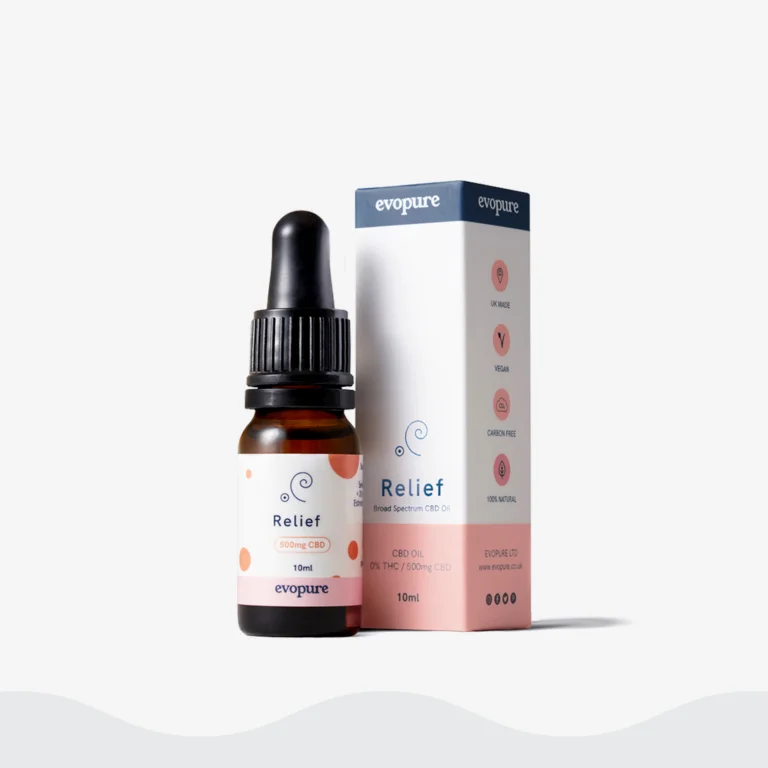
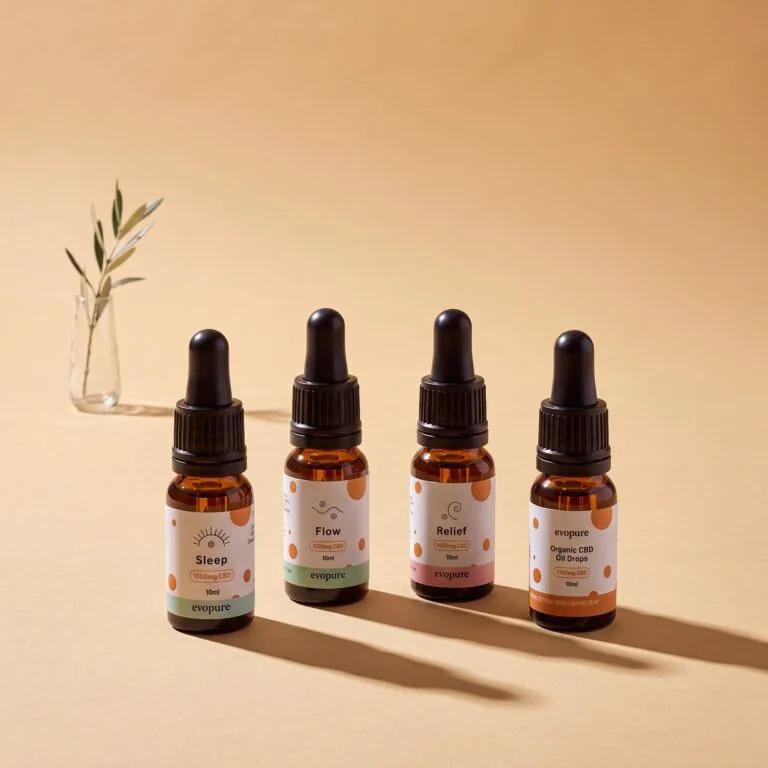
Our CBD is broad spectrum, so it contains minor cannabinoids alongside CBD. That makes it a good fit for recreational athletes and gym-goers, but not the right choice for athletes tested under anti-doping rules.
How athletes take CBD
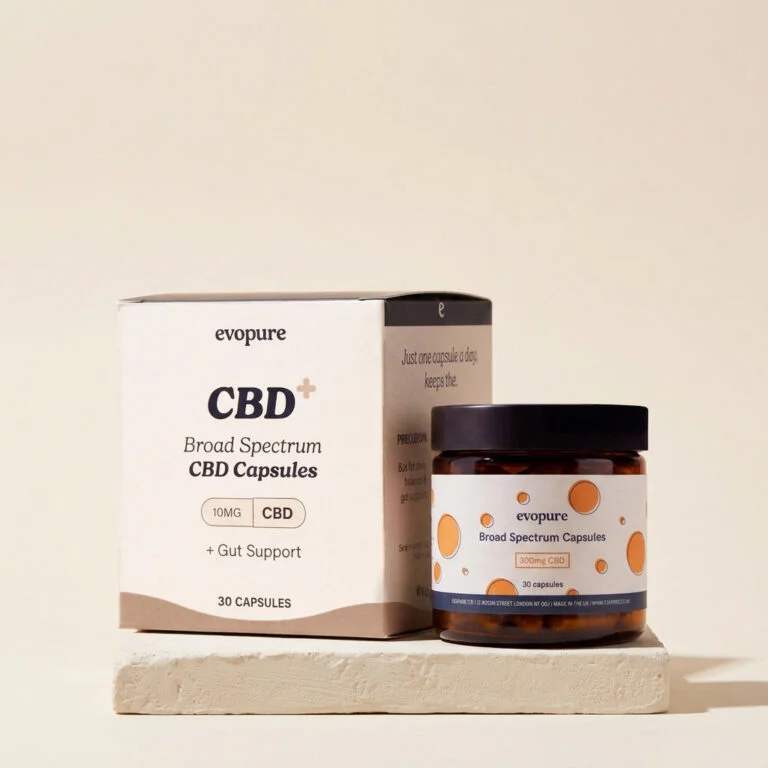
- Evening oil or capsule for sleep and recovery, taken with food for better absorption. See CBD oil vs capsules.
- Balm massaged into tight areas after training. See how to use CBD balm and CBD balm vs Tiger Balm.
- Before competition, some use a small dose for nerves, but try it in training first.
Start low, around 10mg a day. The FSA’s 10mg a day figure is precautionary advice rather than a legal limit, set while longer-term safety research continues. At Evopure we think it is a very cautious figure, and many adults use more. If you go above it, increase slowly, and check with your GP or pharmacist first if you take any medication. Magnesium is another popular recovery supplement: it contributes to normal muscle function and the reduction of tiredness and fatigue. See magnesium for cramps.
Side effects and safety
CBD is generally well tolerated. Possible side effects include tiredness, diarrhoea and changes in appetite, mostly at higher doses. Don’t train or drive if it makes you drowsy. CBD can interact with some medicines, including some painkillers and blood thinners, so check with a pharmacist. See CBD side effects.
See also how to choose a CBD oil for pain.
See also cold showers vs ice baths.
FAQs
Which athletes use CBD?
Well-known examples include rugby players George Kruis and Dom Day, strongman Eddie Hall, footballer Megan Rapinoe, NFL star Rob Gronkowski, golfer Bubba Watson and UFC fighter Nate Diaz.
Is CBD banned in sport?
No. CBD was removed from WADA’s Prohibited List in 2018. But THC and all other cannabinoids are banned in competition, so product purity matters.
Does CBD help muscle recovery?
The evidence is mixed. One small trial found modest benefits for muscle-damage markers after heavy training, while others found no effect on inflammation or performance.
Does CBD improve athletic performance?
No good evidence suggests it does. A 2025 trial found no change in endurance performance at 50mg or 300mg. Most athletes use it for recovery and sleep instead.
Can tested athletes use broad spectrum CBD?
It’s risky. Broad spectrum contains other cannabinoids that are banned in competition, even without THC. Tested athletes are safest with sports-certified isolate products.
Should athletes take CBD before or after training?
Most take it after training or in the evening for recovery and sleep, with a balm on tight areas. Try any pre-competition use in training first.
Sources
- UK Anti-Doping. Cannabidiol (CBD).
- McCartney D et al (2020). Cannabidiol and sports performance: a narrative review of relevant evidence and recommendations for future research. Sports Medicine Open.
- Isenmann E et al (2021). Effects of cannabidiol supplementation on skeletal muscle regeneration after intensive resistance training. Nutrients.
- Crossland BW et al (2022). Acute supplementation with cannabidiol does not attenuate inflammation or improve measures of performance following strenuous exercise. Healthcare.
- Isenmann E et al (2024). Influence of short-term chronic oral cannabidiol application on muscle recovery and performance after an intensive training protocol. Journal of the International Society of Sports Nutrition.
- Sahinovic A et al (2025). The acute effects of cannabidiol on physiological and subjective responses to endurance exercise. Sports Medicine Open.
- Forbes (2020). Retired UK rugby player Dominic Day moves on with CBD business.
- Yahoo Sports. Megan Rapinoe enters partnership with women-owned CBD brand Mendi.
- Stack3d (2020). CBD brand Beast Pharm from strongman Eddie Hall.
This guide is general information, not medical or anti-doping advice.