Last updated: October 2026
Magnesium flakes are magnesium chloride, sold for bath and foot soaks. A warm soak can be relaxing, but there’s little good evidence that much magnesium gets through your skin, so flakes aren’t a reliable way to raise your levels. If you want more magnesium, food or an oral supplement is the dependable route.
Below: what flakes are, the absorption evidence, how to use them, flakes vs Epsom salt, magnesium chloride by mouth, and safety.
What are magnesium flakes?
Magnesium flakes are magnesium chloride hexahydrate: magnesium chloride crystals that hold six water molecules each. They’re white, brittle flakes that dissolve quickly in warm water. Epsom salt is a different compound, magnesium sulphate heptahydrate.
Working from the molecular weights listed by PubChem, magnesium makes up about 12% of the weight of magnesium chloride hexahydrate and about 10% of Epsom salt. So, gram for gram, flakes carry slightly more magnesium. A 250g bath of flakes contains roughly 30g of magnesium, about 100 times the NHS daily amount for men. Very little of it is thought to get into your body, which is the real story here.
The same salt is used to make magnesium oil, covered in our guide to magnesium spray, and it appears as an oral form in types of magnesium.
Do magnesium flakes absorb through your skin?
Probably not in any useful amount. Your skin’s outer layer is built to keep water and dissolved salts out, and magnesium is a charged particle that struggles to cross it.
- The 2017 review. A review in the journal Nutrients looked at magnesium sprays, flakes and salt baths and concluded that promoting transdermal (through the skin) magnesium is scientifically unsupported. It noted that magnesium may only slip in via hair follicles and sweat glands, which cover just 0.1% to 1% of the skin’s surface.
- The magnesium cream pilot (2017). 25 people used a magnesium cream or a placebo cream for two weeks. Blood magnesium rose slightly more with the magnesium cream, but the difference was only statistically significant in a small subgroup of non-athletes.
- The magnesium oil studies. The studies most quoted for magnesium chloride sprays and soaks are small. One, described in the 2017 review, followed 9 people for 12 weeks and measured magnesium in hair, not blood. Another gave 40 women with fibromyalgia a magnesium chloride spray, with no placebo group, and 24 finished. Neither shows that flakes raise magnesium levels.
The same evidence applies to Epsom salt. Our Epsom salt bath guide covers the much-quoted Birmingham bath report in more detail.
Magnesium flakes benefits: what holds up
Most of the benefit comes from the bath itself: warm water, quiet and 20 minutes off your phone.
- Relaxation. A warm soak is a simple way to switch off at the end of the day.
- Sleep. A 2019 review of 13 studies found that a warm bath or shower 1 to 2 hours before bed, in water of about 40 to 42.5°C, was linked with falling asleep faster, even after just 10 minutes. The flakes aren’t needed for that. See bedtime routine for adults and magnesium for sleep.
- Tired, achy muscles. Warmth feels soothing after exercise, but there’s no good evidence the flakes add to it. See magnesium for muscle pain.
- Raising magnesium or “detox”. No good evidence for either.
How to use magnesium flakes
In the bath
- How much: UK packs often suggest about 250g (roughly 2 cups) in a standard bath. More hasn’t been shown to do more.
- Temperature: warm, not hot. Check the water with your wrist or elbow first.
- How long: packs often suggest about 20 minutes. Get out slowly, as warm water can make you light-headed.
- When: for sleep, 1 to 2 hours before bed, so your body has time to cool down.
- How often: packs often suggest 2 to 3 times a week. Cut back if your skin feels dry or itchy.
- Afterwards: rinse off if your skin feels tight or salty, pat dry and moisturise.
As a foot soak
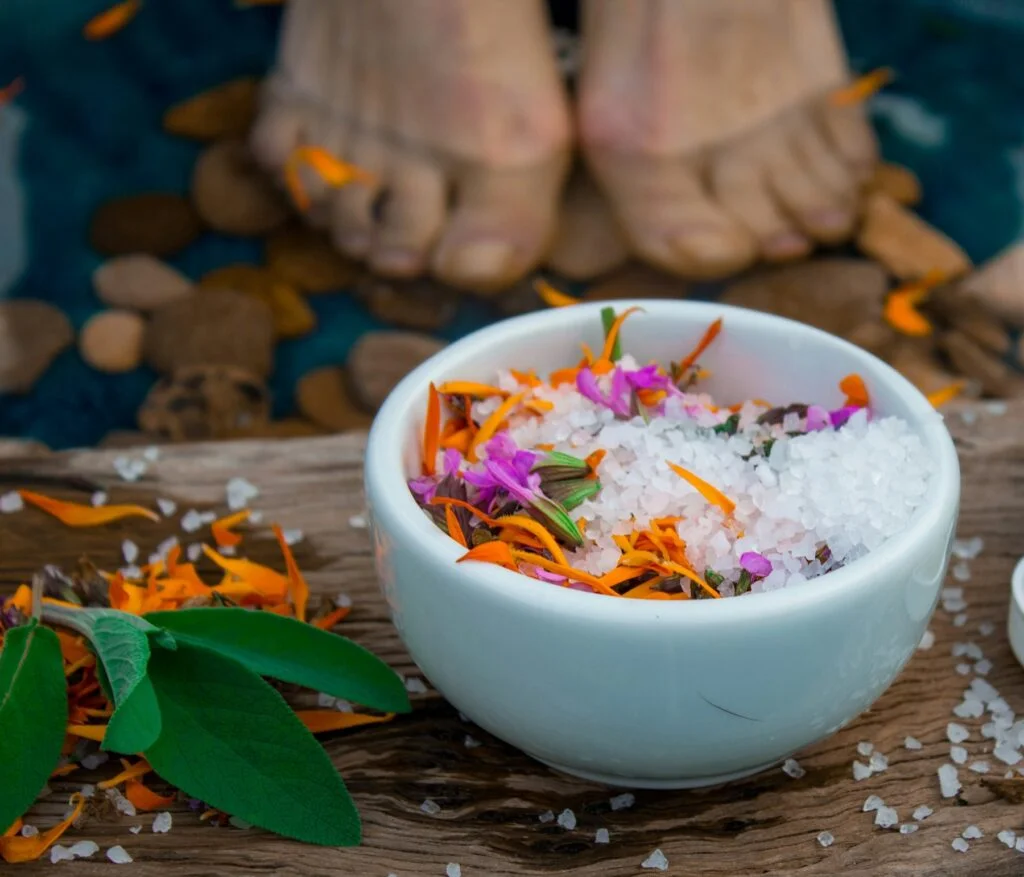
Packs often suggest about 150g (roughly 1 cup) in about 5 litres of warm water, enough to cover your feet, for around 20 minutes. Dry carefully between your toes. If you have diabetes, Diabetes UK advises avoiding foot soaks, so ask your GP or podiatrist first.
As a homemade magnesium spray
Magnesium oil is just magnesium chloride flakes dissolved in water. Stir the flakes into warm water from a boiled kettle until they dissolve, let it cool fully, then keep it in a clean spray bottle. A weaker mix stings less. The same caveat applies: it’s a pleasant massage ritual rather than a proven way to top up.
Patch test first
Chloride solutions can sting, especially on cuts, freshly shaved skin or eczema. Try a little on a small patch of skin first, and stop if you get redness or a rash.
Magnesium flakes vs Epsom salt vs Dead Sea salt
| Magnesium flakes | Epsom salt | Dead Sea salt | |
|---|---|---|---|
| What it is | Magnesium chloride | Magnesium sulphate | Mixed mineral salts rich in magnesium chloride |
| Magnesium by weight | About 12% | About 10% | Varies by brand |
| Raises your magnesium? | No good evidence | No good evidence | No good evidence |
| Skin research | None for flakes in the bath | None of good quality | One small 2005 study: forearm soaks left dry skin better hydrated |
| Cost | Usually pricier | Usually cheapest | Varies |
Are flakes better than Epsom salt? Not in any way the evidence can show. Choose the one you enjoy and can afford. The full comparison, including table salt, is in our Epsom salt bath guide.
Magnesium chloride by mouth vs glycinate and citrate
Magnesium chloride is also sold as tablets and liquids, which are a different product from bath flakes. Taken by mouth, it absorbs reasonably well. In a 2001 study, chloride was absorbed about as well as magnesium lactate and aspartate, and much better than oxide. A 2021 systematic review found organic forms, such as citrate and glycinate, generally absorb better than inorganic ones like chloride and oxide, though all could maintain normal levels in healthy people.
| Form | Absorption | Good to know |
|---|---|---|
| Chloride | Reasonable | The same salt as the flakes, but in supplement form made to be swallowed |
| Glycinate (bisglycinate) | Good | Gentle on the stomach; popular in the evening. See magnesium glycinate |
| Citrate | Good | Can loosen stools at higher doses. See magnesium citrate |
| Oxide | Poor | Cheap and common. See magnesium oxide |
Other forms, such as magnesium malate and magnesium taurate, have their own guides.
Safety: who should be careful
- Don’t swallow bath flakes. They’re sold for the bath, and makers advise against taking them by mouth. If someone swallows a large amount, call 111, or 999 if they’re very unwell.
- Broken skin and eczema. Chloride can sting cuts and cracked skin. The NHS lists heat as something that can make eczema worse, and advises washing with an emollient instead of soap. Ask a pharmacist or GP before trying salt soaks.
- Pregnancy. The charity Tommy’s says a significant rise in core temperature could be harmful in pregnancy, particularly in the first 12 weeks. Keep baths warm, not hot, and check with your midwife. See magnesium in pregnancy. We don’t recommend our products during pregnancy or breastfeeding.
- Kidney disease. Your body may not clear magnesium well, so check with your GP before using magnesium products.
- Children. If you use flakes in a child’s bath, keep the amount small and stay with them the whole time. Ask your health visitor or GP first for babies. See magnesium for kids. Our products are for adults only.
For a reliable top-up, take it by mouth
The NHS says adults need 300mg of magnesium a day (men) or 270mg (women), and most people can get it from a varied diet: leafy greens, nuts, seeds and wholegrains. See foods high in magnesium and signs of magnesium deficiency.
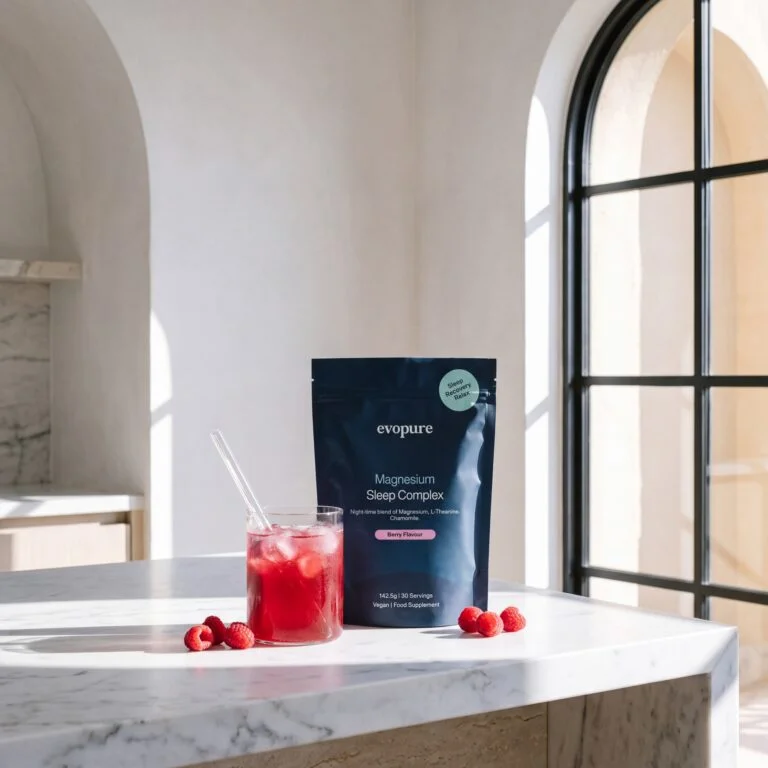
If you’d like a supplement, our Magnesium Glycinate Sleep Complex is a berry-flavoured evening drink with magnesium bisglycinate and citrate (148mg of magnesium per serving), plus glycine, L-theanine, chamomile, passionflower, hops and oat straw. Magnesium contributes to normal muscle function, normal psychological function and the reduction of tiredness and fatigue.
A warm soak followed by a magnesium drink gives you the ritual and a form your body can actually absorb. The NHS says 400mg or less a day from supplements is unlikely to cause harm, so stick to the label.
FAQs
Are magnesium flakes better than Epsom salts?
Not in any proven way. Flakes are magnesium chloride and carry slightly more magnesium by weight, but there’s no good evidence that either raises your magnesium through the skin. Pick the one you enjoy and can afford.
How much magnesium flakes should I put in a bath?
UK packs often suggest about 250g, roughly 2 cups, in a standard bath, and about 150g for a foot soak. Using more hasn’t been shown to do more.
Do magnesium flakes help you sleep?
A warm bath 1 to 2 hours before bed is linked with falling asleep faster, with or without flakes. There’s no good evidence the flakes themselves add to that.
Can you use magnesium flakes on your feet?
Yes, as a foot soak in warm water for about 20 minutes. There’s no evidence your soles absorb more magnesium than other skin. If you have diabetes, ask your GP or podiatrist before soaking your feet.
Are magnesium flakes safe for kids?
If you use them, keep to a small amount in a warm bath, with an adult there the whole time. Ask your health visitor or GP first for babies. Our products are for adults only.
Can you eat or drink magnesium flakes?
No. Bath flakes aren’t made to be swallowed. If you want magnesium chloride by mouth, use a supplement made for that, at the dose on the label.
Sources
- Gröber U et al (2017). Myth or reality: transdermal magnesium? Nutrients. PMID 28788060.
- Kass L et al (2017). Effect of transdermal magnesium cream on serum and urinary magnesium levels in humans: a pilot study. PLoS One. PMID 28403154.
- Engen DJ et al (2015). Effects of transdermal magnesium chloride on quality of life for patients with fibromyalgia: a feasibility study. Journal of Integrative Medicine. PMID 26343101.
- Haghayegh S et al (2019). Before-bedtime passive body heating by warm shower or bath to improve sleep: a systematic review and meta-analysis. Sleep Medicine Reviews. PMID 31102877.
- Proksch E et al (2005). Bathing in a magnesium-rich Dead Sea salt solution improves skin barrier function… International Journal of Dermatology. PMID 15689218.
- Firoz M, Graber M (2001). Bioavailability of US commercial magnesium preparations. Magnesium Research. PMID 11794633.
- Pardo MR et al (2021). Bioavailability of magnesium food supplements: a systematic review. Nutrition. PMID 34111673.
- PubChem. Magnesium chloride hexahydrate and Magnesium sulfate heptahydrate.
- NHS. Vitamins and minerals: others (magnesium).
- NHS. Atopic eczema.
- Tommy’s. Causes of miscarriage (saunas and hot tubs).
- Diabetes UK. How to look after your feet.
This guide is general information, not medical advice. Evopure makes the Magnesium Glycinate Sleep Complex.