






Last updated: October 2026
Eczema (atopic dermatitis) is a common long-term skin condition that causes itchy, dry, inflamed patches, often in the creases of the elbows and knees. It can’t be cured, but it can usually be well controlled with emollients used generously every day and steroid creams during flares. Get urgent help if it suddenly turns painful with blisters or a fever.
Below: whether it’s autoimmune, the main types, flare-up triggers, what helps (based on NHS and NICE advice), sleep, red light therapy and eczema herpeticum.
What is eczema?
When people say “eczema” they usually mean atopic eczema, also called atopic dermatitis, the most common type. “Atopic” describes a tendency to develop eczema, asthma and hay fever, which often run together in families.
At its heart, eczema is a problem with the skin barrier. Healthy skin holds water in and keeps irritants and germs out; in eczema that barrier is leaky. NICE says changes in the filaggrin gene, which helps build the outer layer of skin, are thought to play a part in almost half of cases. Skin loses water, dries and itches, irritants get in, and scratching damages the barrier further.
How common is it?
- About 10 to 30% of children and 2 to 10% of adults have atopic eczema, according to NICE.
- Most cases start before the age of 5, but around 30% of people first get symptoms as adults.
- About 70% of people with atopic eczema have a family history of eczema, asthma or hay fever.
- Eczema is not contagious. You can’t catch it or pass it on.
What eczema looks like
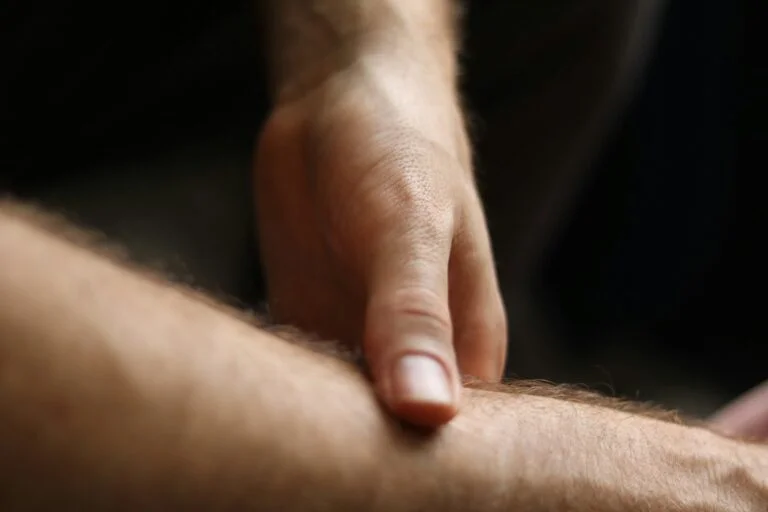
The NHS describes itchy skin that is dry, cracked, scaly or thickened. On white skin, patches usually look red. On brown and black skin they can look darker brown, purple or grey, or lighter than the skin around them. Long-term scratching can leave skin thick and leathery.
Not every itchy rash is eczema: see stress rash for raised welts that appear at stressful times, and dry skin for simple winter flakiness.
Is eczema autoimmune?
No. Atopic eczema isn’t classed as an autoimmune disease. In autoimmune diseases, such as type 1 diabetes or rheumatoid arthritis, the immune system attacks the body’s own tissue. A 2020 review in The Lancet describes atopic dermatitis instead as an inflammatory skin disorder involving a strong genetic tendency, a faulty outer skin layer and immune-driven inflammation, mostly the “type 2” kind seen in allergies and asthma.
The line is still blurry. A Danish study of more than 8,000 adults treated in hospital for eczema found it was linked with 11 of the 22 autoimmune diseases studied. Being linked doesn’t mean eczema causes them, but it shows why researchers call eczema an immune-mediated condition. It’s often mentioned alongside psoriasis, a different inflammatory skin condition; see our psoriasis guide for how to tell the two apart. If your face flushes and stays red rather than dry and itchy, read our rosacea guide.
Types of eczema
Eczema is named by its cause (atopic, contact) or by where it shows up (flexural, hand), so one person’s skin can fit several names.
| Type | Where | What it looks like | Who gets it |
|---|---|---|---|
| Atopic eczema | Anywhere; elbows, knees and hands are common | Dry, itchy, red or darker patches that flare and settle | Usually starts in childhood; runs in families |
| Flexural eczema | The creases of joints: inside the elbows, backs of the knees | Itchy, dry, inflamed skin in the folds; can thicken with scratching | The typical pattern of atopic eczema on white skin |
| Follicular eczema | Around hair follicles on the trunk, arms and legs | Clusters of tiny itchy bumps, like goosebumps that won’t go | A pattern of atopic eczema, seen more often in people of African descent |
| Eyelid eczema | Eyelids and around the eyes | Dry, flaky, puffy or discoloured thin skin | Often a reaction to make-up, nail varnish or hair dye |
| Discoid eczema | Body, arms and legs; not usually the face | Circular or oval patches, very itchy at night | Anyone; may follow very dry skin or a minor skin injury |
| Contact dermatitis | Mainly hands and face | Red, sore, itchy or cracked skin where something touched it | Irritant (soap, water) is commoner than allergic (nickel, fragrance) |
| Asteatotic eczema | Shins mostly; sometimes thighs, arms and back | Very dry skin with a “crazy paving” or dried riverbed pattern | Older adults, in winter and heated homes |
| Hand eczema (including pompholyx) | Palms, backs of hands, sides of fingers | Dry, cracked, sore skin; pompholyx causes intensely itchy tiny blisters | Wet work, frequent hand washing; pompholyx mostly under 40 |
| Seborrhoeic dermatitis | Scalp, eyebrows, sides of the nose, ears, chest | Flaky, sometimes yellowish scale; dandruff | Adults (cradle cap in babies); linked to a yeast on the skin |
| Varicose eczema | Lower legs | Itchy, swollen, dry, discoloured skin | People with varicose veins; more common in women and with age |
Flexural eczema: what most adults mean
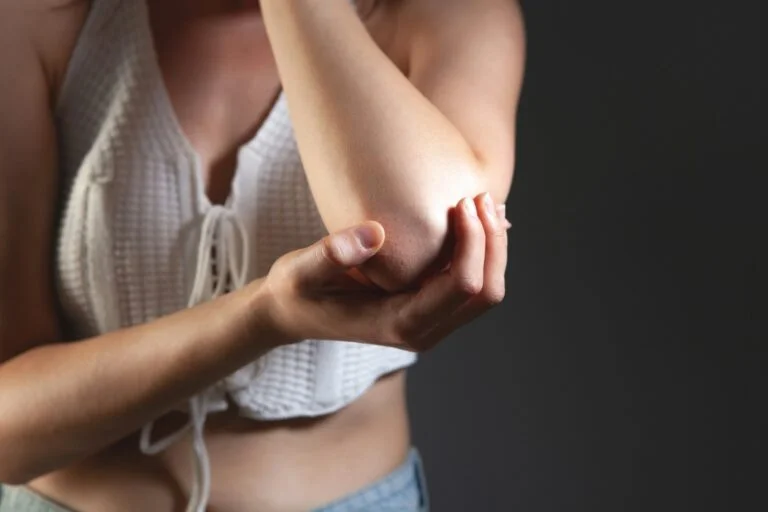
“Flexural” means the parts of the body that bend: the inside of the elbows and the backs of the knees. Eczema UK (formerly the National Eczema Society) notes that on darker skin the pattern can be reversed, affecting the front of the knees and outside of the elbows. It’s atopic eczema in its typical spot, treated the same way.
Follicular eczema
Tiny itchy bumps around hair follicles, seen more often in people of African descent, according to DermNet. It’s easily mistaken for keratosis pilaris, a harmless condition causing small rough bumps on the arms, thighs and bottom. A GP or pharmacist can tell them apart.
Eyelid eczema
Eyelid skin is thin and reacts easily. Eczema UK lists nail varnish, hair dye, perfume sprays, eye drops, make-up and contact lens solution as common culprits. Wash with your emollient, avoid perfumed creams, and ask a pharmacist or GP before using any steroid near your eyes. If it keeps coming back, ask about patch testing.
Asteatotic eczema
Also called eczema craquelé: cracked, crazy-paving dryness on older shins, usually in winter. Hot baths, radiators, soap and dry air make it worse. Plenty of emollient, warm water and baths of 10 to 15 minutes help.
What causes eczema flare-ups?
NICE notes flares can happen two or three times a month. These are the common triggers listed by the NHS, NICE and Eczema UK.
| Trigger | Why it flares eczema | What to try |
|---|---|---|
| Soap, shower gel, bubble bath, detergents | Strip the skin’s oils | Wash with an emollient instead of soap |
| Heat, central heating and dry indoor air | Heat increases itch; dry air dries skin | Keep rooms cool; don’t sit by radiators or fires |
| Cold wind and sudden temperature changes | Dry, cold air weakens the barrier | Moisturise before going out; cover up |
| Wool and rough fabrics | Rub and irritate the skin | Wear smooth cotton next to the skin |
| Sweat and overheating | Can aggravate itch | Wear layers; rinse off sweat |
| Stress | A recognised trigger; itch and broken sleep add to it | Learn the signs of stress and how to relieve it |
| House dust mites | A common allergen in bedding and carpets | See dust mite allergy |
| Pets and pollen | Allergens that can set off a flare | Talk to a GP if you suspect an allergy |
| Fragrances and alcohol hand rubs | Common irritants | Go fragrance-free; moisturise after hand gel |
| Hormonal changes | The NHS lists pregnancy as a possible trigger | Speak to your midwife or GP about safe treatment |
| Skin infections | Staph bacteria can cause a sudden flare | See a GP if skin weeps, crusts or spreads |
| Certain foods | Can play a part in some people | Don’t cut out foods unless a doctor advises it |
Why eczema is worse in winter
Eczema UK notes that many people link a downturn in their skin with autumn and winter. Cold air outside, dry heated air inside and hotter showers all add up. Thicker emollients, lukewarm water and a warm but not hot home help. Our dry skin guide has a full winter routine, and winter wellness covers the rest of the season.
What helps eczema
NICE recommends emollients every day, flaring or clear, with topical steroids added for red, inflamed flares.
1. Emollients, generously and often
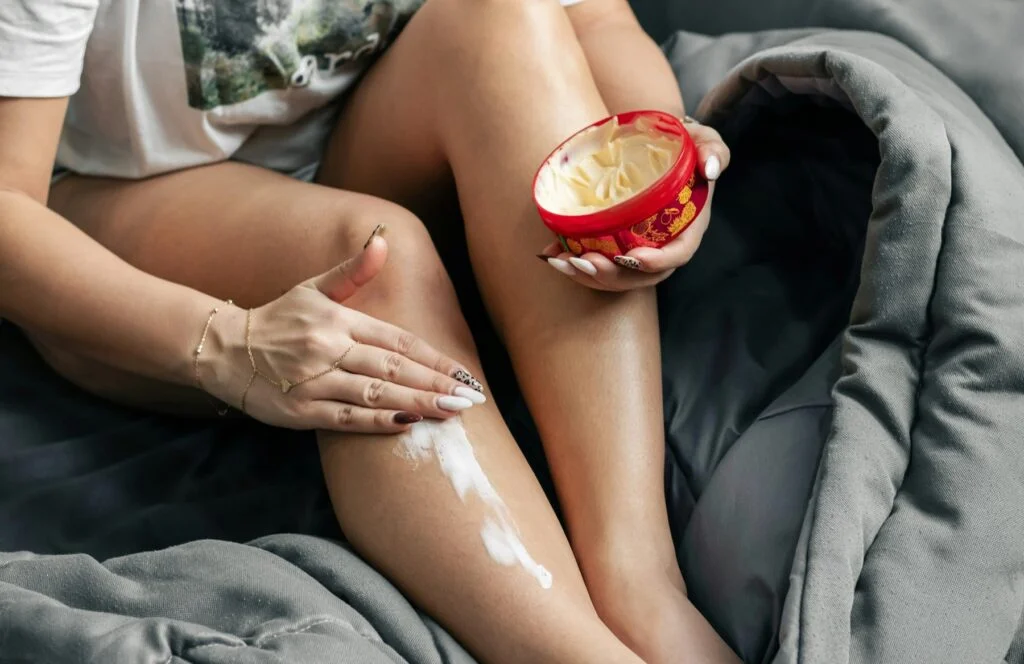
- At least twice a day, and keep going when skin looks better (NHS). NICE notes emollients are usually underused; GPs often prescribe 500g packs to use up to four times a day.
- Smooth, don’t rub, in the direction of hair growth.
- Ointments hold water in best and suit night-time; creams and lotions feel lighter and suit red, inflamed areas.
- Use a pump or clean spoon, not fingers, and don’t share emollients.
- Avoid aqueous cream. It contains sodium lauryl sulphate, which can sting and make eczema worse.
- The best emollient is the one you’ll use. Fewer additives means less chance of irritation.
2. Soap substitutes
Swap soap, shower gel and bubble bath for an emollient wash. Keep showers short and warm, pat dry and moisturise straight after.
3. Topical steroids for flares
Steroid creams and ointments calm inflammation. They come in four strengths, from mild to very potent. A GP matches the strength to the flare, using milder ones on thin skin such as the face, eyelids, armpits and groin.
- Hydrocortisone 1% from a pharmacy is a mild steroid for mild to moderate eczema. The NHS says don’t use it for more than 7 days, or on your face, genitals or broken skin, unless a pharmacist or doctor advises it.
- The fingertip unit. A line of cream from the tip of an adult index finger to the first crease covers an area about twice the size of your palm.
- Leave a gap. NICE suggests applying the emollient first, then waiting around 15 to 30 minutes, if possible, before the steroid.
- Used as directed, topical steroids rarely cause serious side effects; thinning skin is the main risk with long use. Tell your GP if eczema returns soon after stopping.
4. Other prescription options
For delicate areas such as the eyelids, a GP or dermatologist may prescribe non-steroid creams (tacrolimus or pimecrolimus). Wet wraps and medicated bandages can help severe eczema, but NICE says only a trained healthcare professional should start them.
5. Antihistamines: mainly for sleep
NICE doesn’t recommend antihistamines for everyday eczema itch. A GP may suggest a short course of a sedating one if itch is badly disturbing your sleep. They can leave you drowsy the next day, so don’t drive if affected.
6. Know your triggers, leave your diet alone
A simple flare diary can reveal patterns. The NHS advises against changing your diet unless a doctor suggests it. CBD isn’t a treatment for eczema; we’ve looked at the limited research honestly in CBD for eczema, and at skincare claims more broadly in CBD for skin.
Emollient fire safety: please read this
Emollients on fabric can catch fire. They aren’t flammable on skin, but dried into clothing, bedding or bandages they help fabric ignite and burn faster. The MHRA says this applies to all paraffin-based emollients, and the risk can’t be ruled out for paraffin-free ones.
- Don’t smoke, and avoid candles, naked flames and open fires.
- Sit at least 1 metre away from open fires and heaters.
- Wash clothes and bedding at the highest temperature on the care label. This reduces build-up but doesn’t remove it.
- Tell family and carers, especially of older relatives who smoke.
Keep using your emollient; this is about using it safely.
Eczema and sleep
Itch often feels worse at night: you’re warmer under the covers and there’s nothing to distract you. NICE lists disturbed sleep among the main ways eczema affects quality of life.
- Keep the bedroom cool. Heat increases itch. See the best temperature for sleep.
- Moisturise before bed, using a thicker ointment at night if you can tolerate it.
- Keep nails short, and keep an emollient by the bed.
- Rub, don’t scratch. The NHS suggests gently rubbing the skin with a finger.
- Wear smooth cotton and wash bedding hot to cut dust mites and emollient build-up.
- Keep a steady routine. See sleep hygiene and why can’t I sleep?
- Talk to your GP if itch is wrecking your sleep; NICE treats this as a reason to review treatment.
Our products aren’t a treatment for eczema. If a calmer wind-down is part of your evening, our Magnesium Glycinate Sleep Complex is a bedtime drink with magnesium, L-theanine and botanicals. Magnesium contributes to normal psychological function.
Our products are for adults only. We don’t recommend our products during pregnancy or breastfeeding. If you take any medication, check with your GP or pharmacist first.
Can eczema be cured permanently?
Not yet. The NHS is clear that atopic eczema cannot be cured, but treatment can control it. Be wary of anything that promises a permanent cure.
- Many children grow out of it. NICE notes that eczema clears in about 65% of children by age 7 and about 74% by age 16, although it can come back later.
- It tends to ease in adult life, but skin often stays sensitive, so keep the emollient habit.
- Severe eczema has more options than ever. For moderate to severe eczema that hasn’t responded to other treatment, a dermatologist can consider light therapy, immune-suppressing tablets, injected biologics such as dupilumab or tralokinumab, or JAK inhibitor tablets such as abrocitinib or upadacitinib, which NICE has approved for the NHS in specific situations.
Eczema can be hard on your mood. NICE asks GPs to check the psychological impact at every visit, so say if it’s getting to you.
Red light therapy for eczema: what the evidence shows
Two very different things get mixed up here.
- Phototherapy from a dermatologist is real. It uses measured doses of ultraviolet (UV) light, mostly narrowband UVB, in hospital clinics. A 2021 Cochrane review of 32 trials found it may improve eczema signs and itch, though the evidence was of low certainty.
- Home red-light devices are different. They use red or near-infrared light, not UV. None of the Cochrane trials tested them, and a PubMed search finds mainly animal studies and case reports, not trials in people with eczema.
So there’s no good evidence yet that a home red-light panel helps eczema, and sunbeds aren’t a substitute for medical phototherapy. If creams aren’t enough, ask your GP about a dermatology referral.
Eczema herpeticum: when eczema is urgent
Eczema herpeticum is a serious infection of eczema-prone skin, usually caused by the herpes simplex virus that causes cold sores. NICE describes it as potentially life-threatening, and it needs antiviral treatment.
Warning signs (British Association of Dermatologists, NHS):
- Groups of small, painful blisters, often on the face and neck, that can spread and then dry into small pits
- Eczema that suddenly gets much worse, spreads or becomes painful
- A high temperature, shivering or feeling generally unwell
- Swollen glands, or sore or gritty eyes if it’s near the eyes
What to do: get an urgent GP appointment or contact NHS 111 straight away (call 111 for a child under 5). If the rash is spreading fast, affects the eyes, or the person is very unwell, go to A&E. Tell the doctor if you’re pregnant, as the infection can be more serious in pregnancy.
Weeping, crusted or pus-filled skin can also be a bacterial infection, which needs a GP the same day. If you have a cold sore, avoid kissing anyone with eczema until it heals.
Eczema in babies and children
Eczema usually starts in early childhood, often on the face in babies. This guide is for adults, so if your baby or child has itchy, dry or inflamed skin, speak to your health visitor, pharmacist or GP, who can show you how to use emollients and any treatment. Don’t change your child’s diet unless a doctor advises it. Our products are for adults only.
When to see a GP or pharmacist
A pharmacist can help with mild eczema, such as small dry patches that are slightly itchy, and advise on emollients and hydrocortisone cream.
See a GP if:
- you think you have eczema and haven’t been diagnosed
- treatment isn’t working, or eczema keeps coming back soon after you stop a steroid
- it’s on your face, eyelids or genitals
- it’s affecting your sleep, work or mood
- you think something you touch at work is causing it
Get an urgent GP appointment or contact NHS 111 if eczema is blistered, crusted, weeping, painful, hot or suddenly spreading, or you have a fever. See eczema herpeticum.
If your itchy patches come and go within a day, it may be hives rather than eczema.
A painful, blistering rash on one side of the body is more likely to be shingles than eczema; see a pharmacist within 3 days.
FAQs
Is eczema autoimmune?
No. Atopic eczema isn’t classed as an autoimmune disease. It’s an inflammatory skin condition caused by genes, a weak skin barrier and an allergy-type immune response, although people with eczema are more likely to have some autoimmune conditions.
What does flexural eczema look like?
Itchy, dry, inflamed skin in the creases of the inner elbows and backs of the knees. It looks red on white skin and darker brown, purple or grey on darker skin.
What causes eczema flare-ups?
Common triggers are soap, heat and central heating, cold dry weather, wool, sweat, stress, dust mites, pets, pollen, hormonal changes and skin infections. Often several act together.
Can eczema be cured permanently?
No, but it can usually be well controlled. Many children grow out of it, and dermatologists have newer treatments for severe eczema that hasn’t responded to creams.
Is eczema contagious?
No. You can’t catch eczema or pass it on. But infected eczema, such as eczema herpeticum, can spread, so see a GP quickly if eczema blisters or weeps.
Does eczema run in families?
Yes, often. About 70% of people with atopic eczema have a family history of eczema, asthma or hay fever.
What is the best cream for eczema?
The emollient you’ll use generously and often. Ointments hold moisture best; creams and lotions feel lighter. For flares, ask a pharmacist or GP about a steroid cream.
Sources
- NHS. Atopic eczema; Discoid eczema; Varicose eczema; Contact dermatitis; Keratosis pilaris.
- NHS. Hydrocortisone for skin.
- NICE Clinical Knowledge Summaries. Eczema: atopic (causes, prevalence, prognosis, emollients, topical corticosteroids, antihistamines, infected eczema). Revised August 2026.
- NICE. Dupilumab for treating moderate to severe atopic dermatitis (TA534); Abrocitinib, tralokinumab or upadacitinib (TA814).
- Eczema UK (formerly the National Eczema Society). Atopic eczema; Eczema around the eyes; Asteatotic eczema; Hand eczema; Seborrhoeic dermatitis in adults.
- British Association of Dermatologists. Eczema herpeticum patient information.
- MHRA. Emollients: risk of severe and fatal burns with paraffin-containing and paraffin-free emollients; Winter emollient safety warning (December 2025).
- DermNet. Atopic dermatitis.
- Langan SM, Irvine AD, Weidinger S. Atopic dermatitis. Lancet. 2020. PMID 32738956.
- Andersen YM et al. Autoimmune diseases in adults with atopic dermatitis. J Am Acad Dermatol. 2017. PMID 27742171.
- Musters AH et al. Phototherapy for atopic eczema. Cochrane Database Syst Rev. 2021. PMID 34709669.
This guide is general information, not medical advice. If you’re worried about your skin, speak to a pharmacist or GP. Evopure makes the Magnesium Glycinate Sleep Complex mentioned in this guide.