














Last updated: October 2026
Sleep runs in cycles of roughly 90 minutes. To find your bedtime, count back 5 or 6 cycles (7.5 or 9 hours) from your alarm and add 15 minutes to fall asleep. For a 7am alarm, aim to go to bed at about 11.15pm or 9.45pm. Most adults need 7 to 9 hours a night.
Below: a bedtime chart by wake-up time, how sleep cycles work, how much sleep you need by age, and why consistency matters more than perfect timing.
Sleep calculator: bedtime by wake-up time
Times include about 15 minutes to fall asleep.
| If you wake at | Go to bed at (6 cycles, 9 hours) | Go to bed at (5 cycles, 7.5 hours) |
|---|---|---|
| 5.30am | 8.15pm | 9.45pm |
| 6am | 8.45pm | 10.15pm |
| 6.30am | 9.15pm | 10.45pm |
| 7am | 9.45pm | 11.15pm |
| 7.30am | 10.15pm | 11.45pm |
| 8am | 10.45pm | 12.15am |
| 8.30am | 11.15pm | 12.45am |
Only 4 cycles (6 hours)? That’s less than most adults need. Try to make it the exception, not the rule.
How sleep cycles work
Each night you move through 4 to 6 cycles, each lasting roughly 90 minutes, though this varies from about 70 to 120 minutes. Each cycle has stages:
| Stage | What happens |
|---|---|
| Light sleep (N1) | Drifting off; easy to wake. See hypnic jerks |
| Light sleep (N2) | Heart rate and temperature fall; most of the night is spent here |
| Deep sleep (N3) | Hardest to wake from; important for physical recovery. More of it early in the night |
| REM sleep | Vivid dreaming; important for memory and mood. More of it towards morning. See nightmares |
Waking during deep sleep is more likely to leave you groggy. Waking at the end of a cycle, during lighter sleep, often feels easier.
How much sleep do you need?
| Age | Typical need (NHS) |
|---|---|
| Adults | 7 to 9 hours |
| Children | 9 to 13 hours |
| Toddlers and babies | 12 to 17 hours |
If you wake refreshed and stay alert all day, you’re probably getting enough. See how to sleep better.
Wake-up time by bedtime
| If you go to bed at | Wake at (5 cycles) | Wake at (6 cycles) |
|---|---|---|
| 9.30pm | 5.15am | 6.45am |
| 10pm | 5.45am | 7.15am |
| 10.30pm | 6.15am | 7.45am |
| 11pm | 6.45am | 8.15am |
| 11.30pm | 7.15am | 8.45am |
| Midnight | 7.45am | 9.15am |
Napping? A 10 to 20 minute nap avoids deep sleep, or a full 90-minute cycle avoids grogginess. See power naps.
Does timing your cycles really work?
It’s a useful rule of thumb, but not exact. Cycle length varies between people and through the night, and it takes different amounts of time to fall asleep. What matters most is getting enough sleep and keeping the same wake time every day, including weekends. Your body clock then settles, and you’ll start waking more naturally.
Tips to hit your bedtime
- Set a “wind-down” alarm an hour before bed.
- Dim the lights and put screens away. See revenge bedtime procrastination.
- Keep caffeine to before midday.
- Have a warm, caffeine-free drink. See best tea for sleep.
- Can’t drop off? See how to fall asleep fast.
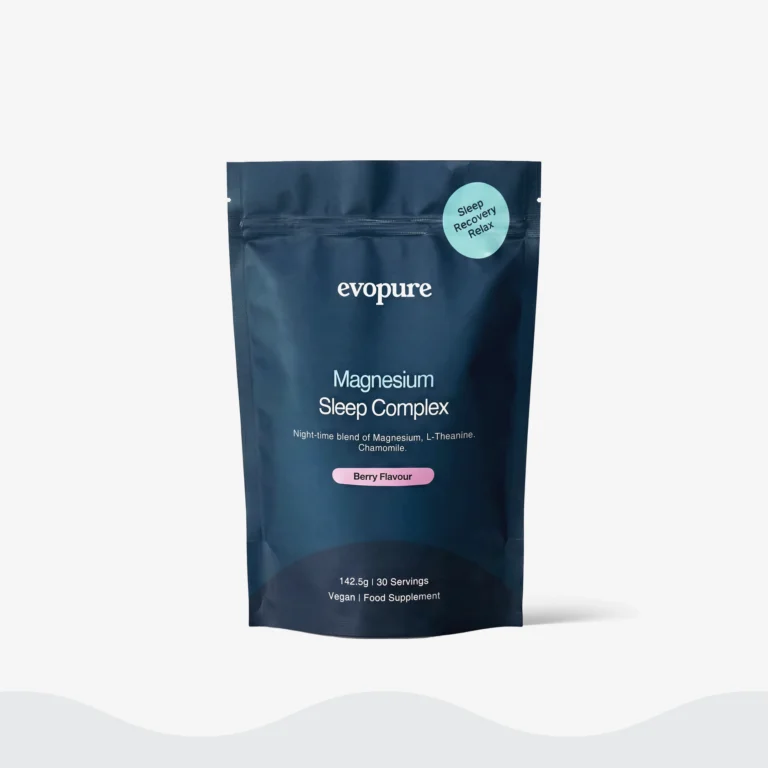
Magnesium contributes to the reduction of tiredness and fatigue and to normal psychological function. Our Magnesium Glycinate Sleep Complex is a berry bedtime drink, and our Sleep CBD Oil pairs broad spectrum CBD with passion flower for evenings. The FSA’s 10mg a day figure for CBD is precautionary advice rather than a legal limit, set while longer-term safety research continues. At Evopure we think it is a very cautious figure, and many adults use more. If you go above it, increase slowly, and check with your GP or pharmacist first if you take any medication.
FAQs
What time should I go to bed?
Count back 7.5 or 9 hours from your wake-up time and add about 15 minutes to fall asleep. For a 7am alarm, that’s about 11.15pm or 9.45pm.
How long is a sleep cycle?
Roughly 90 minutes on average, though it varies from about 70 to 120 minutes. Most people have 4 to 6 cycles a night.
Is 6 hours of sleep enough?
For most adults, no. The NHS says most adults need 7 to 9 hours.
Why do I wake up tired after 8 hours?
You may be waking from deep sleep, sleeping poorly, or have an issue such as sleep apnoea. See a GP if you’re always tired despite enough sleep.
Is it better to wake up at the end of a sleep cycle?
Often, yes. Waking from lighter sleep tends to feel easier than waking from deep sleep.
Sources
- Patel AK et al (2024). Physiology, sleep stages. StatPearls.
- NHS. Insomnia.
- Brooks A, Lack L (2006). A brief afternoon nap following nocturnal sleep restriction: which nap duration is most recuperative? Sleep.
This guide is general information, not medical advice. Evopure makes the Magnesium Glycinate Sleep Complex and Sleep CBD Oil. We don’t recommend our products during pregnancy or breastfeeding.