Last updated: October 2026
A SAD lamp, or light box, gives out bright, UV-free light (usually 10,000 lux) to imitate daylight on dark winter mornings. Trials suggest light therapy can help seasonal affective disorder, but the NHS says the evidence isn’t strong enough to offer it routinely. Most people use one for about 30 minutes soon after waking, from autumn to spring.
Below: what the research shows, how to use one, a UK buyer’s checklist, who should check with a GP first, and free winter-light habits. With the clocks going back on Sunday 25 October, now is a good time to plan.
Need help now? If you feel unable to cope or have thoughts of harming yourself, call 999 or go to A&E if your life is at risk. You can also call NHS 111 and select the mental health option, or call Samaritans free on 116 123, any time of day or night. If low mood lasts more than a couple of weeks, see your GP.
What is a SAD lamp?
A SAD lamp is a light box that gives out much brighter light than an ordinary lamp, with the ultraviolet (UV) filtered out. You sit near it, eyes open, while you eat breakfast or work. The idea is to give your body clock a strong “morning” signal when winter days start late. See our guide to your circadian rhythm.
They’re named after seasonal affective disorder (SAD), a type of depression that comes back at the same time each year, usually in autumn and winter. The NHS lists symptoms including low mood, losing interest in things, irritability, and sleeping and eating more than usual. Our guide to seasonal affective disorder covers symptoms and treatment, and winter blues explains the milder version.
Do SAD lamps work? The evidence
Probably, for many people with SAD, but the studies are smaller and messier than you’d want.
| Question | What the research found | How sure are we? |
|---|---|---|
| Treating SAD | A 2020 meta-analysis of 19 randomised trials (Pjrek and colleagues) found bright light beat placebo, with people about 1.4 times more likely to respond | Moderate. Small trials, moderate to high risk of bias |
| Light vs an antidepressant | The Can-SAD trial (96 adults, 8 weeks) found 30 minutes of 10,000 lux each morning matched the antidepressant fluoxetine: 67% responded in both groups | One good-quality trial |
| Preventing SAD before symptoms start | A 2019 Cochrane review found only one small study (46 people) and could not draw conclusions | Very low quality evidence |
| Non-seasonal depression | A 2025 JAMA Psychiatry meta-analysis of 11 trials (858 people) found adding bright light to usual treatment raised remission from 23.5% to 40.7% | Promising, still small trials |
| Morning vs evening | In a trial of 158 people with SAD, morning light gave higher remission rates than evening light | Reasonably consistent |
So why doesn’t the NHS hand them out? The NHS says light therapy isn’t usually available because there isn’t enough evidence to tell whether it’s effective, though many people find it helps their symptoms. The main treatments the NHS offers for SAD are talking therapies such as CBT and antidepressants. A light box is something to try alongside these, after a chat with your GP, not instead of getting help.
In trials, people usually noticed a difference within one to two weeks. Reviews advise carrying on until spring, because symptoms can return if you stop.
How to use a SAD lamp
Follow your lamp’s instructions first. This table sums up the settings used in research and in 2025 clinical recommendations from the International Society for Bipolar Disorders.
| Setting | Typical guidance | Why it matters |
|---|---|---|
| Brightness | 10,000 lux at your eyes | The level used in most trials, including Can-SAD |
| Distance | The distance the maker gives for 10,000 lux; in research set-ups this is around 30cm (a foot) from the eyes | Brightness drops quickly as you move back |
| Minutes | About 30 minutes a day at 10,000 lux. Dimmer lamps need longer: older trials used 2,500 lux for 2 hours or 5,000 lux for 1 hour | Total light dose is what counts |
| Timing | Morning, soon after waking, at roughly the same time each day | Morning light gave better results than evening light |
| Position | In front of you, slightly above eye level and angled down. Eyes open, but don’t stare into it | Reduces glare and eye strain |
| Season | Daily from when your symptoms usually start until spring | Stopping early can bring symptoms back |
A simple routine
- Set it up where you already sit each morning, in a normally lit room to avoid glare.
- Start gently. If you’re sensitive to light or worried about side effects, start with 15 minutes and add about 15 minutes a week.
- Keep it consistent. Same time every day, including weekends. See our tips on how to wake up early and a morning routine for energy.
- Avoid late sessions. Using a light box in the evening can cause sleep problems.
- Track how you feel. If nothing has changed after a few weeks, or you feel worse, talk to your GP.
How to choose a SAD lamp in the UK
The NHS checklist is short: bright enough (10,000 lux is standard), UV-free, and with a UKCA or CE mark. Here’s a fuller version.
- 10,000 lux at a stated distance. A lux figure without a distance means little. A lamp that only reaches 10,000 lux with your face almost touching it won’t be comfortable for 30 minutes.
- UV-free or UV-filtered. Light therapy works through visible light. The 2025 recommendations say only UV-filtered devices should be used.
- UKCA or CE marking and a UK plug, from a seller you trust.
- Medically certified for SAD. Ireland’s health service advises choosing a light box that is medically approved for SAD.
- A decent screen size. Clinical recommendations suggest a screen of at least about 30cm by 35cm. Very small units tend to cause glare and need you to sit uncomfortably close.
- White, diffused light. Bright white light has the strongest evidence. Look for a frosted screen that spreads the light rather than bare, glaring LEDs.
- A stand that tilts so the light can come from slightly above.
- A timer and brightness control, so you can start low.
What isn’t a SAD lamp
- “Daylight” bulbs change the colour of light, not usually the amount reaching your eyes. They’re nice for reading but aren’t what the trials tested.
- Red light therapy panels are sold for skin and muscles. They aren’t the bright white light used in SAD research.
- Sunbeds and skin lamps give out UV. Never use them as a SAD lamp.
Dawn simulators vs light boxes
A dawn simulator (wake-up light or sunrise alarm) slowly brightens your bedroom over the last 30 minutes or so before you wake. It’s much dimmer than a light box, but works while you sleep.
| Light box | Dawn simulator | |
|---|---|---|
| Brightness | About 10,000 lux | In trials, about 100 to 250 lux |
| When | After waking, 30 to 60 minutes | Before waking, while you sleep |
| Effort | You need to sit near it daily | Set it once, like an alarm |
| Evidence | The most studied option | Fewer, smaller trials |
The research is limited but encouraging. In a US trial of 99 adults with winter depression, symptoms improved by about 50% with a naturalistic dawn simulation (rising to 250 lux), close to the 57% seen with 30 minutes of 10,000 lux bright light. A smaller Russian crossover study of 40 people found the two worked similarly, though people with more severe symptoms tended to prefer the light box. Some people use both. For more on dark mornings, read about how the clocks going back affects sleep.
Who should check with a GP or optician first
The NHS says to speak to a GP before trying light therapy. It’s particularly important if any of these apply:
- Bipolar disorder. Bright light can trigger a switch into hypomania or mania. The 2025 bipolar task force lists recent mania, hypomania, mixed episodes and rapid cycling as reasons not to use it, and recommends anti-manic medication and medical monitoring alongside it. An older Cochrane review of non-seasonal depression also found hypomania was more common with bright light.
- Eye conditions. The NHS says light therapy might not be suitable if you have certain eye conditions. The 2025 recommendations name retinal diseases in particular, and suggest an eye check first if you have reduced vision or recent changes in your sight. If you have any eye condition, especially one affecting the retina, ask your optician or GP first.
- Medicines that increase light sensitivity. These include some antibiotics (such as sulphonamides), the antimalarial chloroquine and the herbal remedy St John’s wort. If you take anything regularly, ask a pharmacist.
- Severe or worsening depression, or thoughts of self-harm. A light box isn’t a substitute for proper care: see the help box at the top of this page.
A 2017 systematic review found no evidence that light therapy damages the eyes in healthy, unmedicated people, though people with existing eye problems were less well studied.
SAD lamp side effects
Most people get no side effects, and those that happen are usually mild and short-lived. The ones reported most often are:
- headache
- eye strain or blurred vision
- feeling irritable, wired or agitated
- nausea or dizziness
- sleep problems, especially if you use the lamp late in the day
Ireland’s health service notes that not using light therapy in the evening may help prevent sleep problems. If side effects bother you, try sitting a little further away or cutting the session shorter. Stop and speak to your GP if you feel unusually elated, need much less sleep than normal, or your mood gets worse.
Other winter-light habits (that cost nothing)
The NHS self-help advice for SAD starts with getting as much natural daylight as you can, going outside in the daytime every day. Outdoor daylight is far brighter than indoor lighting, and can exceed 100,000 lux, so even a short time outside counts.
- Take a morning walk, or walk part of the school run or your commute.
- Move your desk or chair near a window, especially if you work from home.
- Get outside at lunchtime on dark-commute days, when it’s the only daylight you’ll see.
- Keep regular sleep and wake times, as the NHS suggests, even at weekends.
- Dim the lights and put screens away in the hour before bed, so your body clock gets a clear day and night signal.
- Exercise and see people. The NHS lists regular exercise and staying in contact with friends and family. Our winter wellness guide and hygge ideas have plenty of cosy, sociable options.
For more ways to lift your energy when it’s dark, see why you’re so tired in winter, happy hormones and our guide to low mood vs depression.
SAD lamps and vitamin D
A SAD lamp won’t give you vitamin D. The NHS says your body makes it from direct sunlight on your skin outdoors, and SAD lamps are deliberately UV-free.
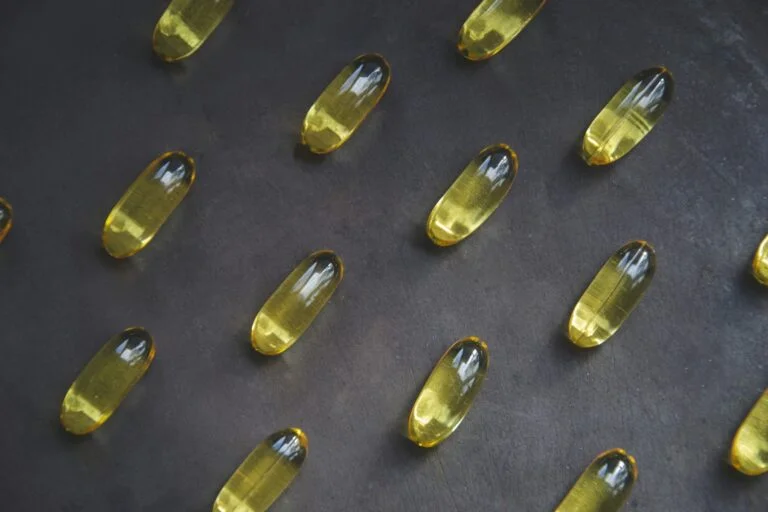
The NHS says that between October and early March we don’t make enough vitamin D from sunlight, so everyone should consider a daily supplement containing 10 micrograms of vitamin D during autumn and winter. Don’t take more than 100 micrograms a day. Our guides to vitamin D in winter and the best time to take vitamin D explain more.
If you use CBD and would like vitamin D in the same drops, our 30ml Mint CBD Oil contains vegan vitamin D3, 5 micrograms in each half pipette. Vitamin D contributes to the normal function of the immune system. It also contributes to the maintenance of normal bones and normal muscle function. Read why we added vitamin D3, and count it towards your daily total.
The FSA’s 10mg a day figure is precautionary advice rather than a legal limit, set while longer-term safety research continues. At Evopure we think it is a very cautious figure, and many adults use more. If you go above it, increase slowly, and check with your GP or pharmacist first if you take any medication.
For an evening wind-down, our Magnesium Glycinate Sleep Complex is a caffeine-free berry drink. Magnesium contributes to normal psychological function and to the reduction of tiredness and fatigue. See magnesium for sleep.
To be clear: CBD isn’t a treatment for SAD or depression, and neither product replaces a light box, talking therapy or anything your GP recommends. Our products are for adults only, and we don’t recommend them during pregnancy or breastfeeding.
FAQs
Do SAD lamps actually work?
For seasonal affective disorder, trials suggest they help many people, and one trial found 30 minutes of 10,000 lux each morning worked as well as an antidepressant. The studies are small, which is why the NHS doesn’t routinely provide them, but many people find them helpful.
How long should I sit in front of a SAD lamp?
About 30 minutes a day at 10,000 lux, soon after waking. Dimmer lamps need longer. Follow your lamp’s instructions, and start with 15 minutes if you’re sensitive to light.
How close should a SAD lamp be?
At the distance the maker gives for 10,000 lux, often around 30cm from your eyes in research set-ups. Sit facing it with the light coming from slightly above, and don’t stare into it.
What is the best time of day to use a SAD lamp?
In the morning, soon after you wake up. Morning light gave better results than evening light in trials, and using it late in the day can make it harder to sleep.
Do SAD lamps work with your eyes closed?
No. The light needs to reach your eyes, so keep them open. You don’t need to look straight at the lamp; you can read, eat or work while it shines towards you.
Do SAD lamps give you vitamin D?
No. SAD lamps are UV-free, and your skin makes vitamin D from sunlight outdoors. The NHS advises considering 10 micrograms of vitamin D a day from October to early March.
Are SAD lamps safe?
For most people, yes. Side effects such as headache, eye strain, irritability and poor sleep are usually mild. Check with your GP first, especially if you have bipolar disorder, an eye condition or take medicines that make you sensitive to light.
Sources
- NHS. Seasonal affective disorder (SAD).
- NHS. Vitamin D.
- Pjrek E, et al. The efficacy of light therapy in the treatment of seasonal affective disorder: a meta-analysis of randomized controlled trials. Psychother Psychosom, 2020.
- Nussbaumer-Streit B, et al. Light therapy for preventing seasonal affective disorder. Cochrane Database Syst Rev, 2019.
- Menegaz de Almeida A, et al. Bright light therapy for nonseasonal depressive disorders: a systematic review and meta-analysis. JAMA Psychiatry, 2025.
- Geoffroy PA, et al. Light therapy for bipolar disorders: clinical recommendations from the ISBD Chronobiology and Chronotherapy Task Force. Dialogues Clin Neurosci, 2025.
Also referred to: Lam RW, et al. The Can-SAD study, Am J Psychiatry 2006 (PMID 16648320); Terman M, et al. Arch Gen Psychiatry 1998 (PMID 9783557); Terman M and Terman JS, Am J Psychiatry 2006 (PMID 17151164); Danilenko KV and Ivanova IA, J Affect Disord 2015 (PMID 25885065); Tuunainen A, et al. Cochrane 2004 (PMID 15106233); Brouwer A, et al. Acta Psychiatr Scand 2017 (PMID 28891192); Kurlansik SL and Ibay AD, Am Fam Physician 2012 (PMID 23198671); HSE (Ireland), Seasonal affective disorder treatment.
This guide is general information, not medical advice. Evopure doesn’t make or sell light boxes. Evopure makes the 30ml Mint CBD Oil with vitamin D3 (Evolabs) and the Magnesium Glycinate Sleep Complex.