














Last updated: October 2026
Christmas is stressful because it squeezes money worries, present buying, hosting, family tension and high expectations into a few weeks, while late nights and extra alcohol cut into sleep. What helps most: start early with a budget, share the jobs, lower the bar from perfect to good enough, and protect your sleep.
Below: why Christmas stresses us out, a week-by-week planner from early November to Boxing Day, and how to handle money, family, Christmas anxiety, hosting burnout, loneliness and grief. If Christmas is hard for you this year, skip to where to get support.
Why is Christmas so stressful?
A 2021 YouGov survey of British adults found that about a quarter (26%) felt stressed about Christmas, with women more likely to (33%) than men (20%). Among people who celebrate, these were the most stressful parts:
| Stressor | Found it stressful | What helps |
|---|---|---|
| Deciding what presents to buy | 46% | Ask for wish lists early; agree a Secret Santa |
| Cost of presents | 45% | Set a total budget and a per-person limit |
| Shopping for presents | 44% | Shop online in early November, before the rush |
| Overall cost of Christmas | 42% | Write every cost down, including food and travel |
| Buying the food | 29% | Keep the menu simple; ask guests to bring a dish |
| Hosting | 24% | Share jobs out; plan time off for the host |
| Seeing certain family members | 24% | Set time limits and an exit plan |
Money is the biggest pressure for many households. In YouGov polling for StepChange Debt Charity in November 2025, 27% of British adults said they expected to struggle to afford Christmas, rising to 31% of parents with children at home.
On top of that come late nights, more alcohol, rich food, less daylight and the pressure to feel happy. Christmas raises every demand at once, so it’s no wonder many people feel frazzled by Boxing Day. If you’re not sure whether what you’re feeling is stress, see our guide to the physical and mental signs of stress.
Christmas stress planner: early November to Boxing Day
The single biggest fix is spreading the work out. Here’s a week-by-week plan for 2026; drop anything that doesn’t matter to your family.
| When | Do this | Why it helps |
|---|---|---|
| Week of 2 November | Agree who’s hosting, where and for how long. Set one total budget. Start a present list with ideas and limits. | Decisions made early stop arguments later |
| Week of 9 November | Suggest a Secret Santa or “children only” presents. Book any travel and time off work. | Fewer presents, less cost, less shopping |
| Week of 16 November | Buy most presents, especially anything that needs posting abroad. Order online to skip the crowds. | Shopping was a top stressor for 44% |
| Week of 23 November | Black Friday is 27 November: buy only what’s already on your list. See how to spot a fake deal. | Stops impulse spending that turns into January debt |
| Week of 30 November | Plan the menu and book a supermarket delivery slot. Write cards if you send them. | Delivery slots go fast in December |
| Week of 7 December | Check the last posting dates, wrap as you go and pick which parties you’ll actually go to. | Saying no early is easier than cancelling |
| Week of 14 December | Give everyone a job for the big day: peeling, table, washing up, games. Book one quiet evening just for you. | Hosts burn out when they do it all |
| Week of 21 December | Write a simple day-by-day plan up to Boxing Day. Keep your wake-up time steady. | A plan on paper stops it running round your head at 3am |
| Christmas Eve | Stop prepping by early evening. Have a warm, alcohol-free drink and an early-ish night. | See how to sleep on Christmas Eve |
| Christmas Day | Get outside for a walk. Accept that good enough is good enough. | Daylight and movement take the edge off |
| Boxing Day | Plan a lazy day: leftovers, a film, no hosting. | Gives everyone a breather before New Year |
Christmas anxiety: when it’s more than stress
Stress is usually a reaction to pressure you can point to: a long list, a bill, a full house. It tends to ease once the pressure passes. Anxiety is worry or fear that hangs around, feels bigger than the situation, or starts weeks before anything has happened. Many people feel both in December.
Common Christmas anxiety triggers include:
- Parties and gatherings. Work dos, small talk and being watched while you open presents can be hard if you have social anxiety. Arrive early when it’s quieter, give yourself a job (handing round drinks works well) and plan your leaving time.
- Dread of a certain person or conversation. Rehearse one or two calm replies and an exit line.
- Pressure to feel happy. It’s fine to feel flat, sad or mixed.
- The morning after. Feeling jittery and full of dread after a big night is common; see hangxiety.
If worry is affecting your sleep, appetite or day-to-day life for weeks, or it’s there all year and Christmas just turns it up, read our complete guide on how to deal with anxiety and talk to your GP. In England, you can also refer yourself to NHS Talking Therapies.
Managing money stress at Christmas
Borrowing for Christmas can cast a long shadow. In the same StepChange polling, about 1 in 12 British adults (8%) expected to rely on credit for festive spending, and 43% of those said it would take more than 6 months to pay back.
- Set one total budget and divide it between presents, food, travel and going out, including wrapping and postage.
- Suggest limits early. Many families are relieved when someone suggests a Secret Santa, a spending cap or “children only” presents.
- Be careful with Buy Now Pay Later. It’s easy to spread several purchases across different apps and lose track. Since 15 July 2026, new BNPL agreements in the UK have been regulated by the Financial Conduct Authority, so lenders must check you can afford to repay and you can complain to the Financial Ombudsman Service if things go wrong. It’s still borrowing: only use it if you’re sure you can make every payment in January.
- Give time instead of things: a home-cooked meal, babysitting or a walk together.
- Get free help early if debt is worrying you. StepChange Debt Charity and MoneyHelper, which is backed by the government, both offer free, impartial debt advice. Free help is always better than a quick loan.
Looking for low-cost ideas? Our wellness gifts for every budget has plenty under £20.
Family stress at Christmas
Families often fall back into old roles at Christmas, and long days in one house leave little room to cool off.
- Agree plans in advance so nobody is surprised: who’s where, when, and for how long.
- Split time fairly if you’re juggling in-laws or separated parents. Alternating years, or Christmas Day with one side and Boxing Day with the other, saves a lot of tension. Agree it in November, not on the 23rd.
- Steer away from known flashpoints like politics, money or old arguments, and have a polite exit line ready: “Let’s not get into that today. Who wants a cup of tea?”
- Take breaks. A walk, a bath or a trip to the shop gives everyone breathing space.
- It’s OK to say no. If you struggle with that, our guide to people pleasing has scripts that help.
- Lower the bar. The perfect Christmas on social media isn’t real.
Christmas burnout: hosts and parents
For the person who does the remembering, Christmas can feel like a second job: presents for everyone, teachers’ cards, nativity costumes, the food order, the in-laws’ dietary needs, the thank-you messages. This invisible planning is often called the mental load, and at Christmas it usually lands on one person.
Signs you’re heading for Christmas burnout: you feel tired even after a lie-in, snap over small things, can’t switch off from the list in bed, and are dreading the day rather than looking forward to any of it.
What helps:
- Write the whole list down and share it. A shared note on everyone’s phone makes the hidden work visible. Hand over whole jobs, not single tasks: “you’re in charge of drinks” rather than “can you grab some tonic?”
- Cut one tradition that nobody would really miss.
- Plan recovery. Book a quiet day after the big day, not just before it.
If you were already running on empty before December, see our guide to burnout symptoms and recovery.
Christmas loneliness and spending Christmas alone
Christmas can be the loneliest time of the year, especially for older people. Age UK’s December 2025 research estimated that 1.5 million older people would eat Christmas dinner alone, and 670,000 wouldn’t see or speak to anyone on Christmas Day.
Being on your own isn’t the same as being lonely; some people enjoy a quiet day. If you’d rather not feel lonely, a little planning helps:
- Plan your day hour by hour: a walk, a call, a favourite film, a proper meal. Empty hours feel longest.
- Arrange calls in advance so you know someone will ring, and offer to call someone else who might be alone.
- Look for community lunches. Many local Age UKs, churches, community centres and pubs host free or low-cost Christmas meals. Book early.
- Volunteer. Food banks, shelters and community kitchens often need help over Christmas, and it brings company and purpose.
The Silver Line Helpline (0800 4 70 80 90), run by Age UK, is free and open 24 hours a day, including Christmas Day, for any older person who’d like a chat. The Age UK Advice Line (0800 678 1602) is open 8am to 7pm, 365 days a year, for older people and their families. For more ideas at any age, see our guide to loneliness and how to feel more connected.
Christmas when you’re grieving
Whether it’s the first Christmas without someone or many years on, the season can bring grief to the surface. Age UK’s research found that 5.9 million older people find Christmas difficult because they remember loved ones who have died.
Bereavement charity Cruse suggests a few things that many people find useful:
- Decide in advance how you’ll mark the day, or not. You might keep traditions to honour the person, change them completely or skip the day. There’s no right way.
- Find a way to remember them: a special place, old photos, their favourite food or a decoration that meant something.
- Accept that others grieve differently. Talk openly as a family about what each of you needs, as different ideas can lead to arguments.
- Keep a routine where you can, with regular meals and sleep.
- Watch the alcohol. Drinking to numb the pain only gives temporary relief.
- Take a break from TV and social media if the happy family images get too much.
Cruse’s free helpline is 0808 808 1677; check its website for opening hours over Christmas. Our guide to grief and how to cope covers the wider experience and where to find support.
Sleep, alcohol and food over Christmas
Stress and poor sleep feed each other. A few simple habits make the festive fortnight easier:
| Habit | Why it matters at Christmas |
|---|---|
| Keep your wake time steady | Late nights plus long lie-ins confuse your body clock and leave you groggy |
| Pace the alcohol | Alcohol may help you nod off, but sleep is more broken in the second half of the night. The NHS advises no more than 14 units a week, spread over 3 or more days. See alcohol and sleep |
| Alternate drinks with water or alcohol-free options | Fewer hangovers and better sleep. See our alcohol-free nightcaps |
| Get daylight and a walk every day | Morning light helps set your body clock, and a walk is a break from a crowded house |
| Eat regular meals | Grazing on sugary snacks all day can leave you tired and irritable |
If the dark afternoons are weighing on you as much as the festive rush, it may be worth reading about seasonal affective disorder, a type of depression that comes and goes with the seasons and is usually worse in winter.
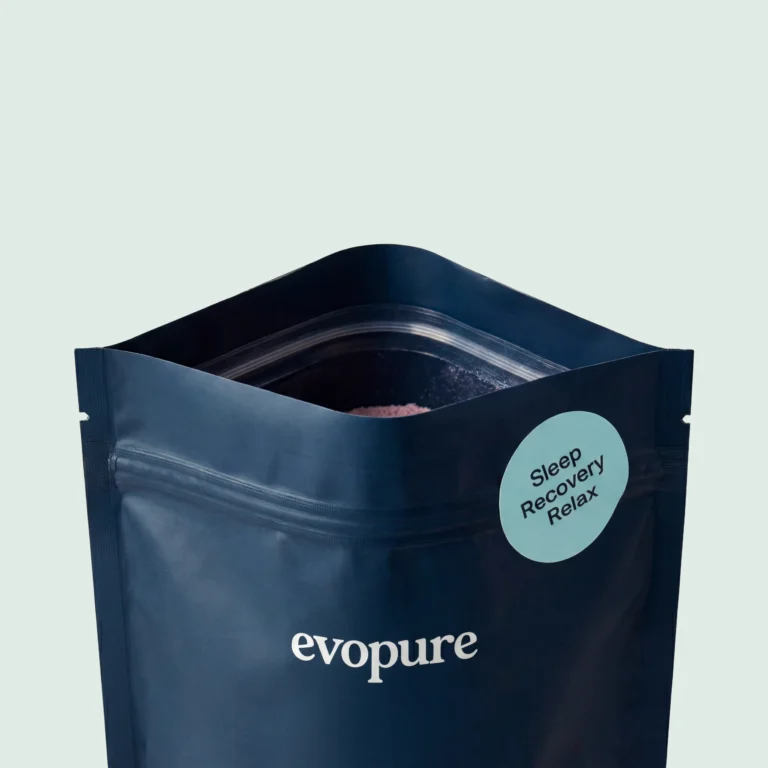
Some people like a warm, alcohol-free drink as part of their evening routine. Our Reishi Mushroom Adaptogenic Complex is a reishi hot chocolate made with cacao, maca and coconut milk powder: a cosy swap for a nightcap. Cacao contains a little natural caffeine, so it isn’t caffeine-free. Our Magnesium Glycinate Sleep Complex provides magnesium, which contributes to normal psychological function and to a reduction of tiredness and fatigue. Both are for adults only. We don’t recommend our products during pregnancy or breastfeeding, and if you take any medication, check with your GP or pharmacist first.
The FSA’s 10mg a day figure for CBD is precautionary advice rather than a legal limit, set while longer-term safety research continues. At Evopure we think it is a very cautious figure, and many adults use more. If you go above it, increase slowly, and check with your GP or pharmacist first if you take any medication.
Gifts that take the pressure off
Deciding what to buy was the most stressful part of Christmas in the YouGov survey. Three ways to make it easier:
- Ask for wish lists in early November, and share your own.
- Pick a theme for everyone, like books, experiences or something cosy for winter evenings.
- Think “useful and kind” rather than big. A good hot chocolate, a candle or a promise to cook dinner often means more than an expensive gadget.
For ideas, browse our wellness gift guide, which has picks for her, him and anyone who needs a rest. If money is tight, start with the gift ideas under £20, £50 and £100.
Quick ways to calm down on the day
- Breathe out slowly: in for 4, out for 6, for one minute. Or try box breathing: in for 4, hold for 4, out for 4, hold for 4.
- Step outside for 5 minutes of fresh air, or offer to take the dog or the bins out.
- Name it: “I’m feeling overwhelmed” takes some of the heat out of it.
- Hand over a job to someone else, even if they do it differently.
- Drink a glass of water and eat something proper.
More fast techniques for the moment you feel yourself boiling over are in our guide on how to calm down.
If Christmas is hard for you
Christmas can be painful if you’re grieving, alone, unwell, or struggling with money or your mental health. You’re not the only one, and it’s fine to do Christmas differently, or not at all.
- Plan something for the hardest days, even a walk or a film.
- Tell someone you trust how you’re feeling.
- Check your GP surgery’s Christmas opening hours in advance, and order any repeat prescriptions early.
- If low mood, worry or poor sleep lasts more than 2 weeks, or comes back every winter, speak to your GP.
If you need help now
Samaritans are open 24 hours a day, every day of the year, including Christmas Day: call 116 123 for free. If you need urgent help for your mental health in England, call NHS 111 and choose the mental health option, or use 111 online. Elsewhere in the UK, check your local NHS website. If someone’s life is at risk, or you don’t feel you can keep yourself or someone else safe, call 999 or go to A&E.
If party season leaves you feeling rough, our hangover guide covers what actually helps and a simple Christmas party plan.
Related guides
- If the run-up to Christmas already feels heavy, National Stress Awareness Day in early November is a good moment to plan ahead.
- If someone on your list is running on empty, see our best sleep gifts for someone who can’t sleep.
- Buying for someone who finds Christmas hard? Our calming gifts for anxiety guide has low-pressure ideas.
- Keep presents simple: small, useful wellness stocking fillers for adults take the pressure off.
- To spread the calm through December, try our free 24-day wellness advent calendar.
FAQs
Why is Christmas so stressful?
It squeezes money worries, present buying, hosting and family time into a few weeks, while late nights and alcohol cut into sleep. Choosing and paying for presents are the top stressors in surveys, and high expectations of a perfect day add to the pressure.
How can I make Christmas less stressful?
Start early, set one budget, agree plans with family in advance, share out the jobs and protect your sleep. A week-by-week plan from early November spreads the work out. Aim for good enough, not perfect.
How do I cope with Christmas anxiety?
Name the triggers (parties, a certain person, money), plan for each one and give yourself breaks and an exit time. Slow breathing helps in the moment. If anxiety affects daily life for weeks, talk to your GP.
How do I deal with family stress at Christmas?
Agree plans in advance, split time fairly between families, avoid known flashpoints, take breaks such as a walk, and share the work so nobody does it all.
What if I’m alone at Christmas?
Plan your day, arrange calls in advance and look for community lunches or volunteering. Older people can call the Silver Line on 0800 4 70 80 90, free and open 24 hours a day, including Christmas Day.
How do I cope with Christmas when grieving?
Decide in advance how you want to mark the day, find a way to remember the person, keep a simple routine and go easy on alcohol. Cruse Bereavement Support has a free helpline on 0808 808 1677.
Why do people get depressed at Christmas?
Loneliness, grief, money worries, family tension and short, dark days can all weigh on mood. If low mood lasts more than 2 weeks, talk to your GP.
Is Christmas stressful for most people?
Around a quarter of British adults said they felt stressed about Christmas in a YouGov survey, and women were more likely to than men.
Sources
- YouGov (2021). What’s the most stressful aspect of Christmas?
- StepChange Debt Charity (2025). Christmas polling (YouGov, 2,070 GB adults, November 2025).
- Financial Conduct Authority (2026). New protections confirmed for Buy Now Pay Later borrowers.
- Age UK (2025). Age UK issues urgent call to end loneliness crisis.
- Age UK. Age UK Advice Line.
- Cruse Bereavement Support. Coping with grief at Christmas.
- NHS. Where to get urgent help for mental health.
- Samaritans. Contact Samaritans.
- NHS. Alcohol units.
- Ebrahim IO et al. (2013). Alcohol and sleep I: effects on normal sleep. Alcoholism: Clinical and Experimental Research. PMID 23347102.
- NHS Every Mind Matters. Loneliness.
- NHS Every Mind Matters. Stress.
This guide is general information, not medical advice. Evopure makes the Reishi Mushroom Adaptogenic Complex and Magnesium Glycinate Sleep Complex.