















Last updated: June 2026
Magnesium is involved in over 300 enzymatic reactions in the body. If you’ve just started supplementing, you’re likely wondering: when should I take it? Here’s the clear, evidence-informed answer.
Does the time you take magnesium matter?
For most people: not much. Consistency matters far more than the exact hour. Taking magnesium at the same time every day — linked to an existing habit like brushing teeth or an evening meal — is the most effective approach. That said, if you’re using magnesium for sleep specifically, timing shifts slightly.
Morning vs night — which is better?
Both work well. Research on medication adherence suggests morning doses may help consistency, as morning routines are generally better maintained. However, for sleep or evening calm, taking magnesium before bed is the more practical choice. The golden rule: pick whichever time you can stick to reliably and do it daily.
Best time to take magnesium for sleep
Here timing matters more. Take magnesium 30–60 minutes before bed, or with your evening meal 1–2 hours before sleep. This aligns with magnesium’s role in activating GABA receptors — the neurotransmitter that quiets the nervous system — helping your body and mind wind down naturally.
One study on older adults found magnesium supplementation significantly improved sleep efficiency, total sleep time and melatonin concentration. Evening timing supports these mechanisms most directly.
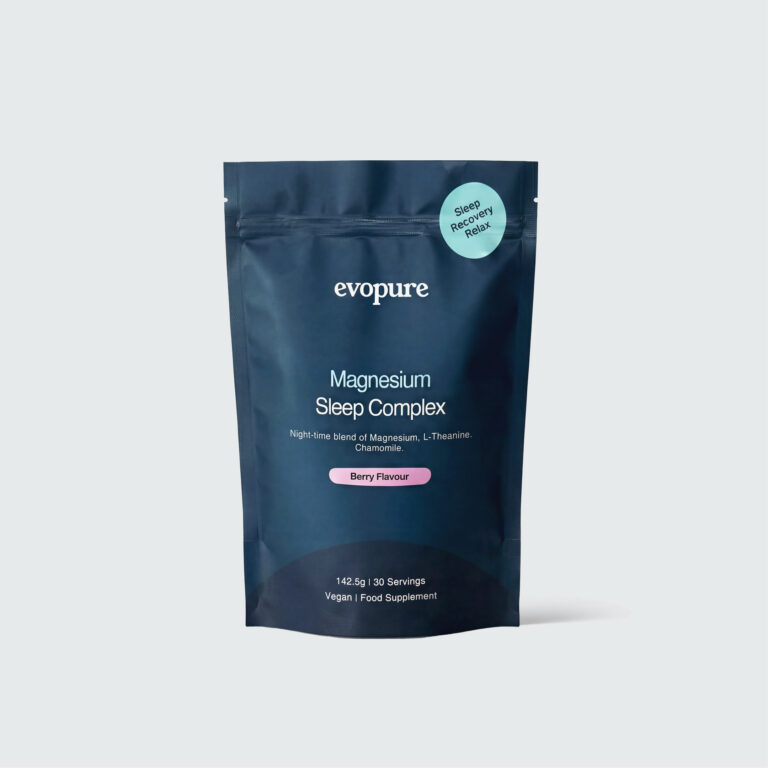
Our Magnesium Sleep Blend is designed specifically as an evening formula — glycinate and L-threonate in a berry-flavoured powder to mix with water before bed.
Read more: Magnesium for sleep | Reishi for sleep
Best time to take magnesium for anxiety
For anxiety support, timing matters less. A 2017 review of 18 studies found magnesium reduced anxiety across multiple population groups when taken consistently — the common factor was daily supplementation, not a specific time. If anxiety is worse at night or disrupts sleep, an evening dose serves double duty.
Read more: Magnesium for anxiety | Magnesium for PMS
Should I take magnesium daily?
Yes — daily consistent intake is how magnesium builds to correct a deficiency over time. The NHS advises no more than 400 mg/day from supplements. Taking more than this doesn’t improve results and may cause GI side effects as the body tries to excrete the excess.
Read more: How long does magnesium take to work? | How long does magnesium stay in your body?
Should I take magnesium with food?
Not required for absorption — but taking magnesium with food reduces GI side effect risk (nausea, stomach upset, loose stools) for sensitive people. This is especially true with citrate. Glycinate and L-threonate are generally gentle enough to take with or without food.
Read more: Magnesium for bloating
When not to take magnesium
Magnesium can interact with some medications — particularly certain antibiotics, thyroid medication, bisphosphonates and blood pressure drugs. Separating doses by 2–4 hours reduces interaction risk. Always consult your GP or pharmacist before starting magnesium if you take regular prescriptions or have kidney disease.
Frequently asked questions
Is it better to take magnesium in the morning or at night?
Either works. Consistency matters most. For sleep support, 30–60 minutes before bed is the best choice.
Should I take magnesium with food?
Optional. Taking with food reduces GI upset risk for sensitive people, particularly with citrate forms. Glycinate and L-threonate are generally gentle either way.
Can I take magnesium every day?
Yes. Daily intake is how magnesium builds and corrects a deficiency. NHS guidance: no more than 400 mg/day from supplements.
Does timing affect magnesium absorption?
Minimal impact. The form of magnesium matters far more than timing. Choose a time you’ll remember and maintain it daily.
How long before magnesium starts working?
For sleep and muscle comfort, some notice improvements within a few days. For correcting a significant deficiency, allow 4–8 weeks of consistent daily use.
Final thoughts on the best time to take magnesium
Consistency beats perfect timing. Pick a time that fits your routine and stick to it every day. For sleep, aim for 30–60 minutes before bed. For anxiety and general wellness, any time works well. Your GP or pharmacist can help match the right form, dose and timing to your individual situation.