Last updated: 18 November 2026
Yes, you can take magnesium glycinate and magnesium citrate together. They are two forms of the same mineral, and we found no interaction between them. What matters is the total: the NHS says 400mg or less of magnesium a day from supplements is unlikely to cause harm. Citrate can loosen stools at higher doses, so build up gradually.
Below: why some supplements combine the two, how to work out the elemental magnesium on a label, taking them at the same time or apart, glycinate with citrate and malate, who should check first, and how common blends compare. Facts checked 18 November 2026.
Can you take magnesium glycinate and citrate together?
Yes. Magnesium glycinate (also sold as bisglycinate) and magnesium citrate both deliver the same mineral, magnesium, bound to a different partner: the amino acid glycine, or citric acid. Taking them in one product, or as two separate supplements, simply adds up to more magnesium. There is no reaction between the two forms that you need to plan around.
The limit that matters is your total intake from supplements. The NHS says adults need 300mg a day (men) or 270mg a day (women), mostly from food, and that 400mg or less a day from supplements is unlikely to cause any harm. It also says high doses (more than 400mg) can cause diarrhoea. So the practical question is not “can I mix them?” but “how much magnesium am I getting from everything I take?”
| Question | Short answer |
|---|---|
| Can you take them together? | Yes. No interaction between the two forms |
| What limit applies? | 400mg or less a day of magnesium from all supplements (NHS) |
| Main side effect to watch | Loose stools, more likely with citrate and with higher doses |
| Who should check first? | Anyone with kidney problems or on regular medicines |
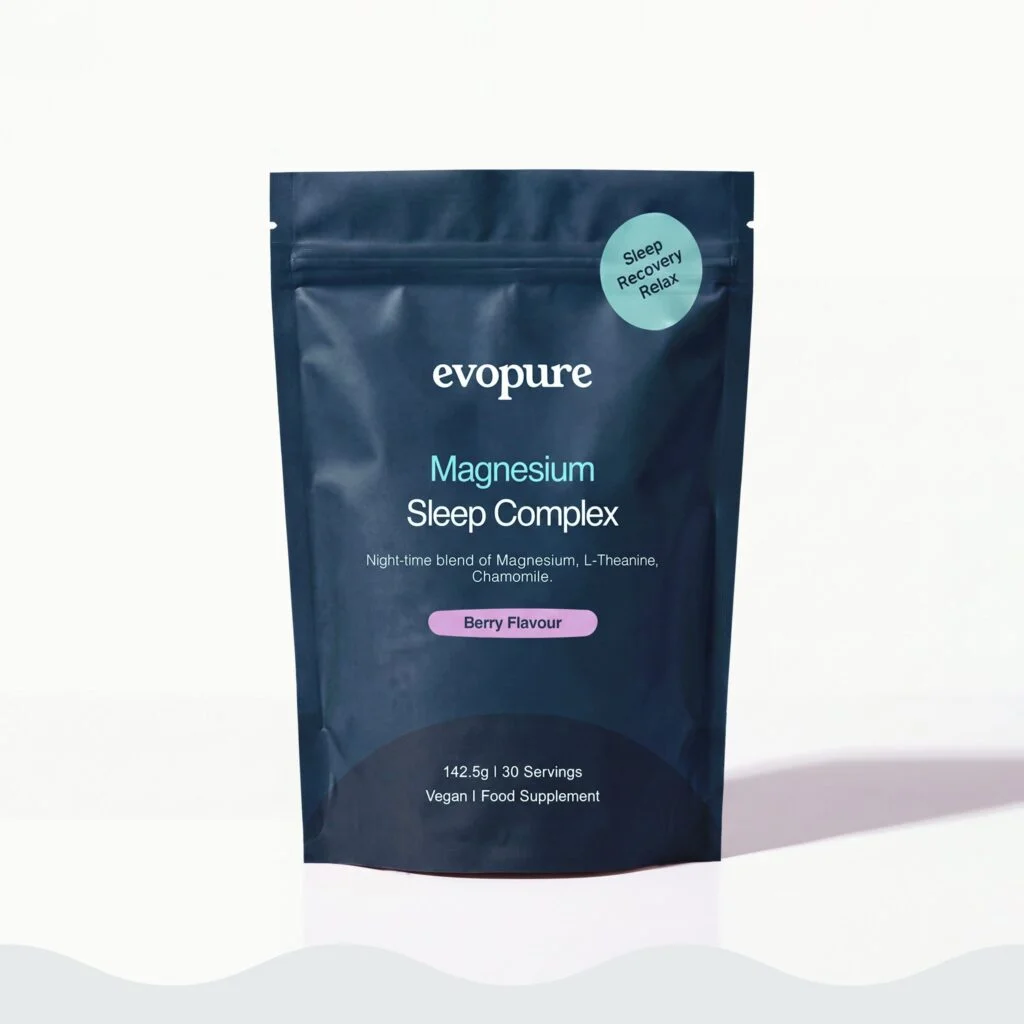
Our pick
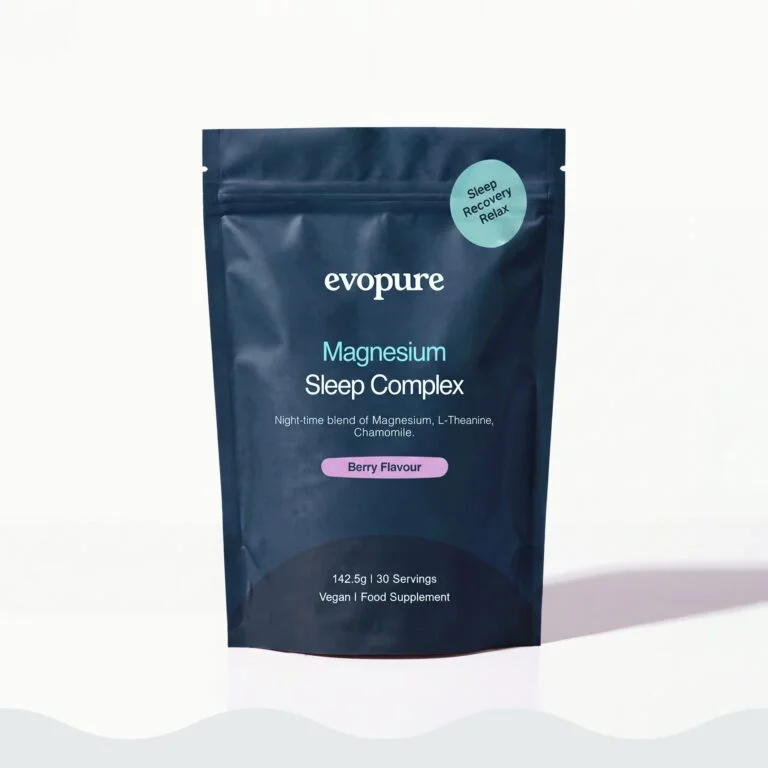
Magnesium Glycinate Sleep Complex
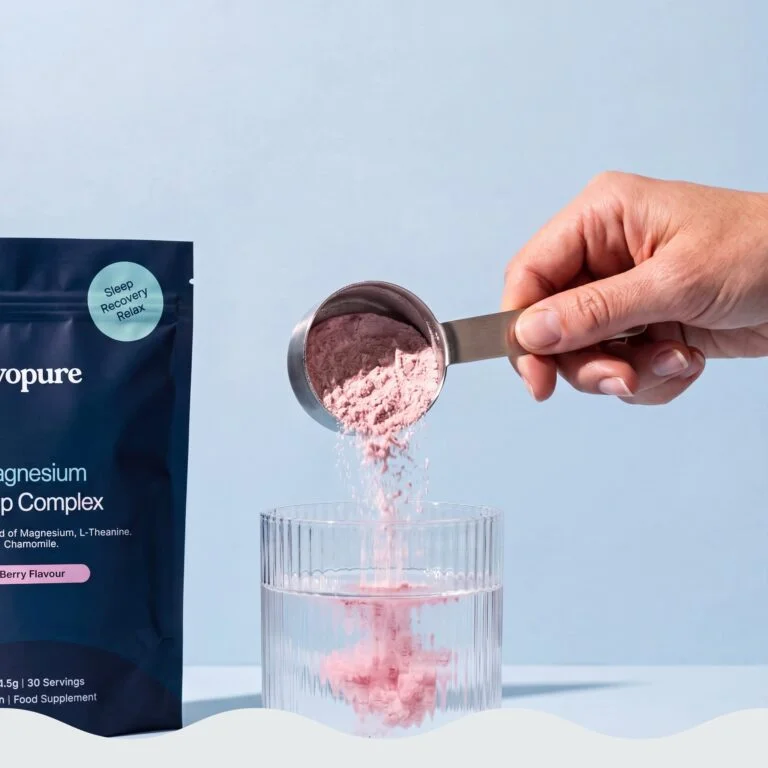
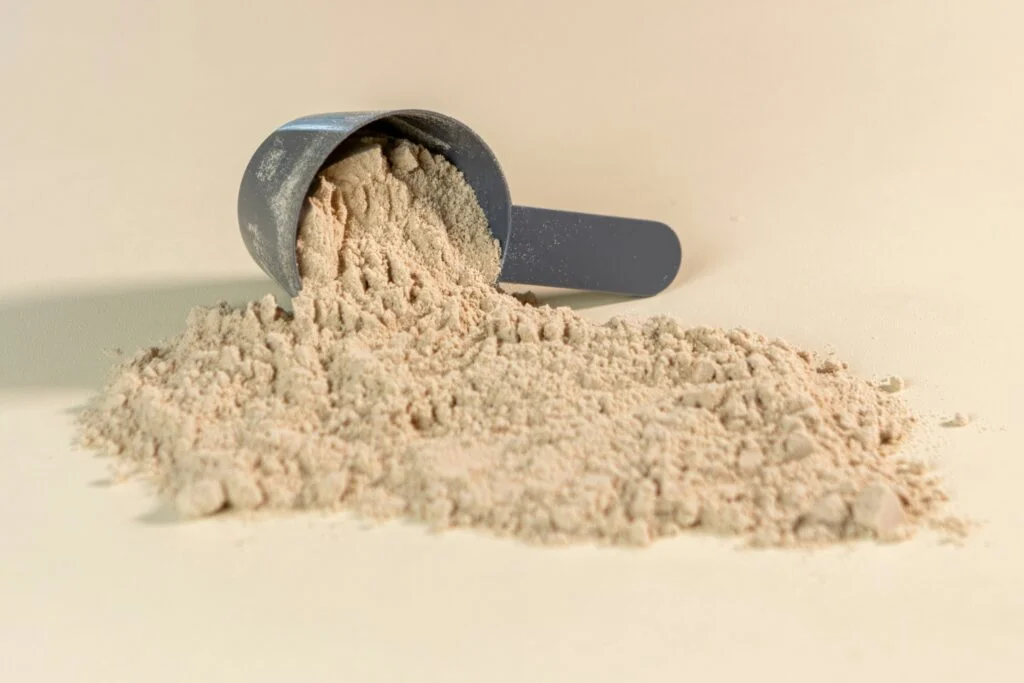
Evopure’s Magnesium Glycinate Sleep Complex already combines the two forms. Each 4.75g scoop of the berry drink powder gives 290mg of magnesium (77% NRV) from 1,000mg magnesium bisglycinate and 900mg magnesium citrate, under the NHS 400mg supplement guide on its own.
Add Magnesium Glycinate Sleep Complex to bag See ingredients and reviews
Rated 4.7 out of 5 from 15 ratings (checked 18 November 2026). We make it, so we’re not neutral. Vegan and made in the UK. Have kidney problems or take regular medicines? Check with your GP or pharmacist first. Free UK delivery over £40. Subscribe and save 25% on your first order, then 20%. New to Evopure? Join our emails for 20% off a one-off first order.
Subscribe £22.49One-off £29.99
View productGlycinate vs citrate: what each form is
- Magnesium glycinate or bisglycinate: magnesium bound to glycine. It is the form people most often ask for by name, and it is usually sold in capsules, tablets or powders. See magnesium glycinate and glycinate vs bisglycinate (they are the same thing).
- Magnesium citrate: magnesium bound to citric acid. It dissolves readily in water, so it is common in drink powders and effervescent tablets. In large doses it draws water into the bowel, which is why it is also used in some bowel-clearing preparations before a colonoscopy. See magnesium citrate.
For a side-by-side of the two (plus threonate), read magnesium glycinate vs citrate vs threonate. All the common forms are in our chart of 12 types of magnesium.
Why some supplements combine them
Blends are mostly about balancing what each form is known for. The research is smaller than the marketing suggests, so here is what the studies actually found:
- Citrate: in a 60-day randomised trial at the University of Reading, 46 healthy adults took 300mg of magnesium a day as citrate, an amino acid chelate or oxide. Citrate gave the highest average blood magnesium, and both citrate and the chelate were absorbed better than oxide.
- Glycinate: in a small trial in 12 people who had part of their bowel removed, a glycinate chelate was better tolerated than magnesium oxide, and was absorbed better in the four patients with the poorest absorption.
- The bigger picture: a 2017 review of what affects magnesium absorption concluded that the type of magnesium salt seems less important than often thought. The dose you take and how much magnesium your body already has matter more. A 2021 systematic review of 14 studies found organic forms (such as citrate and glycinate) tended to be absorbed better than inorganic ones (such as oxide).
So a glycinate and citrate blend is a sensible combination of two organic forms, not a magic formula. We use both in our drink because citrate dissolves well in water and bisglycinate is the form most people look for. If you only want one form, a single-form product is fine too: see magnesium complex vs a single form.
How much elemental magnesium is in a blend?
This is where most people get caught out. Labels often list the weight of each compound (for example “magnesium bisglycinate 1,000mg”) as well as the elemental magnesium, which is the figure that counts towards the NHS 400mg guide. Magnesium is only part of each compound’s weight.
Our own label shows how it works:
| Per 4.75g scoop | Compound weight | Counts towards 400mg? |
|---|---|---|
| Magnesium bisglycinate | 1,000mg | Only its magnesium part |
| Magnesium citrate | 900mg | Only its magnesium part |
| Total elemental magnesium | 290mg (77% NRV) | Yes: this is the number to add up |
So 1,900mg of the two compounds provides 290mg of magnesium, about 15% of their weight. When you add up your daily total, use the elemental figure on every product: a separate glycinate capsule, a multivitamin, an electrolyte drink or a magnesium blend in a sports powder all count. For example, one scoop of our drink (290mg) plus a 200mg glycinate capsule comes to 490mg, which is over the NHS 400mg guide for supplements. More in how much magnesium per day.
Why only one product? It’s our only product with magnesium. Our CBD oils and Reishi Cacao contain none, so they don’t belong in a glycinate and citrate comparison.
Same time or apart?
Either works. Because they are the same mineral, you don’t need a gap between glycinate and citrate. Two patterns are common:
- One combined product once a day. The simplest option. Our drink’s label says to dissolve one 4.75g scoop in water, a hot drink or a smoothie, and take it about 30 minutes before bed, at roughly the same time each night. If you’re new to magnesium, the label suggests starting with a third of a scoop and building up to the full scoop over a week or two.
- Two separate products, split across the day. Some people take citrate in the morning and glycinate in the evening. The 2017 absorption review noted that several smaller doses through the day are relatively better absorbed than one large dose, so splitting is reasonable, as long as the total stays within 400mg.
Timing matters more for medicines than for the two forms. Magnesium can reduce how well some medicines are absorbed, such as levothyroxine, some antibiotics and iron tablets, so these need a gap. See what not to take with magnesium and the best time to take magnesium.
Glycinate and citrate with malate or threonate
Many “3-in-1” and “4-in-1” products add magnesium malate, and some add magnesium oxide to raise the total cheaply. The same rule applies: no interaction between forms, so add up the elemental magnesium across all of them. Oxide is the form the Reading trial found least well absorbed, so a blend that is mostly oxide may give less than its total suggests.
Magnesium L-threonate is usually sold on its own and gives much less elemental magnesium per capsule. It can be taken with glycinate and citrate, again within the total.
For clarity, our drink contains bisglycinate and citrate only. It has no threonate, and the DL-malic acid on its ingredients list is there for taste, not as magnesium malate.
Who should check first
Ask your GP or pharmacist before taking magnesium supplements if you:
- have kidney disease or reduced kidney function: your kidneys clear extra magnesium. For prescribed magnesium (magnesium glycerophosphate), the BNF advises caution in kidney impairment because of the risk of too much magnesium in the blood, and avoiding it when kidney function is very low
- take medicines that need spacing from magnesium, such as levothyroxine, some antibiotics, iron tablets or bone medicines like alendronic acid
- already take a multivitamin, electrolyte drink or other product with magnesium, so you don’t go over 400mg
- are pregnant or breastfeeding: see magnesium in pregnancy. We don’t recommend our products during pregnancy or breastfeeding
Loose stools: both forms can cause them at higher doses, and citrate is the more likely of the two. If it happens, lower the dose, take it with food, or split it. Our guides to magnesium side effects and magnesium glycinate side effects cover what’s normal.
Our drink also contains glycine, L-theanine, chamomile, passionflower, hops and oat straw. If you take regular medicines, show the label to your pharmacist. These are listed as ingredients only.
Glycinate and citrate blends compared
Blends come as capsules, tablets, gummies and powders. The table compares the formats by what’s on the label, not by brand claims. Check the elemental figure on any product you’re considering.
| Type | Forms | Magnesium per serving | Format notes |
|---|---|---|---|
| Evopure Magnesium Glycinate Sleep Complex | Bisglycinate + citrate | 290mg per 4.75g scoop | Berry drink powder with stevia; vegan |
| “3-in-1” capsules | Usually glycinate, citrate, malate | Varies: check the elemental figure | Often 2 to 3 capsules a serving |
| “4-in-1” complexes | Often adds oxide | Varies: some labels list compound weight | Tablets or capsules |
| Glycinate and citrate gummies | Varies | Usually low per gummy | Contain sugar or sweeteners |
If you’re comparing specific brands, our guides to the best magnesium glycinate supplement UK, magnesium bisglycinate gummies and the best magnesium glycinate powder do the label maths for you. Not sure about a drink? See magnesium powder vs tablets, what to mix magnesium powder with and easy to swallow magnesium.
Next step
Magnesium Glycinate Sleep Complex
if you want glycinate and citrate without juggling two products, our Magnesium Glycinate Sleep Complex gives both in one berry drink: 290mg of magnesium per scoop, within the NHS 400mg supplement guide on its own. No second magnesium product needed.
Add Magnesium Glycinate Sleep Complex to bag See ingredients and reviews
Subscribe and save 25% on your first order, then 20%. New to Evopure? Join our emails for 20% off a one-off first order. Free UK delivery over £40. Adults only.
Subscribe £22.49One-off £29.99
View productSources 9
- NHS. Vitamins and minerals: others (magnesium). Reviewed 3 August 2020; checked 18 November 2026.
- Department of Health and Social Care. Great Britain nutrition and health claims (NHC) register. Checked 18 November 2026.
- NICE BNF. Magnesium glycerophosphate: renal impairment and side-effects. Checked 18 November 2026.
- Walker AF et al (2003). Mg citrate found more bioavailable than other Mg preparations in a randomised, double-blind study. Magnes Res. PMID 14596323.
- Schuette SA et al (1994). Bioavailability of magnesium diglycinate vs magnesium oxide in patients with ileal resection. JPEN. PMID 7815675.
- Schuchardt JP, Hahn A (2017). Intestinal absorption and factors influencing bioavailability of magnesium: an update. Curr Nutr Food Sci. PMID 29123461.
- Pardo MR et al (2021). Bioavailability of magnesium food supplements: a systematic review. Nutrition. PMID 34111673.
- Eidensohn Y et al (2021). Magnesium citrate capsules in colonoscopy preparation: a randomized controlled trial. Cureus. PMID 35070543.
- Evopure. Magnesium Glycinate Sleep Complex product page (ingredients table and directions). Checked 18 November 2026.