














Last updated: October 2026
Magnesium spray, often called magnesium oil, is magnesium chloride dissolved in water that you spray on your skin, usually your feet or legs. There’s no good evidence that useful amounts get through the skin, so it isn’t a reliable way to raise magnesium levels. A tablet or drink is. Many people still enjoy it as a relaxing bedtime ritual.
Below: what magnesium spray is, what the research shows for sleep, cramps, restless legs and pain, why people put it on their feet, side effects, and spray vs tablets.
What is magnesium spray?
Magnesium spray, magnesium oil and most magnesium “body sprays” are a strong solution of magnesium chloride flakes in water. It isn’t actually an oil; it just feels slightly oily on the skin. Magnesium lotions, gels and butters use the same salt in a cream base, and Epsom salts are magnesium sulphate, used in the bath.
They’re sold for sleep, muscle cramps, restless legs, aches and “topping up” magnesium without the stomach upsets some tablets cause.
Can magnesium be absorbed through the skin?
Not in any meaningful amount, as far as the evidence goes. Skin is designed to keep things out, and magnesium is a charged particle that doesn’t pass through easily.
| Study | What it found |
|---|---|
| Review of transdermal magnesium, 2017 | Concluded that claims for magnesium sprays, flakes and salt baths are scientifically unsupported, and that oral magnesium is the proven route. |
| Magnesium cream pilot, 2017 (25 people, 2 weeks) | Blood magnesium rose slightly more than with a placebo cream, but the difference was only significant in a small subgroup of non-athletes. |
So if you think you’re low in magnesium, food and oral supplements are the reliable way to top up. See signs of magnesium deficiency.
Magnesium spray for sleep, cramps, restless legs and pain
| Use | What the evidence shows | A better-supported option |
|---|---|---|
| Sleep | No trials of magnesium spray for sleep | Oral magnesium, which showed a small benefit in a 2025 trial. See magnesium for sleep |
| Leg cramps | No trials of sprays; even oral magnesium is unlikely to help typical night cramps in older adults, according to a Cochrane review | Stretching your calves before bed. See magnesium for cramps |
| Restless legs | No good evidence for sprays or creams | Ask your GP to check your iron. See magnesium for restless legs |
| Aches and pain | One small 2015 study in women with fibromyalgia, with no placebo group, reported improvements after 4 weeks of spraying | Massage, warmth and movement |
Part of why people feel a benefit is the ritual itself: massaging your legs or feet, slowing down before bed and expecting to relax all genuinely help you unwind.
Why put magnesium spray on your feet?
Social media often claims the soles of the feet absorb magnesium better because they have large pores. There’s no evidence for this. The skin on your soles is actually some of the thickest on your body. Spraying your feet at bedtime is popular because it’s easy, it doesn’t leave your sheets sticky if you wear socks, and a foot rub is relaxing.
If you have swollen feet or ankles, see magnesium for water retention and swollen feet. Burning or numb feet can be a sign of nerve problems, including from diabetes, so see your GP rather than self-treating.
Magnesium spray vs tablets and drinks
| Spray or lotion | Tablet, capsule or drink | |
|---|---|---|
| Raises magnesium levels | Not reliably shown | Yes, well established |
| Stomach side effects | None | Some forms, like oxide and citrate, can loosen stools; glycinate is gentler |
| Skin side effects | Stinging and itching are common | None |
| Authorised health claims | Not applicable | Magnesium contributes to the reduction of tiredness and fatigue, normal muscle function and normal psychological function |
| Best for | A massage or bedtime ritual | Actually topping up magnesium |
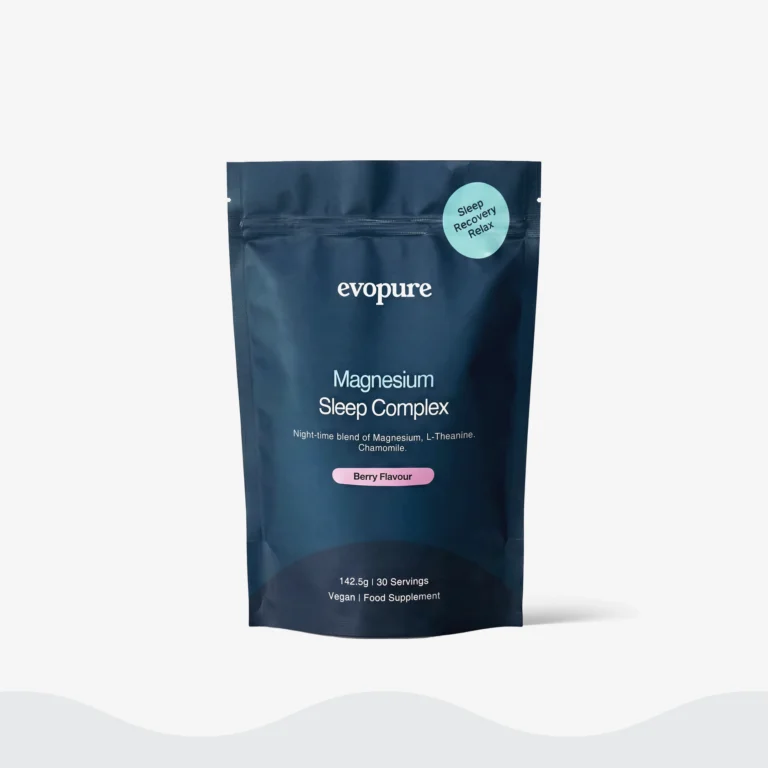
Our Magnesium Glycinate Sleep Complex is a berry-flavoured evening drink with magnesium bisglycinate and citrate, L-theanine and botanicals, so you get the ritual and the magnesium. See types of magnesium and the best time to take magnesium.
How to use magnesium spray
- Patch test first on a small area, as it often tingles.
- Spray onto clean, dry skin, such as calves, feet or shoulders. Avoid broken skin, freshly shaved skin and your face.
- Massage it in for a minute or two. This is where most of the relaxing effect comes from.
- Rinse off after 20 to 30 minutes if it itches or leaves a salty residue.
- Moisturise if your skin feels dry.
Side effects: why does magnesium spray sting?
Stinging, tingling and itching are the most common complaints, especially on dry or freshly shaved skin. It’s because the solution is very salty and draws moisture from the skin, not a sign that it’s “working” or that you’re low in magnesium. Dilute it with water, apply to damp skin or switch to a lotion if it bothers you, and stop if you get a rash.
Because so little is absorbed, sprays are very unlikely to cause diarrhoea or to push your magnesium too high. Even so, check with your GP if you have kidney disease, as your body may not clear magnesium well. Our products are for adults; for children and babies, ask your GP or health visitor before using magnesium products.
FAQs
Does magnesium spray work?
There’s no good evidence that it raises magnesium levels, because very little gets through the skin. Many people find the massage and bedtime ritual relaxing.
Does magnesium spray help you sleep?
There are no trials of magnesium spray for sleep. Oral magnesium has a little more evidence, and a calm wind-down routine helps either way.
Why put magnesium on your feet at night?
Mostly convenience and the relaxing foot rub. Claims that the feet absorb magnesium better aren’t supported by evidence.
Is magnesium spray better than tablets?
No. Tablets, capsules and drinks are the proven way to raise magnesium. Sprays avoid stomach upsets but may not deliver much magnesium at all.
Why does magnesium spray burn or itch?
The solution is very salty, so it can sting, especially on dry or shaved skin. Dilute it, rinse it off after 20 to 30 minutes or switch to a lotion.
Can magnesium spray cause diarrhoea?
It’s very unlikely, because so little is absorbed through the skin. Diarrhoea is a side effect of some oral forms in high doses.
Sources
- Gröber U et al (2017). Myth or reality: transdermal magnesium? Nutrients.
- Kass L et al (2017). Effect of transdermal magnesium cream on serum and urinary magnesium levels in humans: a pilot study. PLoS One.
- Engen DJ et al (2015). Effects of transdermal magnesium chloride on quality of life for patients with fibromyalgia: a feasibility study. Journal of Integrative Medicine.
- Garrison SR et al (2020). Magnesium for skeletal muscle cramps. Cochrane Database of Systematic Reviews.
- NHS. Vitamins and minerals: others (magnesium).
This guide is general information, not medical advice. Evopure makes the Magnesium Glycinate Sleep Complex.