








Last updated: October 2026
The foods with the best evidence for constipation are green kiwi (2 a day), prunes and linseed, alongside more fibre built up slowly towards 30g a day and plenty of fluids. Moving more and a regular toilet routine help too. See a GP if it lasts weeks, keeps coming back, or you notice blood in your poo or weight loss.
Below: the best foods and drinks (including whether apple juice, prune juice, peppermint tea and coffee help), foods and medicines that can make it worse, quick relief from a pharmacy, constipation in pregnancy and when to see a GP. This guide is for adults.
Constipated today: the quick plan
- Eat breakfast with a warm drink. Eating a meal and drinking caffeinated coffee both wake up the bowel.
- Add a fruit that works: 2 green kiwis or a portion of prunes.
- Drink regularly through the day: water, tea and coffee all count.
- Go for a walk, and don’t put off going when you feel the urge.
- On the toilet, rest your feet on a low stool so your knees are above your hips.
- Still stuck after a few days? Ask a pharmacist about a laxative.
Best foods for constipation
The NHS defines constipation as not having a poo at least 3 times in the last week, or going less often than usual, often with hard, dry or lumpy poo and straining. Its first advice is food, fluids and movement, and you may notice a difference within a few days, though it can take a few weeks.
In 2025 the British Dietetic Association (BDA) published the first evidence-based dietary guidelines for chronic constipation in adults, built on 75 trials. Their verdict is useful because it separates foods that have been properly tested from foods that are simply popular. Kiwi, rye bread and high-mineral water made the cut; whole-diet advice like “eat a high-fibre diet” did not, simply because it hasn’t been tested in good trials.
| Food | Amount used in studies | What the evidence shows |
|---|---|---|
| Green kiwi | 2 a day for 4 weeks (BDA: 2 to 3 a day) | The best-studied food: several trials, including a large international one; recommended by the BDA |
| Prunes | 100g a day, or 50g twice a day | Two trials: beat or matched psyllium (the fibre in Fybogel); can cause wind |
| Linseed (flaxseed) | Up to 1 tablespoon a day (NHS); 10g twice a day in one trial | Suggested by the NHS; one small trial helped |
| Wholegrain rye bread | 6 to 8 slices a day in trials | Two small trials: more bowel movements than white bread, but a high dose and a little more wind |
| Oats and wheat bran | Added to breakfast | NHS suggests them; promising but limited trial data |
| Apples, pears, apricots, grapes, raisins, berries | Normal portions | NHS suggests these sorbitol fruits; the BDA says robust evidence is lacking |
| Beans, lentils, chickpeas | Added to meals | Excellent fibre sources; no constipation trials; can cause wind |
| Chia seeds | Not tested | High in fibre, but we found no good human constipation trials |
| High-mineral water | 0.5 to 1.5 litres a day | Recommended by the BDA (see drinks) |
Kiwi: 2 a day
Kiwi has the strongest evidence of any single food. In an international trial of 184 people, 121 of them with constipation, eating 2 green kiwis a day for 4 weeks added about 1.5 complete bowel movements a week in the constipated groups, and improved tummy comfort. Two of the authors worked for the kiwi company Zespri, which is worth knowing. A smaller US trial compared 2 kiwis a day with prunes and psyllium: all 3 worked, and kiwi had the fewest side effects.
The BDA now suggests 2 to 3 kiwis a day for at least 4 weeks, and says peeled kiwi is fine. Leaving the skin on adds fibre, but it wasn’t tested and may cause more side effects. Kiwi is also studied for sleep: see kiwi for sleep.
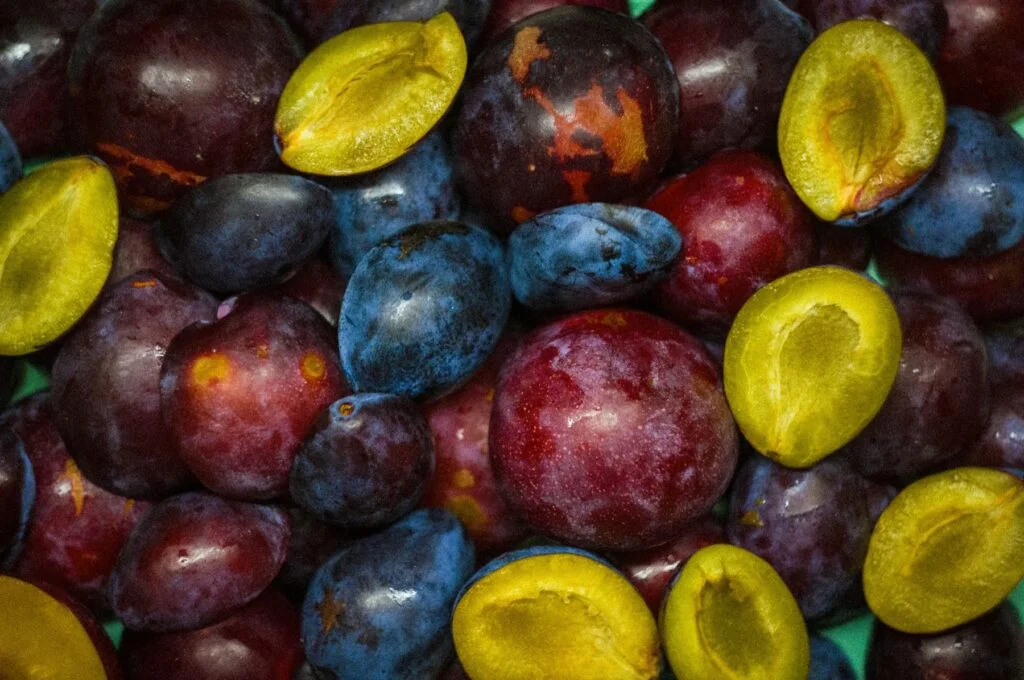
Prunes
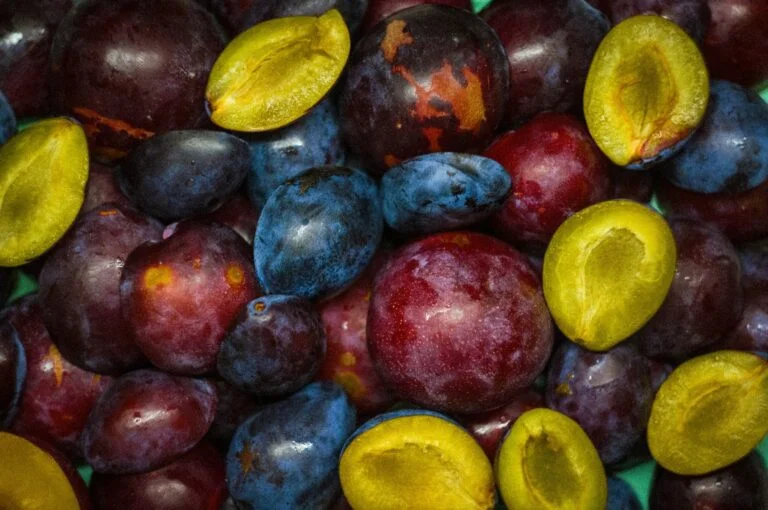
Prunes are the classic remedy, and the research backs them up. In a US trial, 50g of prunes twice a day gave more complete bowel movements and softer poo than psyllium. A King’s College London trial in healthy adults who didn’t eat much fibre found 80g to 120g of prunes a day increased the weight and number of poos, though people also noticed more wind. Prunes contain about 6g of fibre per 100g and a lot of sorbitol, a natural sugar alcohol thought to explain much of their laxative effect. Start with a few and build up.
Linseed, oats and bran
The NHS suggests adding wheat bran, oats or linseed to your diet, and its IBS advice suggests up to 1 tablespoon of linseed a day, whole or ground. In one small trial in people with type 2 diabetes, 10g of linseed baked into cookies twice a day improved constipation more than placebo. Stir it into porridge or yoghurt and drink plenty with it. See flaxseed benefits, and for an alternative, chia seeds.
Rye bread
In a Finnish trial, at least 240g a day of wholegrain rye bread added 1.4 bowel movements a week compared with white bread. The BDA rates the evidence as low and notes the amounts used (6 to 8 slices) are a lot for most people, so think of swapping some of your bread rather than eating a loaf.
Sorbitol fruits
The NHS suggests fruits containing sorbitol, such as apples, apricots, grapes, raisins, raspberries and strawberries. They are a sensible part of your 5 A Day, but the BDA notes there isn’t robust trial evidence for them in constipation, so don’t rely on them alone.
How much fibre, and how to add it without bloating
UK adults are advised to eat 30g of fibre a day, and most of us eat well under that. Wholegrain cereals, wholemeal bread and pasta, potatoes with skins, beans, lentils, vegetables, fruit, nuts and seeds all help. Our high fibre foods list gives grams per portion and a sample 30g day.
- Go slowly. The NHS says to increase fibre gradually. Adding a lot at once can cause bloating and wind; see bloating for what helps.
- Drink more as you go. The BDA advises extra fluid alongside fibre supplements.
- Give it time. In trials, fibre supplements worked best at more than 10g a day for at least 4 weeks.
- Psyllium (ispaghula husk) is the fibre supplement the BDA recommends, and the NHS suggests trying a bulk-forming laxative like this first.
Fibre also feeds the bacteria in your gut. For the wider picture, see gut health and probiotics; the BDA says there isn’t convincing evidence to recommend a specific probiotic strain for constipation, but if you want to try one, give it at least 4 weeks.
Best drinks for constipation
Does apple juice help with constipation?
It might, a little, but there is no good research in adults. Apple juice contains sorbitol and more fructose than glucose, and in children, drinking a lot of it is a known cause of loose stools. That’s the basis for the idea, but we couldn’t find a single trial of apple juice for constipation in adults, and none that tells you how quickly it works.
Whole apples are a better bet, because you keep the fibre. If you do drink juice, the NHS advises no more than 150ml of fruit juice and smoothies a day in total, with a meal, to protect your teeth.
Does prune juice help?
Prune juice is filtered, so it has almost no fibre, but it keeps sorbitol: about 6g per 100g, compared with about 15g in whole prunes. In a 2026 UK survey of 204 people with constipation, 70% said prune juice helped them, and 85% said prunes did. Trials have mostly used whole prunes, so start there, and count a glass of prune juice towards your 150ml a day.
Does peppermint tea help with constipation?
Probably not for constipation itself, and we would rather be honest about that. Peppermint oil capsules are a recognised NHS medicine for IBS: they relax the bowel muscle and can ease cramps, bloating and wind. A meta-analysis of 12 trials found peppermint oil improved overall IBS symptoms. But those trials used capsules, not tea, and they looked at pain and bloating rather than how often people went.
A cup of peppermint tea is still a warm, caffeine-free drink that counts towards your fluids. Be aware that the NHS lists heartburn as a side effect of peppermint oil, so skip it if you get acid reflux.
Coffee
Coffee really can get things moving. In a study measuring pressure inside the bowel, caffeinated coffee stimulated the colon about as much as a 1,000-calorie meal, 60% more than water and 23% more than decaf. The BDA notes there are no trials of coffee in people with chronic constipation, so it’s a nudge rather than a fix. The NHS notes coffee can also bring on heartburn, which is often worse lying down (see acid reflux at night). If caffeine upsets your sleep, a morning cup is enough; see decaf coffee for lower-caffeine options.
Water, and high-mineral water
The NHS suggests 6 to 8 glasses of fluid a day, and enough that your pee is pale yellow. See how much water should I drink? Interestingly, the BDA found little evidence that extra water alone treats constipation. In one trial, though, people eating 25g of fibre a day who also drank 2 litres of mineral water went more often and needed fewer laxatives than those who drank as usual. Fluid and fibre work together.
High-mineral water is one of the BDA’s stronger recommendations: people given it were 47% more likely to feel a benefit than those on low-mineral water. The waters used in research contained 105 to 1,000mg of magnesium per litre and lots of sulphate, far more than UK tap water (up to about 32mg of magnesium per litre). Check the label if you try one.
Foods that can make constipation worse
No single food causes constipation for everyone, but some patterns make it more likely. The NHS lists not eating enough fibre, not drinking enough, not moving much, changes to your diet or routine and ignoring the urge to go. It also advises cutting down on alcohol.
In the 2026 UK survey of people with constipation, the foods most often blamed were:
- white bread (69%)
- refined, sugary breakfast cereals (61%)
- processed red meat (60%)
- cake (57%)
These are people’s own experiences rather than trial results, but they have one thing in common: little or no fibre. The same goes for cheese, meat and many ready meals. You don’t need to cut them out; just make sure plants fill a good part of the plate.
Do bananas cause constipation?
The evidence is thin either way. In a German survey, between 29% and 48% of people said bananas made their poo harder, so the belief is common. You’ll often read that green bananas bind you up and ripe ones help. Green bananas are rich in resistant starch, but no trial has tested whether ripe or unripe bananas change constipation. A banana is still a fruit with some fibre, so if it seems fine for you, keep eating it. See banana before bed.
Can lactose intolerance cause constipation?
It can. Most people link lactose intolerance with diarrhoea, but the NHS lists “diarrhoea or constipation” among its symptoms, along with tummy pain, bloating and wind. If dairy seems to set you off, see a GP for a diagnosis before cutting it out long term.
An underactive thyroid can also cause constipation, alongside tiredness and feeling cold. See underactive thyroid symptoms.
Medicines that can cause constipation
Many medicines list constipation as a side effect. Never stop a prescribed medicine without speaking to your GP first, but do mention it, as there may be an alternative or a laxative to take alongside.
| Medicine | Does it cause constipation? (NHS) |
|---|---|
| Opioid painkillers, including codeine and co-codamol | Yes, a common side effect. The NHS gives these as a key example |
| Paracetamol on its own | Not listed. The NHS says it very rarely causes side effects |
| Buscopan (hyoscine butylbromide) | Yes, common (more than 1 in 100 people) |
| Iron tablets (ferrous sulfate) | Yes, a known side effect. See iron tablets |
| Antacids | Sometimes, as can diarrhoea |
| Some antidepressants, such as amitriptyline | Yes, common |
Does paracetamol cause constipation?
Not usually. Plain paracetamol doesn’t list constipation as a side effect. Co-codamol is different: it combines paracetamol with codeine, and the codeine commonly causes constipation. Check the box if you’re not sure which you have.
Does Buscopan cause constipation?
It can. The NHS lists constipation as one of 3 common side effects of Buscopan, with dry mouth and blurred vision. Its advice is more fibre, plenty of water and regular exercise, and to speak to a doctor or pharmacist if that doesn’t help.
Wondering about CBD? It isn’t known to cause constipation: see can CBD cause constipation?
Quick relief and pharmacy laxatives
If food, fluids and movement haven’t worked after a few days, the NHS says to ask a pharmacist, who can suggest a laxative. Most work within 3 days.
| Type | Examples | How it works | How fast |
|---|---|---|---|
| Bulk-forming | Fybogel (ispaghula husk) | Adds fibre so poo is bulkier and softer. Usually tried first | Up to 3 days |
| Osmotic | Lactulose, macrogol | Draws water into the bowel to soften poo | 2 to 3 days |
| Stimulant | Senna, bisacodyl | Makes the bowel muscles push poo along | 6 to 12 hours |
| Stool softeners | Docusate | Lets water and fat into poo | 12 hours to 3 days |
- Drink plenty with bulk-forming and osmotic laxatives.
- Don’t take shop-bought laxatives for more than 7 days, and speak to a doctor or pharmacist if nothing has changed after 3 days.
- Using laxatives too often or for too long can cause dehydration and low potassium.
- If you’re pregnant or breastfeeding, check with a pharmacist or doctor before taking any laxative.
What about magnesium?
Some forms of magnesium, mainly oxide, citrate and hydroxide, draw water into the bowel, and the BDA guideline includes magnesium oxide supplements. We cover the evidence, forms, doses and who should avoid it in magnesium for constipation. Ask a GP or pharmacist first if you take medication or have kidney problems.
Our Magnesium Glycinate Sleep Complex is an evening drink with magnesium bisglycinate and citrate, glycine and L-theanine. It isn’t a laxative or a constipation treatment. Magnesium contributes to a reduction of tiredness and fatigue and to normal muscle function.
Constipation in pregnancy
Constipation is common in pregnancy and after giving birth, and the NHS lists it among the early signs that might mean you’re pregnant. On its own, though, it can’t tell you whether you are: a pregnancy test can.
The NHS says it’s safe to try the simple food, fluid and activity measures above when you’re pregnant. Check with a pharmacist, doctor or midwife before taking any laxative, and tell your midwife if iron tablets or anything else is making it worse. We don’t recommend our products during pregnancy or breastfeeding.
When to see a GP
See a GP if:
- your constipation isn’t getting better with treatment, or keeps coming back
- you’re often bloated or have tummy pain
- you have blood in your poo or are losing weight without trying
- you also feel constantly tired
- you think a medicine is causing it
- your bowel habits have suddenly changed
Ask for an urgent GP appointment or contact NHS 111 if your poo is black or dark red, or you have bloody diarrhoea. Call 999 or go to A&E if you’re bleeding non-stop from your bottom or passing large blood clots.
Long-term constipation can lead to faecal impaction, where hard poo gets stuck. A sign is runny poo leaking around it, which can look like diarrhoea. This needs a GP or nurse.
For babies and children, see the NHS guide to constipation in children and speak to a GP or health visitor.
FAQs
What foods help you poop fast?
No food works within minutes, but prunes, 2 green kiwis, linseed and a breakfast with coffee are good choices. Eating a meal and drinking caffeinated coffee both stimulate the bowel. If you need faster relief, a pharmacist can suggest a laxative.
Does apple juice help with constipation?
It might help a little, because apple juice contains sorbitol and extra fructose, but there are no good trials in adults. Whole apples keep their fibre and are a better choice. Keep fruit juice to 150ml a day.
Does peppermint tea help with constipation?
There is little evidence that it does. Peppermint oil capsules can ease IBS cramps, bloating and wind, but they don’t make you go more often. Peppermint tea still counts towards your fluids.
Do bananas cause constipation?
Many people believe they do, but there are no trials showing it. Green bananas contain more resistant starch, though no study has tested ripe versus unripe bananas for constipation. If bananas seem fine for you, keep eating them.
How many kiwis should I eat for constipation?
Trials used 2 green kiwis a day for 4 weeks. The British Dietetic Association suggests 2 to 3 a day for at least 4 weeks, and peeled kiwi is fine.
Does paracetamol cause constipation?
Plain paracetamol doesn’t usually cause constipation. Co-codamol, which contains codeine, commonly does.
Is constipation a sign of early pregnancy?
It can be. The NHS lists constipation among the early signs of pregnancy, but it has many other causes, so take a pregnancy test if you think you might be pregnant.
Sources
- NHS. Constipation.
- NHS. Laxatives.
- NHS. How to get more fibre into your diet.
- NHS. 5 A Day: what counts?
- NHS. Water, drinks and your health.
- NHS. IBS: diet, lifestyle and medicines.
- NHS. Peppermint oil.
- NHS. Heartburn and acid reflux.
- NHS. Lactose intolerance.
- NHS. Side effects of codeine; co-codamol; paracetamol; Buscopan; ferrous sulfate; amitriptyline; antacids.
- NHS. Symptoms of bowel cancer; underactive thyroid symptoms.
- NHS. Signs and symptoms that might mean you’re pregnant; constipation in children.
- Dimidi E et al. British Dietetic Association Guidelines for the Dietary Management of Chronic Constipation in Adults. J Hum Nutr Diet, 2025 (PMID 41081513).
- Van Der Schoot A et al. Foods, drinks and diets and their effect on chronic constipation in adults. Aliment Pharmacol Ther, 2024 (PMID 37905980).
- Gearry R et al. Consumption of 2 green kiwifruits daily improves constipation and abdominal comfort. Am J Gastroenterol, 2023 (PMID 36537785).
- Chey SW et al. Green kiwifruit, psyllium, or prunes in US patients with chronic constipation. Am J Gastroenterol, 2021 (PMID 34074830).
- Attaluri A et al. Dried plums (prunes) vs. psyllium for constipation. Aliment Pharmacol Ther, 2011 (PMID 21323688).
- Lever E et al. The effect of prunes on stool output, gut transit time and gastrointestinal microbiota. Clin Nutr, 2019 (PMID 29398337).
- Stacewicz-Sapuntzakis M et al. Chemical composition and potential health effects of prunes. Crit Rev Food Sci Nutr, 2001 (PMID 11401245).
- Soltanian N, Janghorbani M. Flaxseed or psyllium vs. placebo in constipated patients with type 2 diabetes. Clin Nutr ESPEN, 2019 (PMID 30661699).
- Holma R et al. Constipation is relieved more by rye bread than wheat bread or laxatives. J Nutr, 2010 (PMID 20089780).
- Ament ME. Malabsorption of apple juice and pear nectar in infants and children. J Am Coll Nutr, 1996 (PMID 8892180).
- Alammar N et al. The impact of peppermint oil on the irritable bowel syndrome: a meta-analysis. BMC Complement Altern Med, 2019 (PMID 30654773).
- Rao SS et al. Is coffee a colonic stimulant? Eur J Gastroenterol Hepatol, 1998 (PMID 9581985).
- Anti M et al. Water supplementation enhances the effect of high-fiber diet in functional constipation. Hepatogastroenterology, 1998 (PMID 9684123).
- Farsi DN et al. Perceptions of the role of diet among people with constipation. J Hum Nutr Diet, 2026 (PMID 41562174).
- Müller-Lissner SA et al. The perceived effect of various foods and beverages on stool consistency. Eur J Gastroenterol Hepatol, 2005 (PMID 15647650).
- Yang J et al. Banana flour with high content of resistant starch at different ripening stages. Food Funct, 2020 (PMID 33245312).
This guide is general information, not medical advice. Evopure makes the Magnesium Glycinate Sleep Complex.