

Last updated: October 2026
Kombucha is fermented sweet tea made with a SCOBY, a culture of bacteria and yeast. It can be a lower-sugar swap for fizzy drinks, and raw versions contain live microbes. But most of the health claims come from lab and animal studies, with only a handful of small human trials. It also contains some sugar, caffeine and a little alcohol.
Below: the evidence claim by claim, live cultures, sugar, alcohol, kombucha vs kefir, home brewing safely and who should avoid it.
The short version: enjoy kombucha as a tasty, lower-sugar soft drink, not as a medicine. Choose a chilled, unpasteurised one if you want live cultures, check the “of which sugars” line, and keep to a small glass a day. Skip it if you’re pregnant, breastfeeding, have a weakened immune system or are avoiding alcohol completely.
What is kombucha?
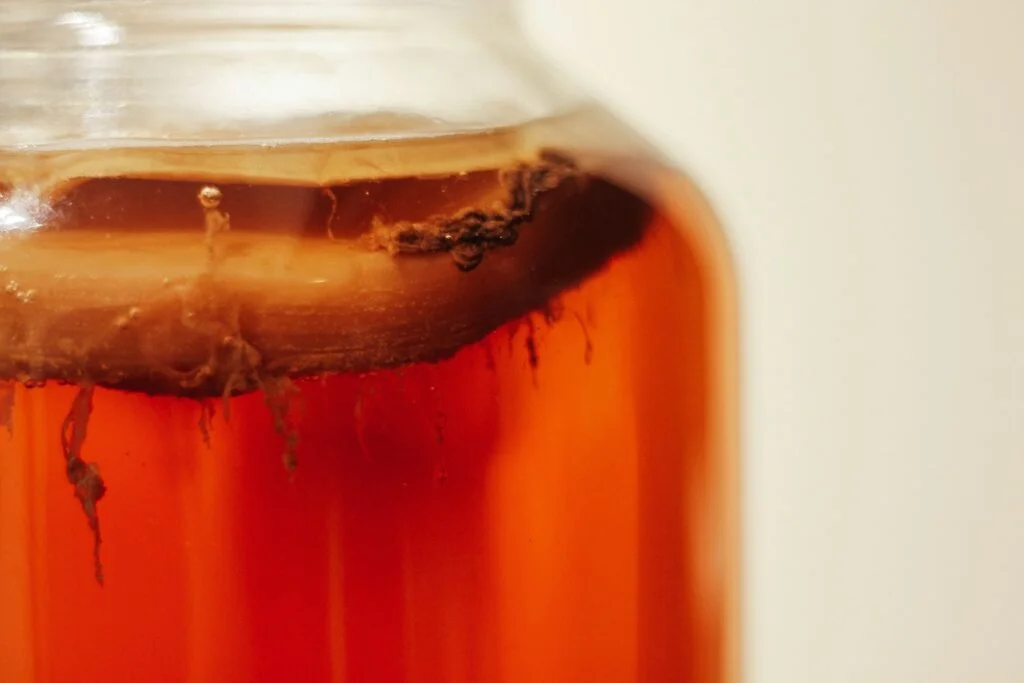
Kombucha is black or green tea sweetened with sugar, then left to ferment with a SCOBY (a “symbiotic culture of bacteria and yeast”). The SCOBY is the rubbery, pancake-like disc that floats on top of a home brew.
Fermentation happens in two steps. The yeasts turn the sugar into alcohol and carbon dioxide, which gives the fizz. Then acetic acid bacteria turn much of that alcohol into acids, mainly acetic acid, the same acid found in vinegar. That’s why kombucha tastes sharp and slightly vinegary, a bit like a fizzy cousin of apple cider vinegar.
Researchers at King’s College London note that its microbes and acids vary with the SCOBY, tea, sugar, temperature, brewing time and storage, so two kombuchas can be quite different drinks. Shop-bought versions are often flavoured with fruit, ginger or herbs.
Kombucha benefits: the evidence by claim
Kombucha has a long list of claimed benefits, but very little human research behind them. A 2019 systematic review searched 310 articles and found just one study reporting health results in people. The King’s College review the same year found no randomised trials of kombucha for gut health at all.
Since then a few small trials have been published, mostly with 12 to 90 people and lasting 4 to 12 weeks. Here is where each claim stands.
| Claim | What the research shows | Verdict |
|---|---|---|
| Gut health | Small trials found modest shifts in gut bacteria; one green tea kombucha trial found fewer gut symptoms but no change in gut bacteria or gut permeability | Early and mixed |
| “Probiotic” | Contains live microbes if unpasteurised, but no strain has been tested at a set dose for a benefit | Not a probiotic in the strict sense |
| Blood sugar | A 12-person pilot in type 2 diabetes saw lower fasting blood glucose after 4 weeks; a healthy-adult trial saw fasting insulin rise | Unproven |
| Cholesterol and blood fats | Triglycerides fell in a trial of a fibre-enriched kombucha; in a weight-loss trial, cholesterol fell within the kombucha group but not clearly more than with diet alone | Unproven |
| Liver “detox” | Only rat studies; there are case reports of liver problems in people who drank kombucha | No human evidence |
| Immunity | A 12-week trial in 90 runners found no change in its main antioxidant measure; other immune changes were exploratory | No good evidence |
| Weight loss | No trial has shown it causes weight loss; added to a calorie-controlled diet, it made no clear difference to metabolic markers | No good evidence |
The most quoted study is a 2023 pilot in type 2 diabetes: average fasting blood glucose fell from 164 to 116 mg/dL after four weeks of 240ml kombucha a day, while the placebo change wasn’t statistically significant. But it involved only 12 people, and the researchers called for larger trials. If you have diabetes, don’t change your medicines or diet on the back of it: speak to your GP or diabetes team.
Is kombucha good for your gut?
Possibly a little, but nobody can say for sure yet. The human trials so far are small and mixed:
- Healthy adults (2024): in 24 people over four weeks, gut bacteria shifted modestly, with no significant change in blood markers or inflammation across the group. A kombucha maker funded it.
- Fibre-enriched kombucha (2025): in 58 healthy adults over six weeks, Bifidobacterium rose compared with unfermented tea. The drink maker funded it, and the added fibre may explain some of the effect.
- Weight-loss diet (2024): in 59 adults with excess weight, green tea kombucha didn’t change gut bacteria or gut permeability, though people reported fewer gut symptoms.
In a well-known Stanford study, adults who followed a diet high in fermented foods for 17 weeks saw their gut bacteria become more diverse. Kombucha was one of the foods on the menu, alongside yoghurt, kefir and kimchi, so the effect can’t be pinned on kombucha alone.
The British Dietetic Association says kefir and kombucha may contain helpful microbes but aren’t considered probiotics, because the evidence for specific benefits is lacking. UK law takes a similar line. On the Great Britain nutrition and health claims register, we counted 129 entries for probiotic claims, and all of them are non-authorised. There are no entries for kombucha. The only authorised claim about live cultures is that live yoghurt cultures improve lactose digestion in people who struggle to digest lactose. The advertising regulator’s guidance says the word “probiotic” itself suggests a link between food and health, so it counts as a health claim.
For a healthier gut, the basics still do the heavy lifting: plenty of fibre and a wide variety of plants. See our guides to gut health and high fibre foods.
Does shop-bought kombucha contain live bacteria?
Only some of it. Pasteurisation uses heat to kill microbes, so a pasteurised, shelf-stable kombucha has no live cultures left, even if it still tastes tangy.
If you want live cultures, look for:
- “raw”, “unpasteurised” or “live” on the label
- a chilled drink kept in the fridge, with “keep refrigerated” on the label
Bear in mind that the number and type of microbes in a raw kombucha are rarely stated, and they change as it’s stored. That’s very different from a probiotic supplement, which names its strains and dose.
How much sugar is in kombucha?
Kombucha starts as sweet tea, and the yeasts and bacteria only use up part of the sugar. Some brands then add fruit juice or more sugar for flavour. So the sugar left in a can varies a lot between brands and batches.
The NHS says adults should have no more than 30g of free sugars a day, and less for children (24g at 7 to 10 years). Added sugar and the sugar in fruit juice both count as free sugars.
To check a drink, find “of which sugars” in the nutrition table and multiply by the size of the can or bottle. For example, a 330ml can with 5g of sugars per 100ml contains about 16.5g of sugar, over half an adult’s daily limit. A can with 2g per 100ml contains about 6.6g.
Some low-sugar versions use sweeteners instead, so check the ingredients list too. If you’re trying to cut down, see our guide to sugar cravings.
Does kombucha contain alcohol?
Yes, a little. Alcohol is a natural by-product of the fermentation. In the UK, the Licensing Act defines alcohol as a drink stronger than 0.5% ABV, so shop-bought kombucha is usually made to stay at or below that and sold as a soft drink.
- “Alcohol free” has a strict meaning. Under UK labelling guidance, “alcohol free” means no more than 0.05% ABV, “de-alcoholised” no more than 0.5% and “low alcohol” 1.2% or less. The government has consulted on raising the “alcohol free” limit to 0.5%, but no change had been announced when we checked.
- Strength can creep up. In a 2026 New Zealand study, 2 of the 9 shop-bought kombuchas tested (22%) were above that country’s 1.15% ABV limit for non-alcoholic drinks. Brewers pointed to high starting sugar, flavourings added after fermentation and poor temperature control. The kombucha used in the 2023 diabetes trial contained 1.5% alcohol.
Home brews are harder to predict. The amounts are small for most adults, but they matter if you’re avoiding alcohol completely. If you’re cutting down rather than stopping, kombucha can be a useful swap: see damp drinking, our Sober October drinks and Dry January guides.
Does kombucha have caffeine?
Usually, yes. It’s brewed from black or green tea, so some of the tea’s caffeine ends up in the drink. The amount depends on the tea and the recipe, and most labels don’t give a figure.
That matters in two situations. If you’re pregnant, the NHS says to keep to no more than 200mg of caffeine a day from all sources. And if you’re sensitive to caffeine, an afternoon or evening kombucha could affect your sleep. See how long caffeine lasts and our guide to green tea.
Kombucha vs kefir vs probiotic supplements
All three get called “good for your gut”, but they’re quite different.
| Kombucha | Kefir | Probiotic supplement | |
|---|---|---|---|
| What it is | Fermented sweet tea | Fermented milk (or water kefir) | Capsules or drinks with named live strains |
| Live microbes | Only if raw; type and amount vary | Yes, if not heat-treated | Strains and dose stated on the label |
| Human trials for gut health | A few small, recent ones | At least one randomised trial, for lactose malabsorption and H. pylori treatment | Good for a few specific uses, strain by strain |
| Other things in it | Some sugar, caffeine and a little alcohol | Milk kefir is a dairy food | Depends on the product |
| Best for | A tangy, lower-sugar soft drink | A fermented food you eat or drink daily | A specific reason, ideally after talking to a GP or pharmacist |
For when a probiotic is actually worth trying, and how to choose one, see our full guide to probiotics.
Is homemade kombucha safe?
Usually, if you’re careful. Follow a tested recipe and these basics:
- Use glass, never glazed ceramic or pottery. Kombucha is acidic and can pull lead out of some glazes. A couple in Australia needed treatment for lead poisoning after six months of drinking kombucha brewed in a ceramic pot. In 2023, Spanish health officials traced a family outbreak of lead poisoning to kombucha fermented and sold in ceramic containers.
- Keep everything clean. Wash your hands and clean and rinse all equipment before you start.
- Throw it out if you see mould. Dry, fuzzy patches on the SCOBY or the surface mean the batch has spoiled. Discard the tea and the SCOBY and clean the jar thoroughly.
- Don’t over-ferment. A brew left too long can become very acidic, and more alcohol can build up in sealed bottles kept somewhere warm. Chill bottles once they’re ready.
Serious reactions are rare but have been reported. In 1995 two people in Iowa who had drunk kombucha daily for about two months became severely ill, and one died; US investigators could only say the illness was possibly linked to the tea. A 2017 UK case report described a woman admitted to hospital with severe lactic acidosis (a build-up of acid in the blood), who recovered after stopping kombucha. In a US case, a 22-year-old man with newly diagnosed HIV developed lactic acidosis and kidney failure within hours of drinking it.
How much kombucha a day?
There’s no official UK limit. University of Georgia food safety guidance says up to about 120ml (4 fl oz) a day is considered safe for most healthy people. That’s roughly a third of a standard can, so many shop-bought cans are bigger than one serving.
- Start small if you’re new to it, and see how your stomach feels.
- Mind your teeth. Kombucha is acidic, like other fizzy drinks. The Oral Health Foundation suggests keeping acidic drinks to mealtimes, using a straw, and waiting at least an hour before brushing your teeth.
- Watch the timing if caffeine affects your sleep: earlier in the day is better.
Who should avoid kombucha?
- Pregnant or breastfeeding women. The risks haven’t been studied. Raw kombucha is unpasteurised, and it contains caffeine and a little alcohol; the NHS says it’s safest to avoid alcohol in pregnancy. We don’t recommend our products during pregnancy or breastfeeding.
- People with a weakened immune system, for example during chemotherapy or with untreated HIV. The NHS says people with a weakened immune system should talk to a doctor before taking probiotics, and live kombucha is no different.
- Children. It contains caffeine, acids and traces of alcohol, and often sugar. Water or milk are better choices.
- Anyone avoiding alcohol completely, including people in recovery from alcohol dependence, and people taking medicines that shouldn’t be mixed with alcohol. Check the label and avoid home brews.
- Anyone prone to acidosis, or with kidney or liver disease. Ask your GP first.
- People with reflux or sensitive teeth. Notice whether it sets off symptoms. The NHS lists coffee and alcohol among common reflux triggers, and kombucha contains a little of both caffeine and alcohol. See acid reflux at night.
If you have diabetes, count the sugar and talk to your diabetes team before relying on kombucha for blood sugar. If you take regular medication, ask your pharmacist.
Other evening drinks to try
Kombucha is a good daytime swap for fizzy drinks or a pint, but its caffeine makes it a less obvious choice before bed. For the evening, try a caffeine-free herbal tea (see best tea for sleep), or one of our coffee alternatives.
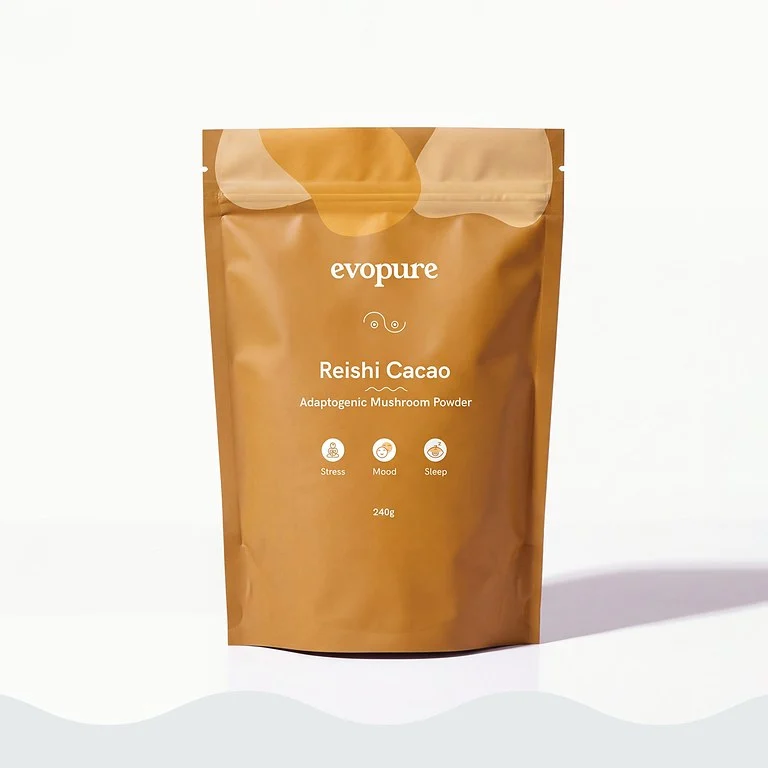
If you’d like something warm and comforting, our Reishi Mushroom Adaptogenic Complex is a reishi hot chocolate made with cacao, maca and coconut milk powder. Cacao contains a little natural caffeine, so it isn’t caffeine-free. Our Magnesium Glycinate Sleep Complex is a berry-flavoured drink with magnesium bisglycinate and citrate, L-theanine and botanicals. Magnesium contributes to a reduction of tiredness and fatigue and to normal psychological function. Both are for adults only.
The verdict
Kombucha is a perfectly reasonable drink for most healthy adults, and a low-sugar one is a better choice than a full-sugar fizzy drink. But it isn’t a proven gut fix, detox or weight loss aid. Choose a low-sugar, chilled raw version if you want live cultures, keep to a small glass, and brew at home only in glass with good hygiene. And if you’re pregnant, have a weakened immune system or avoid alcohol, give it a miss.
FAQs
Is it OK to drink kombucha every day?
For most healthy adults, a small glass a day is fine. US food safety guidance suggests up to about 120ml a day. Watch the sugar, caffeine and acidity, and avoid it if you’re pregnant, breastfeeding or have a weakened immune system.
Does kombucha have alcohol in it in the UK?
Yes, a little. Shop-bought kombucha is usually kept at or below 0.5% ABV and sold as a soft drink, but some products test higher, and home brews can be stronger. Avoid it if you need to avoid alcohol completely.
Is kombucha a probiotic?
Not in the strict sense. Raw kombucha contains live bacteria and yeasts, but no strain has been tested at a set dose for a health benefit. The British Dietetic Association doesn’t count kombucha as a probiotic.
Does kombucha help you lose weight?
There’s no good evidence that it does. In trials where people added kombucha to a calorie-controlled diet, it made no clear difference compared with the diet alone. Swapping a sugary fizzy drink for a low-sugar kombucha does cut sugar.
Is kombucha or kefir better for your gut?
Kefir has more human research behind it, including at least one randomised trial on lactose digestion. Kombucha has only a few small, recent trials with mixed results. A varied diet with plenty of fibre matters more than either.
Can you drink kombucha when pregnant?
It’s best avoided. Its safety in pregnancy hasn’t been studied, raw kombucha is unpasteurised, and it contains caffeine and a little alcohol. Ask your midwife or GP if you’re unsure.
When is the best time to drink kombucha?
With or after a meal earlier in the day suits most people. Food helps protect your teeth from the acid, and drinking it earlier means its caffeine is less likely to affect your sleep.
Sources
- Kapp JM, Sumner W. Kombucha: a systematic review of the empirical evidence of human health benefit. Ann Epidemiol, 2019. PMID 30527803.
- Dimidi E, et al. Fermented foods: definitions and characteristics, impact on the gut microbiota and effects on gastrointestinal health and disease. Nutrients, 2019. PMID 31387262.
- Mendelson C, et al. Kombucha tea as an anti-hyperglycemic agent in humans with diabetes: a randomized controlled pilot investigation. Front Nutr, 2023. PMID 37588049.
- Ecklu-Mensah G, et al. Modulating the human gut microbiome and health markers through kombucha consumption: a controlled clinical study. Sci Rep, 2024. PMID 39738315.
- Arce-López B, et al. Effect of fiber-modified kombucha tea on gut microbiota in healthy population: a randomized controlled trial. Curr Res Food Sci, 2025. PMID 40689297.
- Fraiz GM, et al. The impact of green tea kombucha on the intestinal health, gut microbiota and serum metabolome of individuals with excess body weight in a weight loss intervention: a randomized controlled trial. Foods, 2024. PMID 39594049.
- Bonifácio DB, et al. Effect of green tea kombucha within an energy-restricted diet on cardiometabolic risk markers in individuals with excess body weight: a randomized controlled trial. J Food Sci, 2026. PMID 41957662.
- Bonifácio DB, et al. Acute and chronic effects of green tea kombucha with and without grape skin extract on immune and oxidative stress markers in beginner runners: a randomized controlled trial. J Food Sci, 2026. PMID 42799570.
- Wastyk HC, et al. Gut-microbiota-targeted diets modulate human immune status. Cell, 2021. PMID 34256014.
- Nordstrom K, et al. Comparing Alcolyzer and GC-FID for ethanol measurement in kombucha: insights from nutritional labeling and brewer practices in New Zealand. J Food Sci, 2026. PMID 41536259.
- Phan TG, et al. Lead poisoning from drinking Kombucha tea brewed in a ceramic pot. Med J Aust, 1998. PMID 9887919; Munilla García Z, et al. Family outbreak of lead poisoning linked to kombucha made and sold in ceramic containers. Rev Esp Salud Publica, 2023. PMID 37226984.
- CDC. Unexplained severe illness possibly associated with consumption of Kombucha tea, Iowa, 1995. MMWR, 1995. PMID 7476846; Holbourn A, Hurdman J. Kombucha: is a cup of tea good for you? BMJ Case Rep, 2017. PMID 29197835; SungHee Kole A, et al. A case of Kombucha tea toxicity. J Intensive Care Med, 2009. PMID 19460826.
- Murugesan GS, et al. Hepatoprotective and curative properties of Kombucha tea against carbon tetrachloride-induced toxicity (rats). J Microbiol Biotechnol, 2009. PMID 19420997; Gedela M, et al. A case of hepatotoxicity related to Kombucha tea consumption. S D Med, 2016. PMID 26882579.
- University of Georgia Extension. What’s the word on homemade kombucha?
- NHS. Sugar: the facts; Foods to avoid in pregnancy; Probiotics; Heartburn and acid reflux.
- British Dietetic Association. Probiotics food fact sheet.
- Department of Health and Social Care. Great Britain nutrition and health claims register; Updating labelling guidance for no and low alcohol alternatives.
- Advertising Standards Authority. Food: probiotic claims.
- Oral Health Foundation. Dental erosion.
This guide is general information, not medical advice. Evopure makes the Reishi Mushroom Adaptogenic Complex and Magnesium Glycinate Sleep Complex. We don’t make or sell kombucha.