Last updated: November 2026
Perimenopause is the run-up to menopause: your hormones rise and fall, your periods change and symptoms often start. Menopause is a single point, reached when you haven’t had a period for 12 months, the NHS says. It usually happens between 45 and 55, at an average age of 51 in the UK. After that, you’re postmenopausal.
So if you still have periods, even irregular ones, you’re most likely in perimenopause. If tiredness is part of it, Evopure’s Magnesium Glycinate Sleep Complex is a berry drink with 290mg of magnesium (77% NRV) per 4.75g serving. Magnesium contributes to a reduction of tiredness and fatigue.
What is the difference between perimenopause and menopause?
Perimenopause is a stage that can last several years; menopause is one moment in time. The NHS describes perimenopause as when your periods become irregular, and menopause as not having a period for 12 months while not using hormonal contraception. In a study of more than 2,500 women, perimenopause lasted nearly 4 years on average.
| How they differ | Perimenopause | Menopause | Postmenopause |
|---|---|---|---|
| What it is | The years of change before periods stop | One point: 12 months after your last period | Every year after that point |
| Periods | Still happening, often irregular, lighter or heavier | Stopped for a full year | None (any bleeding needs a GP check) |
| Hormones | Rise and fall unpredictably | Low | Stay low |
| Typical timing | Often from the mid 40s, for a few years | Usually 45 to 55, average 51 | From then on |
| Pregnancy | Still possible: use contraception | Fertility has ended | Not possible naturally |
People often say “the menopause” to mean the whole change. That’s why answers about how long it lasts vary so much: see how long menopause lasts for the full timeline.
Perimenopause vs menopause symptoms: are they different?
Mostly they are the same symptoms at different strengths. The NHS says one of the first signs of perimenopause is usually a change to your periods, and that symptoms usually last 7 to 9 years, sometimes longer. Hot flushes, poor sleep and mood swings are often at their worst in late perimenopause, when hormones swing the most, then gradually ease after menopause.
| Symptom | In perimenopause | After menopause |
|---|---|---|
| Period changes | The classic early sign: closer together, further apart, heavier or lighter | Periods have stopped |
| Hot flushes and night sweats | Common, and often peak late in perimenopause | Often ease over a few years, but can last longer |
| Mood, anxiety and brain fog | Common while hormones fluctuate | Often settle |
| Vaginal dryness and bladder symptoms | Can start | Often continue, and treatment can help |
| Bone density | Can start to fall | Keeps falling, raising the risk of osteoporosis |
For every symptom in detail, from itchy skin to palpitations, see the full list of perimenopause symptoms and whether perimenopause is worse than menopause. We also cover hot flushes, perimenopause and sleep, menopause brain fog, menopause and anxiety, joint pain and menopause weight gain.

Our pick
Magnesium Glycinate Sleep Complex
Magnesium Glycinate Sleep Complex is a berry drink powder with 290mg of magnesium (77% NRV) per 4.75g serving from bisglycinate and citrate, plus glycine and L-theanine. Magnesium contributes to a reduction of tiredness and fatigue. It isn’t a treatment for perimenopause or menopause symptoms.
Add Magnesium Glycinate Sleep Complex to bag See ingredients and reviews
Vegan and made in the UK. Subscribe and save 25% on your first order, then 20%. New to Evopure? Join our emails for 20% off a one-off first order. Free UK delivery over £45. If you take HRT or any regular medicines, check with your GP or pharmacist first.
Subscribe £22.49One-off £29.99
View productHow do I know if I’m in perimenopause or menopause?
Count the months since your last period. If you still have periods, even far apart, you’re in perimenopause. Once you’ve gone 12 months without one, and you aren’t using hormonal contraception, you’ve reached menopause and are now postmenopausal. NICE guidance says that over 45, a GP can usually diagnose both from your symptoms, without a blood test.
- Over 45: diagnosis is based on your symptoms and periods. NICE says a blood test isn’t needed.
- 40 to 45: a follicle-stimulating hormone (FSH) blood test may be considered.
- Under 40: FSH tests are used to check for premature ovarian insufficiency.
- On hormonal contraception or HRT: your periods may be hidden or artificial, so you can’t count months in the usual way. Ask your GP.
iA symptom diary is more useful to take to your GP than a home test kit. See how to test for perimenopause and how menopause is diagnosed.
What age does perimenopause start, and when is menopause?
Perimenopause usually starts in your mid 40s. In the Massachusetts Women’s Health Study, the median age it began was 47.5. Menopause follows a few years later: the NHS says it usually happens between 45 and 55, and NHS inform gives 51 as the average age in the UK. Smokers tended to start earlier.
Menopause before 45 is called early menopause, and before 40 it’s premature ovarian insufficiency. The NHS says it can happen after surgery to remove the ovaries, after some cancer treatments, or for no known reason. If your periods change or stop before 45, see a GP. Our guide to what age menopause starts has more.
Can you get pregnant in perimenopause?
Yes. You’re less fertile in perimenopause, but you can still get pregnant while you have periods, even irregular ones. HRT is not contraception, the NHS says. If you don’t use hormonal contraception, NHS menopause services advise using contraception for 2 years after your last period if you’re under 50, or 1 year if you’re over 50.
iHormonal contraception can mask when your periods would have stopped. The same NHS guidance says that, without an FSH blood test, you may need to keep using it until 55, so ask a GP or sexual health clinic when it’s safe to stop.
Is treatment different for perimenopause and menopause?
Partly. HRT works for symptoms in both stages, but the type changes. The NHS says sequential (cyclical) combined HRT is usually recommended if you have symptoms but still have periods, and continuous combined HRT once you’re postmenopause (no period for 1 year). If you’ve had a hysterectomy, oestrogen-only HRT is recommended.
- CBT. NICE says menopause-specific cognitive behavioural therapy can be considered for hot flushes, night sweats, linked sleep problems and low mood, in either stage. See CBT for menopause: what it is and how to get it.
- Non-hormonal medicines. If HRT isn’t suitable, a doctor may suggest other medicines for hot flushes.
- Vaginal oestrogen for dryness and bladder symptoms, which often continue after menopause.
- Everyday habits. The NHS suggests regular sleep, a balanced diet with calcium-rich foods, weight-bearing exercise, not smoking and keeping to alcohol limits.
The NHS also asks you to talk to a doctor before taking herbal supplements or complementary medicines. If you’re weighing them up, see the best supplements for menopause, magnesium for menopause and CBD oil and menopause. If someone close to you is going through it, share perimenopause for partners.
Supplements and your routine in perimenopause and after
No supplement treats perimenopause or menopause. Two basics are worth knowing. The NHS advises everyone to consider 10 micrograms of vitamin D a day from October to March, and calcium-rich food helps keep bones healthy as oestrogen falls. A plain vitamin D3 supplement is the simple choice for most people: see the best vitamin D supplements in the UK and vitamin D deficiency symptoms.
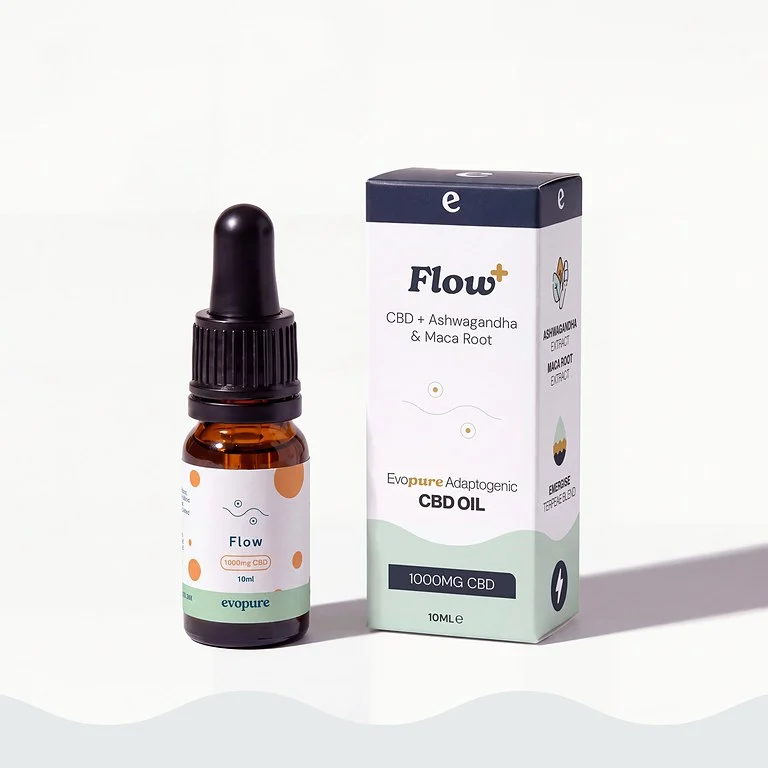
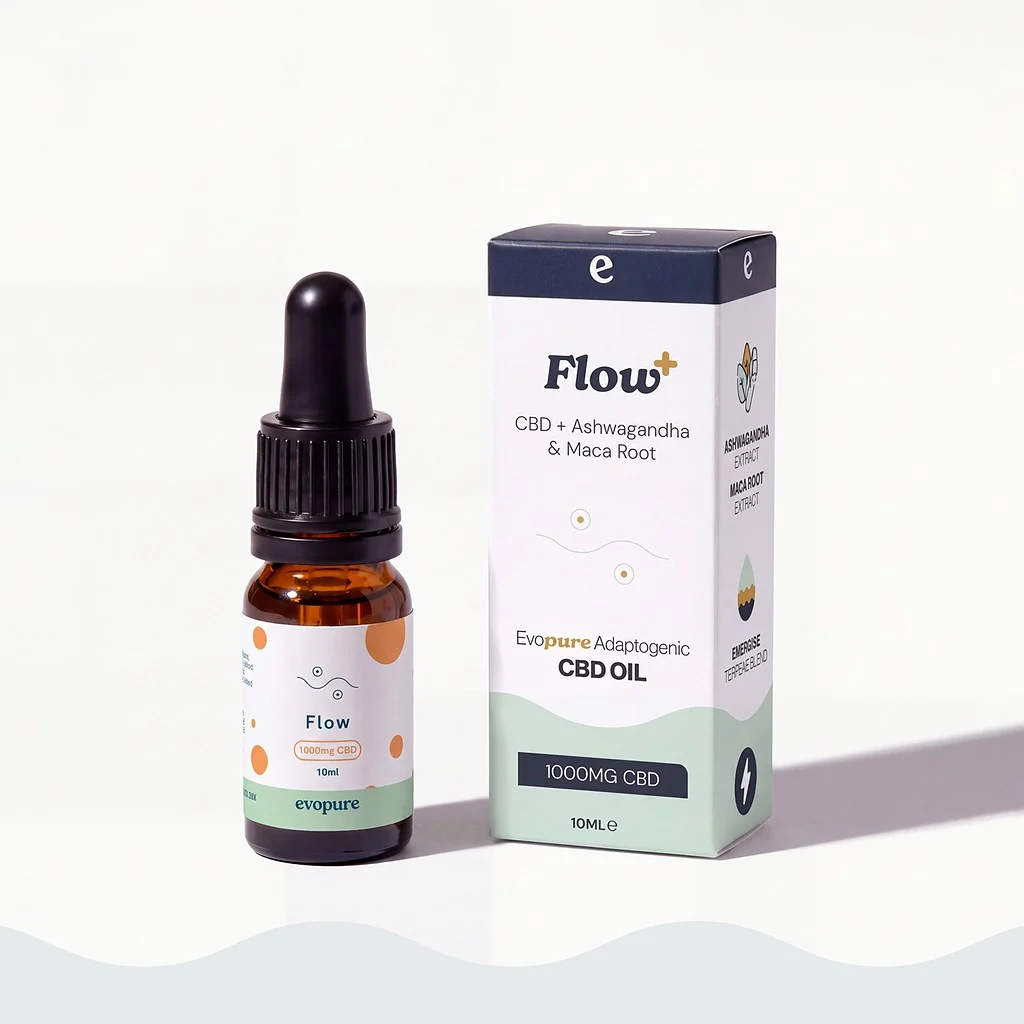
For a daily routine, our Flow CBD Oil is broad spectrum CBD with ashwagandha and maca: 10mg of CBD is about 0.2ml of the 500mg bottle (half a pipette is 17.5mg), and each half pipette has 35mg ashwagandha root extract and 35mg maca root extract. Because it contains ashwagandha, it isn’t for anyone with a thyroid, liver or autoimmune condition, and don’t take it alongside another ashwagandha product.
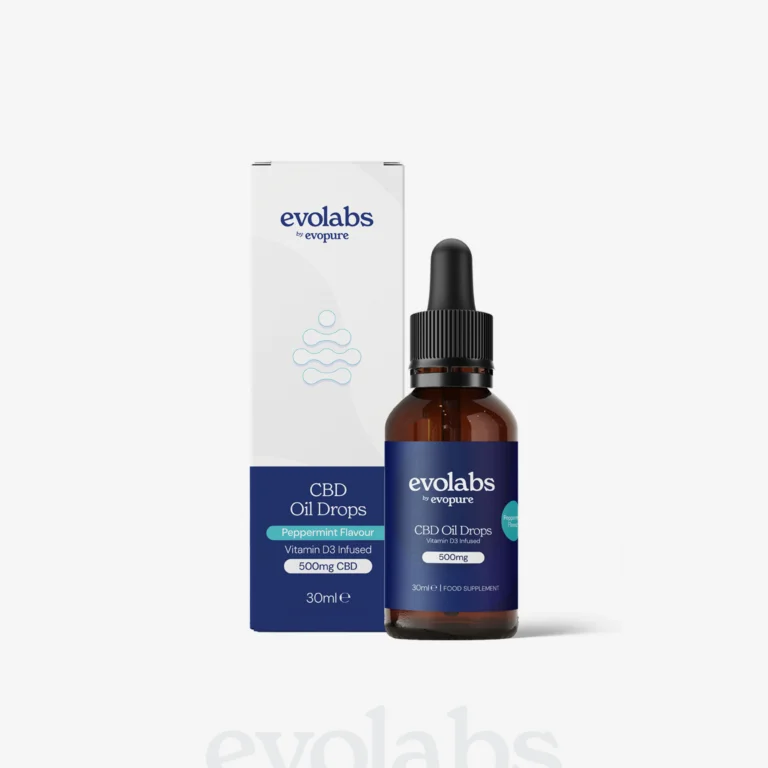
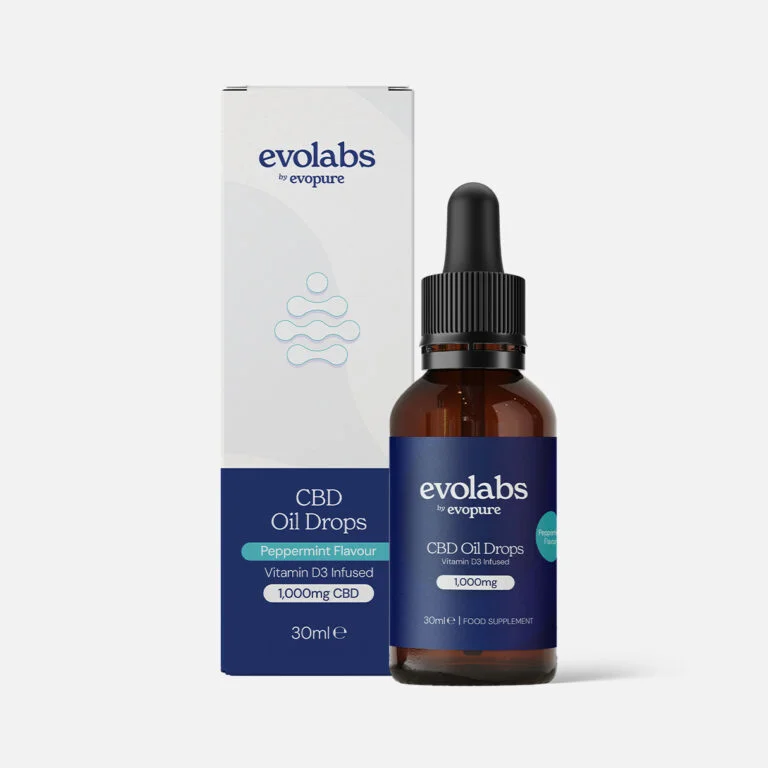
If you’d like your vitamin D and CBD in one, Mint CBD Oil + Vit D3 (1,000mg) has 10µg (400 IU) of vegan D3 per half pipette, 200% NRV. Vitamin D contributes to the normal function of the immune system. About 0.3ml gives 10mg of CBD.
The FSA’s 10mg a day figure is precautionary advice rather than a legal limit, set while longer-term safety research continues. At Evopure we think it is a very cautious figure, and many adults use more. If you go above it, increase slowly, and check with your GP or pharmacist first if you take any medication.
iIf you take HRT or any regular medicines, check with your GP or pharmacist first. We don’t recommend our products during pregnancy or breastfeeding. Adults only.
When to see a GP
The NHS advises seeing a GP if:
- you think you have symptoms of perimenopause or menopause and want to know your options
- you get palpitations (a fast or pounding heartbeat)
- you still have periods but are bleeding more, not less, than before
- your periods change or stop before 45
Bleeding after menopause: if you haven’t had a period for 12 months or more and you get any vaginal bleeding, even spotting or pink or brown discharge, see a GP. The NHS says it’s not usually serious but can be a sign of cancer, so it should always be checked.
If your mood is very low or you have thoughts of harming yourself, call NHS 111, Samaritans on 116 123, or 999 in an emergency.
Next step
Flow CBD Oil gives 10mg of CBD in about 0.2ml of the 500mg bottle, with ashwagandha and maca. Not for anyone with a thyroid, liver or autoimmune condition, or alongside another ashwagandha product. Or choose Mint CBD Oil + Vit D3 for 10µg of vegan D3 per half pipette.
Add Flow CBD Oil 500mg to bag or choose another strength
Add Mint CBD Oil + Vit D3 to bag See ingredients
On the FSA public list (validated), with batch reports on our lab testing page. Made in the UK from US-grown hemp, adults only. Subscribe and save 25% on your first order, then 20%. New to Evopure? Join our emails for 20% off a one-off first order. Free UK delivery over £45. If you take any regular medicines, check with your GP or pharmacist first. We don’t recommend our products during pregnancy or breastfeeding.
Sources 12
- NHS. What are menopause and perimenopause?
- NHS. Symptoms of menopause and perimenopause.
- NHS. Things you can do to help with menopause and perimenopause symptoms.
- NHS. Types of hormone replacement therapy (HRT).
- NHS. Early or premature menopause.
- NICE. Menopause: identification and management (NG23).
- NHS inform. Menopause.
- Somerset NHS Menopause Service (Glastonbury Surgery). Contraception in the perimenopause and menopause.
- Gold EB, et al. Longitudinal analysis of the association between vasomotor symptoms and race/ethnicity across the menopausal transition (SWAN). Am J Public Health, 2006. PubMed 16735636.
- McKinlay SM, et al. The normal menopause transition. Maturitas, 1992. PubMed 1565019.
- NHS. Vitamin D.
- FSA (gov.uk). Cannabidiol (CBD) guidance.
iThis guide is general information, not medical advice. Speak to your GP or a menopause specialist about your own symptoms and treatment.