




Last updated: October 2026
Psoriasis is a long-term, immune-related skin condition that causes raised, scaly patches, most often on the elbows, knees, scalp and lower back. It isn’t contagious. There’s no cure yet, but treatments such as creams, light therapy and specialist tablets or injections usually keep it well controlled. See a GP if you think you have it.
Below: the main types, scalp psoriasis, psoriasis vs eczema, whether it’s genetic, triggers, what helps and psoriatic arthritis.
A note before you read: our products aren’t a treatment for psoriasis, and nothing here replaces advice from your GP, pharmacist or dermatology team.
What is psoriasis?
In psoriasis the skin makes new cells far too quickly. Psoriasis UK (formerly the Psoriasis Association) explains that skin cells are normally replaced every 21 to 28 days, but in psoriasis this takes just a few days. The extra cells pile up as raised, flaky patches called plaques.
It starts in the immune system: overactive immune cells release inflammatory signals that speed up skin growth. What first sets this off isn’t fully understood.
- How common? About 1 in 50 people, says the British Association of Dermatologists (BAD). Men and women are affected equally.
- When does it start? Often between 15 and 25, or 50 and 60, says the NHS, but any age is possible.
- Is it contagious? No. You can’t catch it or pass it on.
On white skin, patches usually look pink or red with silvery-white scale. On brown or black skin they can look purple, grey or dark brown. They can be itchy, sore or both, and tend to flare and settle in cycles.
Types of psoriasis
Many people have one main type, but you can have more than one at once.
| Type | What it looks like | Where | Good to know |
|---|---|---|---|
| Plaque (psoriasis vulgaris) | Raised, well-defined patches with silvery scale | Backs of elbows, fronts of knees, lower back, scalp | The most common type: up to 90% of people with psoriasis have it |
| Scalp | Fine to thick scale, can spread past the hairline | Scalp, forehead, neck, behind the ears | Often the first area affected. Can look like dandruff |
| Flexural (inverse) | Smooth, shiny, much less scaly patches | Armpits, under the breasts, groin, genitals, between the buttocks | Friction and sweat make it worse. Often mistaken for a fungal infection |
| Guttate | Lots of small “teardrop” spots up to 1cm across | Chest, back, arms, legs | Most common in children and young adults. Often follows strep throat |
| Nail | Pits, discolouration, thickening, nail lifting | Fingernails and toenails | Affects up to half of people with psoriasis. Easily confused with fungal nail infection |
| Pustular | Pus-filled bumps that aren’t infectious | Palms and soles, or widespread | The widespread form is a medical emergency |
| Erythrodermic | Red, hot, peeling skin | Most of the body | Very rare (1% to 2% of people with psoriasis). Get urgent help |
“Psoriasis vulgaris” just means common psoriasis, which is plaque psoriasis. If your nails are changing without any skin patches, see our guide to brittle nails.
Scalp psoriasis and psoriasis in the ears
Psoriasis UK says the scalp is one of the most common places for plaque psoriasis, and often the first. It can creep onto the forehead, the back of the neck and around the ears.
How to get rid of psoriasis on the scalp
It can’t be cured for good, but it can usually be cleared or kept under control. The idea is to lift the scale, then treat the skin underneath.
- Soften the scale. Psoriasis UK suggests olive or coconut oil. Leave it on for a while, then gently comb or wash the loosened scale away.
- Don’t pick or scratch. Broken skin can become infected and can trigger new patches.
- Try a medicated shampoo from a pharmacy, such as coal tar or salicylic acid. Part your hair and work it into the scalp, not just the hair.
- See a GP if it isn’t clearing. NICE guidance (CG153) recommends a strong steroid scalp treatment first. If that isn’t enough after a few weeks, options include a steroid shampoo or mousse, a salicylic acid scale remover, or a combined steroid and vitamin D product.
- Give it time. Treatments take weeks, not days.
A Cochrane review of 59 trials found steroid scalp treatments, alone or combined with vitamin D, worked better than vitamin D treatments alone. Evidence on salicylic acid and tar was too limited to judge well, although both are long-standing NHS options.
Best shampoo for scalp psoriasis
| Shampoo | What it does | Evidence |
|---|---|---|
| Coal tar | A long-standing treatment for scalp and skin psoriasis | Part of the NHS and NICE pathway, with fewer modern trials |
| Salicylic acid | Loosens and lifts thick scale | NICE suggests scale removers alongside steroid treatment |
| Ketoconazole (such as Nizoral) | An antifungal aimed at the yeast behind dandruff | Licensed for dandruff and seborrhoeic dermatitis, not psoriasis |
| Steroid (prescription) | Reduces the inflammation under the scale | The strongest trial evidence |
Scalp psoriasis and seborrhoeic dermatitis can overlap, which is when a ketoconazole shampoo may be suggested alongside psoriasis treatment.
Can scalp psoriasis cause hair loss?
It can cause temporary thinning, usually from thick scale or scratching, and Psoriasis UK says hair should grow back once it settles. If your hair is falling out without scaly patches, see why is my hair falling out?
Psoriasis in the ears
The NHS lists the head and behind the ears among common places for psoriasis. It can also affect the outer ear and ear canal, where scale can mix with earwax.
- Don’t use cotton buds or fingers in your ear: the NHS warns they push wax further in.
- Ask a pharmacist or GP before putting any cream or drops in your ear.
- See a GP if your ear feels blocked, your hearing changes, or it’s painful or weeping.
Psoriasis vs eczema: how to tell the difference
Both cause dry, itchy, scaly skin that flares and settles, so they’re easy to mix up. These patterns help, but a GP can tell you for sure.
| Psoriasis | Eczema (atopic eczema) | |
|---|---|---|
| Look | Raised, thick plaques with clear edges and silvery or grey scale | Dry, cracked or rough skin with less defined edges. Can blister or weep |
| Where | Outer elbows, fronts of knees, scalp, lower back, nails, skin folds | Hands, elbows and knees, and the face in babies |
| Itch | Itchy, sore or burning | Itch is usually the main symptom |
| Usual age it starts | Often 15 to 25 or 50 to 60 | Usually babies and young children |
| Triggers | Stress, strep throat, skin injury, smoking, alcohol, some medicines | Soaps, detergents, pollen, dust mites, some foods, heat, stress |
| Linked conditions | Psoriatic arthritis | Asthma and hay fever |
Moisturisers and steroid creams are used for both, but psoriasis also has its own options such as vitamin D-based creams and light therapy. For everyday skin care, see dry skin, and for rashes that flare in stressful times, stress rash.
Conditions that look like psoriasis
- Seborrhoeic dermatitis and dandruff: greasy, yellowish flakes on the scalp, eyebrows and sides of the nose.
- Fungal infections (such as ringworm): often confused with flexural and nail psoriasis. A skin or nail scraping can tell them apart.
- Lichen planus: the NHS describes shiny, raised, purple-red blotches, often on the inner wrists, sometimes with white patches in the mouth. It isn’t contagious and on the skin usually clears in 9 to 18 months.
Is psoriasis genetic?
Partly. The BAD says there is a strong family link, but inheritance is complex: many genes each add a little risk, and something usually needs to set it off.
- In a study of more than 10,700 Danish twin pairs, genes explained about 68% of the differences in who developed psoriasis.
- Yet when one identical twin had psoriasis, the other had it only about a third of the time.
- A nationwide study in Taiwan found people with an affected parent, sibling or child were about 5.5 times more likely to have psoriasis.
So family history raises your risk, but it doesn’t decide it. Plenty of people with an affected parent never develop psoriasis, and others develop it with no family history.
Common psoriasis triggers
- Stress. Psoriasis UK says stress can both trigger psoriasis and make it worse. See stress symptoms.
- Skin injury (the Koebner effect). New patches can appear in cuts, scratches, tattoos, piercings or where clothes rub.
- Infections, especially strep throat, the classic trigger for guttate psoriasis.
- Smoking. Smokers are more likely to develop psoriasis.
- Alcohol. Heavy drinkers may find their psoriasis is worse.
- Some medicines, including lithium, some beta blockers and the antimalarial chloroquine. Never stop a prescribed medicine yourself: talk to your GP or pharmacist.
- Obesity, pregnancy and sunlight, which the NHS lists as possible triggers. Sunlight helps many people, but sunburn is a skin injury.
A simple diary of flares can help you spot your own pattern.
What helps psoriasis
UK treatment follows NICE guideline CG153 in steps. Most people are treated by their GP; severe or stubborn psoriasis is managed by a dermatologist.
| Step | What it involves | Who it’s for |
|---|---|---|
| Emollients | Daily moisturisers, also used as a soap substitute | Everyone with psoriasis |
| Topical treatments | Steroid creams, vitamin D-based creams, combined steroid and vitamin D products, coal tar, dithranol | First-line, from a GP |
| Phototherapy | Controlled ultraviolet light in hospital, usually a few times a week for several weeks | Widespread psoriasis, or when creams aren’t enough |
| Systemic medicines | Tablets or injections that calm the immune system throughout the body | Severe psoriasis, under a specialist |
| Biologic and targeted medicines | Usually injections that block specific parts of the immune response | Severe psoriasis that hasn’t responded to other treatment |
- Review new creams after about 4 weeks (NICE’s advice for adults). Strong steroids are used in courses, and the face and skin folds need gentler options.
- Vitamin D creams aren’t vitamin D supplements. For general UK supplement advice, see vitamin D in winter.
- Emollients and fire: the NHS warns that clothing and bedding with emollient on them burn more easily, so keep away from flames and don’t smoke.
- Sunbeds aren’t a substitute for medical light therapy, which is carefully dosed and monitored.
If you’ve read about CBD and skin, we’ve looked at the research honestly in CBD for psoriasis. In short, CBD isn’t a treatment for psoriasis.
Psoriatic arthritis
Psoriatic arthritis is an inflammatory arthritis linked to psoriasis. Psoriasis UK says around a quarter of people with psoriasis develop it, and the BAD says about 1 in 5. A review of 266 studies found 19.7%. It’s most likely within 10 years of psoriasis starting, and occasionally comes before any skin patches.
Signs to look out for:
- Joint pain, swelling and stiffness, often worse in the morning
- A whole finger or toe swelling like a sausage
- Pain where tendons attach, such as the back of the heel
- Nail pits or lifting, and feeling drained of energy
NICE recommends a yearly check for psoriatic arthritis for everyone with psoriasis. If joint symptoms keep coming back, see your GP even if your skin is clear: early referral to a rheumatologist helps prevent joint damage. Treatments include anti-inflammatory painkillers, steroid injections, disease-modifying medicines (DMARDs), biologics and physiotherapy.
See our guides to arthritis and joint pain, and gout, which can cause similar joint symptoms.
Psoriasis and the rest of your body
Psoriasis involves inflammation, so it isn’t only skin deep. Knowing the links helps you keep up with check-ups.
- Heart and metabolism. The NHS says people with psoriasis have a higher chance of metabolic syndrome, which can lead to diabetes, heart disease and blood clots. NICE recommends a heart risk check for adults with severe psoriasis.
- Bowel. There’s a higher chance of inflammatory bowel disease, such as Crohn’s.
- Mood. The BAD lists anxiety and depression among linked conditions. If you’ve been feeling flat for a while, read low mood vs depression and talk to your GP.
Can psoriasis affect the liver?
Psoriasis doesn’t occur in the liver, despite searches for “psoriasis of the liver”. There are two real links. People with psoriasis are about twice as likely to have fatty liver disease, according to a review of mostly low to moderate quality studies, probably because of shared metabolic risks. And some psoriasis tablets need regular liver blood tests and limits on alcohol. Your specialist will explain what applies to you.
Day-to-day habits that help
The NHS recommends these alongside treatment, not instead of it.
- Moisturise daily, even when your skin is clear. Don’t dip fingers in the pot or share emollients.
- Aim for a healthy weight. A review by psoriasis specialists at Guy’s and St Thomas’ found that, in people living with obesity, weight loss through diet or exercise improved psoriasis.
- Stop smoking. Ask your GP or pharmacist about free NHS stop smoking support.
- Cut down on alcohol, and check it’s safe with your medicines. See how to cut down on alcohol.
- Eat a balanced diet. No diet has been proven to clear psoriasis, so be wary of anything sold as a cure.
- Manage stress and sleep. Itch can disturb sleep, and poor sleep makes stress harder to handle. See how to lower cortisol naturally and sleep hygiene.
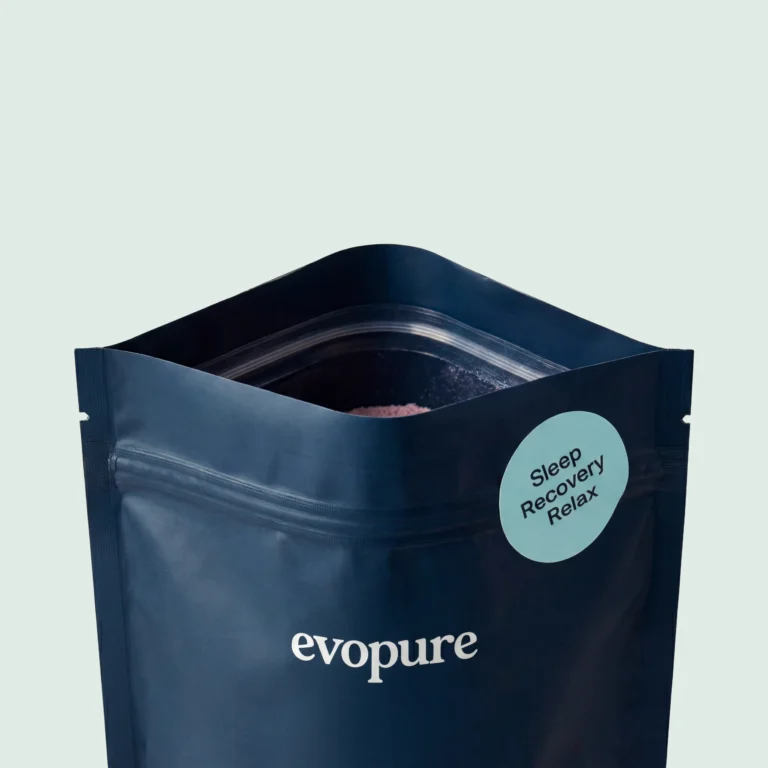
If stress is one of your triggers, an evening wind-down is worth protecting. Our Magnesium Glycinate Sleep Complex is a berry-flavoured bedtime drink with magnesium bisglycinate and citrate, L-theanine and chamomile. Magnesium contributes to normal psychological function and to a reduction of tiredness and fatigue. It isn’t a treatment for psoriasis or any skin condition. Adults only; we don’t recommend our products during pregnancy or breastfeeding, and if you take any medication, check with your GP or pharmacist first.
When to see a GP
See a GP if you think you have psoriasis, if treatment isn’t working or causes side effects, if joint pain or swelling keeps coming back, if psoriasis is affecting your mood or sleep, or if you’re planning a pregnancy, as some treatments need to change.
Call 999 or go to A&E if your skin quickly turns red with white, pus-filled bumps that join together, if patches on your feet turn yellow-brown and fill with pus, or if pus-filled bumps appear on your fingertips or toes, especially with a fast heartbeat, high temperature or shivering. Red, hot, peeling skin over most of the body also needs urgent help.
Related guides
- Redness and flushing on the cheeks and nose without scale is more often rosacea: see our rosacea guide.
- If patches are itchy, dry and in the skin creases rather than thick and scaly, it may be eczema: see our eczema guide.
- Itchy welts that fade within 24 hours are more likely to be hives than psoriasis.
FAQs
Is psoriasis genetic?
Partly. Psoriasis runs in families and twin studies suggest genes explain about two thirds of the differences in who gets it, but it isn’t inherited in a simple way. Many people with a family history never get it.
Psoriasis vs eczema: how can I tell?
Psoriasis usually forms raised, clearly edged patches with silvery scale on the outer elbows, knees, scalp and lower back. Eczema is usually itchier, has less defined edges and often starts in childhood. A GP can confirm which it is.
How do you get rid of psoriasis on the scalp?
Soften the scale with oil, lift it gently without picking, and try a coal tar or salicylic acid shampoo. If it doesn’t clear, a GP can prescribe a steroid scalp treatment, which has the strongest evidence, or a steroid and vitamin D combination.
Is psoriasis contagious?
No. Psoriasis can’t be caught or passed on by touch, sharing towels, swimming pools or sex. Even the bumps of pustular psoriasis aren’t infectious.
Is psoriasis an autoimmune disease?
It’s described as an immune-mediated inflammatory disease. Overactive immune cells drive inflammation that makes skin cells grow far faster than normal.
Can psoriasis affect the liver?
Psoriasis doesn’t occur in the liver, but people with psoriasis are more likely to have fatty liver disease, and some psoriasis tablets need regular liver blood tests and limits on alcohol.
Does Nizoral shampoo help psoriasis?
Ketoconazole shampoo such as Nizoral is licensed for dandruff and seborrhoeic dermatitis, not psoriasis. It may help if you have both, but coal tar, salicylic acid and prescribed steroid scalp treatments are the usual options.
Sources
- NHS. Psoriasis and Psoriatic arthritis.
- NICE. Psoriasis: assessment and management (CG153). Updated 2017.
- Psoriasis UK. About psoriasis, Scalp psoriasis, Triggers and Psoriatic arthritis.
- British Association of Dermatologists. Psoriasis: an overview (2023).
- Schlager JG et al. Topical treatments for scalp psoriasis. Cochrane Database Syst Rev 2016. PMID 26915340.
- Alinaghi F et al. Prevalence of psoriatic arthritis in patients with psoriasis. J Am Acad Dermatol 2019. PMID 29928910.
- Lønnberg AS et al. Heritability of psoriasis in a large twin sample. Br J Dermatol 2013. PMID 23574549.
- Huang YH et al. Familial aggregation of psoriasis. J Clin Med 2019. PMID 30669308.
- Candia R et al. Risk of non-alcoholic fatty liver disease in patients with psoriasis. J Eur Acad Dermatol Venereol 2015. PMID 25418531.
- Mahil SK et al. Does weight loss reduce the severity and incidence of psoriasis or psoriatic arthritis? Br J Dermatol 2019. PMID 30729517.
- NHS. Atopic eczema, Lichen planus and Earwax build-up.
- Electronic Medicines Compendium. Ketoconazole 2% shampoo: product characteristics.
This guide is general information, not medical advice. Evopure makes the Magnesium Glycinate Sleep Complex, which is not a treatment for psoriasis.