Last updated: 17 November 2026
Yes, you can take magnesium and iron, but not at the same time. The NHS says to leave a gap between ferrous sulfate and other medicines and to tell your pharmacist about magnesium supplements. The BNF says iron should be taken 1 hour before or 2 hours after antacids. Iron in the morning, magnesium in the evening is simplest.
Checked against the BNF, NHS medicine pages and PubMed on 17 November 2026. This is general information, not medical advice.
What the BNF and NHS say
Neither source lists magnesium supplements and iron as a named pair, so the advice comes from three entries that all point the same way: keep them apart, and let your pharmacist set the gap.
| Source | What it says | What it means for you |
|---|---|---|
| BNF, iron interactions | Antacids decrease the absorption of oral iron. Iron should be taken 1 hour before or 2 hours after antacids | Many indigestion remedies contain magnesium. Keep them at least this far from iron |
| BNF, magnesium interactions | Oral magnesium preparations should preferably not be taken at the same time as other drugs | No iron entry, but a general “not at the same time” rule |
| NHS, ferrous sulfate | Leave a gap between ferrous sulfate and any other medicine. Tell a pharmacist about supplements containing magnesium | Your pharmacist tells you how long the gap should be |
| NHS, ferrous fumarate | Medicines or herbal remedies containing magnesium may affect how it works | The same applies to other iron tablets |
All four were checked on 17 November 2026. The NHS ferrous sulfate pages were last reviewed on 9 February 2023 and the ferrous fumarate page on 13 March 2026. Laxatives such as magnesium hydroxide (Milk of Magnesia) are on the NHS ferrous sulfate list too, so they count as well as supplements.
Why magnesium can get in the way of iron
Iron tablets dissolve best in an acidic stomach. Some magnesium compounds, such as magnesium oxide and magnesium trisilicate, are used as antacids: they neutralise acid and can bind iron in the gut. In a 1994 lab study, these poorly soluble forms soaked up iron in a simulated gut, while a soluble magnesium salt did not.
The human evidence is older, small and mixed:
- A 1969 report found magnesium trisilicate, an old indigestion remedy, reduced iron absorption.
- A 1986 study found a liquid aluminium and magnesium hydroxide antacid did not significantly reduce iron absorption, while calcium carbonate cut the rise in blood iron by 67%.
No study we could find has tested magnesium glycinate or citrate supplements with iron tablets. That gap is the reason to play safe: if you are treating low iron, every dose counts, and spacing costs nothing. Calcium is a bigger worry than magnesium for iron: see magnesium and calcium if you take both.
How long after iron can you take magnesium?
At least 2 hours is a sensible minimum, based on the BNF’s antacid advice (iron 1 hour before or 2 hours after antacids). The NHS doesn’t give a fixed time for ferrous sulfate and supplements: it says to ask a doctor or pharmacist how long the gap should be. In practice, most people avoid the question by taking iron in the morning and magnesium in the evening, which leaves 10 hours or more.
The order matters less than the gap. If you forget and take them together once, don’t double up: take your next iron dose as normal. The NHS says never to take 2 doses of ferrous sulfate to make up for a missed one.
A simple day plan
Fit the magnesium around the iron, not the other way round. The NHS says ferrous sulfate works best on an empty stomach, 30 minutes before eating or 2 hours after, and to leave 2 hours before tea, coffee, eggs or dairy. If it upsets your stomach, you can take it with or after food.
| Time | What | Why |
|---|---|---|
| 7am | Iron tablet with water (or orange juice if your pharmacist suggests it) | Empty stomach, 30 minutes before breakfast (NHS) |
| 7.30am | Breakfast without tea, coffee, eggs or dairy | Save these until 9am or later (NHS 2 hour gap) |
| Daytime | Other medicines as prescribed | Ask your pharmacist about levothyroxine and antibiotics (see below) |
| Evening | Magnesium supplement | Many hours from the iron, well past the 2 hour BNF antacid gap |
On iron 2 or 3 times a day? Then the gaps are tighter. Ask your pharmacist where magnesium fits, or pause it until your course of iron ends. If your doctor has moved you to alternate days because of side effects, keep magnesium in the evening every day either way. More on iron timing in our guide to iron tablets and on magnesium timing in the best time to take magnesium.
Magnesium glycinate with iron tablets
Most people can take magnesium glycinate alongside a course of iron tablets, as long as they are taken at different times of day. Glycinate (or bisglycinate) is a supplement form, not an antacid, and it is usually gentle on the stomach. No study has tested it with ferrous sulfate, so keep at least 2 hours between them, and ideally have the magnesium in the evening.
One practical upside: iron often causes constipation, and magnesium citrate and oxide can loosen stools. If your bowels change, tell your pharmacist rather than adjusting the iron yourself. See magnesium glycinate, magnesium glycinate side effects and foods that help constipation.
Other things to keep away from iron
Iron clashes with more medicines than magnesium does. These are the BNF gaps for the common ones (checked 17 November 2026):
- Levothyroxine: at least 4 hours from iron. Magnesium also needs a 4 hour gap from levothyroxine: see magnesium and levothyroxine.
- Doxycycline and lymecycline: take the antibiotic 2 to 3 hours after iron. Ciprofloxacin and levofloxacin: at least 2 hours apart. Both groups need a gap from magnesium too: see magnesium and antibiotics.
- Calcium carbonate: take it 1 hour before or 2 hours after iron. The NHS says calcium can reduce the effect of ferrous sulfate.
- Risedronate: at least 2 hours from iron. Bone medicines need a gap from magnesium as well.
- Zinc: iron and zinc can each make the other work less well, and the BNF gives no set gap. See magnesium vs zinc.
Taking omeprazole or another acid reflux tablet for years? A large US study linked 2 years or more of these medicines with a higher risk of iron deficiency, and the MHRA has warned they can lower magnesium. Don’t stop them yourself; mention them to your GP if your levels stay low. See magnesium and omeprazole. Every medicine that needs a magnesium gap is in what not to take with magnesium.
Who should check with a GP or pharmacist first
Ask before adding magnesium to iron tablets if you:
- have kidney disease or reduced kidney function. Your kidneys clear extra magnesium, so it can build up.
- take levothyroxine, antibiotics, bone medicines, digoxin or water tablets, or several regular medicines.
- are pregnant or breastfeeding. Follow your midwife’s or GP’s advice on iron; see magnesium in pregnancy.
- have haemochromatosis or have been told your iron is high. The NHS says to avoid iron and vitamin C supplements then.
- are buying iron without a blood test. Tiredness has many causes, and the NHS says 17mg a day or less of iron from supplements is unlikely to cause harm unless a GP advises more.
Keep iron out of sight and reach of children. The NHS warns that an iron overdose can be fatal for a young child. If a child, or you, takes more than the recommended dose, contact NHS 111 straight away.
Low iron and low magnesium can both leave you tired, and the symptoms overlap. Ask your GP for a blood test rather than guessing: see iron deficiency symptoms and signs of magnesium deficiency. Restless legs is one place both come up: restless legs explains why your GP may check your iron.
Where Evopure fits
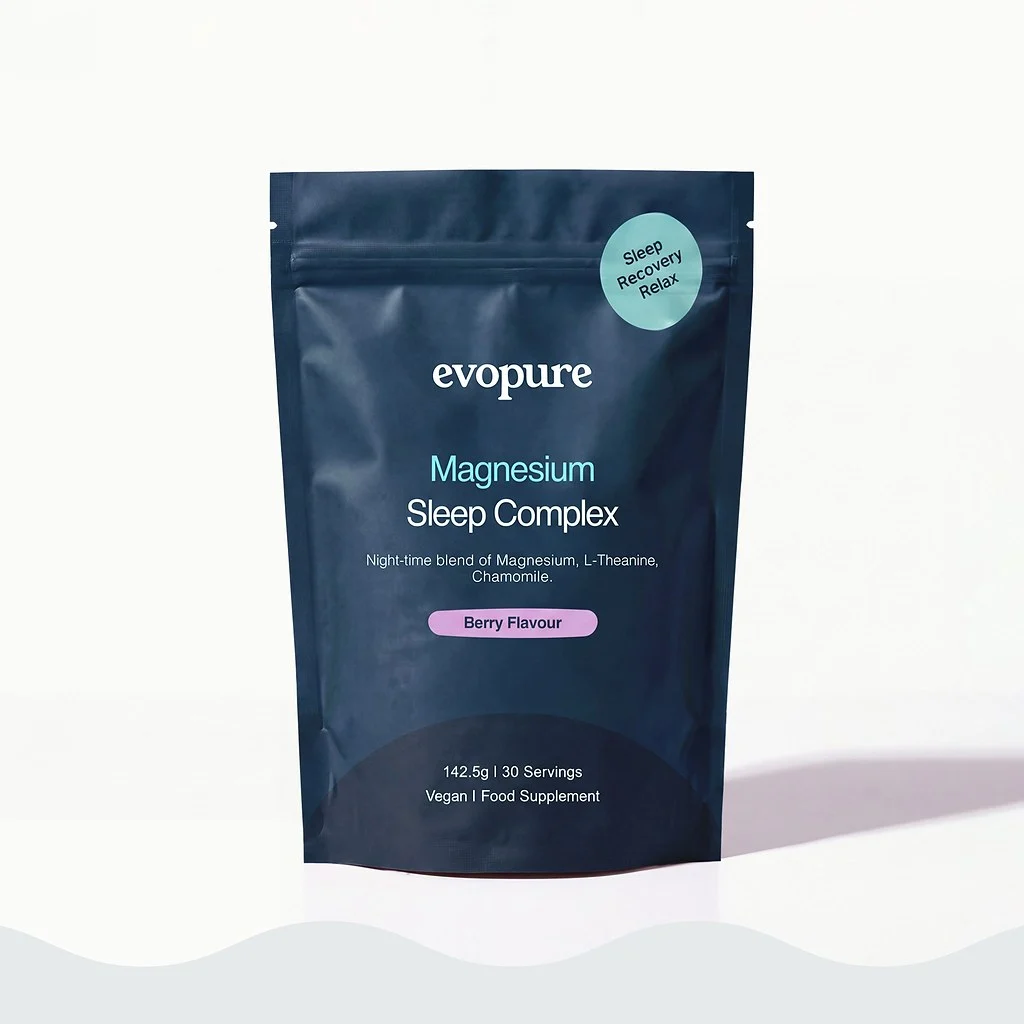
We don’t make an iron supplement, and if a blood test shows low iron you need the dose your GP prescribes. If you also want magnesium, our Magnesium Glycinate Sleep Complex is a berry drink powder with 290mg of magnesium (77% NRV) per 4.75g serving, from magnesium bisglycinate and citrate, plus 500mg glycine and 100mg L-theanine. It is made for the evening, so it sits at the opposite end of the day from a morning iron tablet. It contains no iron and no calcium, and it isn’t an antacid.
Our pick, for the evening
Magnesium Glycinate Sleep Complex
Magnesium Glycinate Sleep Complex. Magnesium contributes to a reduction of tiredness and fatigue, to normal muscle function and to electrolyte balance. Have it at least 2 hours after your iron tablet, or as your pharmacist advises.
Add Magnesium Glycinate Sleep Complex to bag See ingredients and reviews
Rated 4.7 out of 5 from 15 ratings on the product page (via Lipscore, checked 17 November 2026). We make it, so we’re not neutral. Vegan and made in the UK. Free UK delivery over £40.
Subscribe £22.49One-off £29.99
View productWhy only one product? Iron tablets are a medicine. Our Reishi hot chocolate pack says it isn’t for people taking medication (and its cacao would need a gap from iron too), and the FSA advises people on any medication not to take CBD unless under medical direction. Comparing magnesium drinks and powders? See best magnesium supplement UK.
How much magnesium and iron is safe?
Taking both doesn’t change how much of either you need. The figures below are for food and over-the-counter supplements. If your GP has prescribed iron for anaemia, take the prescribed dose: it is much higher on purpose.
| Fact | Magnesium | Iron |
|---|---|---|
| Daily need, men | 300mg | 8.7mg |
| Daily need, women | 270mg | 14.8mg (19 to 49), 8.7mg (50 and over) |
| From supplements, unlikely to cause harm | 400mg a day or less | 17mg a day or less, unless your GP advises more |
| Too much can cause | Diarrhoea (over 400mg) | Constipation, feeling or being sick, stomach pain (over 20mg) |
All figures from the NHS vitamins and minerals pages. A ferrous sulfate 200mg tablet has 65mg of elemental iron (BNF), which is why it is a medicine rather than a daily top-up. For food first, see iron-rich foods, foods high in magnesium and how much magnesium per day. If you take a multivitamin with both minerals in small amounts, that is fine as it is: the spacing advice is about iron tablets.
Next step
Magnesium Glycinate Sleep Complex
Iron in the morning, magnesium in the evening. The Magnesium Glycinate Sleep Complex gives 290mg of magnesium per serving as an evening berry drink. Magnesium contributes to a reduction of tiredness and fatigue.
Add Magnesium Glycinate Sleep Complex to bag See ingredients and reviews
Subscribe and save 25% on your first order, then 20%. New to Evopure? Join our emails for 20% off a one-off first order. Free UK delivery over £40. Adults only. We don’t recommend our products during pregnancy or breastfeeding.
Subscribe £22.49One-off £29.99
View productTaking other medicines too? Our guide to what not to take with magnesium lists every medicine that needs a gap from magnesium.
Sources 13
- BNF (NICE). Iron interactions. Checked 17 November 2026.
- BNF (NICE). Magnesium interactions and antacids interactions. Checked 17 November 2026.
- NHS. Taking ferrous sulfate with other medicines and herbal supplements and how and when to take ferrous sulfate (reviewed 9 February 2023).
- NHS. Ferrous fumarate (reviewed 13 March 2026).
- BNF (NICE). Anaemia, iron deficiency (iron content of ferrous salts). Checked 17 November 2026.
- NHS. Haemochromatosis: treatment (reviewed 29 March 2023).
- NHS. Vitamins and minerals: iron and others (magnesium).
- Hall GJ, Davis AE. Inhibition of iron absorption by magnesium trisilicate. Med J Aust, 1969.
- O’Neil-Cutting MA, Crosby WH. The effect of antacids on the absorption of simultaneously ingested iron. JAMA, 1986.
- Disch G et al. Interactions between magnesium and iron. In vitro studies. Arzneimittelforschung, 1994.
- Lam JR et al. Proton pump inhibitor and histamine-2 receptor antagonist use and iron deficiency. Gastroenterology, 2017.
- MHRA. Proton pump inhibitors in long-term use: reports of hypomagnesaemia. Drug Safety Update, April 2012.
- FSA (gov.uk). Cannabidiol (CBD) guidance.