



Last updated: June 2026
Maitake mushrooms — also called “hen of the woods” — have been used in traditional Chinese and Japanese medicine for centuries. Described in ancient Han Dynasty texts as a longevity tonic, they gained serious scientific attention in the 1980s when researchers discovered their immune-modulating properties. Here’s everything you need to know.
What are maitake mushrooms?
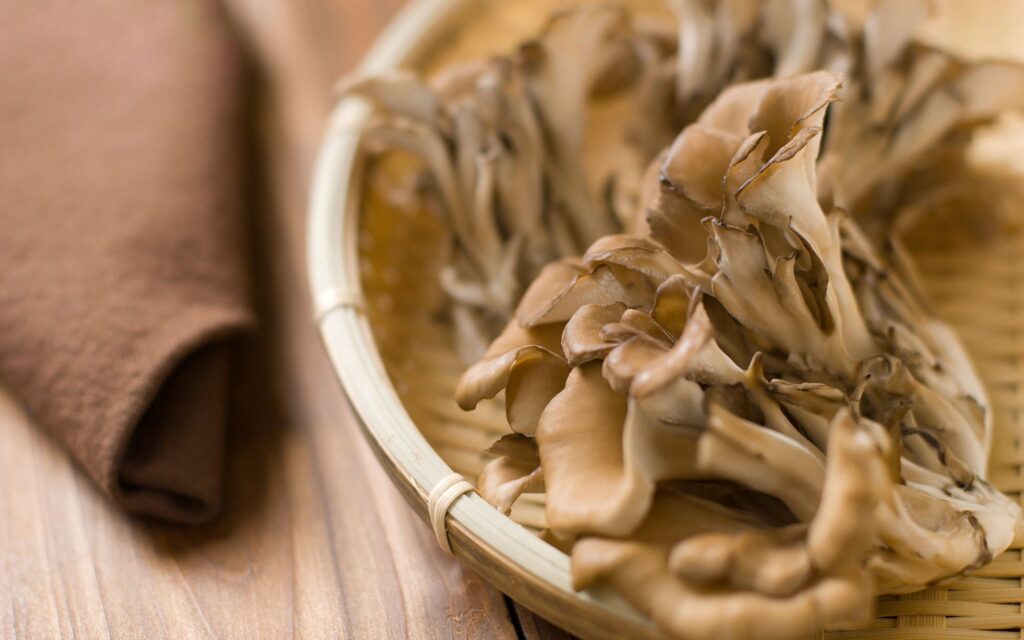
Maitake (Grifola frondosa) are edible fungi that grow in overlapping clusters at the base of oak trees — the layered caps resembling hen feathers, hence the nickname. They are cultivated across East Asia and have a long culinary and medicinal history. In 1984, a Japanese research team discovered that maitake extracts could stimulate the immune system in mice, sparking decades of ongoing research.
Maitake are considered adaptogens — compounds that help the body adapt to and recover from stress. They are high in beta-glucans, polysaccharides, antioxidants and potassium.
Read more: Medicinal mushrooms for inflammation
Potential health benefits of maitake mushrooms
Immune system support
Maitake’s most documented property is immune modulation via its high concentration of beta-glucans. These polysaccharides stimulate immune cells — supporting the body’s ability to identify and respond to infections. Chaga, reishi and turkey tail share similar mechanisms.
Blood sugar and metabolic support
Maitake contains alpha-glucosidase inhibitors that slow carbohydrate absorption in the gut — helping stabilise blood sugar after meals. It may also improve insulin sensitivity and reduce insulin resistance, and contains compounds that could enhance brown adipose tissue activity, supporting energy expenditure. Researchers have explored its relevance to type 2 diabetes management.
Cardiovascular support
Beta-glucans in maitake may help lower LDL cholesterol. Maitake also provides potassium (important for blood pressure regulation), antioxidants that protect against free radical damage, and anti-inflammatory compounds relevant to long-term cardiovascular health.
Weight management
Low in calories (25 kcal per cup) and high in dietary fibre — supporting satiety. Blood sugar stabilisation and potential effects on fat storage and energy expenditure make maitake an interesting ingredient for those managing weight.
Cancer research (exploratory)
Some studies suggest maitake beta-glucans may have anti-tumour properties by stimulating immune cells to identify cancer cells and inducing apoptosis. Some research also suggests maitake may reduce chemotherapy side effects. Important: maitake should never be considered a cancer treatment. Always follow your oncology team’s guidance.
Side effects and cautions
- Blood thinning — maitake contains compounds affecting platelet aggregation; may interact with blood-thinning medications
- Immune overstimulation — in people with autoimmune diseases, maitake’s immune-boosting properties could exacerbate symptoms
- Hormonal effects — compounds in maitake may affect oestrogen levels; consult your GP if you have pre-existing hormonal conditions
- Photosensitivity — maitake contains psoralens that may increase skin sensitivity to sunlight in some individuals
- Heavy metal risk — mushrooms can absorb heavy metals from soil; always source from suppliers with rigorous contamination testing
- Drug interactions — may interact with chemotherapy agents, immunosuppressants and blood sugar-lowering medications
How to use maitake mushrooms
Cooking
Sauté sliced maitake in butter or oil until tender and lightly browned — season with salt, pepper and garlic. Roast at 190°C for 15–20 minutes for caramelised sweetness. Grill with oil or marinade over medium heat 3–5 minutes per side. Add to soups, miso broth or Japanese dashi for depth of flavour.
Mushroom tea
Simmer dried maitake in water for several hours to extract a savoury, earthy tea. A traditional Japanese preparation believed to support immunity.
Powder and tincture
Dried and ground maitake powder can be added to smoothies, soups or sprinkled over food. Tinctures (liquid extracts in alcohol or glycerin) can be taken orally or added to drinks.
Dosage guidance
Dosage varies by product, concentration, reason for use and individual. General research-based ranges:
- Immune support: 500–1,500 mg extract/day in 2–3 divided doses
- Blood sugar management: 1–3 g extract/day in 2–3 divided doses
- Weight management: approximately 3 g extract/day in divided doses
Always follow your product label’s recommendations and consult a healthcare professional before starting any mushroom supplement, especially if you take medications or have a health condition.
Who should avoid maitake?
- People with bleeding disorders or taking blood thinners (warfarin, aspirin)
- Those with autoimmune conditions (lupus, RA, MS)
- Those taking immunosuppressant medications
- Pregnant or breastfeeding individuals
- People with mushroom allergies
Frequently asked questions
What are maitake mushrooms good for?
Primarily studied for immune modulation, blood sugar regulation, cardiovascular support and weight management. All evidence is preliminary and they should not replace medical care.
What are the side effects of maitake mushrooms?
Possible effects include interactions with blood thinners and immunosuppressants, hormonal effects, photosensitivity, and immune overstimulation in those with autoimmune conditions. Source from reputable suppliers to avoid heavy metal contamination.
What dosage of maitake should I take?
Typically 500–1,500 mg/day for immune support. Always follow your product label and consult a healthcare professional for personalised guidance.
Who should avoid maitake mushrooms?
Those with bleeding disorders, autoimmune conditions, mushroom allergies, pregnant or breastfeeding individuals, or those taking blood thinners or immunosuppressants.
Final thoughts on maitake mushrooms
Maitake mushrooms offer a genuinely interesting range of potential health benefits — particularly around immune modulation, blood sugar regulation and cardiovascular support. The science is promising but still developing; they work best as a complementary addition to a balanced diet and healthy lifestyle, not as a standalone medicine. Choose products with published lab results from reputable suppliers, and always consult your GP if you take medications or have a health condition.