Last updated: October 2026
The entourage effect is the idea that CBD works better alongside the hemp plant’s other compounds, such as minor cannabinoids and terpenes, than on its own. It’s popular but unproven in people. A 2024 review found limited evidence for it as a reliable effect, and common terpenes didn’t act on cannabinoid receptors in a 2019 lab study.
Below: where the idea came from, the evidence for and against, what it means for full spectrum, broad spectrum and isolate, and how to choose.
What is the entourage effect?
The term was coined in 1998 by researchers describing how the body’s own cannabinoid-like molecules boost each other. It was later applied to cannabis, most famously in a 2011 review suggesting that terpenes and minor cannabinoids might shape the effects of THC and CBD. The idea is that a “whole plant” extract could do more than a single, isolated compound.
Evidence for
- Epilepsy, 2018: an analysis of observational data found more people reported fewer seizures on CBD-rich extracts (71%) than purified CBD (46%), at lower doses. But it wasn’t a randomised trial, and the extracts may have contained THC.
- CBD and THC together: in some trials, THC plus CBD worked differently from THC alone, for example in migraine. See CBD for migraines.
- Lab and animal studies suggest some minor cannabinoids have their own effects.
Evidence against
- 2024 review: found limited evidence that the entourage effect is a stable, predictable phenomenon, and called for the term to be used more carefully.
- Terpenes, 2019: six of the most common cannabis terpenes, including myrcene, limonene and linalool, didn’t activate CB1 or CB2 receptors or change THC’s effect on them in a lab study.
- Amounts: minor cannabinoids and terpenes are often present in tiny amounts in finished products, far below doses used in research.
- Prescription CBD: Epidyolex, a licensed medicine, is purified CBD and works on its own for its approved uses.
What it means for choosing CBD
| Full spectrum | Broad spectrum | Isolate | |
|---|---|---|---|
| Other cannabinoids | Yes, including THC | Some, THC removed | None |
| Terpenes | Some | Some, or added | None, unless added |
| THC and UK limits | Often a problem | Non-detectable | None |
| Drug test risk | Highest | Low | Lowest |
In the UK, full spectrum products often can’t meet the strict THC rules, so broad spectrum is the closest legal option to “whole plant” CBD. Choose based on THC, testing and how much CBD you get, rather than entourage claims. See full vs broad spectrum vs isolate, CBD and drug tests and minor cannabinoids.
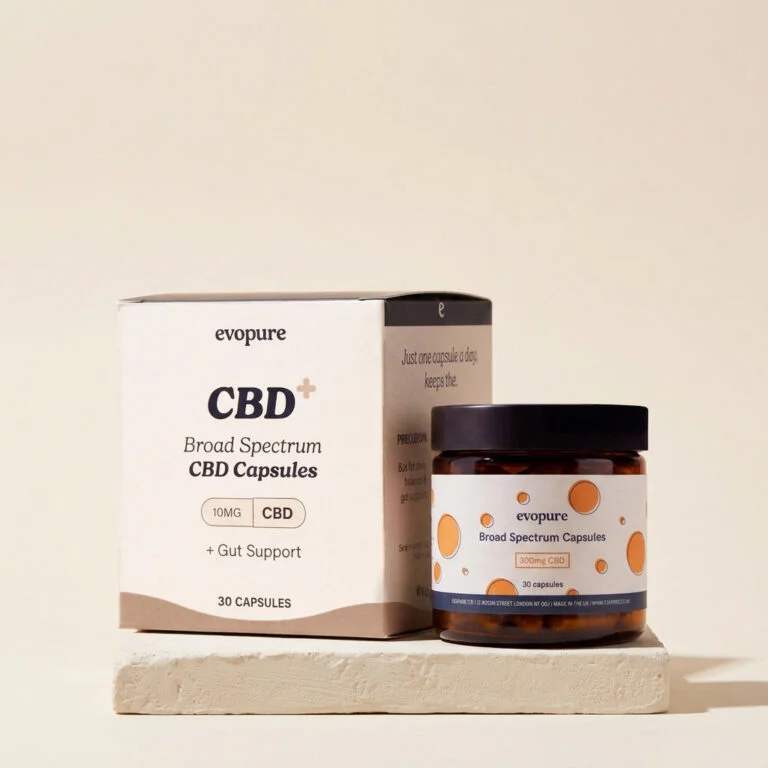
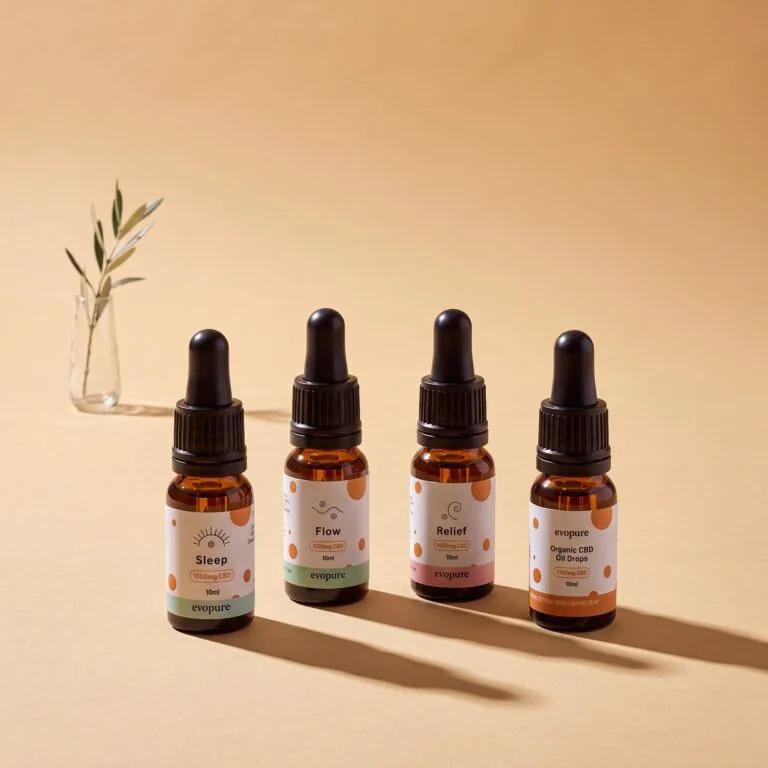
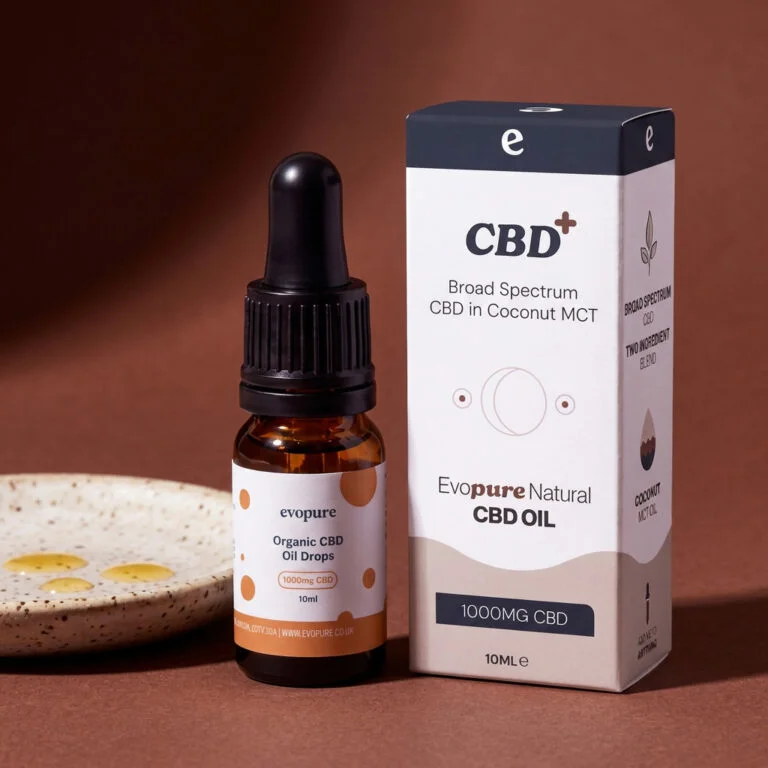
Our oils are broad spectrum. The FSA’s 10mg a day figure is precautionary advice rather than a legal limit, set while longer-term safety research continues. At Evopure we think it is a very cautious figure, and many adults use more. If you go above it, increase slowly, and check with your GP or pharmacist first if you take any medication. We don’t recommend our products during pregnancy or breastfeeding.
FAQs
Is the entourage effect real?
It’s unproven in people. Some observational data supports it, but reviews find limited evidence, and common terpenes didn’t act on cannabinoid receptors in lab tests.
Does broad spectrum CBD have an entourage effect?
It contains some other hemp compounds, so it could in theory, but no good human trial has shown broad spectrum works better than isolate.
Is full spectrum CBD better?
There’s no proof it is, and in the UK it often contains too much THC. Broad spectrum is the closest legal option.
Do terpenes make CBD work better?
A lab study found common terpenes didn’t act on cannabinoid receptors. They mainly affect smell and taste.
Who came up with the entourage effect?
Israeli researchers, including Raphael Mechoulam, coined the term in 1998 to describe the body’s own cannabinoid-like molecules.
Sources
- Russo EB. Taming THC: potential cannabis synergy and phytocannabinoid-terpenoid entourage effects. Br J Pharmacol, 2011.
- Pamplona FA et al. Potential clinical benefits of CBD-rich cannabis extracts over purified CBD in treatment-resistant epilepsy. Front Neurol, 2018.
- Santiago M et al. Absence of entourage: terpenoids commonly found in Cannabis sativa do not modulate the functional activity of THC at CB1 and CB2 receptors. Cannabis Cannabinoid Res, 2019.
- Simei JLQ et al. Does the entourage effect in cannabinoids exist? A narrative scoping review. Cannabis Cannabinoid Res, 2024.