Last updated: October 2026
Losing 50 to 100 hairs a day is normal. Sudden, heavy shedding is usually telogen effluvium, starting about 2 to 3 months after a trigger such as illness, childbirth, stress, crash dieting or a new medicine, and normally grows back. Gradual thinning is usually genetic. See a GP if you have bald patches, a sore scalp or other symptoms.
iBelow: how much shedding is normal, falling out vs breaking, the common causes, hair loss after a baby, weight-loss jabs, smoking, what helps and when to see a GP.
How much hair loss is normal?
More than you might think. The NHS says most people lose about 50 to 100 hairs a day, often without noticing, and the British Association of Dermatologists (BAD) gives a normal range of 30 to 150. You notice more on wash days, because loose hairs come out together.
Signs shedding has gone beyond your normal:
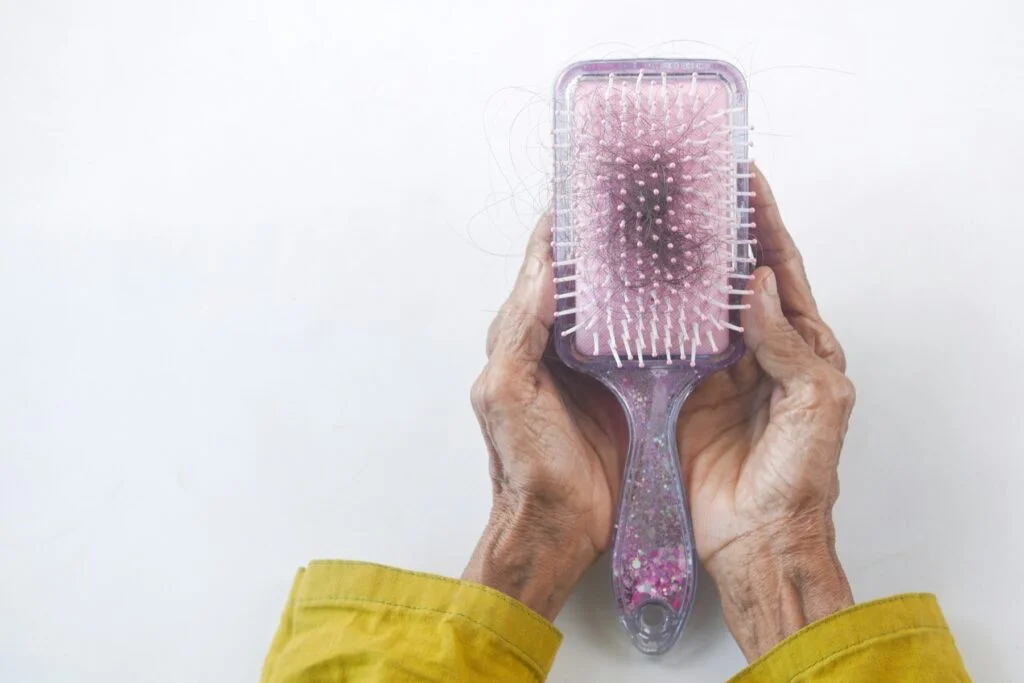
- more hair in the plughole, on your pillow or in your brush, week after week
- a thinner ponytail, or hair ties needing an extra wrap
- a wider parting, or more scalp showing under bright light
- smooth bald patches, or a hairline moving back

Our pick
Magnesium Glycinate Sleep Complex
Magnesium Glycinate Sleep Complex is a berry drink powder with 290mg of magnesium a scoop from bisglycinate and citrate, plus glycine and L-theanine. Magnesium contributes to a reduction of tiredness and fatigue.
Add Magnesium Glycinate Sleep Complex to bag See ingredients and reviews
Vegan and made in the UK. Subscribe and save 25% on your first order, then 20%. New to Evopure? Join our emails for 20% off a one-off first order. Free UK delivery over £45, 14-day returns on unopened items.
Subscribe £22.49One-off £29.99
View productIs my hair falling out or breaking?
Pick up a few lost hairs and look closely:
- Falling out from the root: the hair is full length with a tiny pale bulb at one end. That is a resting (telogen) or “club” hair, the type telogen effluvium sheds.
- Breaking: shorter pieces with no bulb and snapped, frayed or split ends.
Breakage usually comes from heat, bleach and other chemical treatments, rough brushing or tight styles, and improves with gentler care. If your nails are splitting too, see brittle nails.
Common causes of hair falling out at a glance
The NHS lists illness, stress, weight loss, iron deficiency and cancer treatment as common causes of temporary hair loss, and male and female pattern baldness as the main permanent kind.
| Cause | What it looks like | Usually grows back? |
|---|---|---|
| Telogen effluvium (after illness, fever, surgery, stress, a new medicine or stopping the pill) | Sudden shedding all over, about 3 months after the trigger | Yes, usually within months |
| After childbirth | Heavy shedding a few months after the birth | Yes, usually by the baby’s first birthday |
| Fast weight loss, crash diets or weight-loss injections | Shedding all over, a few months after losing weight quickly | Usually, once weight settles |
| Female pattern hair loss | Gradual thinning at the parting and on top | No, but treatment can slow it |
| Male pattern hair loss | Receding at the temples, then thinning on the crown | No, but treatment can slow it |
| Alopecia areata | Sudden, smooth, coin-sized bald patches | Often: about 4 in 5 regrow within a year |
| Iron deficiency or thyroid problems | Shedding plus tiredness and other symptoms | Usually, once treated |
| Tight hairstyles (traction alopecia) | Thinning where styles pull, often at the hairline | Yes if caught early; can become permanent |
| Chemotherapy | Hair loss during treatment | Usually temporary |
| Scalp conditions, such as ringworm or scarring alopecia | Patchy loss, often with itching, redness or scaling | Depends on the cause: see a GP |
Why is my hair falling out all of a sudden?
Most likely telogen effluvium. Normally about 15% of scalp hairs are in the resting phase. After a shock to the body, BAD says this can rise to 30% or more, and the extra hairs shed together around 3 months later, which is why people often don’t connect the two.
BAD’s list of triggers: childbirth, severe illness or injury (especially with a high fever), surgery, stressful life events, marked weight loss or extreme dieting, starting a new medicine or stopping a hormone treatment such as the pill, and severe scalp problems. In about 1 in 3 people no cause is found.
Shedding usually lasts 3 to 6 months, then new hair grows, though full thickness can take many more months. If it goes on for more than 6 months (chronic telogen effluvium), get it checked. Stress has its own guide: can stress make your hair fall out?
The other sudden cause is alopecia areata, an autoimmune condition. BAD describes smooth, round, coin-sized patches, sometimes with tingling or itching first. Without treatment about 4 in 5 people regrow all their hair within a year, though it can return. It is linked to thyroid disease, vitiligo and type 1 diabetes, so see a GP if you find a patch.
Why is my hair falling out from the top?
Thinning on top that creeps up over months or years is usually pattern hair loss (androgenetic alopecia), the most common type in men and women. It often runs in families.
- Women: gradual thinning along the middle parting, then over the top of the head. The hairline rarely recedes.
- Men: a receding hairline above the temples, then thinning on the top and crown.
Telogen effluvium thins the whole scalp too, and the two can overlap, so a GP can help tell them apart.
Hair loss after having a baby: how long does it last?
Very common, and temporary. It is telogen effluvium, and childbirth is one of BAD’s listed triggers. The American Academy of Dermatology says shedding usually peaks about 4 months after the birth, and most women’s hair is back to normal fullness by their child’s first birthday, often sooner.
Meanwhile, loose styles, less heat, a volumising shampoo or a shorter cut can help it look fuller, and regular meals with enough protein and iron matter, even if that is hard with a newborn.
See your GP or health visitor if it hasn’t recovered after a year, you get bald patches, or you also feel exhausted, cold or low, as low iron and thyroid problems can add to shedding. If you are breastfeeding, check with a GP, pharmacist or health visitor before any supplement or hair treatment. We don’t recommend our products during pregnancy or breastfeeding.
Weight loss, crash diets and weight-loss injections
Losing a lot of weight quickly can trigger telogen effluvium, whatever the method. Both BAD and the NHS list weight loss among the causes.
Weight-loss injections. A 2026 review of semaglutide, tirzepatide and retatrutide found hair loss in about 3 to 7% of people in controlled trials, and more in some real-world reports. The authors put it down mainly to telogen effluvium driven by how much and how fast weight comes off, rather than the drug itself, and said it is usually temporary. Women and people losing more than 10% of their body weight were most affected.
“Reta” (retatrutide) is not licensed in the UK. The MHRA has said it cannot legally be supplied outside clinical trials, so pens sold online may not contain what they claim. If you lose hair on any weight-loss medicine, talk to your prescriber rather than changing your dose yourself.
Can Wegovy cause hair loss?
Yes. The Wegovy leaflet on eMC lists hair loss as a common side effect (up to 1 in 10 people). In trials 2.5% on the 2.4mg dose had it, against 1% on placebo; it was mostly mild and more common with bigger weight loss (20% or more). See Wegovy tiredness.
Aim for enough protein each day (see how much protein do I need?). On Mounjaro, see also magnesium on Mounjaro.
Does smoking cause hair loss?
There is a link. A 2022 systematic review found a significant association between smoking and male pattern hair loss, possibly through narrowed blood vessels and free radical damage to the follicle. It also noted there are no studies yet showing that quitting improves hair loss. BAD includes stopping smoking in its hair care advice for telogen effluvium.
Which vitamin deficiency causes hair loss?
Iron deficiency is the best-known nutritional cause of hair loss, and the NHS lists it among the causes of temporary hair loss. Low vitamin D, B12 and zinc, and too little protein, have also been linked with shedding, though the evidence is weaker. Get a GP blood test before buying supplements.
Can low iron cause hair loss? Yes, and BAD says shedding can return if low iron isn’t treated. See iron deficiency symptoms and vitamin D and hair loss.
Iron, thyroid, menopause and other medical causes
Iron deficiency
The NHS lists hair loss (more hair coming out when you brush or wash it) as a symptom of iron deficiency anaemia, alongside tiredness, pale skin and breathlessness. See iron deficiency symptoms and iron-rich foods.
Thyroid problems
The NHS lists dry hair or hair loss as an underactive thyroid symptom, usually with tiredness, feeling cold and weight gain. An overactive thyroid can cause patchy hair loss or thinning, with weight loss and a fast heartbeat. See underactive thyroid symptoms.
Perimenopause and menopause
The NHS includes hair thinning or hair loss among menopause symptoms. See perimenopause symptoms and hormonal imbalance symptoms. A receding band at the front hairline after the menopause, sometimes with eyebrow loss, can be frontal fibrosing alopecia, a scarring type where lost hair does not regrow, so get it seen early.
Medicines and chemotherapy
iA new medicine, or stopping the pill, can trigger shedding. Don’t stop a prescribed medicine because of it: ask your GP or pharmacist. The NHS lists temporary hair loss as a common side effect of chemotherapy.
Tight styles, scalp problems and hair pulling
BAD says tight ponytails, buns, braids, weaves and extensions cause traction alopecia; caught early, hair can fully regrow, but years of pulling can damage follicles for good. Scalp ringworm can cause patchy hair loss and needs antifungal treatment. Trichotillomania, an urge to pull out your hair that is hard to resist, is a recognised condition and a GP can help.
How to stop your hair falling out: what helps
It depends on the cause. For telogen effluvium, time is the main treatment: BAD says medicines don’t speed up regrowth.
- Treat the cause. Low iron or a thyroid problem won’t settle until treated.
- Eat enough. BAD suggests a balanced diet with iron, protein, fruit and vegetables, and no crash diets.
- Be gentle. Less heat, harsh chemicals, rough brushing and tight styles.
- Look after stress and sleep. See stress and hair loss.
- Camouflage if it helps. BAD mentions volumising shampoos and hair fibres; wigs are available on the NHS in some cases.
- Get support. The NHS suggests groups such as Alopecia UK, and your GP can talk to you about counselling.
A word on our own products: none is a hair treatment and we make no hair claims for them. If stress and broken sleep are part of your picture, our Magnesium Glycinate Sleep Complex is a caffeine-free bedtime drink for adults; magnesium contributes to normal psychological function and to a reduction of tiredness and fatigue.
The FSA’s 10mg a day figure for CBD is precautionary advice rather than a legal limit, set while longer-term safety research continues. At Evopure we think it is a very cautious figure, and many adults use more. If you go above it, increase slowly, and check with your GP or pharmacist first if you take any medication.
Minoxidil and finasteride: do hair loss treatments work?
The NHS says finasteride and minoxidil are the main treatments for male pattern baldness, and minoxidil can also be used for female pattern baldness. Neither works for everyone, both only work while you keep using them, and they are not all available on the NHS.
| Minoxidil (on the scalp) | Oral minoxidil (tablets) | Finasteride (tablets) | |
|---|---|---|---|
| Who for | Men and women with pattern hair loss | Some men and women, under a prescriber | Men only; generally not for women |
| How you get it | Over the counter; licensed for pattern hair loss | Prescription; a blood pressure tablet used off-label at low doses | Private prescription only for hair loss |
| Things to know | Must be kept up | Fluid retention, fast heartbeat, low blood pressure and extra body hair, mainly at higher doses | Sexual side effects and, rarely, low mood |
Minoxidil. A Gloucestershire Hospitals NHS leaflet says minoxidil foam is the only licensed treatment for male and female pattern hair loss. Oral minoxidil is used off-label, so take it only under a prescriber who checks your pulse and blood pressure. It is not advised with blood pressure medicines, or if you are trying to conceive, pregnant or breastfeeding, and some people shed more in the first 6 weeks.
Finasteride. The NHS says that for hair loss it is only available privately. Common side effects are erection problems, lower sex drive and ejaculation problems, which can sometimes continue after stopping. The MHRA added a patient alert card in 2024 and strengthened warnings in May 2026: anyone who gets low mood or suicidal thoughts on finasteride should stop and seek medical advice.
iSee a GP before paying for a private hair clinic, so you know what you are treating.
Do hair supplements work?
Mainly if you are low in something. Biotin, zinc and selenium each contribute to the maintenance of normal hair, which is why they fill hair gummies. But a 2019 dermatology review called the role of vitamins and minerals in hair loss “not entirely clear” and said trials are needed in people who are actually deficient.
- Iron: only if a blood test shows you need it. The NHS says 17mg a day or less from supplements is unlikely to cause harm, unless your GP advises more.
- Biotin: deficiency is rare, and high doses can skew blood tests. In a 2017 study, adults taking 10mg a day for a week got misleading results in 9 of 23 lab tests that use biotin; the tests studied included thyroid hormones and ferritin, two common hair loss checks. See B vitamins.
- Zinc: severe deficiency causes hair loss, but extra zinc isn’t shown to help if your levels are fine. See zinc.
- Vitamin D and B12: worth checking if you are also tired. See vitamin D deficiency and B12 deficiency.
Two myths: creatine hasn’t been shown to cause hair loss (see creatine and hair loss), and the evidence for CBD hair products is thin (see CBD for hair). For menopause, see best supplements for menopause.
When to see a GP about hair loss, and which blood tests
iThe NHS says see a GP if you are worried. Book an appointment if:
- you have bald patches, or hair coming out in clumps
- your scalp is itchy, sore, red, scaly or burning
- your hairline is receding, especially with eyebrow loss
- you also feel tired, cold, breathless or low, or your weight has changed
- shedding has lasted over 6 months, or a year after having a baby
- a medicine might be the cause, or it is affecting how you feel
A GP can often tell the type by looking at your scalp and asking what happened in the months before, so note any illness, medicines, diet changes and big events. A 2009 review recommends a full blood count, ferritin (iron stores) and thyroid tests when someone has diffuse hair loss with no obvious cause. Mention biotin if you take it. If you’re also always tired, see why am I always tired?
Related guides
- Thick scale on the scalp can cause temporary thinning: see scalp psoriasis.
- Premature grey hair: causes and whether stress plays a part.
- For a nutrient-by-nutrient look at what’s worth taking, see the best supplements for hair growth.
- Collagen is often sold for hair, but there are no solid independent trials of collagen alone: read our collagen supplements evidence guide.
- If a blood test shows low iron, our guide to iron tablets covers the NHS dose, timing and side effects.
- Hair loss is listed as a common side effect in the Mounjaro leaflet; see Mounjaro tiredness and hair loss for what the leaflet says.
- Started a new supplement? Read does ashwagandha cause hair loss? for the honest evidence and the thyroid link.
- Weight-loss medicines can bring other side effects too: see Wegovy tiredness for what the leaflet lists and what helps.
Next step
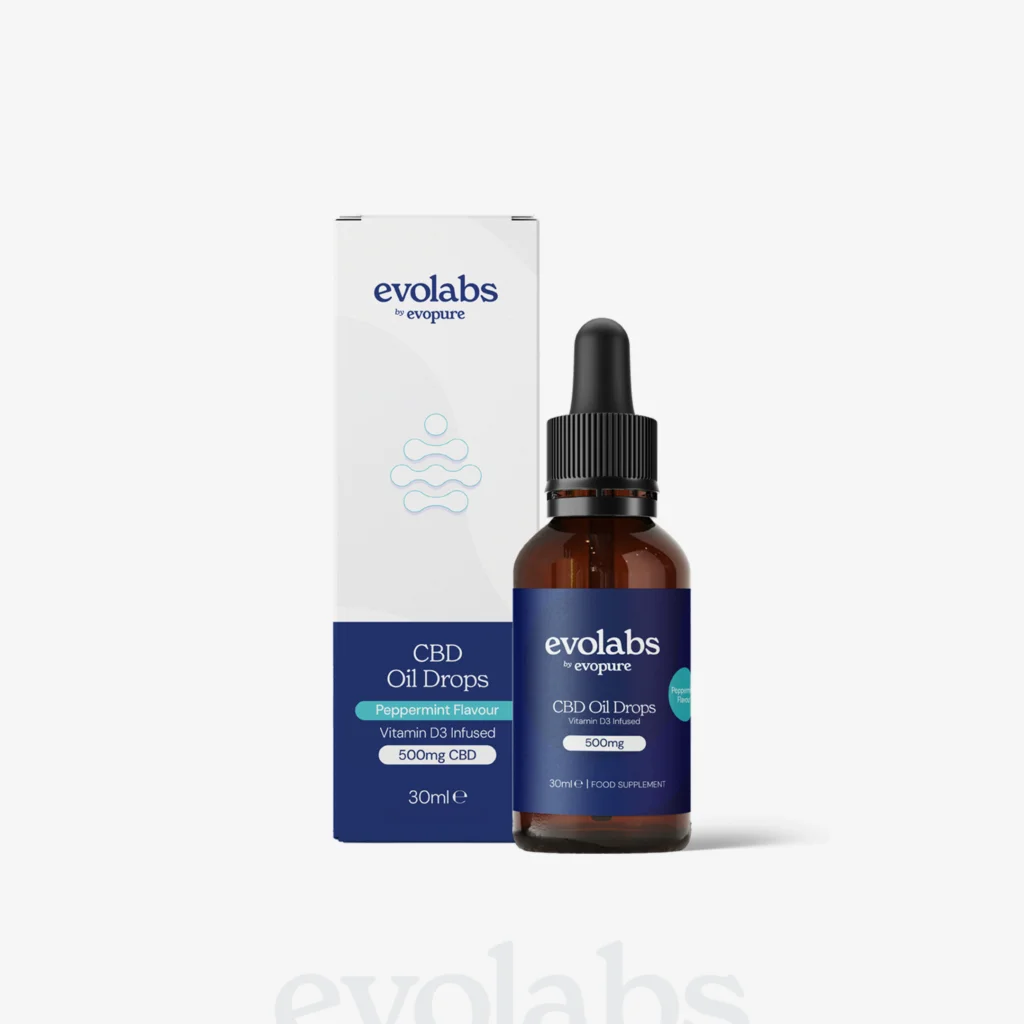
Mint CBD Oil With Vitamin D3 · Evolabs
Already use CBD? Mint CBD Oil + Vit D3 adds the NHS autumn and winter 10µg vegan vitamin D3 (200% NRV) to 11.7mg CBD per half pipette (1,000mg). Vitamin D contributes to the normal function of the immune system. Not a hair treatment.
Add Mint CBD Oil + Vit D3 to bag See ingredients and reviews
Subscribe and save 25% on your first order, then 20%. New to Evopure? Join our emails for 20% off a one-off first order. Free UK delivery over £45. The FSA advises up to 10mg CBD a day: about 0.3ml. Adults only. If you take any regular medicines, check with your GP or pharmacist first.
Subscribe from £13.49One-off from £17.99
View productSources 15
- NHS. Hair loss.
- British Association of Dermatologists. Telogen effluvium, Alopecia areata, Traction alopecia and Frontal fibrosing alopecia.
- NHS. Iron deficiency anaemia, Underactive thyroid, Overactive thyroid, Menopause symptoms, Chemotherapy, Ringworm, Trichotillomania and Iron.
- NHS. About finasteride and Side effects of finasteride.
- MHRA. MHRA strengthens safety warnings for finasteride and dutasteride. May 2026.
- Gloucestershire Hospitals NHS Foundation Trust. Minoxidil for hair loss (patient leaflet, 2024).
- American Academy of Dermatology. Hair loss in new moms.
- Leite Júnior AC, Ribeiro Junior HL. GLP-1 receptor agonists and hair loss: adverse effect, epiphenomenon, or therapeutic paradox? Acta Diabetol, 2026.
- The Pharmacist. Warning over unlicensed weight-loss drugs being sold on social media (reporting the MHRA), August 2026.
- Kavadya Y, Mysore V. Role of smoking in androgenetic alopecia: a systematic review. Int J Trichology, 2022.
- Almohanna HM et al. The role of vitamins and minerals in hair loss: a review. Dermatol Ther (Heidelb), 2019.
- Li D et al. Association of biotin ingestion with performance of hormone and nonhormone assays in healthy adults. JAMA, 2017.
- Shrivastava SB. Diffuse hair loss in an adult female: approach to diagnosis and management. Indian J Dermatol Venereol Leprol, 2009.
- emc. Wegovy 2.4mg patient leaflet and SmPC (section 4.8), checked November 2026.
- GOV.UK. GB nutrition and health claims register.
This guide is general information, not medical advice. Evopure makes the Magnesium Glycinate Sleep Complex mentioned above, which is not a hair treatment.