Last updated: October 2026
Eye twitching, or eyelid myokymia, is usually harmless and settles on its own within days or a few weeks. Common triggers are stress, tiredness, caffeine, alcohol and eye strain, and cutting back on these usually helps. See a GP if it lasts more than 2 weeks or spreads, or if your eyelid closes fully or droops.
Below: what that flicker actually is, the common causes, how to make it stop, how long it lasts, whether magnesium helps and when to get it checked.
What is eye twitching?
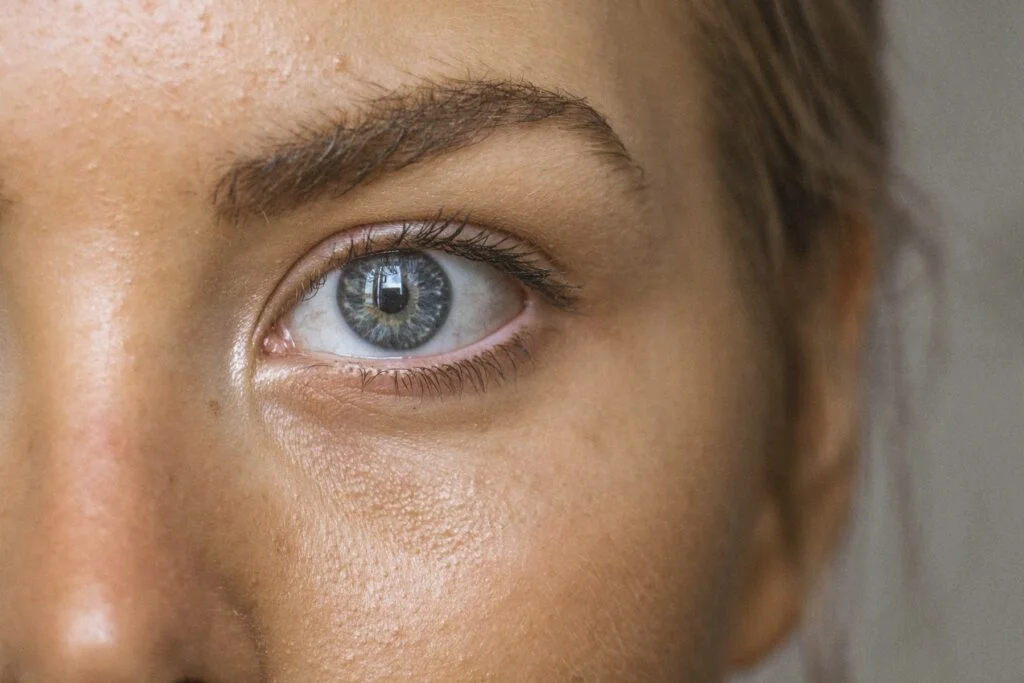
The everyday eye twitch is called eyelid myokymia. It’s a fine, rippling flicker of the muscle that closes your eyelid. It usually affects one eye, more often the lower lid than the upper, and comes and goes in bursts lasting seconds to hours.
Two rarer conditions can look similar at first, which is why it’s worth knowing the difference:
| Eyelid myokymia (common twitch) | Benign essential blepharospasm | Hemifacial spasm | |
|---|---|---|---|
| What it feels like | A gentle flicker or quiver; the eye stays open | Frequent blinking that can turn into the eyelids squeezing shut | Spasms around one eye that can spread to the cheek and mouth |
| Which side | Usually one eyelid | Usually both eyes | One side of the face only |
| Cause | Everyday triggers such as stress, tiredness and caffeine | A type of dystonia, where the brain’s control of the blink reflex goes wrong | Often a blood vessel pressing on the facial nerve, or nerve rewiring after facial palsy |
| Outlook | Settles by itself | Long-term; usually treated with botulinum toxin injections about every 3 months | Long-term; usually treated with botulinum toxin injections |
Most eye twitches are myokymia, the most common type of facial twitch. The other two are uncommon and need a specialist, so the rest of this guide is about the everyday kind.
Common causes of eye twitching
The NHS says most twitches are linked to stress, anxiety, tiredness, caffeine, alcohol or some medicines. Eye doctors at Moorfields add dry eyes and nicotine. Often it’s two or three at once: a busy week, short nights and an extra coffee to get through it.
| Trigger | What to try |
|---|---|
| Stress and anxiety | Build in short breaks and something that winds you down. See how to relieve stress and physical stress symptoms. |
| Tiredness and poor sleep | Protect your sleep for a week or two: a regular bedtime and fewer late screens. See sleep deprivation. |
| Caffeine | Cut back on coffee, tea, cola and energy drinks, especially after midday. See does caffeine cause anxiety? |
| Alcohol | Have a few alcohol-free days and see whether the twitch eases. |
| Nicotine | Smoking and vaping can both play a part; cutting down helps your eyes in other ways too. |
| Eye strain and dry eyes | Regular screen breaks and lubricating eye drops from a pharmacy. |
| Some medicines | Don’t stop a prescribed medicine. Ask your GP or pharmacist if you think it’s the cause. |
Long screen days are a big one. The NHS lists long periods at a computer without breaks as a risk factor for dry eyes, and dry, tired eyes are a common twitch trigger. Our guide to blue light glasses covers what genuinely helps with screen strain.
How to stop your eye twitching
There’s no instant off switch, but these steps tackle the usual triggers. The NHS says most twitches stop within days or weeks.
- Try not to worry about it. The NHS points out that worrying can make a twitch feel worse, and the twitch itself is almost always harmless.
- Cut back on caffeine. If you drink several coffees a day, reduce gradually. See the coffee crash for why the afternoon cup backfires.
- Get more sleep. Aim for a few earlier nights in a row rather than one long lie-in.
- Rest your eyes. Every 20 minutes, look at something 20 feet away for 20 seconds, blink fully and set your screen slightly below eye level.
- Look after dry eyes. A warm (not hot) cloth over closed eyelids, then a gentle clean, and eye drops from a pharmacist can make tired eyes more comfortable.
- Ease off alcohol and nicotine for a couple of weeks.
- Lower your stress load. A daily walk, slow breathing or a screen-free hour before bed all count.
How long does eye twitching last?
A single bout usually lasts seconds to minutes, then comes back on and off through the day. The NHS says twitches normally stop within a few days or weeks.
- For a few days: very common and almost always down to everyday triggers.
- For a week or two: still usually harmless. Work through the steps above.
- For more than 2 weeks: the point where the NHS suggests seeing a GP, mainly to check for causes such as stress or a medicine.
- For months: get it checked. Twitching that lasts this long is less typical of everyday myokymia, and a GP or optometrist can rule out blepharospasm, hemifacial spasm and other causes.
A medical review notes that being female and cold weather are both risk factors for longer-lasting eyelid twitching.
Eye twitching with a headache or eye pain
A twitch alongside a dull, band-like headache often points to the same root cause: long screen days, stress and short sleep. Our guide to tension headaches explains the overlap. Puffy, shadowed eyes after poor sleep are part of the same picture; see dark circles under the eyes.
Pain is different. Moorfields advises getting a twitch checked if it comes with other symptoms such as pain. The NHS says to get an urgent GP appointment or call 111 if your eye is painful and red, and to call 999 or go to A&E for any sudden change in vision, or a red eye with a severe headache and feeling sick.
Does magnesium help eye twitching?
It’s one of the most searched questions, so here’s the honest answer: we couldn’t find any clinical trials of magnesium for eyelid twitching. Many people take it and notice no change, because their twitch is down to stress, sleep or caffeine rather than low magnesium.
Low magnesium can cause tremors and weakness. But a medical review notes that low blood magnesium often causes no symptoms until levels are quite low, and true deficiency is usually linked to things like alcohol misuse, long-term illness, gut problems or kidney problems. Our guide to the signs of magnesium deficiency explains who’s most at risk, and a GP can arrange a blood test if you’re worried.
What we can say is that magnesium contributes to normal muscle function and to the reduction of tiredness and fatigue. If your diet is low in magnesium-rich foods, start there: see foods high in magnesium. The NHS suggests 300mg a day for men and 270mg for women, and advises not taking more than 400mg a day from supplements.
If you’d like a supplement as part of a calmer evening routine, our Magnesium Glycinate Sleep Complex is a caffeine-free drink with 148mg of magnesium per serving from bisglycinate and citrate, plus L-theanine and chamomile. It isn’t a proven fix for twitching; think of it as one part of a calmer evening, alongside the changes above. For more on the form we use, see magnesium glycinate, and for other muscle niggles, magnesium for cramps.
When to see a GP or optometrist
Most eye twitches never need a doctor. The NHS advises seeing a GP if:
- the twitch lasts more than 2 weeks
- you have twitches in more than one place
- the affected area feels weak or stiff
- you think a prescribed medicine may be causing it
Moorfields also advises getting help if the twitching becomes constant or spreads to other parts of your face. See a GP or an optometrist sooner if your eyelid droops, or if your eyelids squeeze shut so you struggle to open them, as this can be a sign of blepharospasm.
Call 999 if one side of your face suddenly droops, you can’t lift both arms or your speech is slurred. These are signs of a stroke, not a twitch.
If stress is behind your twitch and it’s affecting your sleep, mood or work, that’s worth raising too. See anxiety symptoms and signs of burnout.
See also how long caffeine stays in your system.
See also cutting caffeine with decaf.
FAQs
Why is my eye twitching?
Usually because of stress, tiredness, caffeine, alcohol, dry eyes or screen strain. It’s called eyelid myokymia and is almost always harmless.
How do I make my eye stop twitching?
Cut back on caffeine and alcohol, get more sleep, take regular screen breaks and try to relax. Most twitches settle within days or a few weeks.
Is eye twitching for weeks a sign of something serious?
Rarely. But the NHS suggests seeing a GP if a twitch lasts more than 2 weeks, spreads, or the area feels weak or stiff.
What is the difference between eye twitching and blepharospasm?
A common twitch is a gentle flicker in one eyelid. Blepharospasm usually affects both eyes and makes the eyelids squeeze shut. It is long-term and needs a specialist.
Can low magnesium cause eye twitching?
It can be one cause, but it isn’t the most common one. There are no trials of magnesium for eye twitching, and stress, sleep and caffeine are more likely triggers.
Does eye twitching mean anything?
Folklore links a twitching eye with luck or news, but medically it usually just means your eyelid muscle is tired or overstimulated.
Sources
- NHS. Twitching eyes and muscles.
- Moorfields Eye Hospital NHS Foundation Trust. Moorfields consultant explains why your eyelids twitch.
- Guy’s and St Thomas’ NHS Foundation Trust. Blepharospasm and hemifacial spasm.
- NHS. Dry eyes.
- NHS. Vitamins and minerals: magnesium.
- NHS. Stroke symptoms.
- Jafer Chardoub AA, Patel BC. Eyelid myokymia. StatPearls, 2023. PMID 32809430.
- Zeppieri M, Patel BC. Benign essential blepharospasm. StatPearls, 2026. PMID 32809668.
- Gragossian A, et al. Hypomagnesemia. StatPearls, 2023. PMID 29763179.
This guide is general information, not medical advice. Evopure makes the Magnesium Glycinate Sleep Complex.