Last updated: November 2026
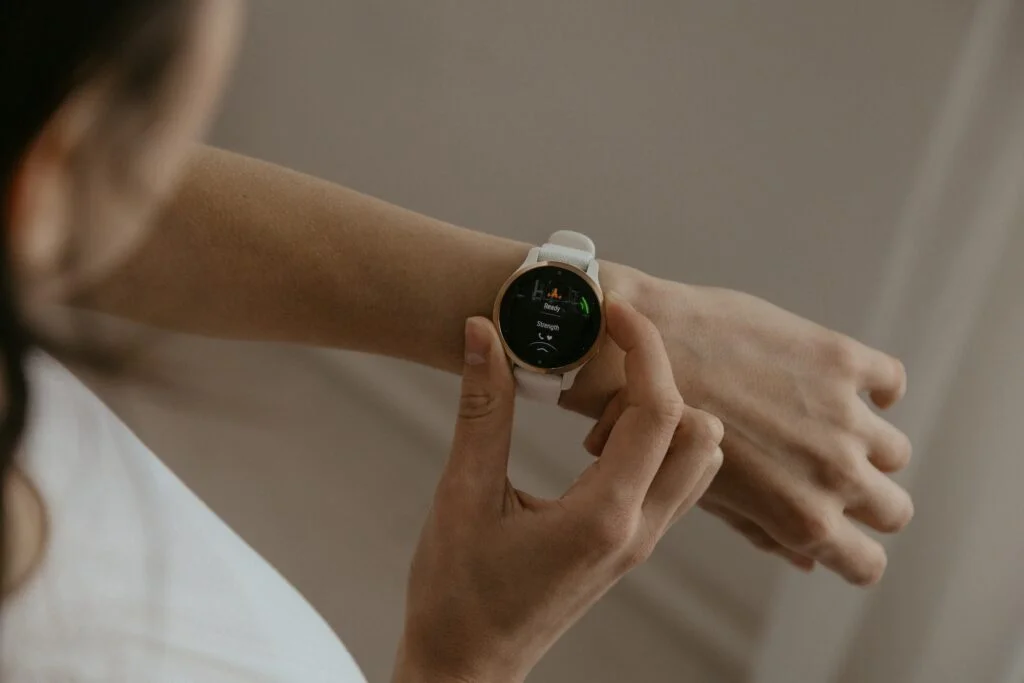
Garmin measures stress from your heart rate and heart rate variability (HRV), the tiny changes in time between heartbeats, read by the watch’s optical sensor while you’re still. It turns them into a stress score from 0 to 100: 0 to 25 is rest, 26 to 50 low, 51 to 75 medium and 76 to 100 high.
It measures your body’s state, not your mood. With Stress Awareness Day on Wednesday 4 November (see Stress Awareness Week), here’s what your numbers mean and what brings them down. Checked on Garmin’s own pages, November 2026.
How does Garmin measure stress?
Your nervous system has two sides. The sympathetic side readies you for action (“fight or flight”): your pulse quickens and the gaps between beats become more even. The parasympathetic side takes over when you rest and digest, and the gaps vary more. Your Garmin reads both signals and estimates which side is in charge.
- The engine: Garmin says stress is estimated by its Human Performance Lab engine, mainly from heart rate and HRV. It builds on a 24-hour HRV method from Jyväskylä, Finland, home of Firstbeat Analytics, which Garmin bought in 2020.
- Only when you’re still: stress is scored while you’re inactive, never during exercise.
- Personal to you: the analysis adapts to your physiology, so the more you wear it, especially in bed, the more personalised it gets.
- It can’t tell you why: a deadline and pre-race nerves look the same.
What your Garmin stress score means
Garmin’s manual sets out four bands. On the stress chart, readings above 25 show as orange bars and readings below 25 as blue.
| Garmin stress score | Garmin’s label | What’s happening |
|---|---|---|
| 0 to 25 | Rest | Rest-and-digest side leads; Body Battery charges |
| 26 to 50 | Low stress | Fight-or-flight side starting to lead |
| 51 to 75 | Medium stress | Clearer fight-or-flight activity |
| 76 to 100 | High stress | Strong fight-or-flight activity; Body Battery drains faster |
What is a good stress level on Garmin?
Garmin doesn’t publish a target average or a chart by age. Its advice is balance: offset stressful moments with relaxing ones and good sleep. In practice:
- Most of the night in the rest band is what you’d hope for, as sleep is when the rest-and-digest side is usually most active.
- Short orange spikes in the day are normal: a meeting, a phone call, the school run.
- Long stretches in medium or high, day after day, are worth noticing.
Compare with your own usual pattern, not a friend’s.
Our pick
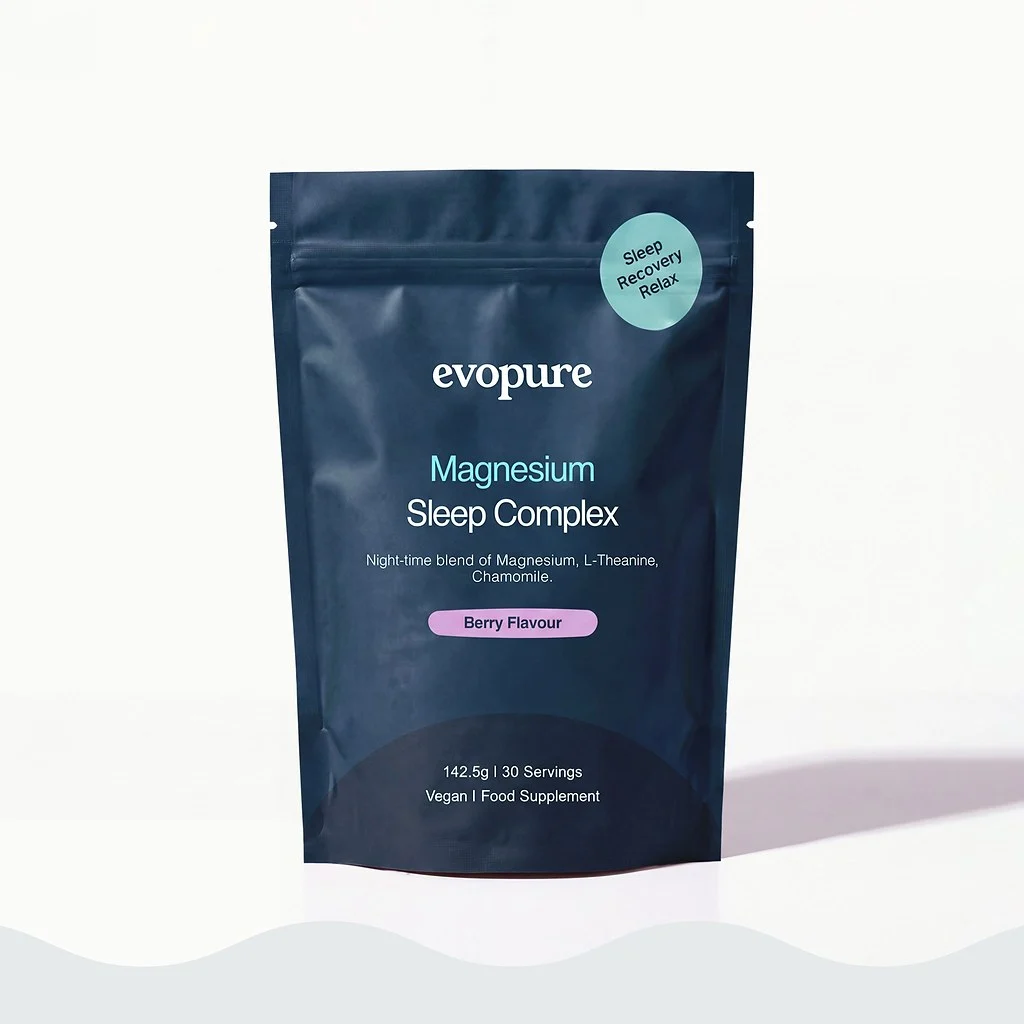
Magnesium Glycinate Sleep Complex
if a calmer evening is part of your plan, our Magnesium Glycinate Sleep Complex is an evening wind-down drink: magnesium bisglycinate and citrate in a 4.75g scoop, berry flavoured, with glycine and L-theanine. Magnesium contributes to normal psychological function.
Add Magnesium Glycinate Sleep Complex to bag See ingredients and reviews
Vegan and made in the UK, for adults only. Free UK delivery over £45, 14-day returns on unopened items.
Subscribe £22.49One-off £29.99
View productExercise, stress and Body Battery
Garmin doesn’t measure stress during exercise, because the strain of exercise is itself a stress on the body and is tracked in other ways. Readings can still be higher for a while after a hard session, and Garmin lists excessive exercise as one cause of above-normal stress. Runners can read more in our guide to HRV and recovery.
Body Battery, Garmin’s estimate of your energy reserves, uses heart rate, HRV and movement, with stress as a main input:
- Stress 0 to 25: Body Battery charges, more strongly when your heart rate is lower and HRV higher than your usual baseline.
- Stress above 25: it drains, faster as stress rises.
- Sleep: the biggest recharge, though Garmin says illness, alcohol and lingering stress can stop you charging fully.
Why is my Garmin stress high?
Garmin names stimulants, excessive exercise, poor nutrition and illness as things that can raise readings. Research backs up several.
| Cause | What happens | What to try |
|---|---|---|
| Alcohol | In 4,098 Finnish employees, alcohol reduced recovery in the first 3 hours of sleep, even at low doses | Alcohol-free nights, or stop earlier |
| Illness | Heart rate usually rises and HRV falls when you’re unwell | Rest; ignore the score until you’re better |
| Caffeine | In a sleep lab, 400mg before bed shifted the heart towards fight-or-flight in REM sleep | No caffeine after early afternoon |
| A late, heavy meal | Digestion keeps your body working | Eat earlier and lighter |
| Lingering worry | The day’s stress carries into the night | A wind-down routine and slow breathing |
| Watch fit | A loose strap can give poor heart rate readings | Wear it snug, above the wrist bone |
Why is my Garmin stress high at night?
Sleep is when the score is normally lowest, so a high night stands out. The usual suspects: an evening drink (see alcohol and sleep), a virus coming on, a late coffee (how long caffeine lasts), eating close to bedtime or a mind that won’t switch off (anxiety at night, tired but wired). Waking in the small hours too? See why you wake at 3am.
Why is my Garmin stress high for no reason?
There’s usually a reason, just not always a feeling. Google’s Fitbit help pages give standing up quickly, eating and public speaking as everyday triggers, and Garmin notes that happy excitement registers as stress too.
How accurate is Garmin’s stress score?
It’s a fair estimate of your body’s stress response, not a diagnosis.
- Not a medical device: Garmin says so plainly, and notes wrist heart rate can be less accurate depending on your physical characteristics and how the watch fits.
- Body, not mind: in a 2025 study of 60 adults wearing a Garmin vivosmart 4 and a chest strap ECG, the stress score rose during mental stress tasks and tracked ECG heart rate and HRV. But it only marginally predicted how stressed people said they felt; plain heart rate did better.
Use it to spot patterns. More in do sleep trackers work? and what your tracker’s deep sleep number means.
How to lower your Garmin stress score
What brings the score down is what the NHS recommends for stress. Expect changes over days and weeks.
- Slow breathing. The NHS exercise: in through your nose for a count of up to 5, out through your mouth for 5, for at least 5 minutes a day. Some Garmin watches can alert you when stress is unusually high and start a relaxation breathing timer. Try box breathing or 4-7-8 breathing too.
- Move during the day. The NHS says exercise won’t remove stress but can calm intense feelings.
- Cut alcohol and late caffeine, which the NHS lists as unhelpful ways to cope.
- Protect your sleep with a regular bedtime and wind-down (sleep hygiene). Our vagus nerve guide explains why slow breathing shifts HRV.
- Try meditation. In a 2026 study where 90 people wore Garmin watches, regular meditators’ HRV rose by about 4.7ms during sessions and stayed up for at least 30 minutes. Start with a body scan.
- Deal with the source. Talk to someone, share the load, say no. The stress bucket shows what’s filling your day; see also 15 ways to relieve stress and how to lower cortisol naturally.
Supplements and your evening routine
No supplement has been shown to lower a Garmin stress score or raise HRV, and we don’t claim ours do. Some adults simply like a drink or a few drops as part of a calmer evening.
- Magnesium Glycinate Sleep Complex: a berry drink with magnesium bisglycinate and citrate in a 4.75g scoop. Magnesium contributes to normal psychological function and to a reduction of tiredness and fatigue.
- Reishi Mushroom Adaptogenic Complex: a reishi hot chocolate. It contains a little natural caffeine from the cacao, so have it earlier in the evening.
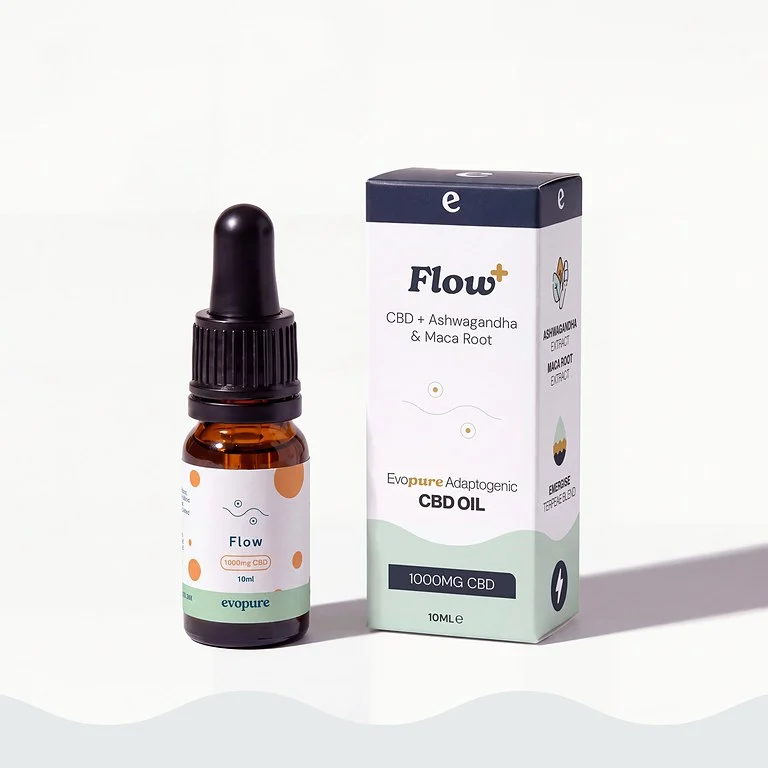
- Flow CBD Oil: broad spectrum CBD with ashwagandha and maca for a daytime routine. Because it contains ashwagandha, it isn’t for anyone with a thyroid, liver or autoimmune condition, and don’t take it alongside another ashwagandha product.
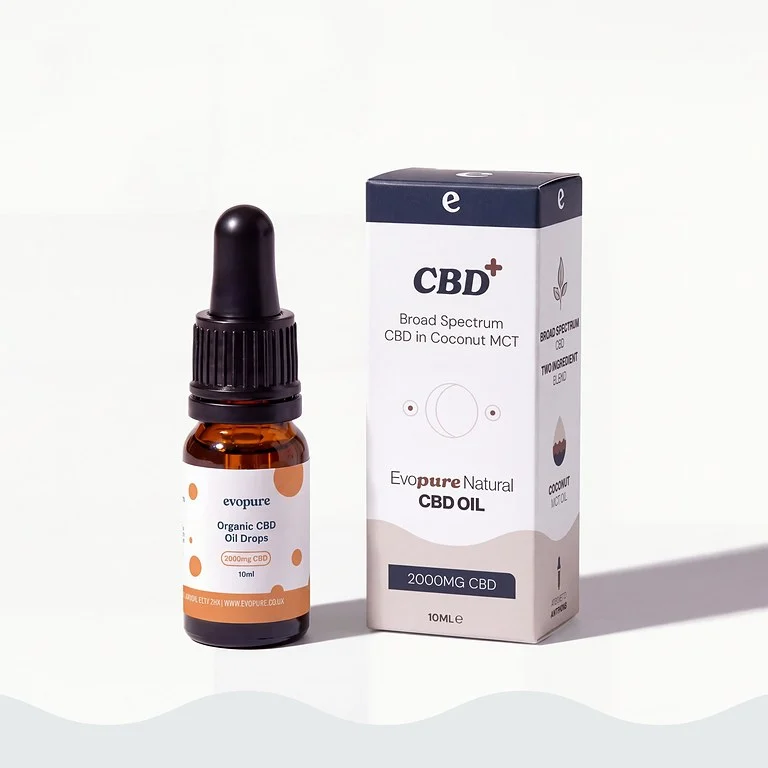
The FSA’s 10mg a day figure is precautionary advice rather than a legal limit, set while longer-term safety research continues. At Evopure we think it is a very cautious figure, and many adults use more. If you go above it, increase slowly, and check with your GP or pharmacist first if you take any medication.
iIf you take any regular medicines, check with your GP or pharmacist first. We don’t recommend our products during pregnancy or breastfeeding. For adults (18+) only. For the trial evidence on specific ingredients, see supplements to lower cortisol.
Apple Watch, Fitbit and Oura: how they compare
Other wearables read similar signals but show them differently (checked on each maker’s support pages).
| Device | What it shows | When it measures |
|---|---|---|
| Garmin | Stress score 0 to 100 | Day and night, when you’re still |
| Fitbit and Pixel Watch | Daily Resilience score (Optimal, Balanced or Low) | Once a day, from heart rate, HRV, activity and sleep |
| Oura | Daytime Stress: Stressed, Engaged, Relaxed or Restored | Awake and still only |
| Apple Watch | Recovery HRV (Series 12 and Ultra 4) | While you’re still |
The scores aren’t interchangeable between brands.
When to see a GP
iGo by how you feel, not just the number. See your GP if:
- you’re struggling to cope with stress, or what you’re trying isn’t helping
- your sleep, mood or energy have been poor for weeks (see stress symptoms and burnout)
- your resting heart rate is much higher than usual and you feel unwell, or you notice palpitations
Get help urgently
- Call 999 for chest pain, severe breathlessness or fainting, or if someone’s life is at risk.
- NHS 111 if you need help urgently but it isn’t an emergency.
- Samaritans: call 116 123, free, day or night.
Sources 11
- Garmin. Heart rate variability and stress level.
- Garmin. Stress tracking.
- Garmin. Body Battery energy monitoring.
- Garmin. Activity tracking accuracy.
- Rosenbach H, et al. (2025). Assessing stress level scores against wearables-driven physiological measurements.
- Pietilä J, et al. (2018). Acute effect of alcohol intake on cardiovascular autonomic regulation during the first hours of sleep.
- Bonnet M, et al. (2005). Effects of caffeine on heart rate and QT variability during sleep.
- Natarajan A, et al. (2020). Physiological signs associated with COVID-19 measured using wearable devices.
- Takezawa J, et al. (2026). Daily stress and heart rate variability among mindfulness meditation practitioners.
- NHS. Stress, breathing exercises for stress and 10 stress busters.
- Google. Manage stress and mindfulness. Oura. Daytime Stress. Apple. Monitor your heart rate.
This guide is general information, not medical advice. Evopure isn’t connected with Garmin, Google, Oura or Apple. Evopure makes the Magnesium Glycinate Sleep Complex, the Reishi Mushroom Adaptogenic Complex and Flow CBD Oil.