Last updated: October 2026
As you get older, your body clock shifts earlier and deep sleep gets shorter, so it’s normal to feel sleepy by 9pm, wake around 5am and stir more often in the night. Most people over 65 still need 7 to 8 hours. Loud snoring with pauses, long daytime naps or exhausting days are worth a chat with your GP.
iBelow: why older people wake up early, how sleep changes after 50 and 60, how much sleep you need, napping, how to stop waking so early, an evening routine and when to see a GP. Checked against NHS and Age UK guidance in October 2026.
Why do older people wake up early?
Waking at 4am or 5am and not getting back to sleep is one of the most common sleep changes in later life. A review of ageing and body clocks describes sleep moving to earlier hours as “a common feature of aging”, often earlier than people would like. It also notes that more than a third of older adults regularly report waking too early or struggling to stay asleep. Usually several things add up:
- Your body clock runs earlier. The internal clock that times sleepiness, body temperature and the sleep hormone melatonin tends to move earlier with age, and its daily rhythm gets weaker. You feel sleepy earlier in the evening and your body is ready to wake earlier too.
- Lighter sleep towards morning. Older adults spend less time in deep sleep, so the last part of the night is lighter. Birdsong, a partner getting up or the heating clicking on is more likely to wake you fully.
- An early bedtime. If you nod off in front of the television at 9pm, 8 hours later is 5am. Often the “early waking” is really an early night.
- Less daylight. Light is the main signal that sets your body clock, and the same review notes that older adults’ light exposure differs from younger people’s. Days spent mostly indoors give your clock a weaker signal.
- Loo trips. Getting up to pee once in the early hours can be enough to end the night. See waking up to pee at night.
- No alarm, no routine. After retirement there’s often no fixed time to get up, so sleep times drift.
- Naps. A long afternoon doze uses up some of your need for sleep, so there’s less left to carry you through to the morning.
- Low mood, worry, pain or medicines. The NHS lists waking up very early in the morning as a symptom of depression, and long-term pain and some medicines among the causes of insomnia.
Waking early is not a problem in itself. If you wake at 5am feeling rested and get through the day fine, your sleep has simply moved. It’s worth acting on when you wake before you want to, feel tired all day or lie awake worrying. For 3am waking specifically, see why you wake up at 3am and middle insomnia.

Our pick
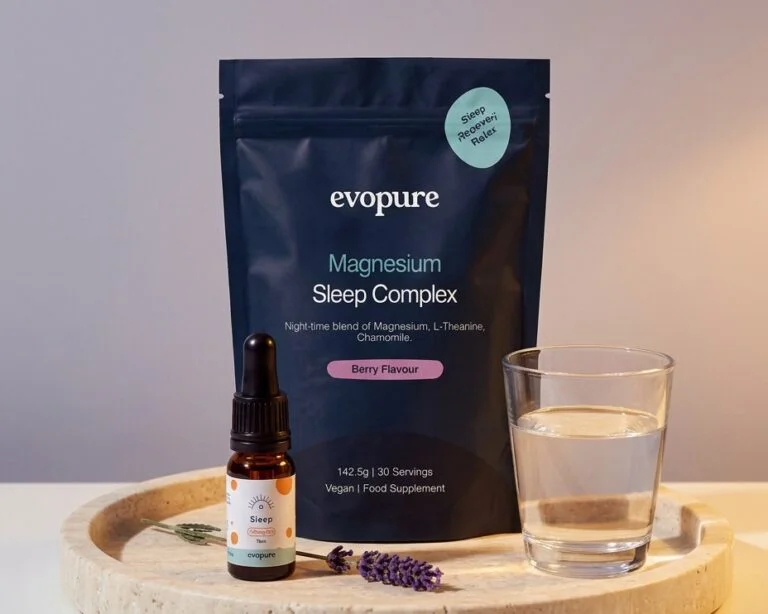
Magnesium Glycinate Sleep Complex
Magnesium Glycinate Sleep Complex is a berry drink powder for your evening wind-down, with 148mg of magnesium a serving from bisglycinate and citrate, plus glycine and L-theanine. Magnesium contributes to a reduction of tiredness and fatigue. A warm or cold drink is also easier than tablets if you struggle to swallow pills.
Add Magnesium Glycinate Sleep Complex to bag See ingredients and reviews
Vegan and made in the UK. Free UK delivery over £45, 14-day returns on unopened items.
Subscribe £22.49One-off £29.99
View productHow sleep changes after 50 and 60
A large analysis of 65 sleep studies, covering more than 3,500 people aged 5 to 102, measured how sleep changes across adult life. As adults age, total sleep time, deep (slow-wave) sleep and dreaming (REM) sleep all fall, while light sleep, the time it takes to drop off and time awake in the night all rise. Age UK notes that deep sleep falls between the ages of 30 and 60.
One finding is reassuring: after about 60, most of these measures change little. The one that keeps falling is sleep efficiency, the share of time in bed actually spent asleep. So from your 60s the main change is more time lying awake, not a steady loss of deep sleep.
| What changes | What you might notice |
|---|---|
| Body clock runs earlier | Sleepy by 9pm or 10pm, awake by 5am or 6am |
| Less deep sleep | Sleep feels lighter; noise wakes you more easily |
| More time awake in the night | Longer or more frequent wake-ups, often around 2am to 4am |
| Takes longer to fall asleep | Lying awake for a while after lights out |
| Weaker day and night rhythm | Dozing in the day, wakeful at night |
The researchers also found that how much sleep changed depended a lot on how healthy the people studied were. Much of the “bad sleep” blamed on age comes from things that become more common with age, such as pain, sleep apnoea, a busy bladder or medicines. Many of those can be helped, which is why a GP check is worthwhile if sleep has changed a lot. For more on the deepest stage, see deep sleep.
How much sleep do older people need?
You don’t need much less sleep as you get older. You just find it harder to get it in one long block.
| Age | Recommended sleep | Who says so |
|---|---|---|
| Adults, including your 50s | 7 to 9 hours | NHS; National Sleep Foundation (26 to 64) |
| 65 and over | 7 to 8 hours | National Sleep Foundation |
| Later life (50+) | 7 to 8 hours | Global Council on Brain Health, with Age UK |
Is 6 hours enough for a 60 year old? It’s below the recommended range for most people. Some people do function well on a little less, and the expert panels say needs vary from person to person. If you regularly sleep 6 hours and feel fine during the day, that’s reassuring. If you sleep 6 hours and feel tired, foggy or dozy, aim for more time asleep, not just more time in bed.
Is it normal to sleep more as you get older? Spending longer in bed is common, because sleep is broken up. But needing a lot more sleep than you used to, or nodding off during the day without meaning to, isn’t a normal part of ageing. It can be a sign of sleep apnoea, low mood, an illness or a medicine side effect, so mention it to your GP. See also why am I always tired?
For bedtimes worked back from your wake-up time, try our sleep calculator, and for typical UK bed and wake times see the best time to sleep and wake up. Researchers are also studying how sleep in later life relates to memory: see sleep and dementia for what the evidence shows.
Lighter sleep and waking in the night
With less deep sleep, the things that disturb sleep matter more. These are the common ones after 50, and where to read more:
| What wakes you | What to know | Read more |
|---|---|---|
| Needing to pee | Common with age. In men, an enlarged prostate can cause getting up in the night: see a GP | Night-time loo trips |
| Aches and stiff joints | Long-term pain is a recognised cause of insomnia | Arthritis |
| Hot flushes, night sweats | The NHS lists menopause among causes of poor sleep | Menopause and sleep |
| Restless, uncomfortable legs | An urge to move your legs at rest, often in the evening | Restless legs |
| Snoring, gasping | Possible sleep apnoea, which is more likely as you get older | Sleep apnoea |
| Feeling cold or too hot | A cool room with warm bedding suits most people | Best temperature |
| A nightcap | Alcohol can help you drop off but breaks up sleep later | Alcohol and sleep |
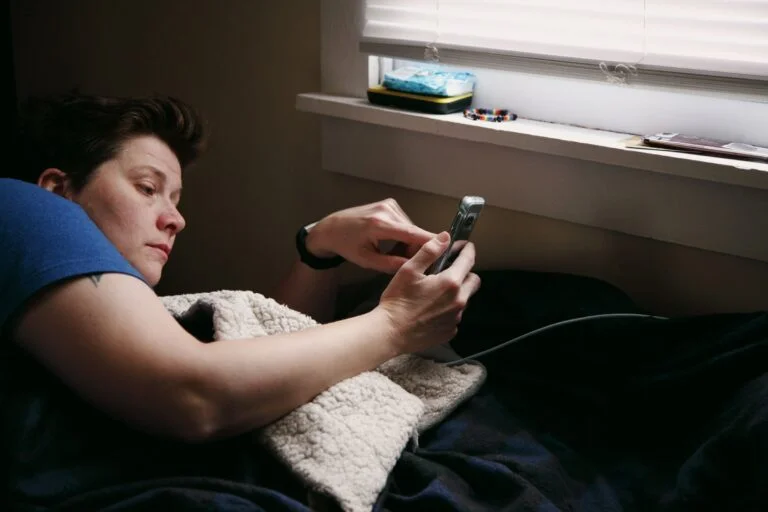
If you wake and can’t settle, the advice in how to stay asleep and light sleeper applies at any age: keep the room dark and quiet, keep the clock out of sight and don’t reach for your phone. For colder nights, our guide to electric blankets covers safe use.
iMedicines. The NHS notes that some medicines can cause sleep problems. If your sleep changed after starting or changing a medicine, ask your pharmacist or GP before stopping anything. A pharmacist can also do a medicines review if you take several.
Napping: is it good for older adults?
A short nap is fine for most people. A long or late one can cost you sleep at night. The Global Council on Brain Health, whose sleep advice for people over 50 was published with Age UK, recommends keeping afternoon naps to less than 30 minutes. Age UK’s own advice is to get most of your sleep at night, with only short daytime naps.
| Nap | Verdict | Why |
|---|---|---|
| Up to 30 minutes, early afternoon | Fine for most people | Short enough to leave you sleepy at bedtime |
| An hour or more | Cut it down | Can leave you groggy and wakeful at night |
| Dozing in the chair after 6pm | Try to avoid | Takes the edge off your sleepiness before bed |
| Nodding off without meaning to | See your GP | Can be a sign of poor night-time sleep or illness |
If you have insomnia, the NHS advises avoiding naps altogether while you get your night-time sleep back on track. Some studies have linked long daily naps with health problems: a review of studies including more than 288,000 people linked naps of 60 minutes or more a day with a higher risk of type 2 diabetes, but found no link for shorter naps. That is an association, not proof that naps cause harm, as people who are unwell often nap more. For timing tips, see our power nap guide.
Should seniors nap every day? A short daily nap is fine if it doesn’t stop you sleeping at night. If you need a long nap every day to get by, look at what’s happening at night first.
How to stop waking up so early
You can’t fully reverse a body clock that has moved earlier, but you can often gain an hour or so and make the early hours less frustrating.
- Don’t go to bed too early. The NHS advises going to bed only when you feel tired. If you wake at 5am, count back 7 to 8 hours and push your bedtime later in 15-minute steps rather than dozing off at 9pm.
- Get up at the same time every day, weekends included. A fixed wake-up time is one of the Global Council on Brain Health’s recommendations and the anchor for everything else.
- Get daylight later in the day. Light sets your body clock. An afternoon walk outside and keeping the lights on in the evening, rather than sitting in a dim room, gives your clock a later signal. See how many steps a day and Japanese walking for gentle ways to get out.
- Keep the bedroom dark in the morning. Blackout curtains or an eye mask help in spring and summer, when it’s light before 5am.
- Cut caffeine after lunch. The Global Council on Brain Health advises older adults not to drink coffee after lunchtime. The NHS notes that tea and some soft drinks contain caffeine too.
- Keep alcohol early and modest. The NHS says alcohol and nicotine can disrupt sleep.
- Be active in the day. The NHS says even small amounts of activity help you sleep better.
- If you wake early, don’t fight it in bed for hours. If you’re wide awake and frustrated, get up and do something calm in low light until you feel sleepy again.
- Try CBT for insomnia. If early waking has gone on for months, the NHS says a GP may offer cognitive behavioural therapy, face to face or as an online programme. Sleepio is one online CBT course, free on the NHS in some areas.
The clocks going back in October can make early waking feel worse for a week or two: see how to cope when the clocks go back. For a whole-routine reset, see sleep hygiene and a bedtime routine for adults.
What about sleeping tablets? The NHS says GPs rarely prescribe sleeping pills for insomnia because of side effects and the risk of dependence. Sleep aids from a pharmacy should only be used for 1 to 2 weeks, and you should check with a doctor first. Melatonin is prescription-only in the UK: see melatonin in the UK.
An evening routine for later life
A routine works best when it’s simple and the same most days. Here’s one that fits around an earlier body clock:
| Time | What to do |
|---|---|
| Morning | Get up at your set time, open the curtains, have breakfast in the light |
| Lunchtime | Your last caffeine of the day: coffee, tea or a mug of Reishi Cacao |
| Early afternoon | A nap of under 30 minutes if you need one, then a walk outside |
| Evening | Lights on, stay up and active; eat dinner about 3 hours before bed |
| Last hour | Screens off, lights low, a warm drink, a book or the radio |
Where our products fit:
- Magnesium Glycinate Sleep Complex is a berry-flavoured drink powder with magnesium bisglycinate and citrate (148mg of magnesium a serving), glycine, L-theanine, and oat straw, hops, chamomile and passionflower extracts. Its directions are one scoop in a drink about 30 minutes before bed. Magnesium contributes to a reduction of tiredness and fatigue and to normal psychological function. See magnesium for sleep for what the research says, and how much magnesium a day for the NHS amounts.
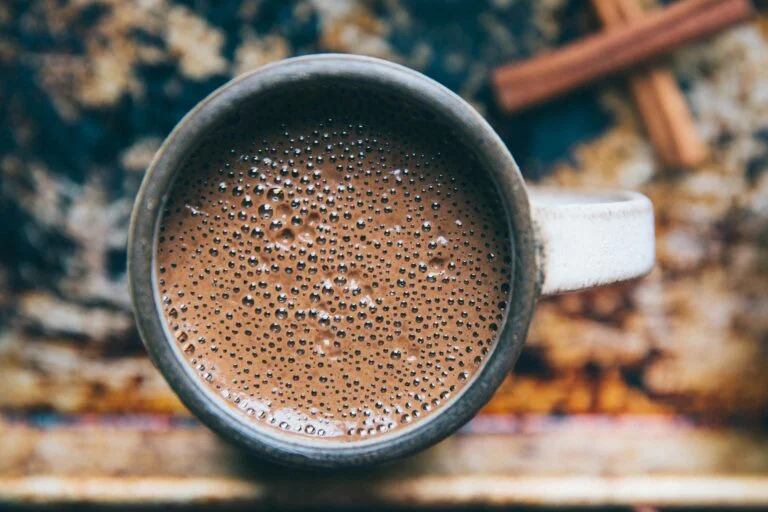
- Reishi Cacao is a hot chocolate made with reishi mushroom, cacao and maca. It contains a little natural caffeine from the cacao, so we’d have it at lunchtime in place of a coffee, not in the evening (our caffeine in hot chocolate guide has the numbers). Reishi has no authorised health claims, so it’s a mug to enjoy, not a remedy.
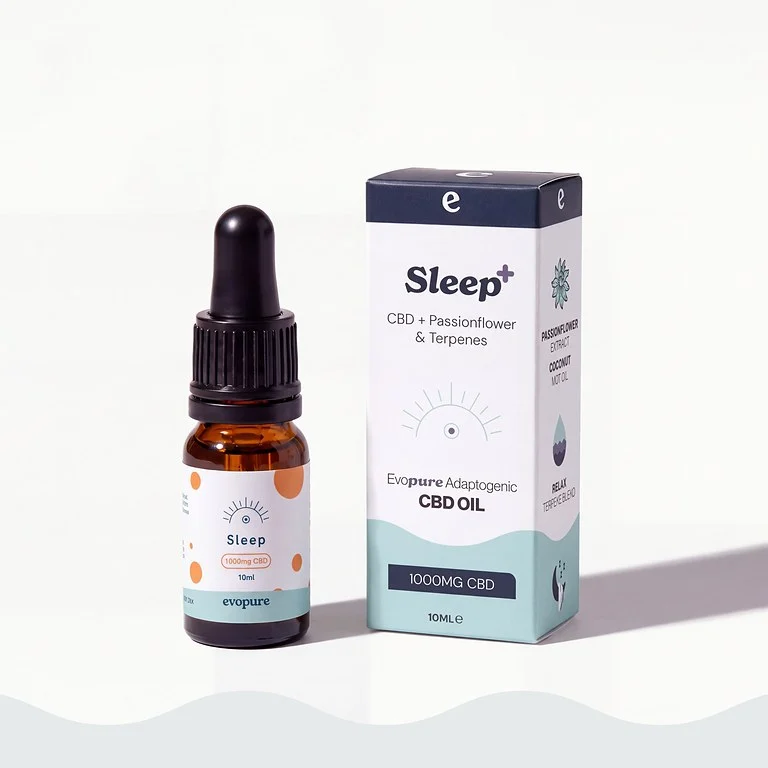
- Sleep CBD Oil is our evening oil: broad spectrum CBD with passion flower extract and a night-time terpene blend. At 500mg, about 4 drops give 10mg of CBD. CBD isn’t a treatment for insomnia, and the research on CBD and sleep is still limited: see CBD for sleep. If you take any regular medicines, check with your GP or pharmacist first. Our guide to CBD and medication explains why, and CBD oil for older adults covers starting low, formats and who should avoid it.
The FSA’s 10mg a day figure is precautionary advice rather than a legal limit, set while longer-term safety research continues. At Evopure we think it is a very cautious figure, and many adults use more. If you go above it, increase slowly, and check with your GP or pharmacist first if you take any medication.
All three are vegan, alcohol-free and made in the UK, and for adults (18+) only. Our CBD oils are broad spectrum with 0% THC and third-party lab tested, with reports on request from our lab testing page. These are food supplements, not medicines, and they don’t replace a GP check if your sleep has changed a lot. For other options ranked by evidence, see natural sleep aids.
When to see a GP
See a GP if:
- you snore loudly, or someone has seen you stop breathing, gasp, snort or choke in your sleep
- you always feel very tired during the day, or nod off without meaning to (both can be signs of sleep apnoea; if it’s confirmed and you feel very sleepy, the NHS says you must not drive until it’s under control)
- trouble sleeping has lasted months, or changing your habits hasn’t helped, or poor sleep makes daily life hard
- you wake very early feeling low, hopeless or anxious most days
- you get up to pee several times a night, or peeing has changed
- pain, breathlessness or an urge to move your legs keeps you awake
- your sleep changed after starting a new medicine
Call 999 or go to A&E if someone suddenly becomes confused. The NHS says to get medical help immediately. If you feel you can’t cope or have thoughts of harming yourself, call 111 or Samaritans on 116 123.
A GP will look for the cause and may suggest a sleep diary, CBT for insomnia or a referral to a sleep clinic. Go with a partner or family member if they have noticed symptoms at night.
Related guides
- For women weighing up vitamins after 60, see supplements for women over 60 for what the NHS advises.
- If you’re a man weighing up vitamins as you get older, see supplements for men over 50 and 60 for what the NHS advises.
- For the NHS amounts and the gentlest forms in later life, see magnesium for older adults.
- Pain and broken sleep feed each other; see joint pain and morning stiffness for what helps.
- If you find tablets hard to swallow, a magnesium drink stirred into warm water is another option (check with your GP or pharmacist first if you take regular medicines).
Sources 13
- NHS. Insomnia.
- NHS. Sleep apnoea.
- NHS Every Mind Matters. How to fall asleep faster and sleep better.
- NHS. Symptoms of depression in adults.
- NHS. Enlarged prostate.
- NHS. Restless legs syndrome.
- NHS. Confusion.
- Age UK. Get enough good sleep to stay mentally sharp in later life (Global Council on Brain Health recommendations).
- Age UK. Look after your thinking skills.
- Ohayon MM et al. Meta-analysis of quantitative sleep parameters from childhood to old age in healthy individuals. Sleep, 2004. PMID 15586779.
- Duffy JF, Zitting KM, Chinoy ED. Aging and circadian rhythms. Sleep Medicine Clinics, 2015. PMID 26568120.
- Hirshkowitz M et al. National Sleep Foundation’s sleep time duration recommendations. Sleep Health, 2015. PMID 29073412.
- Yamada T et al. J-curve relation between daytime nap duration and type 2 diabetes or metabolic syndrome: a dose-response meta-analysis. Scientific Reports, 2016. PMID 27909305.
This guide is general information, not medical advice. Evopure makes the Magnesium Glycinate Sleep Complex, Sleep CBD Oil and Reishi Mushroom Adaptogenic Complex.