







Last updated: 11 November 2026
Women need about 270mg of magnesium a day, and many get less than that from food. Magnesium contributes to a reduction of tiredness and fatigue, normal muscle function, normal psychological function and the maintenance of normal bones. Glycinate is the gentlest form for daily use: Evopure’s Magnesium Glycinate Sleep Complex gives 290mg (77% NRV) per 4.75g serving, from bisglycinate and citrate.
This guide explains what magnesium does for women, the benefits at each life stage, how much you need, the best type, signs you may be low, and who should check first.
Black Friday sale on now, until the end of Monday 30 November: 25% off any order, 30% off when you spend £50 and 40% off when you spend £100, with free standard UK delivery on every order. See the Black Friday offer.
Our pick
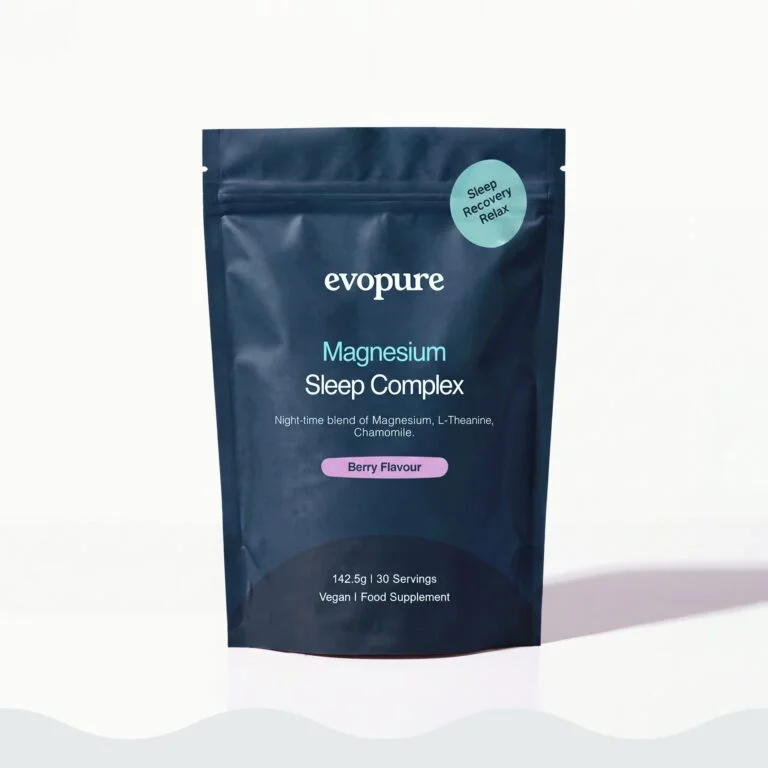
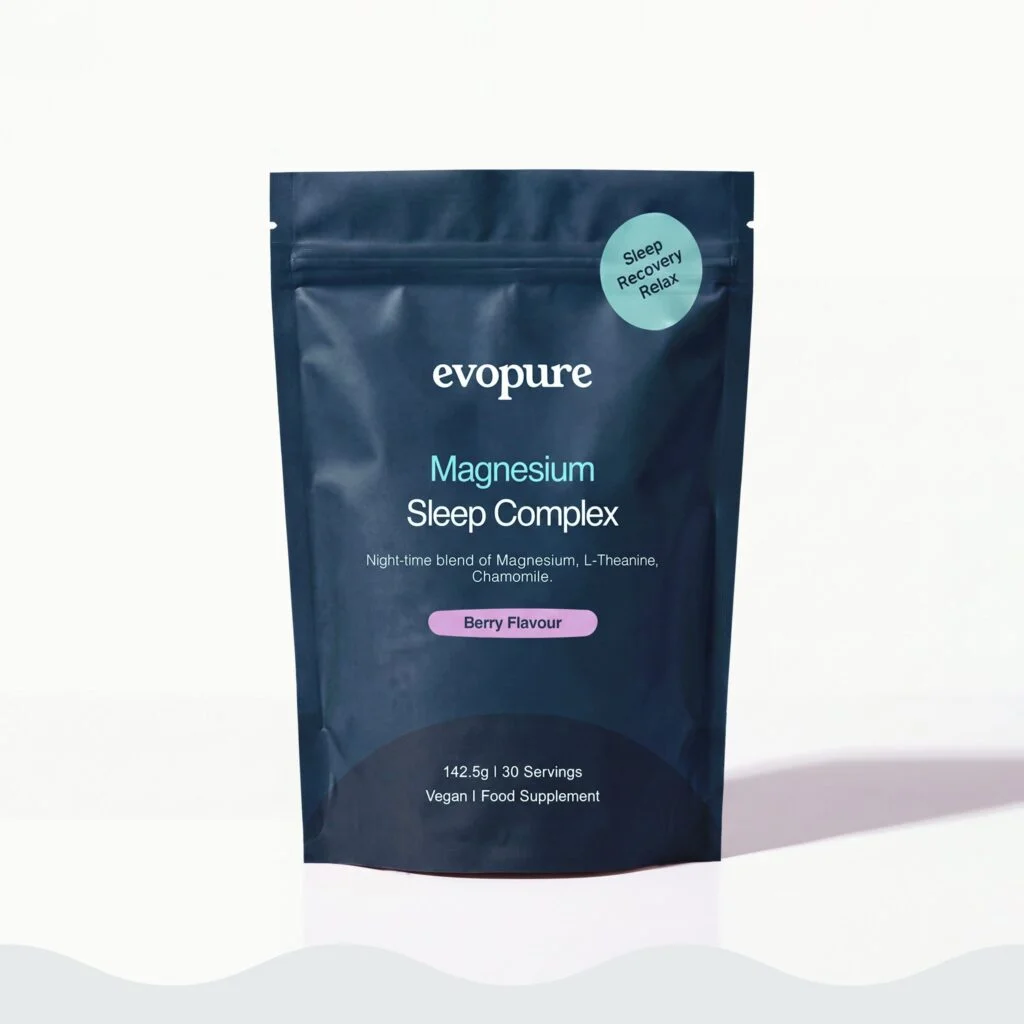
Magnesium Glycinate Sleep Complex
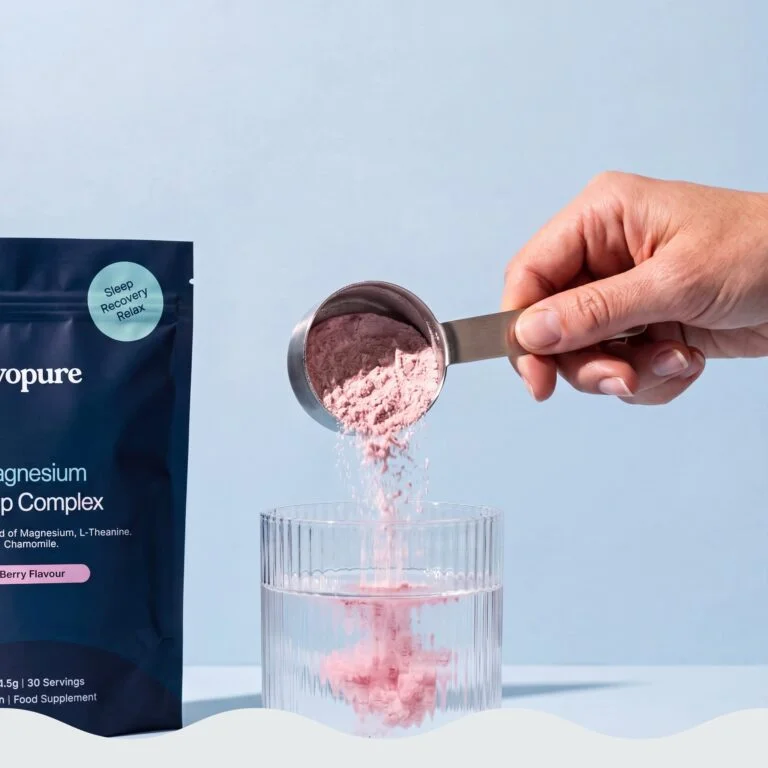
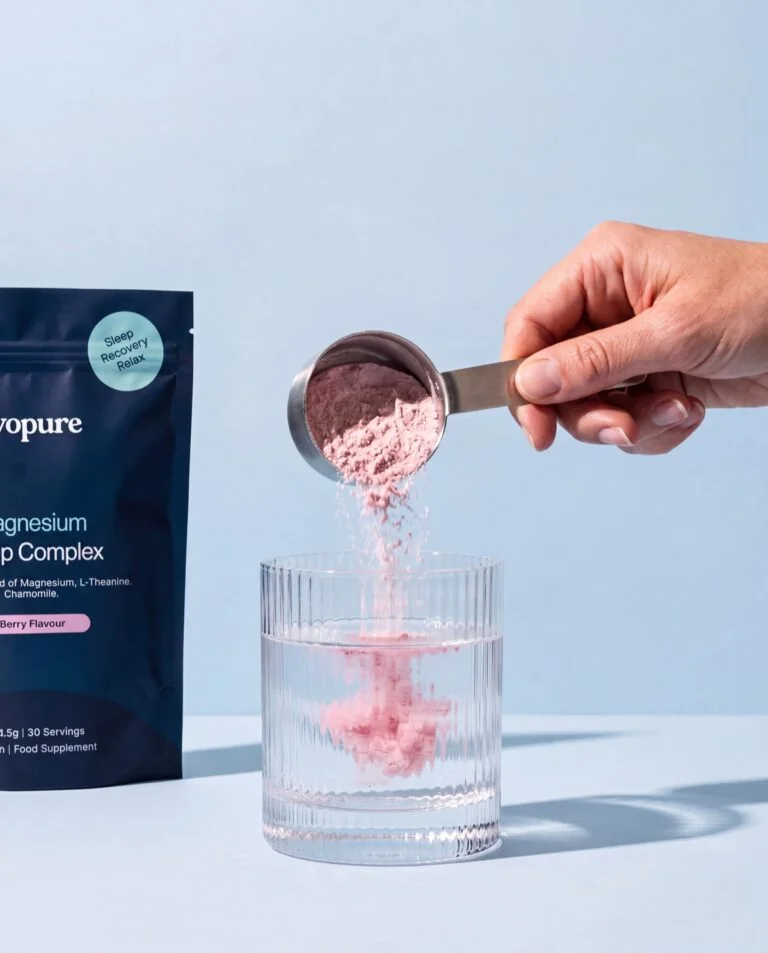
Magnesium Glycinate Sleep Complex is a berry drink powder with 290mg of magnesium (77% NRV) per 4.75g serving from bisglycinate and citrate, plus glycine and L-theanine. Magnesium contributes to a reduction of tiredness and fatigue.
Add Magnesium Glycinate Sleep Complex to bag See ingredients and reviews
Vegan and made in the UK. We don’t recommend our products during pregnancy or breastfeeding. Subscribe and save 25% on your first order, then 20%. New to Evopure? Join our emails for 20% off a one-off first order. Free UK delivery over £40, 14-day returns on unopened items.
Subscribe £17.99One-off £29.99
View productWhat does magnesium do for women?
Magnesium is involved in more than 300 processes in the body, from muscle and nerve function to energy production and bone health. Women’s needs are slightly lower than men’s (270mg vs 300mg a day), but periods, pregnancy, menopause and some medicines can all affect how much you get and use. The officially approved UK benefits of magnesium apply to everyone, and several matter particularly to women. For all ten authorised claims in one place, plus what research says beyond them, see our guide to magnesium benefits.
Magnesium glycinate benefits for women
Magnesium glycinate gives women the same authorised benefits as any magnesium: it contributes to a reduction of tiredness and fatigue, normal muscle function, normal psychological function and the maintenance of normal bones. Its main advantage is that it is gentle on the stomach. The NHS says women aged 19 to 64 need 270mg of magnesium a day.
| What women ask about | What the evidence shows |
|---|---|
| Tiredness | Authorised claim: contributes to a reduction of tiredness and fatigue. |
| PMS and periods | One small trial (200mg a day) found less premenstrual fluid retention. Little research on period pain. |
| Sleep | A 2025 bisglycinate trial found a small improvement in insomnia scores. No authorised sleep claim. |
| Bones | Authorised claim: maintenance of normal bones, alongside calcium and vitamin D. |
Magnesium benefits for women
1. Less tiredness and fatigue
Magnesium contributes to a reduction of tiredness and fatigue and to normal energy-yielding metabolism, useful at any stage of life, and especially when sleep is broken.
2. PMS, bloating and water retention
In a University of Reading trial, women who took 200mg of magnesium a day had fewer premenstrual fluid retention symptoms by the second month, including bloating, swollen hands and feet and breast tenderness. See magnesium for PMS and magnesium for water retention.
3. Period cramps and muscle function
Magnesium contributes to normal muscle function, which is why many women take it for period cramps. The research on period pain specifically is limited, so treat it as a gentle extra. See magnesium for cramps.
4. Mood and stress
Magnesium contributes to normal psychological function and the normal functioning of the nervous system. Many women take it in the evening as part of a calming routine. See magnesium for anxiety.
5. Sleep
Glycinate is the most popular form for sleep, and a 2025 trial found a small improvement in insomnia scores in adults who slept poorly. See magnesium for sleep.
6. Bones
Magnesium contributes to the maintenance of normal bones. Bone density falls faster after menopause, so magnesium matters alongside calcium, vitamin D and strength exercise. Taking HRT? See magnesium and HRT.
7. Migraines
iSome research suggests magnesium may help reduce how often migraines happen, including migraines linked to periods, but the evidence is mixed. If you get frequent migraines, talk to your GP. See magnesium for migraines.
The FSA advises healthy adults to take no more than 10mg of CBD a day: about 0.2ml of the 500mg (0.1ml of the 1,000mg) gives 10mg. (Mint CBD Oil + Vit D3: about 0.3ml.) Adults only. The FSA’s 10mg a day figure is precautionary advice rather than a legal limit, set while longer-term safety research continues. At Evopure we think it is a very cautious figure, and many adults use more. If you go above it, increase slowly, and check with your GP or pharmacist first if you take any medication.
Magnesium by age and life stage
| Life stage | Why magnesium matters | Read more |
|---|---|---|
| 20s and 30s | PMS, period cramps, stress and sleep | Magnesium for PMS |
| Pregnancy | Leg cramps are common; always check with your midwife first | Magnesium in pregnancy |
| PCOS | Many women with PCOS ask about magnesium | Magnesium for PCOS |
| Over 40: perimenopause | Broken sleep, tiredness and low mood often start here | Magnesium for menopause |
| Over 50: menopause | Sleep, tiredness and bone health | Magnesium for menopause |
| Over 60 | Absorption can fall with age, and some medicines lower magnesium | See “Who should check first” below |
How much magnesium do women need?
The NHS says women aged 19 to 64 need 270mg of magnesium a day, and that most people can get this from a varied diet. If you take a supplement, 400mg or less a day from supplements is unlikely to cause harm.
- Typical supplement: 100 to 300mg of elemental magnesium a day.
- Food sources: pumpkin seeds, almonds, spinach, beans, wholegrains and dark chocolate.
- Check the label for elemental magnesium, not the compound weight.
See the best time to take magnesium for timing.
Best magnesium supplement for women
The best magnesium supplement for women is one that gives a clear amount of elemental magnesium in a form your stomach tolerates. Glycinate (bisglycinate) is gentle for daily use; citrate suits women who also get constipation. Women aged 19 to 64 need 270mg a day, and the NHS says 400mg or less a day from supplements is unlikely to cause harm.
For a daily drink, Evopure’s Magnesium Glycinate Sleep Complex gives 290mg of magnesium (77% NRV) per 4.75g serving, from 1,000mg magnesium bisglycinate and 900mg magnesium citrate, plus 500mg glycine and 100mg L-theanine.
| Form | Elemental magnesium (approx.) | On the stomach | Suits women who |
|---|---|---|---|
| Glycinate (bisglycinate) | About 14% of the compound weight | Gentle | Want an everyday form, morning or evening |
| Citrate | About 16% | Can loosen the bowels at higher doses | Also get constipation |
| Oxide | About 60% | Most likely to cause loose stools | Want a small, cheap tablet |
| L-threonate | About 7 to 8% | Gentle | Are curious about early brain research (small studies) |
How to read a label: look for the elemental magnesium per daily dose, not the compound weight. 1,000mg of magnesium bisglycinate gives roughly 140mg of magnesium. Add what you get from food: the NHS figure of 270mg a day for women aged 19 to 64 is the target from your whole diet, and 400mg a day from supplements is the upper guide.
- Glycinate: the best all-rounder for daily use, morning or evening. Gentle on the stomach. See our magnesium glycinate guide.
- Citrate: good if you also get constipation or bloating. See magnesium for bloating.
- L-threonate: sometimes chosen for brain fog, though research is early.
Our Magnesium Glycinate Sleep Complex combines bisglycinate and citrate with calming botanicals, giving 290mg of magnesium per serving as an evening drink. For every form side by side, see magnesium glycinate vs other forms.
Signs you may be low in magnesium
Mildly low magnesium often has no clear symptoms. Muscle cramps or twitches, tiredness and weakness are sometimes linked to low magnesium, but they have many other causes too. A blood test is the only reliable check, so speak to your GP if you are worried rather than guessing from symptoms.
Who should check first?
- Pregnant or breastfeeding women: check with your midwife or GP before taking any supplement.
- Women with kidney disease: your kidneys clear excess magnesium.
- Women on long-term heartburn medicines (PPIs, such as omeprazole): the MHRA has warned that long-term use can lower magnesium levels, so ask your GP whether your levels should be checked.
- Women taking antibiotics, osteoporosis medicines or thyroid medicine: magnesium can reduce how well these are absorbed, so they may need to be taken a few hours apart. Ask your pharmacist.
Related guides
- PMS symptoms.
- PCOS has a new name: PMOS explained.
- A guide to PMDD.
- Inositol for women: the evidence for PCOS, fertility and side effects.
- If you can’t sleep in the week before your period, see insomnia before a period.
- Choosing a product? Our best magnesium supplement guide has an 8-point checklist.
- Period pain relief: what the evidence says.
- Pumpkin seeds for women.
- Perimenopause symptoms and the vitamins worth taking.
- Men need a little more, 300mg a day; see magnesium for men for their guide.
- For where magnesium sits alongside vitamin D, calcium and herbal remedies in midlife, see best supplements for menopause.
- See magnesium L-threonate (Magtein): evidence, dose and cost per mg.
- How much magnesium per day for a woman, at every age.
- Women need 270mg a day, and a handful of seeds goes a long way: see magnesium-rich foods for the best sources.
- Wondering about less common forms? Read magnesium taurate: benefits, dose and taurate vs glycinate.
- Shopping for her this Christmas? Our guide to wellness gifts for her mixes simple non-supplement ideas with a few warm evening drinks.
- For blends sold for women, our guide to what a magnesium complex is and whether it beats a single form shows what to look for on the label.
- Many women also need to think about iron; see iron supplements for women and how to take them.
- The types of magnesium and their benefits, form by form.
- Thinking of adding a herb? See whether you can take ashwagandha and magnesium together, and what women should check first.
- For tiredness that follows your cycle, read why you feel so tired on your period, including when low iron is the cause.
- For the NHS 400mg supplement guide and the first signs of taking too much, see magnesium side effects.
- Comparing options for midlife? Our CBD oil for menopause guide explains what CBD research does and doesn’t show.
- Choosing a CBD product? See the best CBD oil for women UK, with picks by life stage.
- Over 60? See magnesium for older adults for how much you need in your 60s and 70s and which type suits you.
- For magnesium alongside vitamin D, iron, B12 and calcium, see supplements for women over 50 and 60.
Next step
Magnesium Glycinate Sleep Complex
Try Magnesium Glycinate Sleep Complex in the evening: 290mg of magnesium (77% NRV) per 4.75g berry drink.
Add Magnesium Glycinate Sleep Complex to bag
Subscribe and save 25% on your first order, then 20%. New to Evopure? Join our emails for 20% off a one-off first order. Free UK delivery over £40. If you take any regular medicines, check with your GP or pharmacist first. We don’t recommend our products during pregnancy or breastfeeding.
Subscribe £17.99One-off £29.99
View productSources 5
- NHS. Vitamins and minerals: magnesium.
- MHRA. Proton pump inhibitors in long-term use: reports of hypomagnesaemia.
- Walker AF et al (1998). Magnesium supplementation alleviates premenstrual symptoms of fluid retention. Journal of Women’s Health.
- NIH Office of Dietary Supplements. Magnesium: fact sheet for health professionals.
- Schuster J et al (2025). Magnesium bisglycinate supplementation in healthy adults reporting poor sleep. Nature and Science of Sleep.
This guide is general information, not medical advice.