







Last updated: October 2026
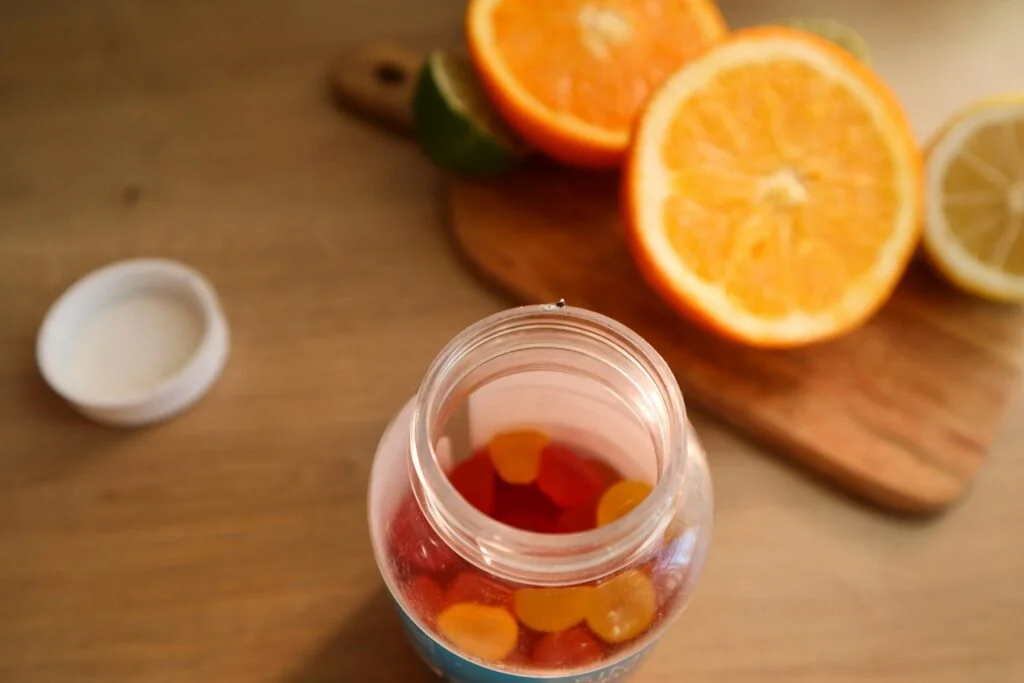
Mushroom gummies are chewable supplements made with lion’s mane, reishi or a mushroom blend. The research on these mushrooms is early, and most of it used specific extracts at amounts many gummies don’t reach. Check the extract type, the milligrams per gummy and the sugar. No mushroom has an authorised health claim in the UK.
Below: what’s in a mushroom gummy, how gummy doses compare with the studies, gummies vs powder, capsules and coffee, how to read the label, sugar, safety and how to choose.
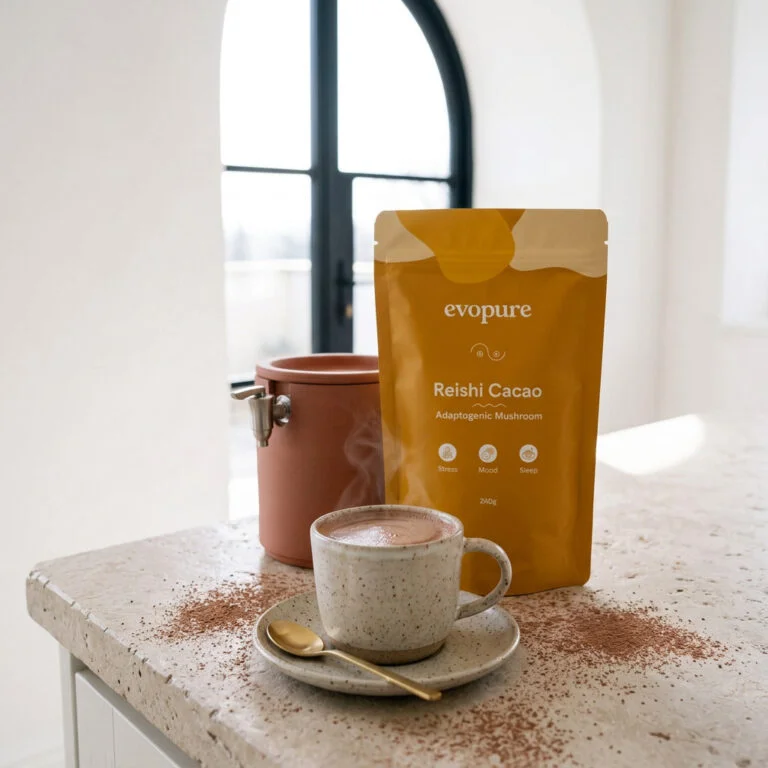
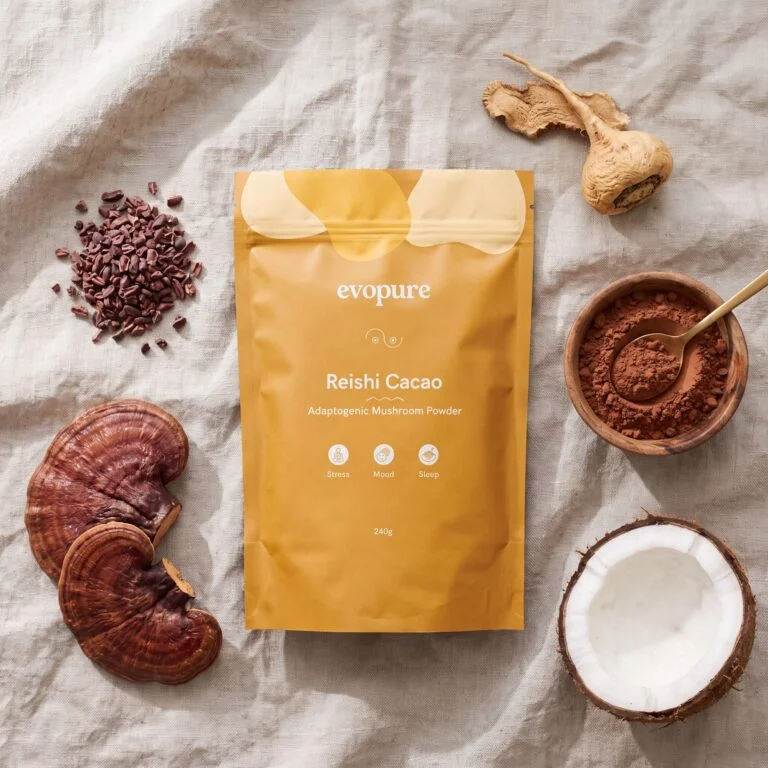
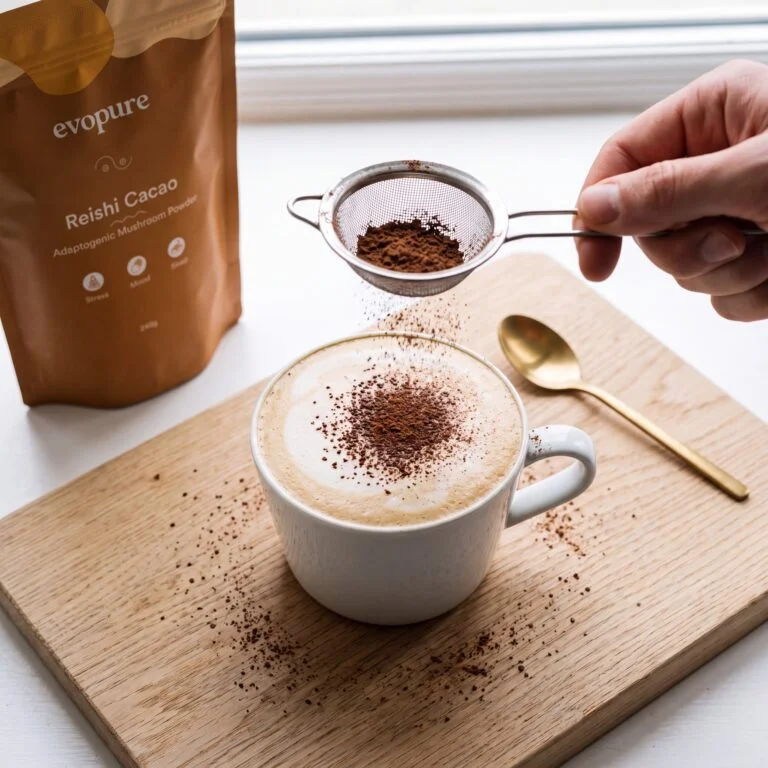
Prefer a warm drink to a gummy? Our Reishi Mushroom Adaptogenic Complex is a reishi hot chocolate powder, not a gummy: reishi mushroom extract with cacao, maca and coconut milk powder. It contains a little natural caffeine from the cacao. Adults only.
What’s in a mushroom gummy?
A mushroom gummy is a sweet, chewy base (usually sugar or glucose syrup, set with pectin) with a small amount of mushroom extract mixed in. The most common mushrooms are:
- Lion’s mane (Hericium erinaceus), usually sold for focus. See our full guide to lion’s mane.
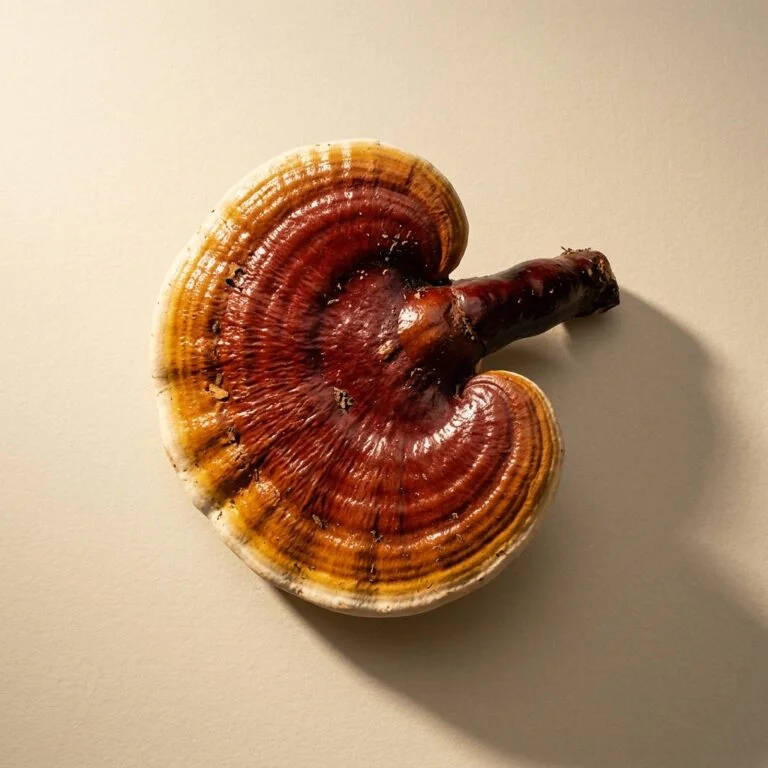
- Reishi (Ganoderma lucidum), usually sold for evenings. See reishi mushroom.
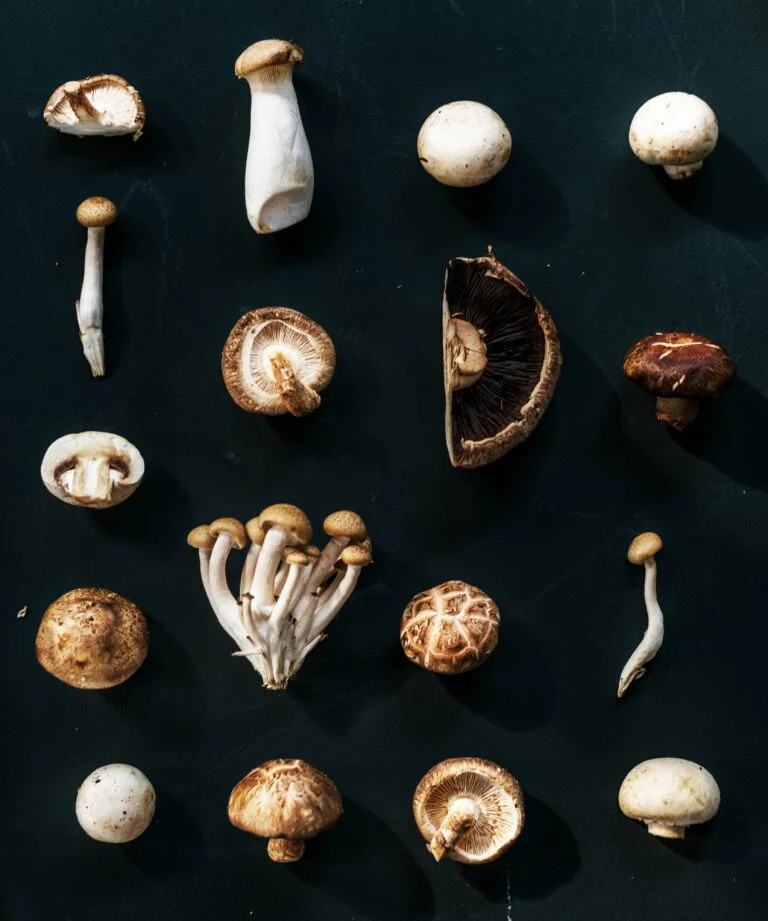
- Blends of four to ten mushrooms, often with cordyceps, chaga, turkey tail, maitake or shiitake.
The catch is size: a gummy weighs a few grams, mostly the sweet base. One UK reishi gummy we checked in October 2026 weighs 4g, contains 3g of sugar and just 25mg of reishi extract. A lion’s mane gummy we checked provides 500mg of a 2:1 extract per two-gummy serving, so 250mg a gummy. Several blend gummies list a total for the whole blend without saying how much of each mushroom is in it.
Here’s how that compares with the amounts used in human studies:
| Study | Amount a day | Who and how long |
|---|---|---|
| Lion’s mane, Mori 2009 | 3g of dried fruiting-body powder (twelve 250mg tablets) | 30 adults aged 50 to 80 with mild cognitive impairment, 16 weeks |
| Lion’s mane, Docherty 2023 | 1.8g of lion’s mane | 41 healthy adults aged 18 to 45, 28 days |
| Lion’s mane mycelium, Li 2020 | 1,050mg of an erinacine A-enriched mycelium extract | Adults with mild Alzheimer’s disease, 49 weeks |
| Reishi, Tang 2005 | 5,400mg of a reishi polysaccharide extract (1,800mg three times a day) | 132 adults with long-term fatigue (neurasthenia), 8 weeks |
| Typical gummies we checked | 25mg to 500mg of extract at the label dose | Label directions: one or two gummies a day |
Extracts are more concentrated than dried powder, so this isn’t exactly like for like, but the gap is often large.
Do mushroom gummies work?
No published trial has tested mushroom gummies themselves. What exists is a small body of research on lion’s mane and reishi in other forms:
- Lion’s mane: a 2025 systematic review found only five randomised controlled trials and three pilot trials in people, mostly small. In the 16-week Japanese trial, cognitive scores rose compared with placebo, then fell within 4 weeks of stopping. The UK pilot study had mixed results, and its authors urged caution.
- Reishi: the 2005 trial in people with long-term fatigue used a high-dose polysaccharide extract. Cochrane reviews of reishi for cancer and for heart disease risk factors found the evidence too limited to support its use for those conditions.
So the honest answer is that we don’t know, and a low-dose gummy is the format least likely to match the studies. For a side-by-side look at the three most popular mushrooms, see lion’s mane vs reishi vs cordyceps.
How long do mushroom gummies take to work?
Most of the studies above ran for 4 to 16 weeks of daily use. There’s no good evidence of a noticeable effect within hours.
Mushroom gummies for ADHD, weight loss, gut health or menopause
None of these has been tested in a trial of mushroom gummies. There are no human studies of lion’s mane in ADHD (see lion’s mane), so don’t change ADHD medication without your doctor. For menopause, see mushrooms for menopause.
Mushroom gummies vs powder vs capsules vs coffee
| Gummies | Capsules | Powder or extract | Mushroom coffee | Mushroom hot chocolate | |
|---|---|---|---|---|---|
| Mushroom per serving | Often small, limited by gummy size | Fixed amount per capsule | Flexible: you choose the scoop | Varies; many don’t list mg per mushroom | Varies by brand |
| Sugar | Usually added sugar, or sweeteners and polyols | None | None | None unless added | Often some |
| Caffeine | None | None | None | Yes | A little, from the cacao |
| Absorption | No evidence that one format is absorbed better. What matters more is the type of extract and how much you take. | ||||
| Cost per study-level dose | Can be high, if you’d need several gummies | Moderate | Usually lowest | Higher than plain powder | Varies |
| Convenience | Very easy, tastes sweet | Easy, tasteless | Needs mixing; earthy taste | Fits a morning habit | Fits an evening habit |
Gummies win on taste and ease; capsules and powders usually give you more mushroom for less sugar. The gummy format tends to trade dose for taste, as we found with CBD oil vs gummies and apple cider vinegar gummies. Prefer a cup? See mushroom coffee or mushroom tea.
Where our reishi drink fits
We don’t make a mushroom gummy. Our Reishi Mushroom Adaptogenic Complex is a powder you stir into warm milk or water to make a reishi hot chocolate. It contains reishi mushroom extract, cacao, maca, coconut milk powder and coconut sugar (which still counts as sugar). The cacao gives it a little natural caffeine. It’s vegan, made in the UK and third-party lab tested. Reishi has no authorised health claims, so think of it as an evening ritual, not a remedy. More in reishi cacao benefits and healthy hot chocolate.
How to read a mushroom gummy label
- Milligrams of each mushroom per gummy. “Mushroom blend 1,000mg” tells you nothing about how much lion’s mane or reishi you get. Look for each species listed with its own amount.
- The extract ratio, and what it hides. A 10:1 ratio means about 10kg of dried mushroom went into 1kg of extract. Labels often turn this into an “equivalent” figure: 400mg of a 10:1 extract becomes “4,000mg”. The real amount in the gummy is 400mg. Ratios aren’t standardised and don’t tell you which compounds were concentrated.
- Fruiting body or mycelium. The fruiting body is the mushroom itself. Mycelium is the root-like network, often grown on grain such as oats or rice. A 2025 lab study found chaga products made from mycelium on fermented grain were rich in starch and chemically different from real chaga. Mycelium isn’t always worse (one lion’s mane trial used it), but it should be named.
- Beta-glucans, not just “polysaccharides”. Starch is a polysaccharide too, so grain can inflate that figure. Lab methods can measure beta-glucan separately from starch, so a beta-glucan percentage tells you more.
- Third-party testing. Look for independent lab reports for heavy metals and microbes that the brand will share. Ours are on our lab testing page.
- Novel food status. The FSA says any food not eaten to a significant degree in the UK or EU before 15 May 1997 is a novel food and must be authorised before it can be sold in Great Britain. That can depend on the species and how the extract is made, so ask the brand.
- Honest claims. The Advertising Standards Authority notes there are no authorised health claims for mushrooms themselves. Some gummies add a vitamin or mineral, such as zinc, and the health claim on the pack is about that nutrient, not the mushroom.
For the same checklist applied to capsules and powders, see the best mushroom supplements in the UK and our functional mushrooms UK guide.
Sugar and your teeth
The NHS says adults should have no more than 30g of free sugars a day, roughly 7 sugar cubes, and that sugar is one of the main causes of tooth decay. The reishi gummy we checked has 3g of added sugar each, about a tenth of that limit per gummy.
- Take sugary gummies with a meal rather than as a snack: the NHS advises keeping sugary foods to mealtimes.
- “Sugar-free” gummies often use polyols such as maltitol, sorbitol or erythritol. Large amounts can upset your stomach.
Side effects and who should avoid them
Lion’s mane and reishi are edible mushrooms and are generally well tolerated in studies, but they aren’t risk-free:
- Reishi and your liver. The US LiverTox database says reishi is well tolerated but has been linked to rare single cases of acute liver injury, although other causes often weren’t ruled out. One fatal case followed a switch to reishi powder. Stop and see a GP if you get yellow skin or eyes, dark urine or unusual tiredness.
- Reishi and bleeding. Reishi may increase the risk of bleeding, so take extra care with blood thinners such as warfarin, and tell your surgeon or dentist before an operation.
- Reishi and other medicines. It may affect blood sugar and the immune system, so check first if you take diabetes medicines, immunosuppressants or chemotherapy.
- Lion’s mane. Reported side effects include stomach discomfort, headache and allergic reactions. Avoid it if you’re allergic to mushrooms.
- Pregnancy and breastfeeding. There isn’t enough safety research. We don’t recommend our products during pregnancy or breastfeeding.
- Medicines. Speak to your GP or pharmacist before taking any mushroom supplement if you take regular medication.
- Children. Mushroom supplements haven’t been tested in children, and gummies look like sweets. Keep them out of reach. Our products are for adults only.
Not the same as “magic mushroom” gummies
Functional mushroom gummies contain no psilocybin. But some products sold online as “mushroom” gummies or chocolates are psychoactive. In 2024, US authorities linked one brand’s chocolates, cones and gummies to 180 reported illnesses and 73 hospital admissions, and testing found undeclared substances including muscimol, psilocin and pregabalin. Magic mushrooms are a Class A drug in the UK. Buy from brands that list every ingredient and amount.
How to choose mushroom gummies in the UK
- Pick the mushroom first. Lion’s mane is usually taken in the day and reishi in the evening; see reishi for sleep.
- Check the mg of each mushroom per gummy against the study amounts above, plus fruiting body or mycelium.
- Check the sugar or sweetener per serving.
- Ask for lab reports for heavy metals and microbes.
- Walk away from big promises. Gummies that claim to cure anxiety or treat menopause are breaking UK advertising rules. See what the evidence shows in mushrooms for anxiety.
If a gummy has only a small amount of extract, you may be paying mainly for a sweet. A capsule, powder or mushroom drink can be better value.
FAQs
Do mushroom gummies work?
No trial has tested mushroom gummies themselves. Small studies on lion’s mane and reishi used extracts or powders at 1g to 5.4g a day for 4 to 16 weeks, and many gummies contain far less. The evidence is early.
Are lion’s mane gummies good?
They’re convenient and taste pleasant, but many contain only a few hundred milligrams of extract plus added sugar. Check the mg of lion’s mane per gummy, whether it’s fruiting body or mycelium, and the sugar.
Mushroom gummies vs powder: which is better?
Powders and capsules usually give you more mushroom per serving with no sugar, and cost less per gram. Gummies are easier to take. Neither has been shown to be absorbed better.
How many mushroom gummies should I take?
Follow the label and don’t take more than it says. More gummies also means more sugar. If you take medication, ask your GP or pharmacist first.
Are mushroom gummies safe?
Most healthy adults tolerate lion’s mane and reishi well. Reishi has rare case reports of liver injury and may raise bleeding risk. Avoid them in pregnancy and breastfeeding, and check with your GP or pharmacist if you take medication.
How long do mushroom gummies take to work?
Studies on lion’s mane and reishi ran for 4 to 16 weeks of daily use. There’s no good evidence that a mushroom gummy has a noticeable effect within hours.
Can children take mushroom gummies?
We don’t recommend it. Mushroom supplements haven’t been tested in children, and gummies look like sweets, so keep them out of reach. Our products are for adults only.
Sources
- Mori K et al (2009). Improving effects of the mushroom Yamabushitake (Hericium erinaceus) on mild cognitive impairment: a double-blind placebo-controlled clinical trial. Phytotherapy Research.
- Docherty S et al (2023). The acute and chronic effects of lion’s mane mushroom supplementation on cognitive function, stress and mood in young adults. Nutrients.
- Li IC et al (2020). Prevention of early Alzheimer’s disease by erinacine A-enriched Hericium erinaceus mycelia. Frontiers in Aging Neuroscience.
- Menon A et al (2025). Benefits, side effects, and uses of Hericium erinaceus as a supplement: a systematic review. Frontiers in Nutrition.
- Tang W et al (2005). A randomized, double-blind and placebo-controlled study of a Ganoderma lucidum polysaccharide extract in neurasthenia. Journal of Medicinal Food.
- Jin X et al (2016). Ganoderma lucidum (Reishi mushroom) for cancer treatment. Cochrane Database of Systematic Reviews.
- Klupp NL et al (2015). Ganoderma lucidum mushroom for the treatment of cardiovascular risk factors. Cochrane Database of Systematic Reviews.
- LiverTox, NIDDK (2024). Lingzhi, Reishi.
- Wanmuang H et al (2007). Fatal fulminant hepatitis associated with Ganoderma lucidum (Lingzhi) mushroom powder. Journal of the Medical Association of Thailand.
- Memorial Sloan Kettering Cancer Center. Reishi mushroom.
- Windsor C et al (2025). Comparative study of chaga (Inonotus obliquus) dietary supplements using complementary analytical techniques. International Journal of Molecular Sciences.
- McCleary BV, Draga A (2016). Measurement of beta-glucan in mushrooms and mycelial products. Journal of AOAC International.
- Food Standards Agency. Novel foods authorisation guidance.
- Advertising Standards Authority (2024). Shroom for improvement: navigating the advertising rules for functional mushrooms.
- NHS. Sugar: the facts.
- US Food and Drug Administration. Investigation of illnesses: Diamond Shruumz-brand chocolate bars, cones and gummies.
- Talk to Frank. Magic mushrooms.
This guide is general information, not medical advice. Product details for gummies were taken from UK retailer labels in October 2026. Evopure makes the Reishi Mushroom Adaptogenic Complex.