Last updated: 12 November 2026
Yes, CBD does do something: it is absorbed, can cause side effects and can interact with some medicines. But its only proven, licensed use in the UK is Epidyolex, a prescription CBD medicine for rare forms of epilepsy. As a food supplement, CBD can’t claim health benefits, and research on sleep, stress and pain is early and mixed.
Side effects in trials, mostly at high prescription doses, were sleepiness, diarrhoea, reduced appetite and raised liver enzymes. Below: what CBD oil does to you, whether it actually works for sleep, stress and pain, the evidence at a glance, the side effects in numbers, daily use and the FSA’s safety advice.
Does CBD actually work?
It depends what you mean by “work”. Three things are true at the same time:
- CBD is active in the body. It is absorbed, has side effects and can interact with medicines.
- At prescription doses it has proven effects in a few rare forms of epilepsy. Those doses are 10 to 25mg per kg of body weight a day, which is 700 to 1,750mg for a 70kg adult.
- At food supplement doses, which the FSA advises keeping to 10mg a day, there is no good-quality trial showing a health effect.
Why many people feel it works
Expectation plays a big part. In a 2021 Canadian study, 43 healthy adults took hempseed oil with no CBD in it. When they were told it contained CBD, they reported feeling more sedated, and those who went in with a strong belief in CBD for anxiety reported lower anxiety during a stress test.
A 2025 German trial went further. It gave 180 stressed university students either a low-dose over-the-counter CBD oil, a look-alike placebo oil or nothing, every day for 30 days. Both oil groups reported less stress than the group that took nothing, but there was no difference at all between the real CBD oil and the placebo oil. The researchers described a substantial placebo response.
Two other things get in the way. Many products don’t contain what the label says: a UK study of 29 widely available CBD oils found only 11 were within 10% of the CBD on the label. And there is a big dose gap between research and real life, so results from 300mg or 600mg studies can’t be assumed to apply to a 10mg serving. If you’d rather skip to choosing one, our guide to the best CBD oil in the UK explains what we’d check first.
Does CBD work for sleep?
There is no good evidence that it does: a 2020 review found insufficient evidence to support cannabinoids for any sleep disorder, and many studies also used THC. CBD isn’t a treatment for insomnia. See does CBD help you sleep? and, for how the two compounds compare, CBD vs THC for sleep.
Does CBD work for stress and anxiety?
The best-known study used a single 600mg dose in a lab (see the table below). In the 2025 trial above, a month of daily low-dose oil did no better than a placebo oil for stress, and CBD isn’t a treatment for anxiety disorders. More in CBD and anxiety: what the research shows.
Does CBD work for pain?
The trials are mostly negative: a 2024 review found 15 of 16 placebo-controlled trials showed no benefit over placebo, at doses from 6 to 1,600mg a day. See CBD for pain: what the trials actually show.
What about Reddit and reviews?
Forum threads are split: some people are sure CBD makes a difference, and many notice nothing. Personal reports can’t separate CBD from expectation or a quieter week, which is what placebo-controlled trials are for. If you’ve tried it and feel nothing, our guide to why CBD might not be working for you goes through dose, timing, food and product quality.
Our pick
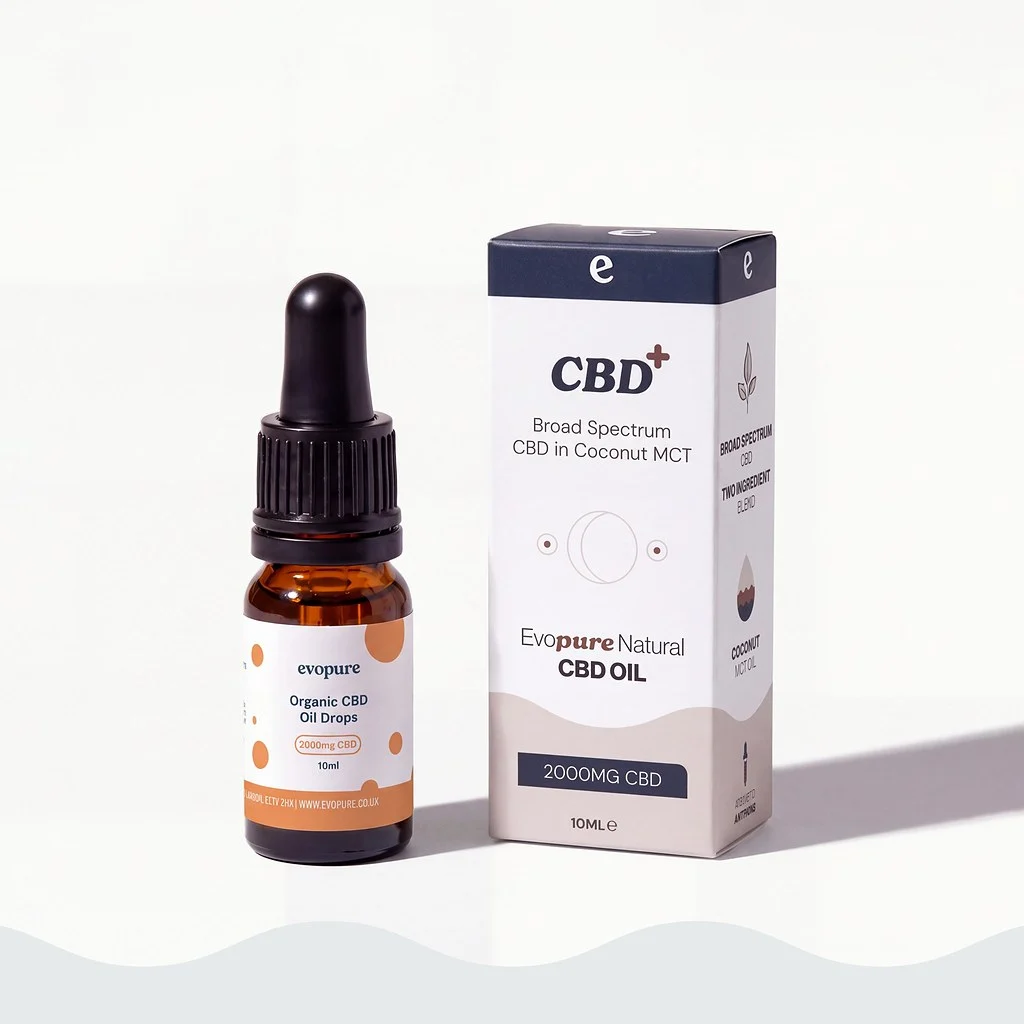
Broad Spectrum CBD Oil is just broad spectrum CBD and coconut MCT oil, in 500mg, 1,000mg or 2,000mg. 10mg of CBD is about 0.2ml of the 500mg oil (0.1ml of the 1,000mg).
Add Broad Spectrum CBD Oil 500mg to bag or choose another strength
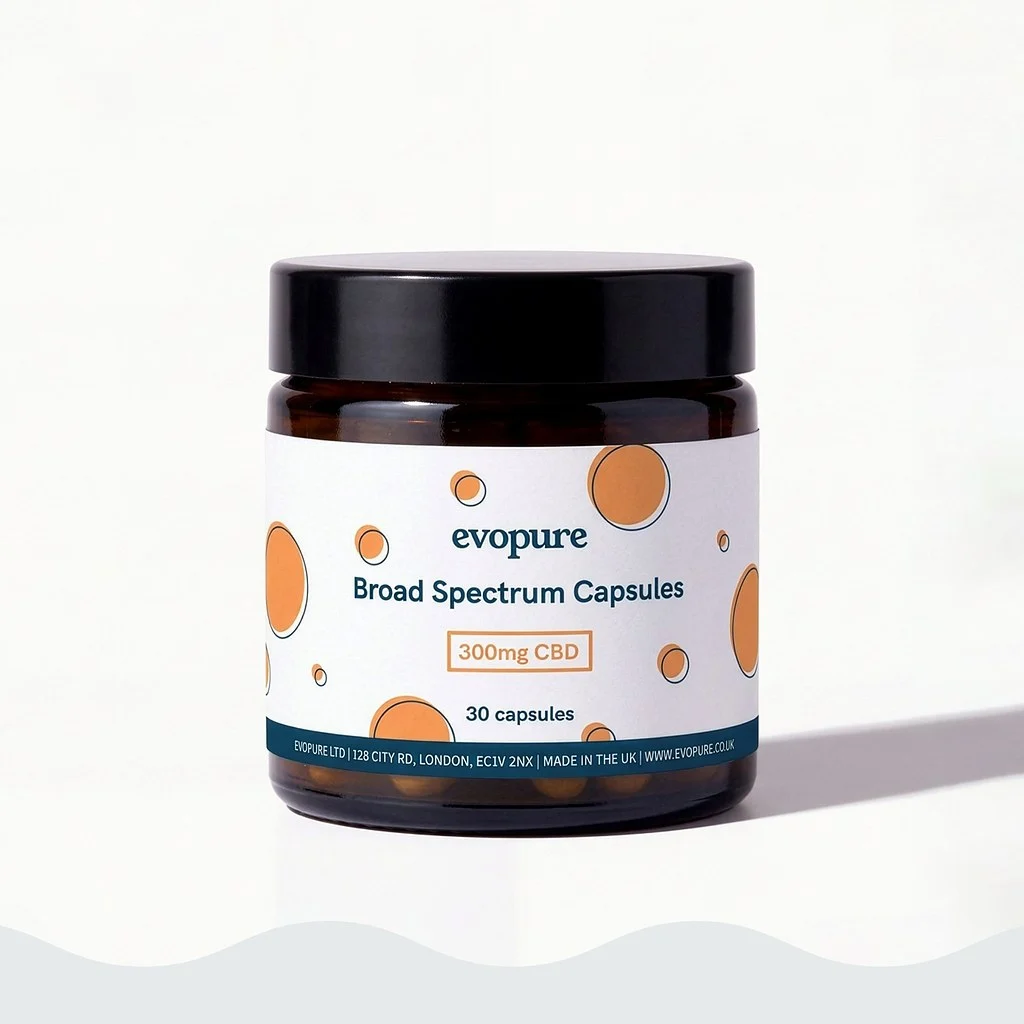
Prefer no taste and no measuring? Broad Spectrum CBD Capsules: one 10mg capsule a day, in a vegan HPMC shell. Add CBD Capsules 10mg to bag or choose another strength
Broad spectrum with 0% THC, every batch third-party lab tested, on the FSA public list, made in the UK. For adults only. We don’t recommend our products during pregnancy or breastfeeding. New to Evopure? Join our emails for 20% off a one-off first order. Free UK delivery over £40.
What is CBD oil good for?
CBD oil has one proven use in the UK: Epidyolex, a prescription CBD medicine for rare forms of epilepsy, at 700mg to 1,750mg a day for a 70kg adult. Shop-bought CBD oil is a food supplement and can’t claim to be good for any health condition. Most people use it as part of an evening or wind-down routine.
Research on anxiety, sleep and pain is early and mixed: the studies are mostly small and often used far more CBD than the FSA’s advice of no more than 10mg a day for healthy adults. The table below sets out what people commonly use CBD oil for and how strong the evidence is for each.
| What people use it for | What studies show | Strength of evidence |
|---|---|---|
| Rare epilepsies | Prescription CBD lowered seizures in trials | Strong, for the licensed medicine only |
| Feeling stressed or anxious | Single high doses in lab tests; daily low-dose oil no better than placebo | Early and mixed |
| Sleep | Not enough evidence for any sleep disorder | Weak |
| Aches and pain | Most placebo-controlled trials found no benefit | Mostly negative |
| Skin | Mostly lab studies | Very early |
For the detail behind each row, see the evidence at a glance below, and for how much to take, our CBD dosage guide.
Is CBD good for you?
There’s no proof CBD is good for your health at food supplement doses, but trials suggest it is well tolerated at moderate doses. Side effects and raised liver enzymes were seen mainly at high prescription doses, and CBD can interact with some medicines. As a precaution, the FSA advises healthy adults to keep to 10mg a day, and doesn’t recommend CBD during pregnancy or breastfeeding, for under 18s or for anyone taking medication: check with your GP or pharmacist.
“Good for you” also depends on the product. Choose one with a batch lab report that confirms the CBD content and the THC result. More in our guides to CBD side effects, the FSA’s 10mg a day advice and how to read a CBD lab report.
What can CBD oil do?
CBD oil sold as a food supplement has no proven or authorised health benefits. The only licensed CBD medicine in the UK is Epidyolex, prescribed for rare forms of epilepsy. Studies have looked at anxiety, sleep, pain, inflammation and skin, but most were small, short or used far higher doses than a food supplement serving, with mixed results.
The CBD benefits list below shows what published research has looked at for each area people search for. “Strength of evidence” means the quality and amount of human research, not a promise about how a product will work for you.
Want each topic in more depth, including MS spasticity, focus and the UK rules on benefit claims? See our full guide to CBD oil benefits and what the research has looked at.
| Area | What the research shows | Strength of evidence | Key caveat |
|---|---|---|---|
| Rare epilepsies (licensed medicine). See prescription CBD | In a 2017 trial in Dravet syndrome, prescription CBD lowered convulsive seizure frequency compared with placebo | Strong, for the licensed medicine only | Prescription doses of 10 to 25mg per kg a day, started and supervised by an epilepsy specialist |
| Anxiety. See CBD and anxiety | In a 2011 lab study, 24 people with social anxiety took a single 600mg dose or placebo before a simulated public speaking test; the CBD group reported lower anxiety scores | Early: small, short, lab-based studies | One-off high doses; a 2025 trial of daily low-dose oil found no difference from placebo for stress |
| Sleep. See CBD and sleep research | A 2020 systematic review found insufficient evidence to support cannabinoids for any sleep disorder | Weak and mixed | Many studies were small, at risk of bias, or used THC alongside CBD |
| Pain and arthritis. See CBD for pain | A 2024 review found 15 of 16 placebo-controlled CBD trials showed no benefit over placebo for pain | Mostly negative for CBD on its own | The cannabis medicine licensed for MS muscle spasms (Sativex) contains THC as well as CBD |
| Inflammation | Research is mostly laboratory and animal work on inflammatory pathways | Early: mostly lab and animal | Lab results don’t tell us what happens in people at food supplement doses |
| Skin. See CBD and skin | Preclinical studies on skin cells; a 2020 review said clinical effects have yet to be confirmed | Early: little human evidence | Most research is on topical use, not oils you swallow |
| Addiction. See is CBD addictive? | A small 2019 trial in people abstinent from heroin found 400 or 800mg a day for 3 days lowered cue-induced craving scores | Early: small, exploratory trials | High doses in a specialist research setting |
| Psychosis | A 2018 trial added 1,000mg a day of CBD to antipsychotic medicine in 88 people with schizophrenia, with modest differences after 6 weeks | Research only | Very high doses under psychiatric care; nothing to do with over-the-counter CBD |
The pattern is clear: the strongest results come from purified CBD at prescription doses, many times higher than any food supplement serving. Everything else is early research.
Where CBD is a licensed medicine
Epidyolex is purified CBD licensed in the UK for people aged 2 and over with seizures linked to Dravet syndrome, Lennox-Gastaut syndrome (both alongside the medicine clobazam) and tuberous sclerosis complex. In a 2017 trial in Dravet syndrome, monthly convulsive seizures fell from a median of 12.4 to 5.9, against 14.9 to 14.1 on placebo, at 20mg per kg a day. For a 70kg adult, that dose would be 1,400mg a day, 140 times the FSA’s 10mg a day figure for food supplements, and it is given under specialist care with regular liver monitoring.
The NHS says very few people are likely to get a prescription for any cannabis-based medicine. Besides Epidyolex, the main ones are nabilone, a man-made medicine that acts like THC, for sickness caused by chemotherapy, and nabiximols (Sativex), a THC and CBD mouth spray for muscle stiffness and spasms in multiple sclerosis. Both are used only when other treatments haven’t worked. The NHS is also clear that CBD oils sold in health shops come with no guarantee of quality or of any health benefit. Our guide to medical cannabis in the UK explains who can get a prescription.
How does CBD work and what does it do to you?
CBD oil doesn’t get you high. The intoxicating part of cannabis is THC, and the NHS notes that purified CBD medicine won’t get you high because it doesn’t contain THC. Broad spectrum CBD oils have the THC removed. Some people feel a little more relaxed or sleepy, and many feel nothing obvious. See does CBD get you high?
- It acts on several targets in the body. CBD binds only weakly to the main cannabinoid receptors of the endocannabinoid system and interacts with a number of other receptors and enzymes. Our complete beginner’s guide to CBD explains more.
- It is absorbed slowly and variably. A systematic review of human studies found that swallowed CBD reaches its highest blood level anywhere up to about 4 hours after a dose, with higher levels when it is taken with food or in an oil. With daily use, its half-life was 2 to 5 days. See how long CBD takes to work.
- It is broken down by the liver, mainly by enzymes called CYP2C19 and CYP3A4, which is one reason it can interact with some medicines.
In short, CBD is a non-intoxicating plant compound with measurable effects on the body, known side effects at high doses and real potential for medicine interactions, but no proof of a health benefit at food supplement doses.
CBD side effects: what the trials found
Most of what we know comes from the Epidyolex trials and that medicine’s official product information, so most numbers below are at prescription doses: roughly 700 to 1,750mg a day for an adult, 70 to 175 times the FSA’s 10mg a day.
| Side effect | What the trials found | Dose context |
|---|---|---|
| Sleepiness and sedation | 29% of people taking Epidyolex in trials: 43% of those also taking the epilepsy medicine clobazam, against 14% of those who weren’t | Prescription doses; alcohol and other sedating medicines can add to it |
| Diarrhoea | 13% at 10mg per kg and 21% at 20mg per kg a day in the Dravet and Lennox-Gastaut trials, against 10% on placebo. Outside childhood epilepsy, a 2020 meta-analysis found it was the only side effect clearly more common with CBD than placebo | Dose-related |
| Reduced appetite | Very common (more than 1 in 10) with Epidyolex, and more likely than with placebo across trials | Mainly at prescription doses |
| Tiredness, fever and vomiting | Also listed as very common in the Epidyolex product information | Prescription doses, in people with severe epilepsy |
| Raised liver enzymes | ALT above 3 times normal in 12% on Epidyolex against under 1% on placebo, mostly with valproate. In healthy adults: 7 of 16 at 1,500mg a day, and 5.6% at about 350mg a day (5mg per kg) for 4 weeks, against none on placebo | Seen at 350mg a day and above; lower doses have been studied much less. See CBD and the liver |
| Medicine interactions | Expected with some medicines, including warfarin and some epilepsy medicines (see below) | Strongest evidence at prescription doses |
The NHS also lists sickness, dizziness and mood changes as possible side effects of cannabis-based medicines. For what is normal and what to do, see our complete guide to CBD side effects.
CBD and other medicines
The Epidyolex product information says CBD is predicted to cause clinically significant interactions with medicines broken down by the liver enzymes CYP2C9, such as warfarin, and CYP2C8. It also increases sleepiness alongside clobazam. In case reports of people on warfarin, INR (the blood clotting test) rose when prescription CBD was started, so INR should be monitored. The NHS says CBD can affect how other medicines work. If you take any medication, check with your GP or pharmacist before using CBD. Our guide to CBD and medication covers which medicines matter most.
Long-term effects
Long-term use at supplement doses hasn’t been studied well. The FSA’s advice is based on lifetime exposure: it says the more CBD you take over your lifetime, the more likely you are to develop long-term adverse effects such as liver damage or thyroid issues. In the 4-week trial in healthy adults, CBD made no difference to thyroid hormones or testosterone, but 4 weeks isn’t long-term.
Who shouldn’t take CBD?
As a precaution, the FSA advises against CBD for children under 18, people taking any medication, anyone trying to conceive and people who are pregnant or breastfeeding, unless under medical direction. Our products are for adults (18+) only. We don’t recommend our products during pregnancy or breastfeeding. If you have a liver or kidney condition, speak to your GP first.
Is it safe to take CBD every day?
Many adults take CBD daily, and the FSA’s advice is framed around daily intake: it advises healthy adults to limit CBD from food to 10mg a day, which is about 0.2ml of a 5% (500mg in 10ml) oil. Its expert committees set that figure in 2023 as a provisional acceptable daily intake, which may be refined as new research comes in. Read more in what the FSA’s 10mg advice really means.
In September 2026 the FSA board recommended the first CBD products for full novel food approval, also with a 10mg a day maximum. Our guide to the FSA’s first CBD approvals explains what that means for UK buyers.
As for the benefits of taking CBD daily, there’s no evidence that daily use at supplement doses brings health benefits. What it changes is how much is in your body: with a half-life of 2 to 5 days, CBD builds up over the first days of regular use.
iIf you take CBD every day, keep to a consistent amount, read the mg per serving on the label, and stop and speak to your GP if you feel unwell or notice anything unusual. Our CBD dosage guide shows how much oil gives 10mg at common strengths.
Do CBD gummies work?
Gummies contain the same CBD as oils, so the honest answer is the same: they deliver CBD, but there’s no proof of a health benefit at food supplement doses. What differs is absorption and how reliable the dose is.
- Absorption. A gummy is chewed and swallowed, so the CBD is absorbed through the gut like a capsule. Swallowed CBD can take up to about 4 hours to reach its peak, and the amount absorbed varies with food. See CBD oil vs gummies for speed, cost and safety side by side.
- Label accuracy. A 2025 study tested 56 CBD gummy products sold online in the US. In 70% of them the CBD content differed from the label by more than 10%, 39% contained THC, and CBD varied from gummy to gummy in the same bottle. The UK oil study above shows this isn’t only a gummy problem.
- Dose. The gummies in that study averaged about 21mg of CBD each, more than twice the FSA’s 10mg a day advice. Check the mg per gummy, not just per pack.
- Safety at home. CBD products are for adults only, and gummies look like sweets. Keep them well out of children’s reach.
If you want to try CBD
- Choose a product on the FSA public list with a batch lab report you can read.
- Start low and take it consistently for a few weeks.
- Be wary of any brand claiming CBD treats or cures a condition.
- Check with your GP or pharmacist first if you take any medication.
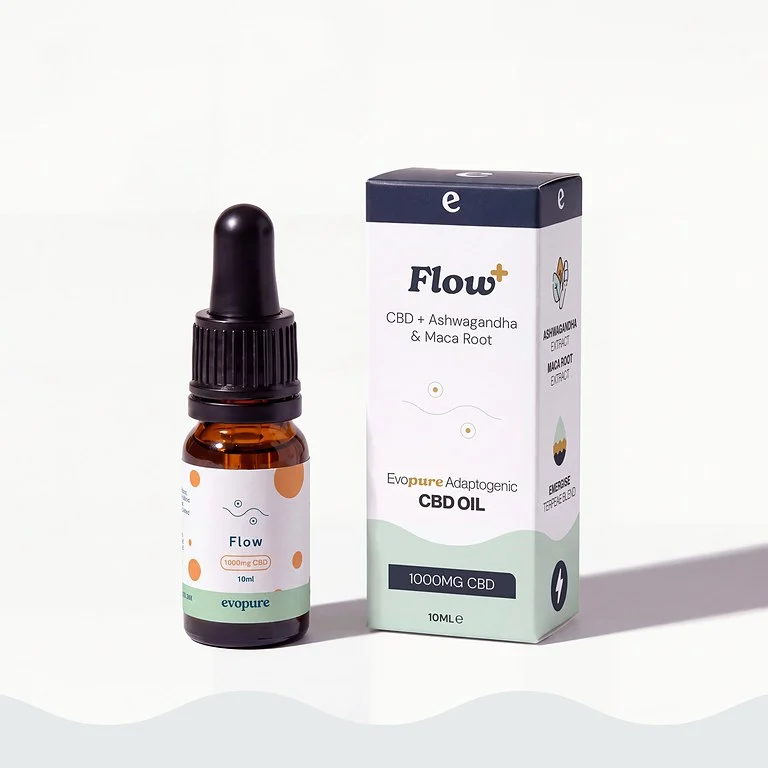
Our Broad Spectrum CBD Oil contains CBD and MCT oil only, our Broad Spectrum CBD Capsules come in 10mg and 25mg strengths in plant-based shells, and our Flow CBD Oil combines broad spectrum CBD with ashwagandha and maca. All three are broad spectrum with 0% THC, vegan, alcohol-free, made in the UK and third-party lab tested, and all are on the FSA public list of CBD products linked to novel food applications. Being on that list isn’t the same as FSA approval. Our products are for adults (18+) only. We don’t recommend our products during pregnancy or breastfeeding.
The FSA’s 10mg a day figure is precautionary advice rather than a legal limit, set while longer-term safety research continues. At Evopure we think it is a very cautious figure, and many adults use more. If you go above it, increase slowly, and check with your GP or pharmacist first if you take any medication.
Wondering about the law as well as the research? See is CBD legal in the UK.
For what the trials found in back pain, knee arthritis and nerve pain, and how to choose an oil if you still want to try one, see our best CBD oil for pain UK guide.
If you decide to try CBD, our best CBD oil UK guide shows how to check a lab report, the FSA public list and the mg per ml before you buy.
A stronger bottle isn’t a stronger effect: see CBD oil strength explained for how mg, % and ml relate.
See also CBD gummies UK: what they are, mg per gummy and the law.
For what research says about CBD and anandamide, see anandamide explained.
Next step
if you want to try CBD at the FSA’s 10mg a day, Broad Spectrum CBD Capsules give one 10mg capsule a day, and Broad Spectrum CBD Oil gives 10mg in about 0.2ml of the 500mg. Both are broad spectrum with 0% THC, third-party lab tested and on the FSA public list.
Add CBD Capsules 10mg to bag Add Broad Spectrum CBD Oil 500mg to bag
Subscribe and save 25% on your first order, then 20%. New to Evopure? Join our emails for 20% off a one-off first order. Free UK delivery over £40. The 25mg capsule is above the FSA’s 10mg a day advice. Adults only. If you take any regular medicines, check with your GP or pharmacist first. We don’t recommend our products during pregnancy or breastfeeding.
Sources 23
- Food Standards Agency. Cannabidiol (CBD): consumer advice. GOV.UK.
- Food Standards Agency. Cannabidiol (CBD) guidance. GOV.UK, updated 2026.
- ACNFP and COT. Provisional cannabidiol (CBD) acceptable daily intake (ADI). GOV.UK, 2023.
- NHS. Medical cannabis (and cannabis oils).
- Electronic Medicines Compendium. Epidyolex: summary of product characteristics (sections 4.2, 4.4, 4.5 and 4.8).
- Electronic Medicines Compendium. Sativex oromucosal spray: summary of product characteristics.
- Devinsky O et al. Trial of cannabidiol for drug-resistant seizures in the Dravet syndrome. N Engl J Med, 2017.
- Spinella TC et al. Evaluating cannabidiol (CBD) expectancy effects on acute stress and anxiety in healthy adults: a randomized crossover study. Psychopharmacology, 2021.
- Winkler A et al. Placebo effects in a RCT assessing 30 days of low dose cannabidiol (CBD) treatment for psychological distress in stressed students at risk for depression. J Cannabis Res, 2025.
- Bergamaschi MM et al. Cannabidiol reduces the anxiety induced by simulated public speaking in treatment-naïve social phobia patients. Neuropsychopharmacology, 2011.
- Suraev AS et al. Cannabinoid therapies in the management of sleep disorders: a systematic review of preclinical and clinical studies. Sleep Med Rev, 2020.
- Moore A et al. Cannabidiol (CBD) products for pain: ineffective, expensive, and with potential harms. J Pain, 2024.
- Burstein S. Cannabidiol (CBD) and its analogs: a review of their effects on inflammation. Bioorg Med Chem, 2015.
- Baswan SM et al. Therapeutic potential of cannabidiol (CBD) for skin health and disorders. Clin Cosmet Investig Dermatol, 2020.
- Hurd YL et al. Cannabidiol for the reduction of cue-induced craving and anxiety in drug-abstinent individuals with heroin use disorder. Am J Psychiatry, 2019.
- McGuire P et al. Cannabidiol (CBD) as an adjunctive therapy in schizophrenia: a multicenter randomized controlled trial. Am J Psychiatry, 2018.
- Millar SA et al. A systematic review on the pharmacokinetics of cannabidiol in humans. Front Pharmacol, 2018.
- Chesney E et al. Adverse effects of cannabidiol: a systematic review and meta-analysis of randomized clinical trials. Neuropsychopharmacology, 2020.
- Watkins PB et al. Cannabidiol and abnormal liver chemistries in healthy adults: results of a phase I clinical trial. Clin Pharmacol Ther, 2021.
- Florian J et al. Cannabidiol and liver enzyme level elevations in healthy adults: a randomized clinical trial. JAMA Intern Med, 2025.
- Grayson L et al. An interaction between warfarin and cannabidiol, a case report. Epilepsy Behav Case Rep, 2018.
- Johnson ED et al. Cannabidiol gummy products: LC-MS/MS assessment of cannabinoid concentrations. Cannabis Cannabinoid Res, 2025.
- Liebling JP et al. An analysis of over-the-counter cannabidiol products in the United Kingdom. Cannabis Cannabinoid Res, 2022.