Last updated: October 2026
No, CBD isn’t considered addictive. The World Health Organization found no evidence of abuse or dependence potential in humans, and controlled trials found people didn’t “like” CBD the way they like THC or sedatives. Stopping CBD suddenly caused no withdrawal symptoms in a 2020 trial. The real risk is THC in poorly made products.
Below: what the research shows, addiction vs dependence vs tolerance, withdrawal, the THC problem, how to use CBD sensibly, and what researchers are studying about CBD and addiction.
Is CBD addictive? The research
| Source | What it found |
|---|---|
| World Health Organization review, 2018 | No effects in humans that suggest abuse or dependence potential; CBD is generally well tolerated |
| Frequent cannabis users, 2017 (31 people) | Oral CBD at 200, 400 and 800mg felt no different from a placebo on every “liking” and “high” measure; smoked cannabis did |
| Recreational drug users, 2018 (43 people) | 750mg CBD was no different from placebo for drug liking. Very high doses (1,500 to 4,500mg) had small effects, far lower than alprazolam (a sedative) or dronabinol (a THC drug) |
| Withdrawal trial, 2020 (30 healthy adults) | No withdrawal syndrome after stopping 1,500mg a day abruptly, following four weeks of use |
The doses in these trials are far higher than anything in a food supplement, which makes the results reassuring for everyday use. CBD doesn’t make you high, and it doesn’t appear to trigger the reward and craving loop that drives addiction.
Addiction vs dependence vs tolerance
| Term | What it means | CBD? |
|---|---|---|
| Addiction | Compulsive use despite harm, with cravings and loss of control | No evidence |
| Physical dependence | The body adapts, so stopping causes withdrawal symptoms | Not found in trials |
| Tolerance | Needing more over time for the same effect | Little evidence in people |
| Habit | A routine you like, such as an evening drink or wind-down | Possible, as with any routine |
Liking how you feel with a routine isn’t addiction. If you notice you feel you can’t cope without CBD, that’s worth talking through with your GP, as it may point to something CBD isn’t the answer for.
Does CBD cause withdrawal?
In the 2020 trial, volunteers took 1,500mg of CBD a day for four weeks, then half switched to placebo without warning. Withdrawal scores stayed close to zero in both groups. You can stop CBD whenever you like without tapering.
If you stop and notice your sleep or mood feels the way it did before you started, that isn’t withdrawal. It’s simply how things were without it. Cannabis containing THC is different: FRANK lists irritability, poor sleep, sweating and shaking as withdrawal symptoms for regular cannabis users.
Can you build a tolerance to CBD?
There’s little evidence that people need more CBD over time for the same effect, though research is limited. If you feel a product has stopped working, check you’re taking it consistently and try a short break. See can you build up a tolerance to CBD?
The real risk: THC
THC is the part of cannabis that makes people high, and FRANK confirms people can become addicted to cannabis. CBD products are only legal in the UK if they contain no more than tiny traces of THC, but not every product is made well. A 2022 US study tested 80 CBD products and found measurable THC in most of them, including 5 of the 21 labelled “THC-free”.
If a CBD product ever makes you feel high, stop using it: it almost certainly contains THC. THC can also show up on a drug test. See CBD and drug tests and CBD vs THC.
How to use CBD sensibly
- Choose broad spectrum or isolate if you want to avoid THC. See full spectrum vs broad spectrum vs isolate.
- Check the batch lab report for THC. Ours are available on request: see our lab testing page.
- Start low and increase slowly. See how much CBD to take.
- Check medicines first. CBD can interact with some medicines. See CBD and medication and CBD side effects.
The FSA’s 10mg a day figure is precautionary advice rather than a legal limit, set while longer-term safety research continues. At Evopure we think it is a very cautious figure, and many adults use more. If you go above it, increase slowly, and check with your GP or pharmacist first if you take any medication.
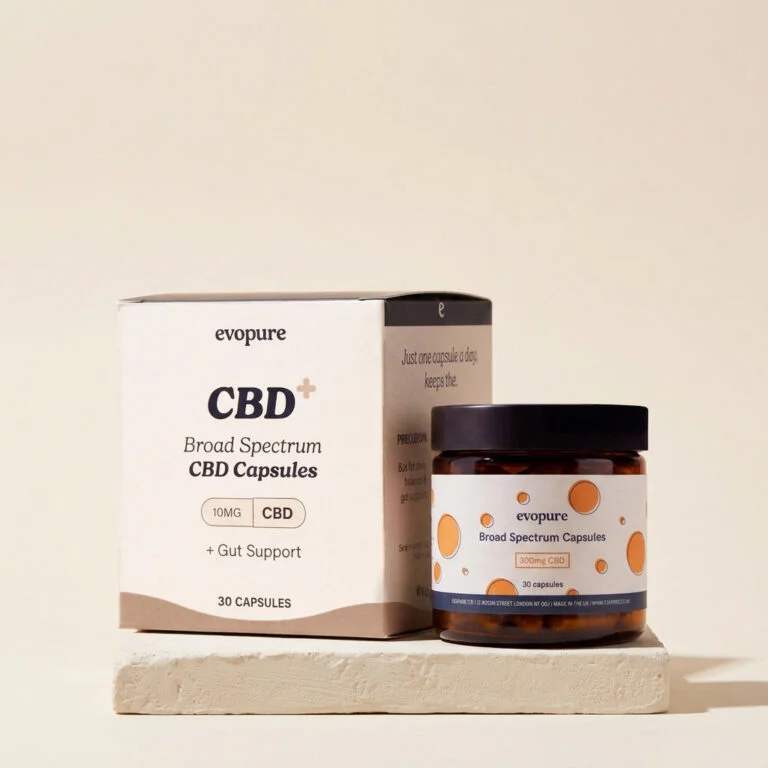
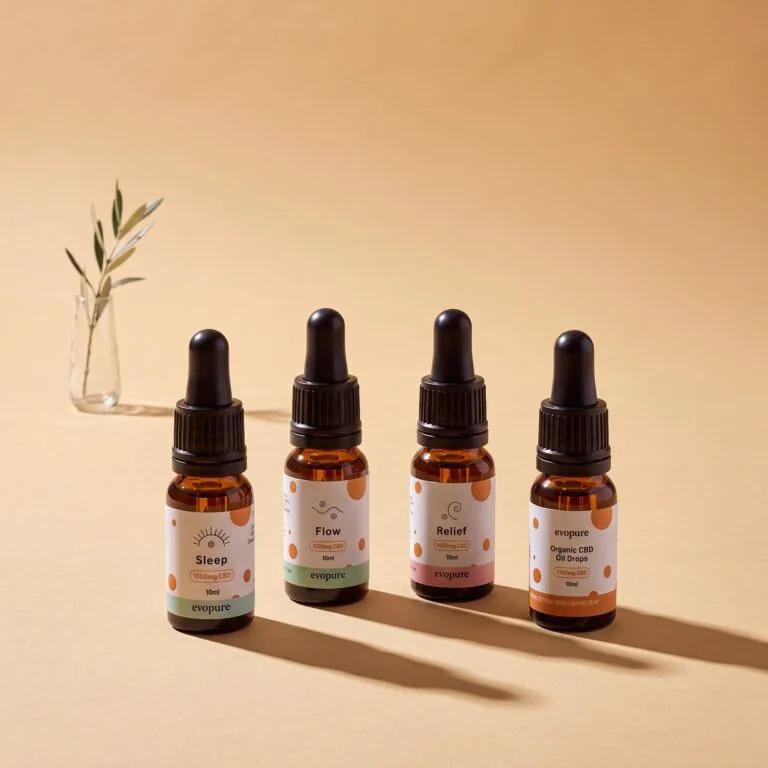
Our oils and capsules are broad spectrum, made for adults who want a daily routine without a high. We don’t recommend our products during pregnancy or breastfeeding.
CBD and addiction research
Researchers are studying high-dose pharmaceutical CBD for addiction. A 2019 US trial looked at cravings in 42 people in recovery from heroin use, and a 2020 UK trial looked at people trying to cut down cannabis. Both were small, used doses of 400mg to 800mg, and need larger trials before anything is known.
CBD supplements aren’t a treatment for addiction. If you’re worried about your own or someone else’s drug or alcohol use, talk to your GP or contact FRANK on 0300 123 6600.
FAQs
Is CBD addictive?
No. The World Health Organization found no evidence of abuse or dependence potential in humans, and trials found CBD felt no different from placebo at normal doses.
Is CBD oil habit-forming?
Not chemically. You may enjoy it as part of a routine, but it doesn’t create cravings or compulsive use.
Can you get withdrawal from CBD?
No withdrawal syndrome was found in a trial that stopped very high doses suddenly after four weeks. You can stop whenever you like.
Is it OK to take CBD every day?
Many adults do. Start low, keep within a sensible amount, and check with your GP or pharmacist first if you take any medication.
Can CBD make you high?
No. If a product makes you feel high, it almost certainly contains THC, so stop using it.
Is CBD more addictive than cannabis?
No. Cannabis contains THC, which can be addictive. CBD on its own showed no signs of abuse potential in controlled trials.
Sources
- World Health Organization. Cannabidiol (CBD) critical review report, 2018.
- Babalonis S et al. Oral cannabidiol does not produce a signal for abuse liability in frequent marijuana smokers. Drug Alcohol Depend, 2017.
- Schoedel KA et al. Abuse potential assessment of cannabidiol in recreational polydrug users. Epilepsy Behav, 2018.
- Taylor L et al. Abrupt withdrawal of cannabidiol: a randomized trial. Epilepsy Behav, 2020.
- Johnson E et al. CBD product contamination: THC concentrations in commercially available CBD products. Drug Alcohol Depend, 2022.
- Hurd YL et al. Cannabidiol for cue-induced craving in heroin use disorder. Am J Psychiatry, 2019.
- Freeman TP et al. Cannabidiol for cannabis use disorder: a phase 2a randomised trial. Lancet Psychiatry, 2020.
- FRANK. Cannabis.